Why French Vehicles Balance Style and Function
France approaches vehicles differently than neighboring Germany. Where Germany prizes engineering precision and power, France values cleverness, practicality, and style. French engineers ask: "How can we make this work beautifully?" rather than "How powerful can we make this?" This creates vehicles with personality—the TGV's distinctive design, the 2CV's charming simplicity, the elegant curves of Peugeot cars.
What makes French vehicles distinctive is their human-centered design. French cities prioritize people over cars—Paris has transformed car lanes into bike lanes, created pedestrian zones, and invested heavily in metros and trains. Vehicles serve people; people don't serve vehicles.
For kids, French vehicles show that engineering isn't just about specifications—it's about how things make people feel. A TGV isn't just fast; it's gracefully fast. A 2CV isn't just cheap; it's charmingly simple. Let's explore eight vehicles that show French innovation and style.
1. TGV Train (Train à Grande Vitesse) - The High-Speed Pioneer
The TGV (literally "very fast train") is France's high-speed rail system, reaching 200 mph in regular service and holding the world speed record for conventional rail (357 mph in 2007 test). Launched in 1981, it pioneered high-speed rail that inspired systems worldwide. The distinctive aerodynamic nose and sleek design make TGVs instantly recognizable.
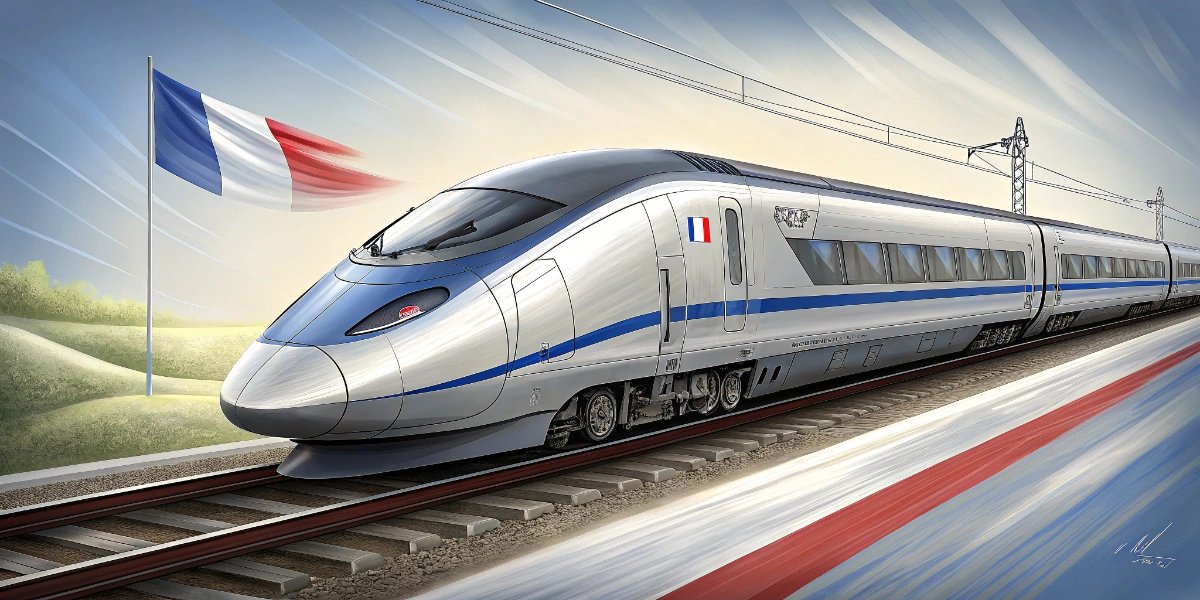
What makes it special: TGV engineering emphasizes smooth, comfortable high-speed travel. Trains articulate (connected cars share wheel assemblies), reducing weight while maintaining stability. The TGV democratized fast travel—making Paris to Lyon (2 hours), Paris to Marseille (3 hours), and Paris to London via Channel Tunnel (2.5 hours) accessible to millions.
How Fast Can It Go?
Cultural significance: The TGV represents French technological ambition and infrastructure investment. It connects France efficiently while reducing domestic flight demand. For French people, the TGV is source of national pride—engineering achievement connecting the republic.
Fun fact for kids: TGV trains are so aerodynamic they create their own weather! When two TGVs pass each other at combined speeds of 350+ mph, the air pressure changes are so extreme that windows must be specially strengthened. It's physics in action at incredible speeds!
Speech sounds: "TGV train" has the /t/, /ʒ/ (soft j sound in French pronunciation), /v/, /tr/, and /n/ sounds. French pronunciation (tay-zhay-VAY) teaches that French letters sound different than English.
If your child wants a simple, picture-led introduction to high-speed trains, you can also visit the high-speed train vehicle page together for basic facts and visuals.
2. Citroën 2CV (Deux chevaux) - The Quirky People's Car
The Citroën 2CV (deux chevaux, or "two horses") is one of automotive history's most beloved cars. Designed as affordable car for French farmers, it was meant to carry "two farmers in clogs, 50kg of potatoes, and a basket of eggs across a plowed field without breaking the eggs." Production ran 1948-1990, with over 3.8 million built.
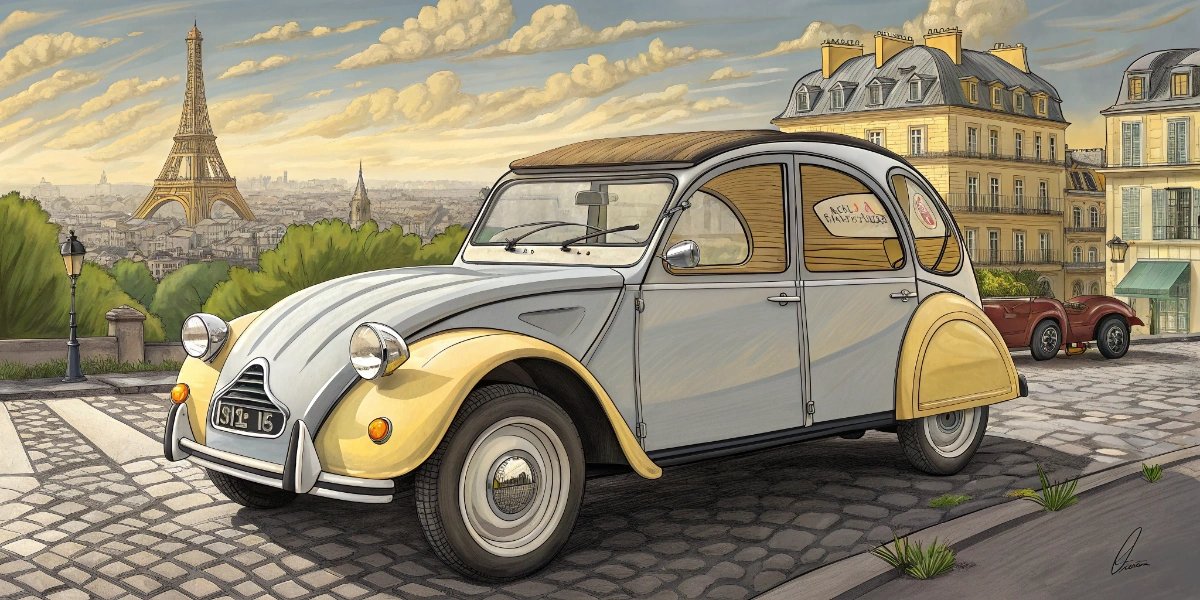
What makes it special: The 2CV is charmingly simple—air-cooled two-cylinder engine, canvas roll-back roof, minimal interior, interconnected suspension creating incredibly soft ride over bumps. It was designed to be maintained by farmers with basic tools. Despite basic engineering, it became beloved for character and charm.
Cultural significance: The 2CV represents French cleverness and democratic values. Unlike luxury cars for elite, it was explicitly for working people. It became cultural icon appearing in films, beloved by students and artists, representing French attitude that simple can be beautiful.
Fun fact for kids: The 2CV's roll-back canvas roof was designed so French farmers could carry tall items like ladders or hay bales! You could roll the entire roof back, load long objects that stick out the top, and drive. One design goal was that two people could lift the engine out by hand for repairs!
Speech sounds: "Citroën 2CV" has the /s/, /tr/, /n/, /t/, /s/, /v/ sounds. French pronunciation (see-tro-EN duh shuh-VOH) with the nasal "ën" sound teaches that French pronunciation is very different from spelling.
When you want a simple, picture-first look at classic cars, you can also explore the car vehicle page and talk about how the 2CV's simplicity made it special.
3. Paris Metro Train (Métro de Paris) - The Urban Underground
The Paris Métro is one of world's densest subway systems—214 miles of track, 308 stations, and coverage so complete that no point in Paris is more than 500 meters from a metro station. It opened in 1900 for Paris World's Fair. The Art Nouveau station entrances by Hector Guimard are iconic Parisian landmarks.
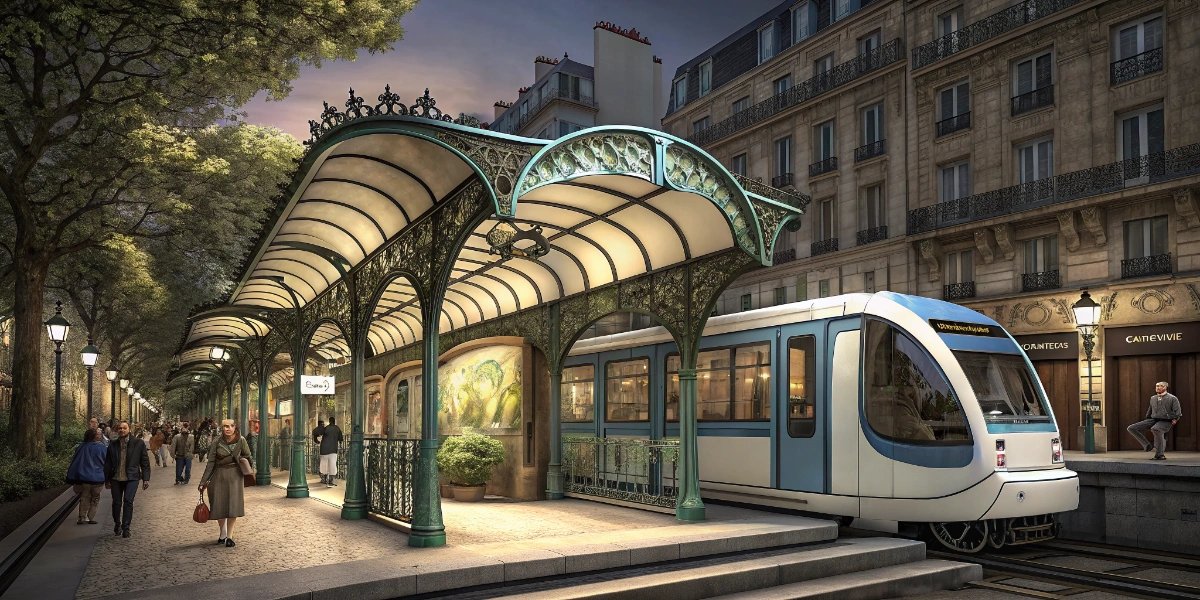
What makes it special: Paris Metro prioritizes density over speed—stations are extremely close together (average 560 meters apart) for maximum accessibility. Trains are rubber-tired on some lines (quieter, better acceleration) and steel-wheeled on others. Short wait times (2-5 minutes between trains) make cars unnecessary for Parisians.
Cultural significance: The Metro represents Parisian urban life and democratic accessibility. Rich and poor, tourists and locals, all use the same metro. The Art Nouveau entrances show French belief that even utilitarian infrastructure should be beautiful.
Fun fact for kids: Some Paris Metro trains have rubber tires instead of steel wheels! Lines 1, 4, 6, 11, and 14 use rubber tires running on concrete tracks. This makes them quieter, allows steeper grades, and provides better acceleration. It's innovative solution to urban density challenges!
Speech sounds: "Paris Metro train" has /p/, /r/, /s/, /m/, /tr/, and /n/ sounds. "Métro" (MAY-troh) with accent mark teaches that French uses accents to indicate pronunciation.
To compare with other subway systems, you can also visit the subway vehicle page and point out how Paris's system is one of the densest in the world.
4. Vélib' Bicycle - The Sharing Pioneer
Vélib' (contraction of vélo libre, or "free bike") is Paris's bike-sharing system launched in 2007—one of world's first large-scale urban bike shares. Users unlock bikes at automated stations throughout Paris, ride anywhere, and return to any station. Paris now has 20,000+ bikes at 1,800+ stations.
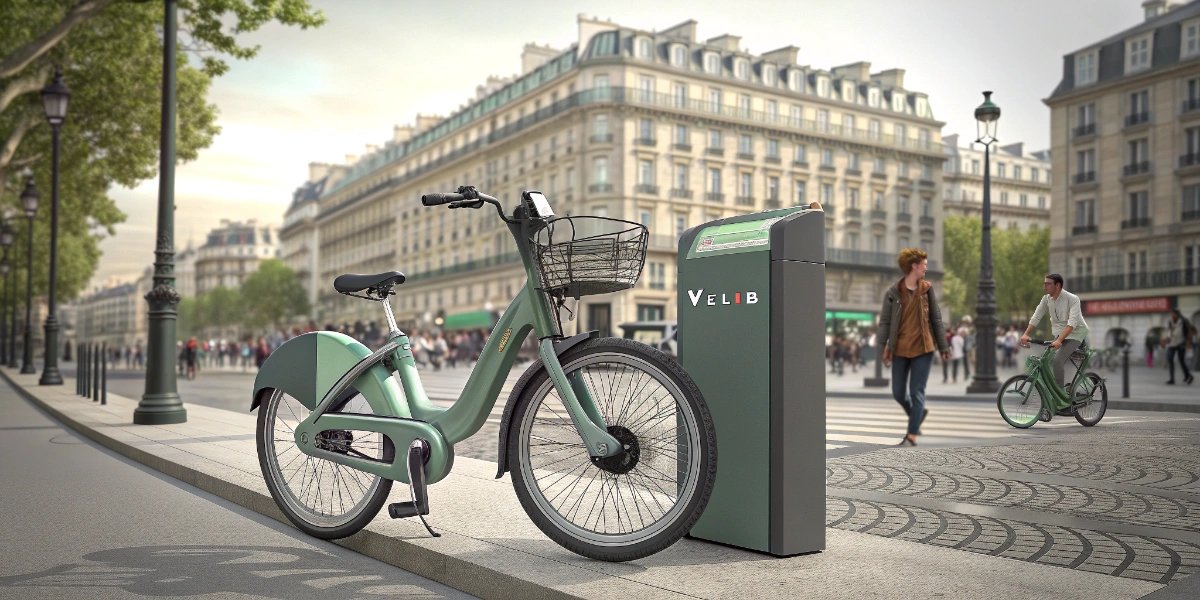
What makes it special: Vélib' transformed Parisian mobility—making bikes accessible without ownership burden. Stations are everywhere (every 300 meters), bikes are sturdy, and system is integrated with metro passes. Electric bikes are available for hills or longer distances.
Cultural significance: Vélib' represents French innovation in urban mobility. It demonstrated that bike-sharing could work at scale, inspiring systems worldwide (Citi Bike in NYC, Divvy in Chicago). For Parisians, it's practical transport—faster than metro for short trips.
Fun fact for kids: Vélib' bikes are nearly indestructible! They're built specifically for public use—heavy frames, puncture-resistant tires, fully enclosed chains. Each bike weighs 22kg (50 pounds)—three times heavier than racing bikes—because durability matters more than weight!
Speech sounds: "Vélib' bicycle" has /v/, /l/, /b/, /s/, /k/, and /l/ sounds. "Vélib'" (vay-LEEB) teaches French pronunciation and how French creates new words by combining existing ones.
When you want a simple, picture-first look at bikes, you can also explore the bicycle vehicle page and talk about how bike-sharing makes cycling accessible to everyone.
5. Peugeot Car (Voiture familiale Peugeot) - The French Family Vehicle
Peugeot is France's largest car manufacturer, producing vehicles since 1891. Peugeot cars emphasize comfort, practicality, and French style—less sporty than German cars, more refined than basic economy cars. The lion logo is one of automotive's oldest trademarks.
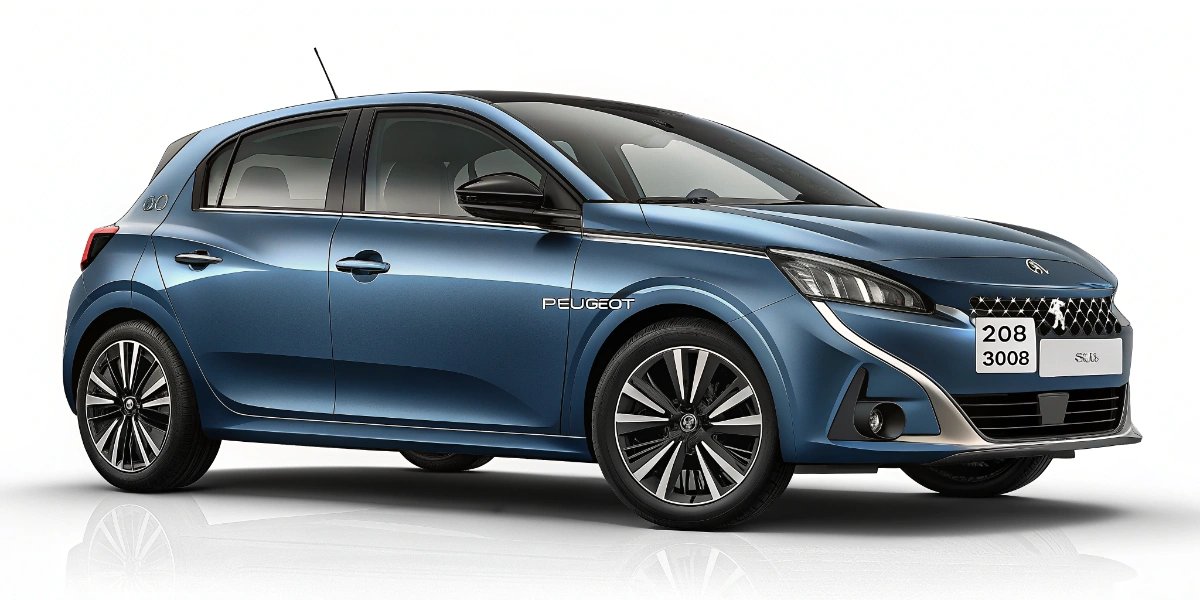
What makes it special: Peugeot engineering prioritizes ride comfort—soft suspensions absorb road imperfections, seating is comfortable for long journeys, and styling is distinctively French. They're practical family cars without pretension.
Cultural significance: Peugeot represents French automotive pragmatism—cars designed for real families, real roads, real budgets. They're not luxury statements or driving machines—they're practical transport with French character.
Fun fact for kids: Peugeot's lion logo is over 170 years old! The company started making saws and tools (1810) before cars, and chose a lion to represent strength and durability. When Peugeot started making cars (1891), they kept the lion logo. It's one of oldest continuous corporate symbols!
Speech sounds: "Peugeot car" has /p/, /ʒ/ (zh sound), /k/, and /r/ sounds. French pronunciation (puh-ZHOH) teaches that French spelling and pronunciation are very different.
To compare French cars with vehicles from other countries, you can also visit the car vehicle page for a simple overview.
6. Renault Kangoo Van (Fourgon Renault Kangoo) - The Delivery Workhorse
The Renault Kangoo is compact van used extensively for deliveries across France and Europe. It's perfectly sized for narrow European streets while offering cargo capacity. Many are electric, making them popular for urban delivery. You see them everywhere—delivering mail, parcels, bread, plumbing supplies.
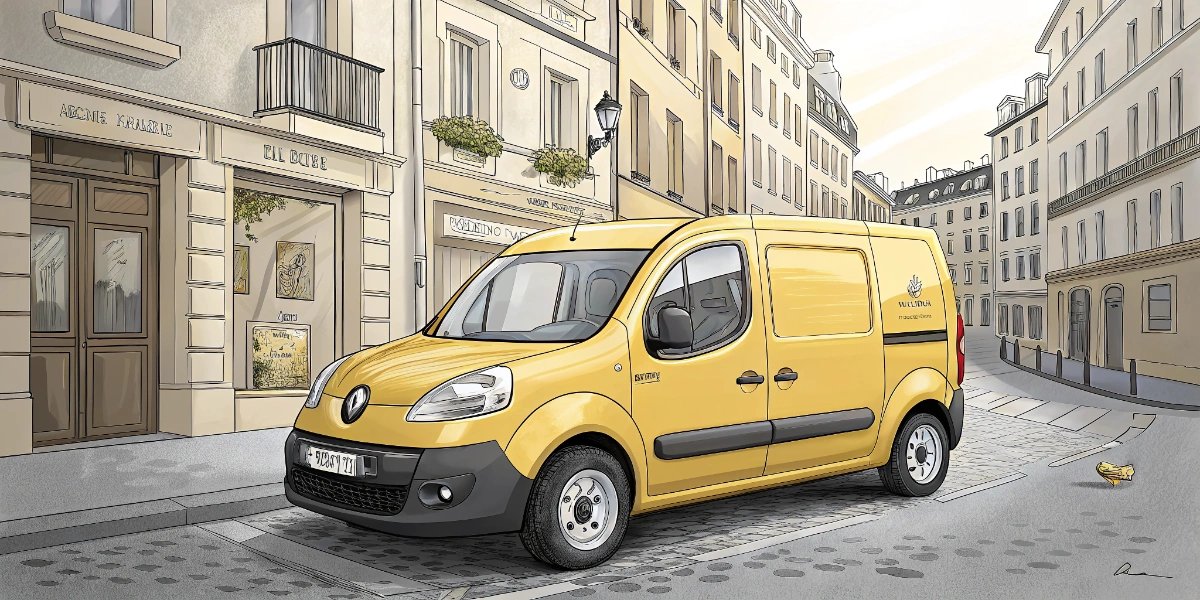
What makes it special: The Kangoo is designed for European urban conditions—narrow enough for tight streets, tall enough for cargo capacity. Sliding side doors allow loading in tight spaces. Electric versions make urban deliveries quiet and emission-free.
Cultural significance: Delivery vans represent French small business culture. Independent tradespeople, artisan bakers, postal workers all rely on compact vans navigating medieval street patterns in historic cities.
Fun fact for kids: French postal service operates thousands of electric Kangoo vans! Yellow postal Kangoos are common sight in French cities, delivering mail silently with zero emissions. France prioritized electric postal vans for environmental reasons.
Speech sounds: "Renault Kangoo van" has /r/, /n/, /k/, /ŋ/ (ng), /g/, /v/, and /n/ sounds. "Renault" (ren-OH) and "Kangoo" (kahn-GOO) teach French pronunciation patterns.
To compare these vans with other delivery vehicles, you can also visit the delivery truck vehicle page and talk about how European vans are smaller than American delivery trucks.
7. Parisian Taxi (Taxi parisien) - The Distinctive City Cab
Parisian taxis have evolved from classic black Peugeot sedans to modern diverse fleet, but they maintain distinctive roof sign and traditional service culture. Drivers must pass rigorous geography test knowing every Parisian street and landmark.
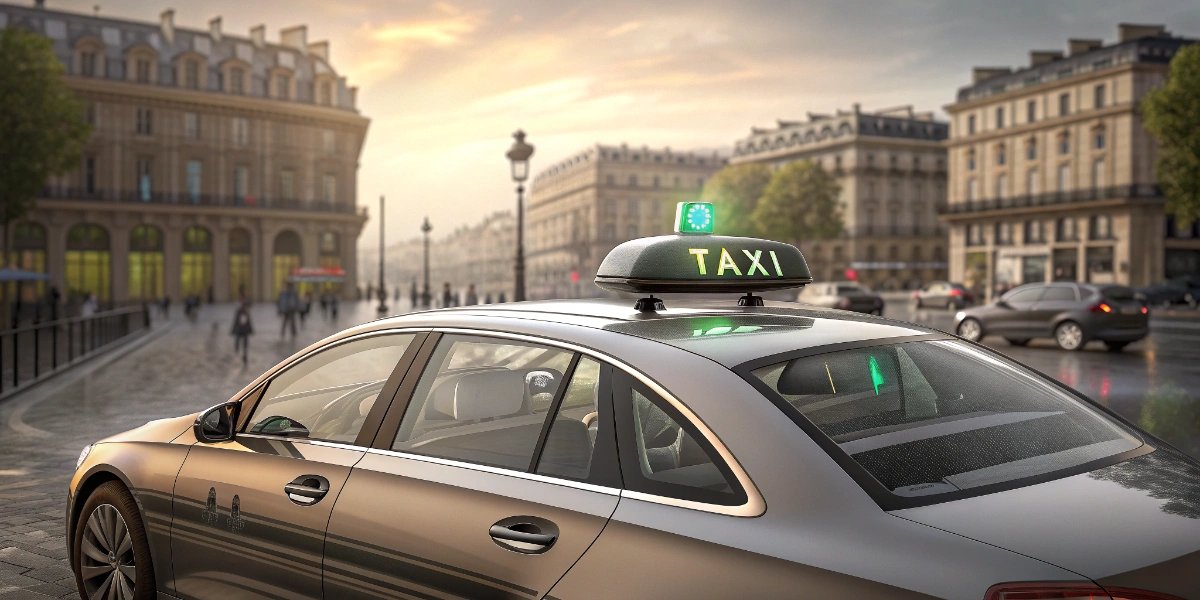
What makes it special: Parisian taxi drivers have geographic expertise—they know shortcuts, understand traffic patterns, and navigate without GPS. Many are now hybrid or electric responding to Paris's environmental policies.
Cultural significance: Taxis represent traditional Parisian service and expertise. Unlike impersonal ride-sharing, traditional taxis have professional drivers who know the city intimately.
Fun fact for kids: To become a Parisian taxi driver, you must pass incredibly difficult geography test! The exam tests knowledge of 460+ Paris streets, major landmarks, quickest routes. Pass rate is only 30-40%. This ensures taxi drivers genuinely know Paris better than GPS!
Speech sounds: "Parisian taxi" has /p/, /r/, /ʒ/ (zh), /n/, /t/, /k/, /s/ sounds. "Parisian" (puh-REE-zhun) teaches French city adjective formation.
To connect this to a simple vehicle overview, you can visit the taxi vehicle page and point out how taxis look different in different cities.
8. Gendarmerie Van (Fourgon de la gendarmerie) - The Rural Police
The Gendarmerie Nationale (national police force) operates distinctive blue vans throughout rural France. Unlike urban police, Gendarmerie covers countryside and small towns. Their vehicles serve as mobile police stations in rural areas.
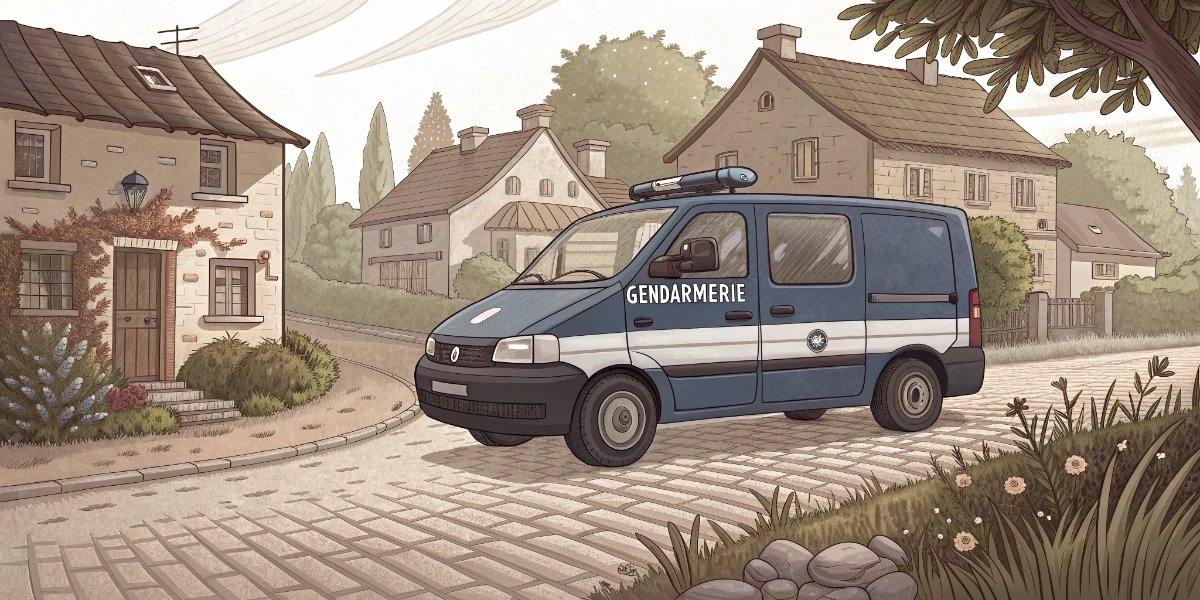
What makes it special: Gendarmerie vans are equipped as mobile offices—communications equipment, computers, and space for detaining suspects. They're often stationed at crossroads, visible deterrents and accessible to rural populations.
Cultural significance: The Gendarmerie represents French approach to rural law enforcement—military professionalism applied to civilian policing. The distinctive blue vans are authority figures in countryside.
Fun fact for kids: Gendarmerie means "armed people" in French—historically, soldiers who kept order! The Gendarmerie Nationale was created in 1791 during French Revolution. Today, gendarmes are military personnel doing police work—unique French system!
Speech sounds: "Gendarmerie van" has /ʒ/, /n/, /d/, /r/, /m/, /r/, /v/ sounds. French pronunciation (zhahn-dar-muh-REE) with nasal vowels teaches French sound patterns.
To compare with other police vehicles, you can also visit the police car vehicle page and talk about how different countries use different police vehicles.
Learning Opportunities Through French Vehicles
Geography Lessons
French vehicles teach geography through urban density and connections. Why such dense metro system in Paris? Because city developed before cars, creating dense neighborhoods where walking and metros make sense. Why TGV network? Because France is hexagonal shape with Paris as central hub—radiating train lines connect all regions efficiently.
Cultural Awareness
Every French vehicle reveals cultural values:
- Style matters - Even utilitarian vehicles should be beautiful
- Human-scale cities - Prioritizing walking, cycling, public transit over cars
- Democratic access - 2CV for farmers, metro for everyone, Vélib' for visitors
- Clever engineering - Practical solutions with character
- Environmental consciousness - Electric buses, bike infrastructure, train preference
App Connections
Talk & Listen: Practice French vehicle sounds—TGV smooth whoosh, 2CV distinctive two-cylinder engine, Paris metro rubber-tire hum. Learn vocabulary through cultural context: "fast," "stylish," "practical," "charming."
Create & Play: Kids can design their own high-speed trains with distinctive noses, create charming simple cars like 2CV, or plan metro systems with beautiful station entrances. French vehicles inspire balancing function with beauty!
Activity Ideas
Want something to print alongside these? The free printables library has vehicle coloring pages and activity packs — no email required.
- Speed comparison: How fast is TGV (200 mph) vs. regular train vs. car?
- Egg challenge: Can you carry an egg across bumpy surface without breaking (2CV test)?
- Metro density: Paris station every 500 meters—how many in your town?
- Bike-sharing math: Vélib' first 30 min free—how far can you ride?
- French pronunciation: Practice "deux chevaux," "Vélib'," "métro"
- Station beauty: Design Art Nouveau metro entrance with curves and nature
- Geography test: Can you name major streets in your neighborhood (taxi driver challenge)?
Why French Vehicles Teach Style and Function
When my toddler said the TGV looks like a pointy rocket, they captured French design philosophy—function should be beautiful. The aerodynamic nose isn't just for speed; it's elegantly designed. The 2CV's simplicity isn't just cheap engineering; it's charming character.
French vehicles show that engineering priorities reflect cultural values. France prioritizes human experience: comfortable trains for long journeys, bike systems making cities livable, metros reducing car dependence, cars with character beyond specifications.
Kids appreciate this balance. They learn that the fastest train can also be stylish (TGV), that the cheapest car can be beloved (2CV), that shared bikes can transform cities (Vélib'). French vehicles teach that good design serves both practical needs and emotional connections.
Explore More World Vehicles
This is part of my World Vehicles series. Already published: Japan, India, UK, Africa, Middle East, Australia, Scandinavia, South America, Southeast Asia, Russia, China, USA, and Germany.
Want to explore French vehicles interactively? Talk & Listen includes vehicle sounds emphasizing French style and character. In Create & Play, kids can design vehicles inspired by French innovation—from high-speed trains to charming simple cars.
When your child wants to keep playing, you can turn this into a quick activity: let them try the free Vehicle Sound Quiz to hear trains, bikes, and city sounds, then open the Compare Vehicles tool to line up two favorites and talk about which one looks fastest, coziest, or most stylish.
For a complete overview across all regions, visit the World Vehicles for Kids: Complete Guide.
 Frequently Asked Questions
 Ad-free & offline ready