Why Spanish Vehicles Reveal Rapid Transformation
Spain underwent astonishing transformation in just 40 years. In 1975, dictator Francisco Franco died after 36-year rule that isolated Spain from Europe—poor infrastructure, limited highways, no high-speed rail, underdeveloped transit. By 2015, Spain had Europe's longest high-speed rail network, world-class metro systems in multiple cities, and modern infrastructure rivaling any European nation. This transformation was intentional—Spain used European Union investment and post-Franco democracy to rapidly modernize, deliberately catching up to France and Germany within single generation.
But modernization didn't erase regional diversity. Spain is 17 autonomous communities (regions) with distinct identities, languages (Castilian Spanish, Catalan, Basque, Galician), and cultures. Catalonia operates differently from Andalusia; Basque Country differs from Madrid. This diversity appears in vehicles—Barcelona's modern trams reflect Catalan European orientation; Seville's horse-drawn carriages preserve Andalusian tradition; Madrid's metro serves centralized capital. Spanish vehicles reveal tension between modernization and tradition, central authority and regional autonomy, European integration and Spanish identity.
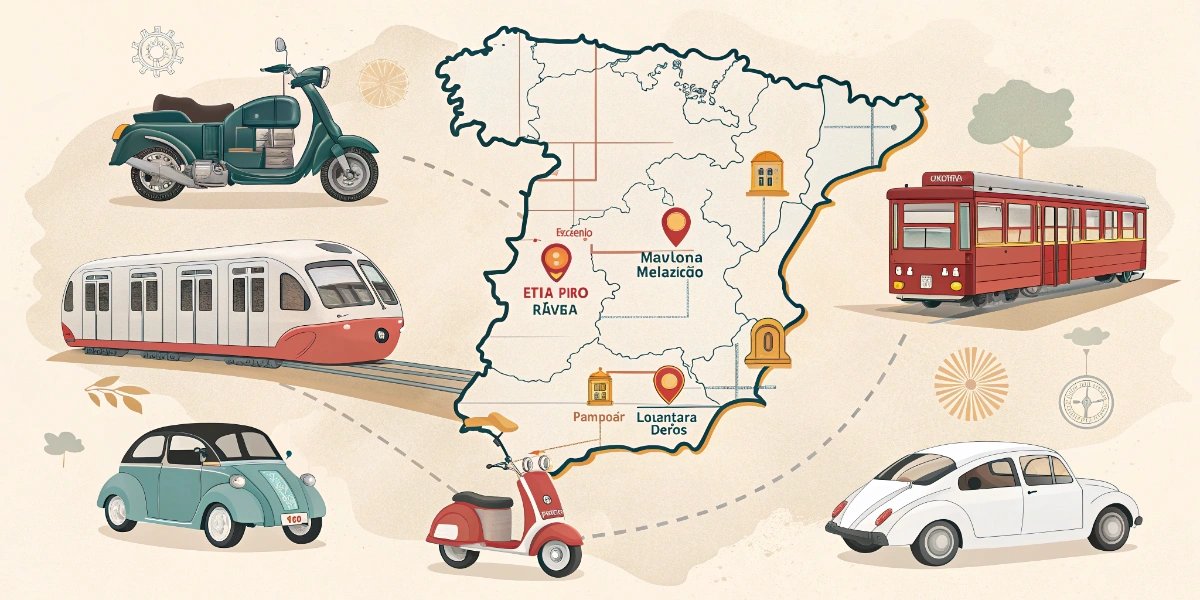
These eight vehicles show Spain's complexity: high-speed trains demonstrating engineering excellence and EU integration, regional trains serving diverse geography from Mediterranean coast to Pyrenees mountains, urban metros modernizing medieval cities, and traditional vehicles preserving cultural heritage. Spanish transport infrastructure reflects nation navigating modernity while honoring tradition—very Spanish paradox of embracing future while treasuring past.
What makes Spanish vehicles unique?
Spain transformed from isolated dictatorship (1975) to modern European nation with Europe's longest high-speed rail network (3,400+ km) in just 40 years. AVE trains reach 310 km/h connecting all major cities. Montserrat and Vall de Núria rack railways climb steep mountains to historic monasteries. Vespa culture dominates southern cities where medieval streets are too narrow for cars. Spanish vehicles reveal rapid modernization while preserving regional diversity and historic infrastructure.
1. AVE High-Speed Train (Alta Velocidad Española) - Engineering Pride
What It Is
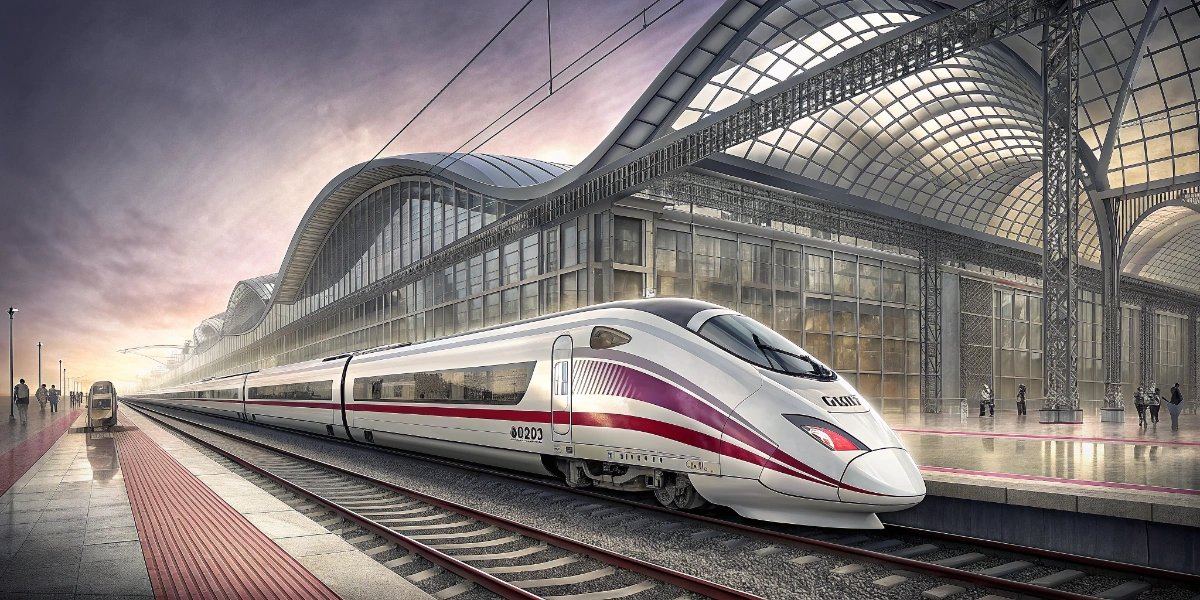
AVE (Alta Velocidad Española / Spanish High Speed) trains are Spain's bullet trains, operating at speeds up to 310 km/h (193 mph) on dedicated high-speed tracks. Launched in 1992 (Barcelona Olympics year), AVE now connects all major Spanish cities—Madrid to Barcelona in 2.5 hours (was 8+ hours by car), Madrid to Seville in 2.5 hours (was 5+ hours). Spain has 3,400+ km (2,100+ miles) of high-speed rail—longest network in Europe, second globally only to China. AVE trains are sleek, comfortable (like flying first-class), and punctual (99% on-time record—if over 5 minutes late, passengers get refund). If your child wants a picture-led overview of fast trains, you can also visit the high-speed train vehicle page together for simple visuals and vocabulary practice.
Why It Matters
Symbol of modernization: AVE represents Spain's transformation from isolated nation to European leader. Before AVE, traveling Madrid to Barcelona took all day by slow train or 8+ hours driving. AVE made Spain functionally smaller—2.5 hours between cities allows business trips, weekend visits, integrated economy. It's psychological shift: Spain stopped being collection of distant regions, became unified nation connected by infrastructure. AVE's success proved Spain could compete with France (TGV) and Germany (ICE) in engineering excellence.
Madrid to Barcelona: Then vs Now (Hours)
EU integration success story: AVE construction was heavily funded by European Union—demonstrating EU's role modernizing southern Europe. This investment worked spectacularly—Spain became world leader in high-speed rail construction, now exporting expertise globally (building high-speed rail in Saudi Arabia, California consulting). It's EU success narrative: investment + political will = rapid transformation. Spain went from no high-speed rail (1991) to longest European network (2024) in 33 years.
Environmental victory over flights: AVE killed domestic flights—Madrid-Barcelona was world's busiest flight route until AVE launched (1992). Now, 90% of Madrid-Barcelona travelers take AVE rather than fly (faster door-to-door, more comfortable, no airport hassle, lower emissions). This demonstrates trains can compete with planes when infrastructure is excellent. Spain proved high-speed rail isn't just European fantasy—it actually displaces flights when done properly.
Cultural Significance
AVE restored Spanish pride after Franco isolation—showing Spain could build world-class infrastructure. The 99% punctuality rate became point of national pride (contrasting with stereotypes about "mañana" culture—AVE proves Spanish efficiency when infrastructure supports it). AVE also democratized travel—reducing need for car ownership, connecting rural regions to major cities, allowing middle-class families to visit relatives across Spain affordably. It's infrastructure creating social equity.
Fun Facts
- AVE trains reach 310 km/h (193 mph)—faster than most highway speed limits allow
- 99% punctuality—if train is 5+ minutes late, Renfe refunds 100% of ticket price
- Madrid-Barcelona AVE has 25+ trains daily—departures every 30 minutes during peak
- Spain has 3,400 km of high-speed rail—longer than France, Germany, UK combined
- AVE reduces Madrid-Barcelona CO2 emissions by 80% compared to flying
- First AVE route (Madrid-Seville, 1992) was built for Barcelona Olympics and Expo '92
Teaching Moment
AVE teaches that nations can transform rapidly with political will and investment. Spain went from no high-speed rail to European leader in 30 years—showing change is possible if society commits to it. Also demonstrates infrastructure shapes lifestyle: before AVE, Spaniards rarely traveled between cities; now they commute weekly. Kids learn that geography matters less than infrastructure—Madrid and Barcelona are physically same distance apart, but AVE made them "closer" by reducing travel time. What separates or connects places isn't just distance—it's infrastructure.
2. Madrid Metro (Metro de Madrid) - Underground Labyrinth
What It Is
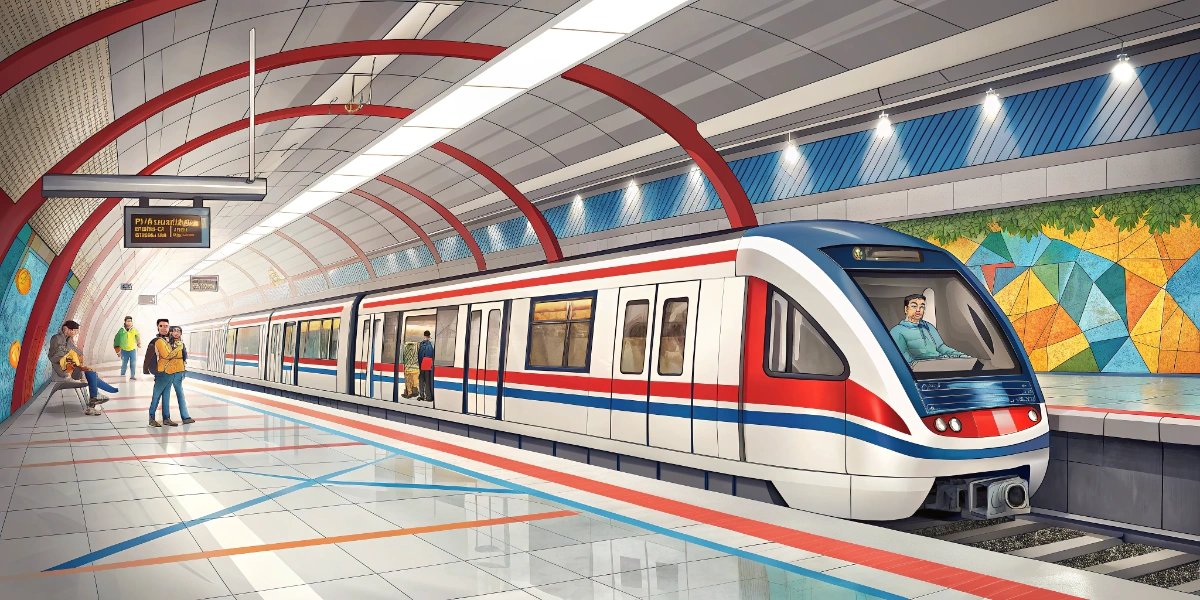
Madrid Metro is one of the world's largest metro systems—hundreds of stations, nearly 300 km (183 miles) of track, 13 lines plus light rail, serving millions of trips daily. It's extensive, modern, clean, and efficient—trains arrive every 2-5 minutes during peak hours. Metro opened in 1919 (under King Alfonso XIII) but expanded dramatically after Franco—doubling in size 1995-2007 with massive EU-funded expansion. Now it reaches suburbs, airport, and even nearby cities. Madrid Metro uses color-coded lines, clear signage, and accessible stations (most have elevators—unusual for century-old system). For a simple, kid-focused introduction to subways, you can pair this article with a quick visit to the passenger train vehicle page to practice train sounds and basic vocabulary.
Why It Matters
Democratizing medieval city: Madrid's historic center has narrow medieval streets impossible for cars—metro made dense urban living practical without car ownership. Metro stations every 600 meters (0.37 miles) mean everywhere in central Madrid is walkable from subway. This preserved historic neighborhoods (didn't demolish for highways like some cities) while modernizing transport. It's innovative solution: don't destroy old cities to fit cars—build underground networks serving them.
Class equalizer: Madrid Metro is used by everyone—business executives, students, elderly, tourists, all income levels. Unlike some cities where metro is "poor people's transport," Madrid Metro is fastest, most convenient option for everyone (faster than driving in traffic, cheaper than taxis, no parking hassles). This creates social mixing—CEOs and janitors share same car during rush hour. It's democratic public space where social class visible above ground disappears underground.
European integration visible: Madrid Metro expansion (1995-2007) was largely EU-funded—demonstrating European solidarity (wealthier northern EU countries funding southern infrastructure). This investment paid off—Madrid became European business hub partially because excellent metro allowed dense urban development without car dependency. EU investment created functional, livable city attracting talent and business.
Cultural Significance
Metro enables Spain's late-night culture—restaurants serve dinner at 10pm, bars close at 3am, nightlife is central to Spanish social life. Metro running until 1:30am (2:30am weekends) makes this safe and convenient—no drunk driving, no expensive taxis, everyone can participate. Metro also reflects siesta culture: ridership drops mid-afternoon when shops close and people go home for lunch/siesta, then surges again at 5-6pm when shops reopen. Spanish daily rhythm visible in metro ridership patterns.
Fun Facts
- Madrid Metro is 7th largest globally—larger than Paris, London underground portions
- 301 stations include world's deepest metro station—Cuatro Caminos (49 meters / 160 feet underground)
- Most stations have mobile phone coverage—rare for metros globally
- Metro serves airport—15-minute ride from Terminal 4 to city center (€5 fare)
- Line 6 is circular—40 km (25 mile) loop around central Madrid serving suburbs
- Metro expanded from 125 stations (1995) to 301 (2007)—doubling in 12 years
Teaching Moment
Madrid Metro teaches that old cities can modernize without losing character. Rather than demolish medieval streets for highways (American approach), Madrid built underground metro preserving surface. Kids learn that solutions can be vertical (underground/above-ground) when horizontal space is limited. Also demonstrates public investment creates livable cities—metro expansion made Madrid functional without cars, reducing pollution and traffic while preserving historic neighborhoods. Infrastructure investment pays long-term dividends.
3. Cremallera de Montserrat - Mountain Monastery Railway
What It Is
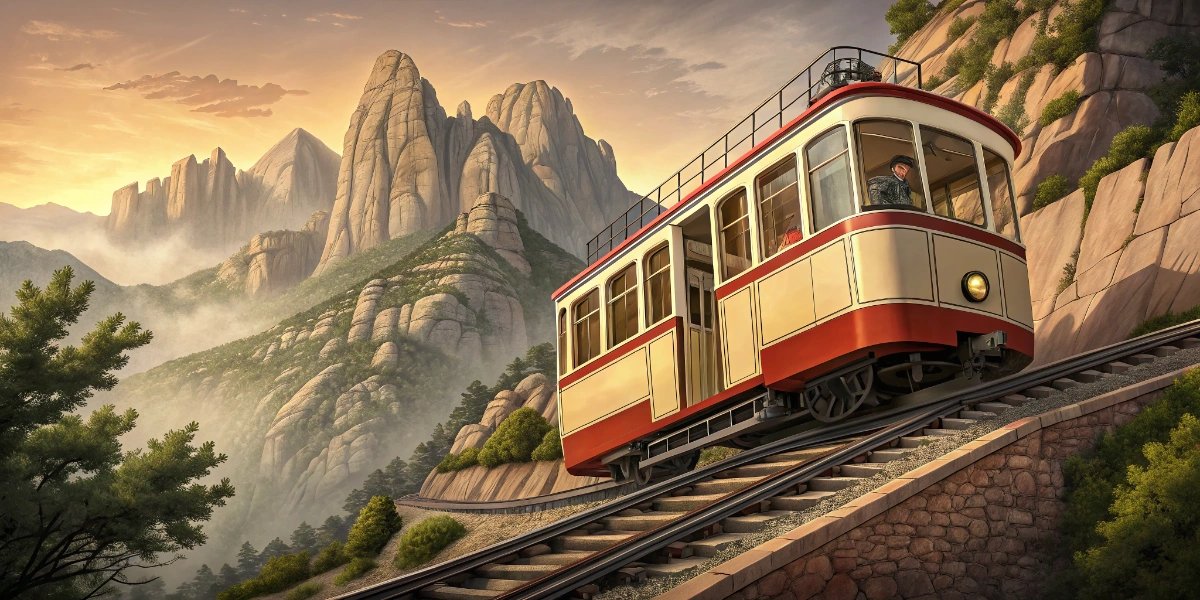
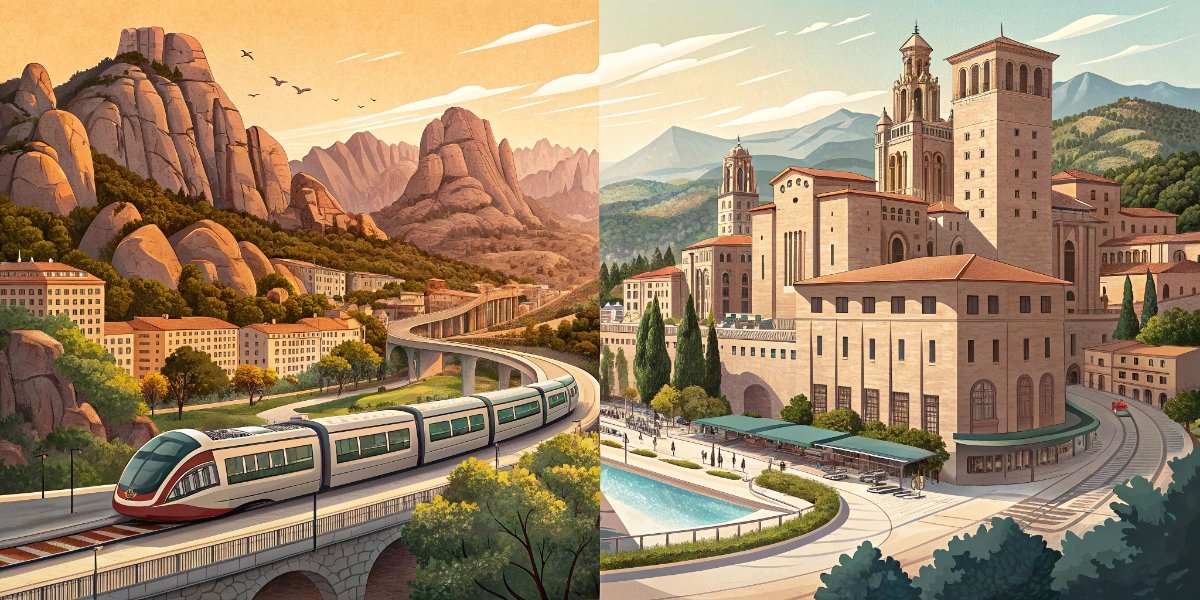
The Cremallera de Montserrat is a historic rack railway climbing 1,800 feet up the jagged Montserrat mountain to reach the Benedictine monastery housing the Black Madonna (La Moreneta), Catalonia's patron saint. Built in 1892, this cogwheel train uses a gear mechanism engaging a toothed rack rail between the tracks, allowing it to climb the 15% gradient that would be impossible for normal trains. The journey takes 15 minutes, offering dramatic views of Catalonia's distinctive "serrated mountain" rock formations. It's religious pilgrimage route, tourist attraction, and engineering marvel—transporting 1 million passengers annually up the sacred mountain.
Why It Matters
Religious and cultural pilgrimage: Montserrat isn't just mountain—it's spiritual heart of Catalonia. The monastery founded in 1025 houses La Moreneta, a 12th-century wooden statue of Virgin Mary darkened by candle smoke over centuries. Pilgrims have climbed this mountain for 1,000 years—first on foot, then by mule, now by rack railway. The train democratized pilgrimage: elderly, disabled, and families can now reach monastery that was once accessible only to physically fit. This accessibility transformed spiritual practice from elite activity to universal possibility.
Rack railway engineering: Montserrat's steep gradient (15% average, 18% maximum) would cause normal trains to slip—wheels can't grip enough for traction. Rack railways solve this: a toothed gear beneath the train engages a toothed rack rail between tracks, providing mechanical advantage. The train literally pulls itself up the mountain using gears. This 19th-century Swiss invention enabled mountain railways worldwide—Montserrat was among the first in Spain. It demonstrates how engineering solves geographic challenges, making "impossible" routes possible.
Tourism and accessibility balance: Montserrat receives 2+ million visitors annually—creating tension between spiritual site and tourist attraction. The rack railway enables mass tourism: 1 million passengers yearly riding up mountain. Monastery benefits economically (donations, bookstore, restaurant revenue) but struggles with crowds disrupting contemplative atmosphere. This tension appears at religious sites worldwide: how to welcome visitors without destroying what makes site special? The train itself is neutral technology—its impact depends on how society manages access it provides.
Cultural Significance
The Cremallera represents Catalan identity—regional pride in engineering achievement connecting people to sacred place. Catalans view Montserrat as spiritual and national symbol: monastery sheltered Catalan culture during Franco's suppression, La Moreneta is Catalonia's patron saint, and mountain's distinctive shape appears in regional art and literature. The rack railway is infrastructure supporting this identity—enabling Catalans to maintain connection to cultural touchstone. It's not just tourist convenience—it's cultural lifeline.
Fun Facts
- Original 1892 steam locomotives have been replaced by modern electric trains—but track and rack system remain from original construction
- Montserrat's name means "serrated mountain"—jagged rock formations created by erosion over millions of years
- Monastery's boys' choir (Escolania de Montserrat) is one of Europe's oldest—founded 1223, still performing daily
- La Moreneta ("Little Dark One") is dark brown/black—likely from centuries of candle smoke, though legend says St. Luke carved it from dark wood
- Railway shares access with the Aeri de Montserrat cable car—two engineering solutions to the same mountain problem
Teaching Moment
Cremallera de Montserrat teaches about specialized engineering, accessibility, and sacred places. Kids learn that steep mountains require specialized trains—regular trains can't climb 15% grades. Also demonstrates how technology changes access: what once required day-long difficult hike now takes 15-minute comfortable train ride. This accessibility has trade-offs: more people can visit (democratization) but crowds change experience (commercialization). Understanding these complex outcomes—where same technology creates both benefits and costs—builds nuanced thinking. Finally, it teaches about cultural identity: Catalans' emotional connection to Montserrat shows how places carry meaning beyond physical attributes.
4. Vall de Núria Rack Railway (Cremallera de Núria) - Pyrenees Mountain Train
What It Is
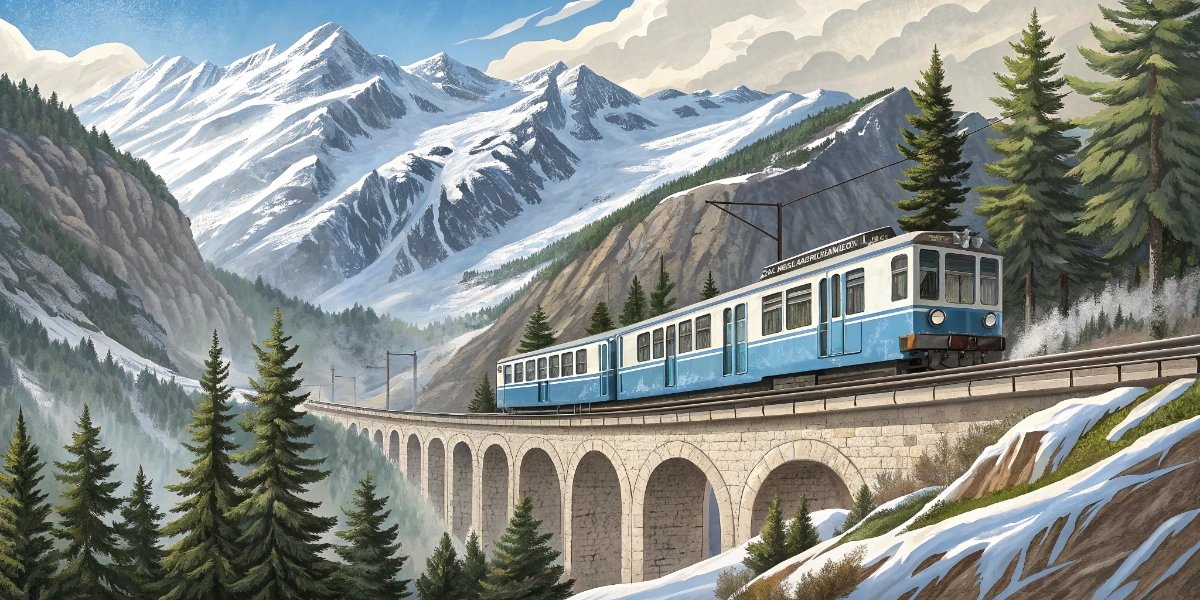
The Vall de Núria rack railway climbs 3,600 feet through the Catalan Pyrenees from Ribes de Freser to the Vall de Núria sanctuary and ski resort. Built 1931, this 7.8-mile journey takes 40 minutes, ascending through forests, crossing viaducts over gorges, and emerging at remote alpine valley accessible only by train (no roads reach Vall de Núria). The cogwheel system handles 15% gradients through dramatic mountain scenery. Unlike Montserrat (day-trippers), Vall de Núria is mountain resort destination—skiing in winter, hiking in summer, religious sanctuary year-round—reached exclusively by rack railway.
Why It Matters
Car-free mountain resort: Vall de Núria's inaccessibility by car is feature, not bug. No roads mean no traffic, no parking lots, no exhaust fumes—just mountain silence broken by train whistles. This enforced car-free zone creates unique alpine experience: families walk freely without watching for vehicles, ski slopes lack parking congestion, and mountain environment is protected from road development. The rack railway isn't just access—it's environmental protection strategy. By making train the only option, valley preserves character that road access would destroy.
Year-round mountain tourism: Most Pyrenees resorts are winter-only (ski season). Vall de Núria operates year-round: skiing/snowboarding in winter, hiking/mountain biking in summer, religious pilgrimage always. The rack railway enables this versatility—functioning in all seasons, transporting skiers with equipment (racks for skis/boards), hikers with backpacks, and pilgrims visiting shrine. This year-round operation makes railway economically sustainable—not dependent on single season. Engineering enables business model: all-season transportation supporting diverse activities.
Engineering in extreme conditions: Pyrenees winters mean heavy snow, avalanche risk, and -20°F temperatures. The railway operates despite this: snowplows clear tracks, avalanche barriers protect vulnerable sections, and trains have heating systems and snow-clearing equipment. Operating mountain railway in winter isn't simple—it requires constant maintenance, weather monitoring, and safety protocols. The fact that trains run reliably demonstrates Spanish engineering competence in harsh mountain conditions. It's unglamorous infrastructure work enabling visible tourism experience.
Cultural Significance
Vall de Núria's sanctuary dates to 1072—shepherds discovered statue of Virgin Mary in remote valley. Legend says image was carved by St. Luke, hidden during Muslim invasions, then miraculously revealed to shepherd. True or not, the shrine attracted pilgrims for 900+ years before rack railway (1931) made access easier. The train continues this pilgrimage tradition while adding modern tourism. It bridges sacred past and tourist present—infrastructure serving both spiritual and commercial purposes without fully belonging to either.
Fun Facts
- Vall de Núria is accessible ONLY by rack railway—no roads exist, making it one of Spain's most isolated resorts
- Railway has 12% average gradient (maximum 15%)—among steepest rack railways in Spain
- Valley sits at 6,560 feet elevation—high enough for reliable snow but accessible for day trips
- Sanctuary legend: Virgin Mary statue was hidden in cave during Muslim period, rediscovered by shepherd following divine bull (symbolic miracle story)
- Resort accommodates thousands of overnight visitors—hotel, apartments, camping—all accessed by train with luggage racks
- Cross-country ski trails, snowshoe routes, and hiking paths radiate from valley—making it outdoor sports hub
Teaching Moment
Vall de Núria rack railway teaches about sustainable tourism, isolation's benefits, and engineering enabling preservation. Kids learn that "accessibility" doesn't always mean "by car"—train-only access protects environment while serving visitors. Also demonstrates that limitations create value: inability to drive creates car-free experience many people seek. Understanding that constraints can be assets rather than problems builds creative thinking. Finally, it teaches about year-round operations: designing systems that work in multiple seasons requires planning for extreme conditions (summer heat AND winter snow). Robust engineering accommodates variability.
5. White Taxi (Taxi blanco) - Urban Navigation Masters
What It Is
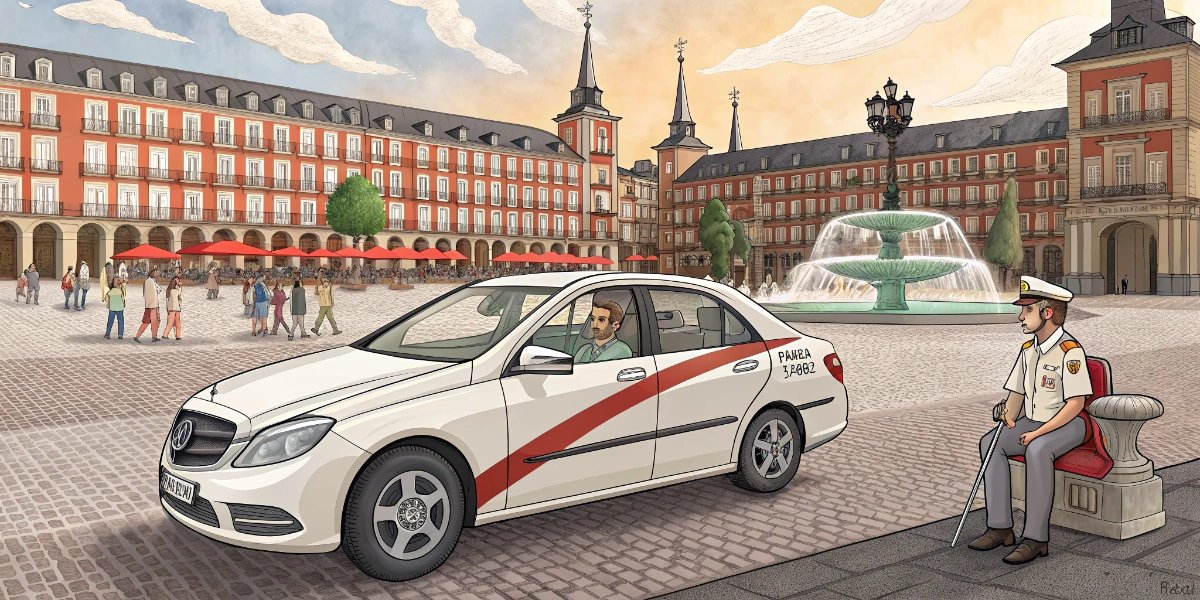
Spanish taxis are white with diagonal stripe (red in Madrid, yellow in Barcelona, blue in Seville)—standardized national design making them instantly recognizable. Taxi drivers master navigation of medieval city centers—narrow streets, one-way labyrinths, hidden shortcuts that GPS misses. Madrid has 15,000+ taxis; Barcelona 10,000+. Taxis are professional service—drivers licensed after extensive testing, vehicles regularly inspected, fares regulated by government. Unlike some countries where taxis are informal, Spanish taxis are formal professional transport with century-long tradition. You can connect this to a more general overview by visiting the taxi vehicle page to practice sounds, routines, and safety vocabulary around getting rides.
Why It Matters
Medieval city expertise: Spanish taxi drivers know medieval street layouts GPS can't handle—where delivery trucks can't fit, which one-ways reverse at siesta, shortcuts through plazas. This local knowledge is invaluable in cities like Toledo (medieval labyrinth), Seville (winding Moorish streets), or Córdoba (Roman grid overlaid with medieval chaos). Taxi drivers preserve geographical knowledge GPS hasn't yet captured—human expertise remaining relevant despite technology.
Regulated professional service: Spanish taxis face strict regulation—competitive exams, route knowledge tests, vehicle inspections, fare controls. This ensures quality and fairness—contrast with app-based ride-sharing (Uber, Cabify) which Spanish taxi industry fiercely opposes. Debate reflects broader economic questions: protect traditional regulated professions or embrace digital disruption? Spain sides more with regulation and traditional professions than Anglo-American countries—taxis remain dominant despite Uber's attempts to enter market.
Siesta and night life enablers: Taxis adapt to Spanish schedule—quiet mid-afternoon (siesta), surge at midnight when restaurants close, peak at 2-3am when bars close. Taxi shifts reflect Spanish daily rhythm rather than standard 9-5. Also crucial for nightlife culture—allowing drinking without driving (taxis affordable enough for regular use). Spanish culture of late dinners, bar-hopping until 3am is only safe because reliable taxi service exists.
Cultural Significance
White taxis are Spanish cities' connective tissue—moving people when metro stops running, navigating streets buses can't reach, providing door-to-door service metro can't match. Taxi drivers become local characters—knowing neighborhoods intimately, chatting with regular passengers, providing unofficial city tours to tourists. In country valuing personal relationships over efficiency, taxis' human element matters—driver greeting you by name beats app's algorithmic matching.
Fun Facts
- Madrid has 15,600 taxi licenses—density similar to New York City
- Spanish taxi drivers must pass rigorous exam testing city geography knowledge
- Green light on roof means "Libre" (available)—red means occupied
- Taxis have fixed fares for airport runs—preventing tourist price-gouging
- Taxi colors standardized nationally—white base with city-specific diagonal stripe
Teaching Moment
Taxis teach that human expertise remains valuable despite technology. GPS navigation can't match taxi driver's knowledge of medieval streets, traffic patterns, and shortcuts. Kids learn that technology doesn't replace all human skills—local knowledge, experience, and judgment remain valuable. Also demonstrates regulated professions protecting quality and fairness: Spanish taxi regulation ensures service standards and fair prices, though it also limits competition and innovation. Trade-offs between regulation (quality/fairness) and free market (competition/innovation) are complex without simple answers.
6. Vespa & Moto Culture (Cultura motera) - Two-Wheel Urban Mobility
What It Is
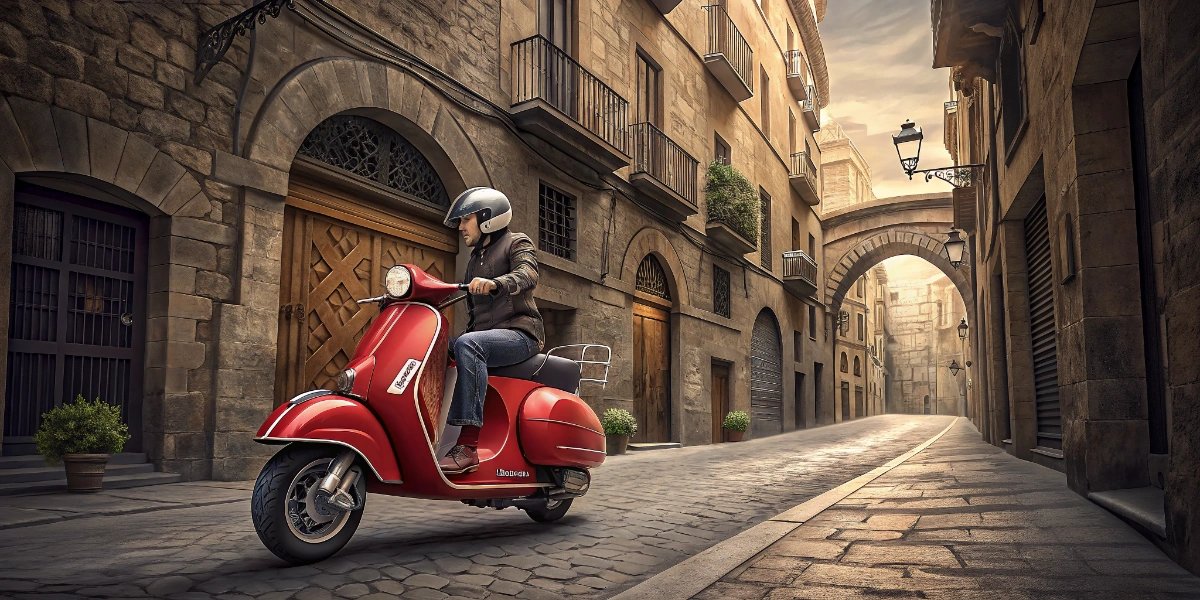
While Vespa is Italian brand, scooter culture is massive in Spain—especially in crowded cities like Madrid, Barcelona, Valencia, and Seville. Scooters (50cc to 300cc) are practical urban transport—maneuvering through traffic, parking anywhere, affordable to buy and run. Spanish youth often get scooter licenses at age 14-15 (before car licenses at 18), making scooters first vehicles. Motorcycle culture is also strong—BMW, Ducati, and Spanish brands like Gas Gas thrive. Two-wheel transport is middle ground between walking/metro (slow, limited range) and cars (expensive, parking impossible). If your child loves zippy two-wheelers, you can also visit the scooter vehicle page to see a simpler, kid-level breakdown of how scooters work.
Why It Matters
Mediterranean urban solution: Southern European cities (Spain, Italy, Greece) embrace scooters because they solve urban density problems—narrow medieval streets impossible for cars, parking non-existent, climate allowing year-round riding. Scooters are practical where cars aren't—weaving through traffic, parking on sidewalks (technically illegal but tolerated), storing in small apartment garages. They're necessity-driven adaptation to dense old cities that pre-date cars.
Youth independence vehicle: Spanish teenagers get scooter licenses at 14-15, gaining mobility before driving age. Scooters enable independence—visiting friends across city, part-time jobs requiring transport, socializing beyond walking distance. This shapes Spanish adolescence differently from countries requiring cars (American suburbs) or public transit (Japanese cities). Scooter culture is distinctly southern European phenomenon—freedom machine for teenagers in dense cities.
Economic accessibility: Scooters cost €2,000-5,000 (new), use minimal gas (60+ mpg), and don't require expensive parking. Insurance and maintenance are cheap. For young people or low-income workers, scooters provide affordable mobility cars can't match. Food delivery (Glovo, Uber Eats, Deliveroo) largely relies on scooter couriers—gig economy rides on two wheels. Scooters democratize urban mobility—accessible to people priced out of car ownership.
Cultural Significance
Scooters represent Spanish pragmatism and Mediterranean lifestyle. They're fun (riding through warm evenings), practical (parking anywhere), and social (groups of friends on scooters). Unlike northern European bike culture (Dutch cargo bikes = family values), southern European scooter culture is younger, more individualistic, slightly rebellious. Scooters also reflect Spanish casualness about minor rule-breaking—parking illegally on sidewalks is technically prohibited but universally practiced. It's cultural flexibility where pragmatism trumps strict rules.
Fun Facts
- Spain has 3+ million registered motorcycles/scooters—one for every 15 people
- Barcelona has highest scooter density in Europe—200+ scooters per 1,000 residents
- Spanish scooter licenses (AM license) can be obtained at age 15
- Food delivery in Spanish cities is 90%+ scooter-based—faster than cars in traffic
- Helmet laws strictly enforced—€200 fine for riding without helmet
Teaching Moment
Scooters teach that appropriate solutions depend on context. Dense Mediterranean cities need different transport than American suburbs or flat Dutch cities. What works (cars in Texas, bikes in Amsterdam, scooters in Barcelona) depends on geography, climate, existing infrastructure, and culture. Kids learn that there's no universal "best" transport mode—optimal solution varies by context. Also demonstrates how regulations shape culture: allowing 15-year-olds scooter licenses creates different youth culture than requiring waiting until 16-18 for cars.
7. Horse-Drawn Carriage (Calesa de caballos, Sevilla) - Preserved Tradition
What It Is
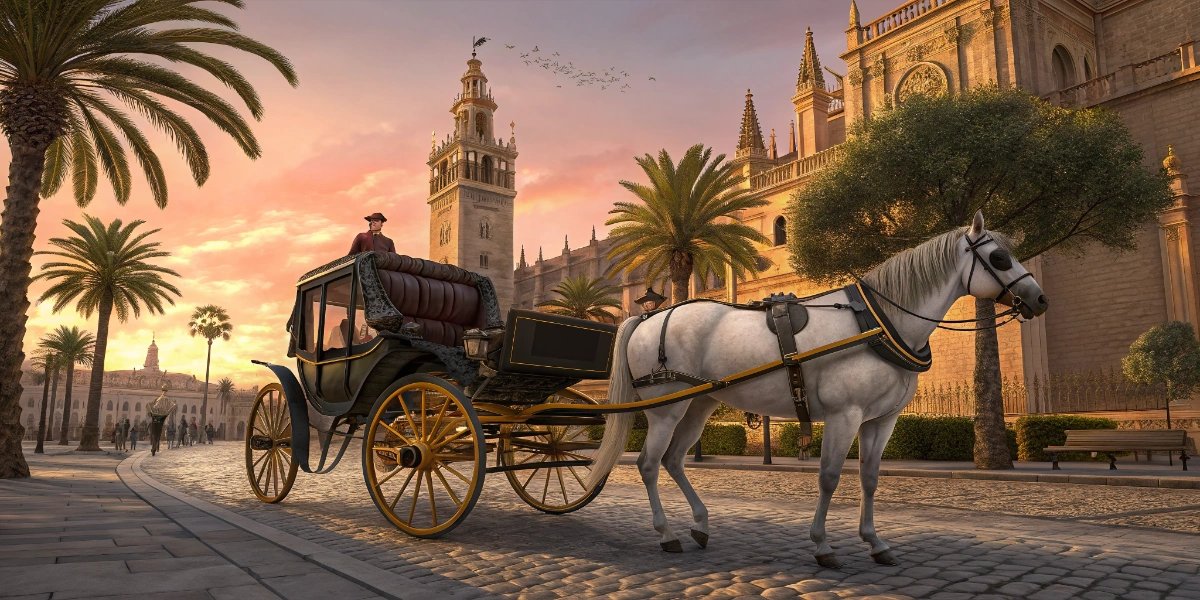
Seville's horse-drawn carriages (coches de caballos) are traditional transport carrying tourists through historic neighborhoods. White horses pull ornate carriages past landmarks—Cathedral, Alcázar Palace, Plaza de España—while driver narrates history. Similar carriages exist in Granada, Córdoba, and other Andalusian cities. They're expensive (€50+ for 45-minute tour), slow, and impractical—but that's the point. They preserve romantic vision of Spain: warm evenings, clip-clop horse hooves on cobblestones, slower pace recalling pre-modern era. For a simpler, kid-level picture of this kind of vehicle, you can also visit the horse-drawn buggy vehicle page and compare how a generic buggy illustration matches the ornate Andalusian carriages in this section.
Why It Matters
Andalusian romanticism: Horse carriages embody romanticized view of southern Spain—flamenco, bullfighting, Moorish heritage, passionate culture. They're tourist attraction but also cultural preservation—keeping equestrian traditions alive in automotive age. Seville particularly emphasizes horse culture—Feria de Abril (April Fair) features thousands of Sevillanos riding horses through city, women in flamenco dresses riding sidesaddle. Carriages are visible reminder of this horse heritage.
Economic niche in modern city: Horse carriages survive because tourism values "authentic" experiences—even if authenticity is performed for tourists. Drivers depend on tourism income; horses are well-cared-for (regulations ensure this, animal welfare groups monitor). It's economic ecosystem: tourists pay for romantic experience, drivers earn living, horses maintained. Carriages would disappear without tourist demand—showing how economic incentives preserve (or create) tradition.
Tension with modernity: Animal welfare groups argue carriages exploit horses—hot Andalusian summers (40°C / 104°F), car traffic stress, hard pavement damaging hooves. City government regulates—shade requirements, water stations, heat restrictions, veterinary inspections. Debate reflects broader question: should traditions continue when they conflict with modern values (animal welfare, efficiency, sustainability)? Different cultures answer differently—Seville sides with tradition, balancing preservation with animal welfare regulations.
Cultural Significance
Horse carriages represent Spanish relationship with tradition—preserving past even when impractical. They're theatrical: drivers wear traditional dress, carriages beautifully maintained, horses groomed immaculately. It's performance of Spanishness for tourists and locals alike. This performance has economic value (tourism) but also cultural value—maintaining connection to past, even if that past is partly invented for tourists. Carriages show tradition can be economically viable if marketed properly.
Fun Facts
- Seville has 120+ licensed horse carriages—strictly regulated number
- Carriage horses cannot work during hottest hours (typically noon-4pm in summer)
- Routes are designated—carriages stick to historic areas avoiding heavy traffic
- Drivers must pass exam on Seville history to provide accurate narration
- Animal welfare inspectors regularly check horses' health and working conditions
Teaching Moment
Horse carriages teach complex questions about tradition versus modernity. Should practices continue just because they're traditional? What if tradition conflicts with modern values (animal welfare)? Can compromise work (regulations protecting horses while preserving tradition)? Kids learn that these questions lack simple answers—preservationists, animal welfare advocates, drivers' livelihoods, tourist expectations all matter. Also teaches that "tradition" is often constructed—carriages seem timeless but their current form emerged from tourism industry, not organic continuity. Distinguishing authentic tradition from performed tradition is challenging.
8. Formula One Race Car (Coche de Fórmula 1) - Alonso's Legacy
What It Is
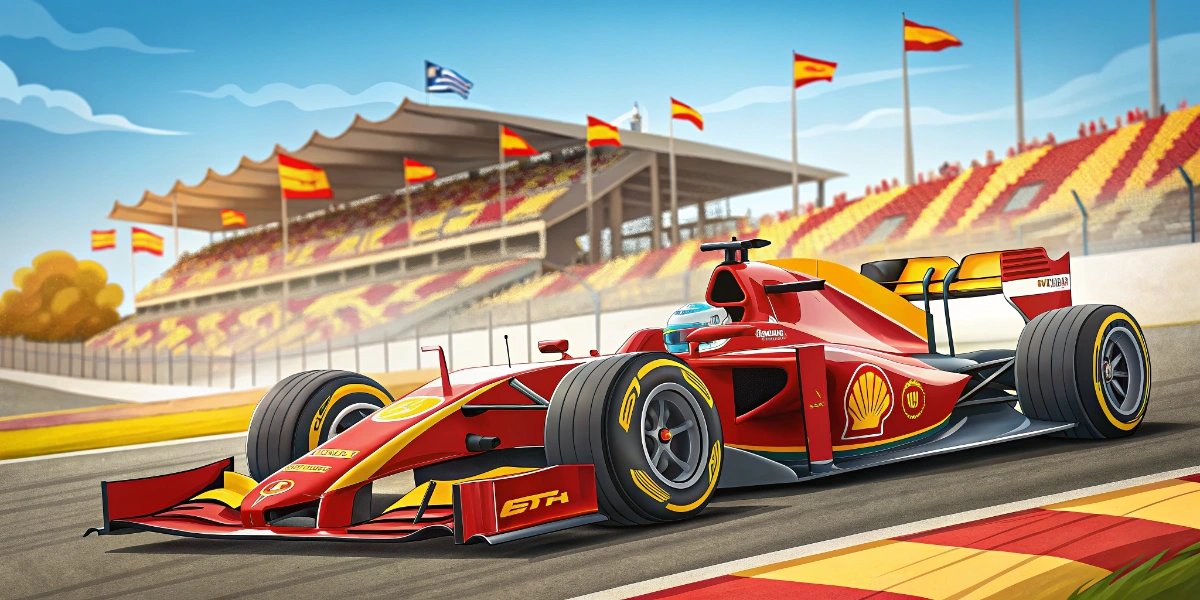
Formula One represents Spain's racing heritage, epitomized by Fernando Alonso—two-time world champion (2005, 2006), regarded as one of F1's all-time greats. Born in Oviedo (small city in Asturias, northern Spain), Alonso reached F1's pinnacle despite Spain having no major racing tradition. His success inspired Spanish F1 interest—Circuit de Catalunya (Barcelona) hosts Spanish Grand Prix attracting 150,000+ fans. Alonso continues racing into his 40s, demonstrating longevity and competitiveness unusual in physically demanding sport.
Why It Matters
Underdog inspiration: Alonso came from working-class family in small northern city—far from F1's typical elite European origins (Monaco, Switzerland, UK boarding schools). His father built first go-kart from parts; family couldn't afford expensive karting circuits wealthy competitors accessed. Alonso's success shows talent overcoming limited resources—very Spanish narrative of scrappy determination defeating privileged opponents. He's national hero because he succeeded despite disadvantages, not because of advantages.
Racing vs. daily driving paradox: Spain loves F1 racing (Alonso's success, Circuit de Catalunya) yet has lower car ownership than northern Europe and emphasizes public transit. Like Netherlands (Max Verstappen racing, bike culture thriving), Spain separates sport from daily transport. Spaniards enjoy watching Alonso race at 300 km/h but take metro to work. It's healthy relationship with cars: appreciate racing's excitement and engineering without needing fast car for daily life. Entertainment and practicality serve different purposes.
Competitive spirit: Alonso embodies Spanish competitiveness and pride—never backing down, fighting despite inferior equipment (Alonso drove uncompetitive cars for years but extracted maximum performance), and demanding respect. He's vocal, passionate, sometimes controversial—very Spanish character refusing to accept mediocrity quietly. Spanish fans love his fighting spirit even when he doesn't win—effort and passion matter as much as results. It's cultural value on trying hard and never surrendering.
Cultural Significance
Alonso represents Spain's integration into global elite through individual excellence. Like Rafael Nadal (tennis) or Pau Gasol (basketball), Alonso proved Spaniards could dominate globally in sports requiring resources Spain lacked historically. His success coincided with Spain's broader emergence—EU integration, economic growth, infrastructure modernization—showing Spain becoming global player. Alonso's championships (2005-2006) came just as Spain hit peak economic growth before 2008 crisis. He symbolizes Spain's brief moment as rising star before financial challenges returned.
Fun Facts
- Fernando Alonso is two-time F1 world champion (2005, 2006)—still racing at age 43
- Circuit de Catalunya hosts Spanish Grand Prix—150,000+ fans attend, many camping overnight
- Alonso attempted "Triple Crown" (Monaco GP, Indy 500, Le Mans)—achieved 2 of 3
- Spanish F1 interest surged with Alonso—TV viewership increased 300% during his prime
- Alonso drove for Renault, McLaren, Ferrari—three legendary F1 teams
Teaching Moment
F1 teaches that passion for something (racing) doesn't require daily participation—you can love watching F1 while taking metro to work. Kids learn that entertainment and practical life serve different purposes: racing is exciting sport, but impractical for daily transport. Also demonstrates meritocracy's appeal: Alonso from small city beating wealthy competitors shows talent overcoming barriers. His longevity (racing into 40s) teaches that excellence requires sustained effort and adaptation—staying competitive as sport evolves demands continuous improvement.
What These Vehicles Reveal About Spanish Culture
Rapid Transformation Within Single Generation
Spain transformed from isolated dictatorship (Franco died 1975) to European leader (EU integration 1986, AVE launched 1992, Barcelona Olympics 1992, Madrid European Capital of Culture 1992, Madrid/Barcelona metros expanded dramatically 1995-2007). This happened within 40 years—living Spaniards experienced entire transformation from third-world infrastructure to first-world excellence. AVE symbolizes this: from no high-speed rail to longest European network faster than parents could imagine. Rapid change created generational divide—grandparents remember Spain without highways; grandchildren assume world-class infrastructure is normal.
Regional Diversity and Identity Politics
Barcelona's trams reflecting Catalan European orientation versus Madrid's centralized metro shows regional differences. Catalonia emphasizes autonomy and distinction from Madrid; Andalusia preserves horse carriages showcasing southern romanticism; Basque Country (not covered but relevant) has own distinct transport identity. Spain isn't unified nation—it's collection of regions with distinct languages, cultures, and priorities. Transport infrastructure becomes arena for expressing regional identity versus central authority. Even metro announcements (Catalan-first in Barcelona, Spanish-only in Madrid) reflect identity politics.
Mediterranean Lifestyle Embedded in Infrastructure
Siesta culture affects traffic patterns—metro ridership drops mid-afternoon, taxi shifts adjust to late-night culture. Late dinners (10pm), nightlife (bars closing 3am), and metro running until 1:30am enable social culture central to Spanish life. Scooters facilitate warm-weather outdoor socializing; trams and metros allow bar-hopping without driving. Infrastructure supports Mediterranean lifestyle—prioritizing social life, leisure, and quality of life over economic productivity. Northern Europe optimizes for work; Spain optimizes for life.
EU Integration Success and Dependency
AVE, metro expansions, and modern infrastructure were heavily EU-funded—wealthier northern countries subsidized Spanish modernization. This created spectacular results (world-class infrastructure) but also dependency—when EU funding reduced after 2008 financial crisis, infrastructure expansion stopped abruptly. Spain's success story has asterisk: it required external investment, raising questions about sustainability and independence. Also creates EU appreciation—many Spaniards see EU positively (funding infrastructure, opening opportunities) unlike some northern European skepticism.
Tradition and Modernity Coexisting
Horse carriages operating alongside AVE trains, medieval city centers served by modern metros, historic plazas accessed by contemporary trams—Spain embraces modernity without abandoning tradition (or performance of tradition). This isn't contradiction but intentional choice: modernize where it matters (transport efficiency, infrastructure quality) while preserving what tourists value (historic aesthetics, romantic traditions). It's pragmatic approach: use modernity's tools to preserve tradition's value.
Class and Democracy in Public Space
Spanish public transit is used by all classes—executives and students share metro cars, reflecting democratic public space. Unlike some countries where transit is "poor people's option," Spanish metro and trains are fastest, most convenient choice for everyone. This creates social mixing and shared experience across class lines. Conversely, car ownership remains status symbol (especially luxury cars), but metro use doesn't signal poverty. Public transit's quality creates democracy in motion.
Historical Context: From Isolation to Integration
Franco Era (1939-1975): Isolation and Underdevelopment
Francisco Franco ruled Spain 1939-1975 after Spanish Civil War—isolating Spain from Europe and maintaining agricultural economy. Infrastructure was poor: few highways, slow trains, limited urban transit. Spain was "different" (Franco propaganda slogan: "España es diferente")—meaning isolated, traditional, behind European neighbors. Car ownership was luxury; most Spaniards used buses or trains when traveling. Franco's death (1975) opened possibility for transformation.
Transition to Democracy (1975-1985): Opening Up
Spain transitioned to democracy 1975-1982—remarkable peaceful transformation from dictatorship to constitutional monarchy with elected parliament. This "Transition" (La Transición) is source of Spanish pride—proving peaceful democratic change possible. Infrastructure remained poor but political opening created possibility. Spain sought European integration—joining NATO (1982) and preparing for European Economic Community membership. Modernization became national project—catching up to Europe after 40 years isolation.
EU Integration (1986-1992): Transformation Begins
Spain joined European Economic Community (1986)—unlocking massive EU structural funds for infrastructure. Spanish government invested heavily in modernization: highways, AVE high-speed rail, metro expansions, airports. Barcelona Olympics (1992) showcased transformed Spain—modern infrastructure, efficient transit, world-class facilities. AVE Madrid-Seville launched (1992) symbolizing Spain's arrival as modern European nation. Spain went from isolated periphery to integrated member within single decade.
Growth and Expansion (1992-2008): Building Boom
Spain experienced explosive growth 1995-2008—fueled by EU investment, construction boom, and economic optimism. Madrid Metro doubled in size (1995-2007); AVE network expanded connecting all major cities; Barcelona built new trams. This was Spain's golden age—full employment, infrastructure rivaling anyone, confident European integration. Spanish construction companies became global players. Economic bubble inflated but infrastructure built during this period remains valuable legacy.
Crisis and Recovery (2008-Present): Testing Infrastructure
2008 financial crisis hit Spain hard—unemployment reached 26%, construction collapsed, EU funding reduced. Infrastructure expansion stopped abruptly—many planned projects canceled. But infrastructure built during boom years proved value: AVE continued operating profitably, metros maintained service despite budget cuts. Spain's modern infrastructure helped recovery—attracting tourists and businesses. Today, Spain navigates between past debt and future opportunities, but infrastructure remains world-class even if expansion paused.
Learning Opportunities for Kids
Rapid National Transformation
Spain transformed within living memory—grandparents remember Spain without highways or high-speed trains. Kids can learn that national development happens at human timescales, not geological—societies can change dramatically within decades if political will and investment align. Also teaches that transformation requires external support: Spain's modernization was partly EU-funded, showing international cooperation's benefits. No nation develops completely independently.
Regional Identity Within National Framework
Spanish regions (Catalonia, Andalusia, Basque Country) maintain distinct identities despite national government—visible in transport choices, language policies, cultural preservation. Kids learn that unity and diversity coexist: Spain functions as nation while regions preserve autonomy. This balancing act is challenging—Catalonia seeks independence, other regions want greater autonomy—but it shows democracy accommodating diverse identities within shared framework.
Geography Shapes Infrastructure Possibilities
Spain's geography influenced transport choices: Madrid Metro underground because historic center couldn't expand; AVE crossing mountains required engineering excellence; Barcelona trams serving dense city differently than rural Andalusia needs. Kids learn that geography constrains and enables—flat Netherlands suits bikes, mountainous Spain requires trains cutting through peaks. Good infrastructure works with geography, not against it.
Economic Development Visible in Vehicles
Grandparents remember when cars were luxuries; parents grew up with basic cars (SEAT 600); current generation assumes modern cars and excellent transit. Vehicle evolution mirrors economic development—from scarcity (few cars) to basic mobility (affordable SEATs) to quality infrastructure (AVE, modern metros). Kids learn economic progress through tangible changes: what was luxury becomes normal, what seemed impossible becomes routine. Progress is generational accumulation.
Discussion Questions for Parents and Kids
- Spain transformed from dictatorship to democracy to EU leader in 40 years. What enabled such rapid change? Could it happen elsewhere?
- Why might Catalan Barcelona choose trams while Castilian Madrid chose buses? How does infrastructure reflect regional identity?
- Is preserving horse carriages in Seville worth it if horses suffer from heat and traffic? How do we balance tradition, animal welfare, and economics?
- Fernando Alonso loves racing, yet most Spaniards prefer metro to driving. Is loving speed separate from daily transport choices? Should they be?
- Spain's infrastructure was EU-funded. Does external financial help enable or create dependency? What happens when funding ends?
- How does siesta culture appear in transport patterns? Would changing work schedules (eliminating siesta) require redesigning infrastructure?
Explore European Vehicle Cultures
Spain is part of our European regional series. Each country reveals different transport philosophy:
- Netherlands - Bike-first infrastructure and cargo bikes
- Germany - Autobahn engineering excellence
- France - TGV trains and urban elegance
- Italy - Scooter culture and passionate driving
- United Kingdom - Double-decker heritage
- Scandinavia - Winter innovation and sustainability
See complete overview at World Vehicles for Kids: Complete Guide.
App Connection: Learning About Transformation
In Talk & Listen, children learn vehicle names and sounds. Understanding that Spain transformed rapidly—from horse carriages to high-speed trains in one generation—teaches that change happens at human timescales. Kids learning "AVE train" or "metro" are learning about Spain's modernization story. Vehicle vocabulary becomes entry point for understanding national transformation, regional diversity, and how societies evolve through intentional choices about infrastructure and priorities.
 Frequently Asked Questions
 Ad-free & offline ready