Why Italian Vehicles Emphasize Passion and Style
Italy approaches vehicles as art and emotion, not just engineering. Where Germany prizes precision and France values elegance, Italy celebrates passion—"la passione" for beautiful design, joyful driving, and vehicles with soul. Italian designers ask: "Does it stir emotion?" rather than "Is it the most efficient?" This creates vehicles people love, not just use. The Vespa became symbol of freedom and style. The Fiat 500 inspired affection beyond its tiny size. Ferrari built not the fastest cars (often), but the most passionate.
What makes Italian vehicles distinctive is adaptation to Italy's unique constraints—medieval cities with impossibly narrow streets require tiny vehicles. The Fiat 500 and Ape three-wheeler weren't arbitrary designs; they were solutions to navigating 800-year-old city centers where modern cars don't fit. But Italians made necessity stylish—tiny became cute, practical became iconic, constraints became character.
For kids, Italian vehicles show that design constraints inspire creativity. When streets are narrow, make small beautiful. When life is hard (postwar poverty), create joyful vehicles (Vespa, 500). When passion matters more than perfection, build Ferraris. Let's explore eight vehicles that show Italian style and passion.
1. Vespa Scooter - The Icon of Italian Style
The Vespa (Italian for "wasp") launched in 1946, becoming one of automotive history's most iconic designs. Created by Piaggio, an airplane manufacturer converting to peacetime production, it was designed for affordability, practicality, and style. The distinctive curvy body, step-through frame (no crossbar to swing leg over), and ease of riding made scooters accessible to everyone, especially women in skirts.
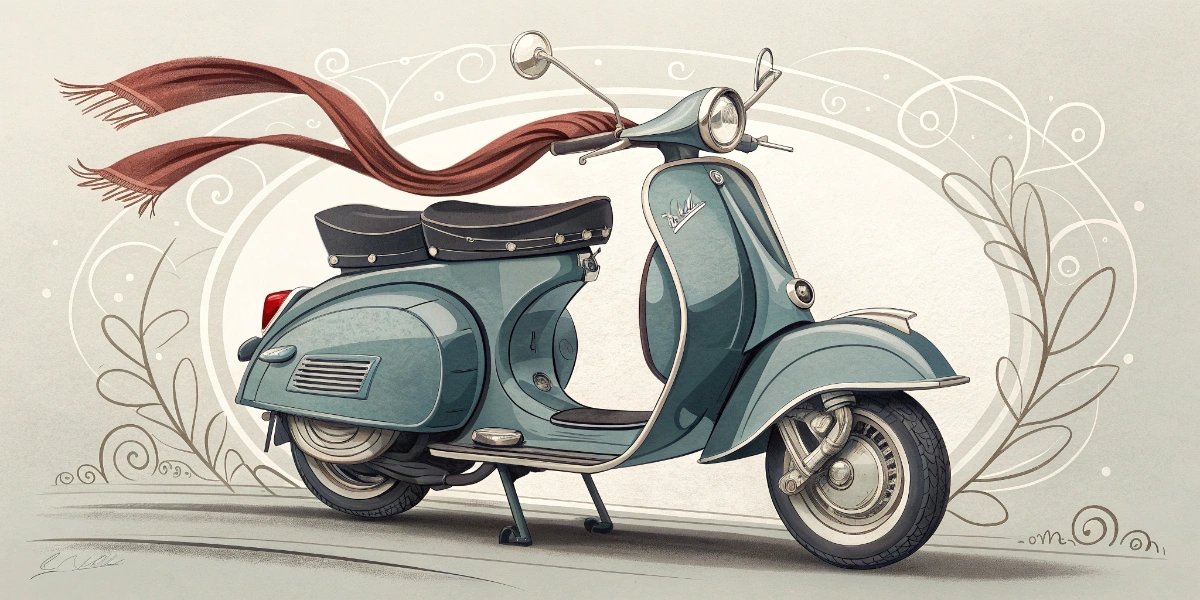
What makes it special: The Vespa revolutionized urban mobility—offering personal transport cheaper than cars, easier to park, and stylish enough to ride proudly. The monocoque steel body (aircraft-influenced—body is structure, no separate frame) protects rider from dirt and weather. Small wheels navigate cobblestones well, and simple mechanics mean easy repairs. But the magic is style—riding a Vespa makes you feel cool. It became symbol of Italian postwar recovery, "la dolce vita" lifestyle, and youthful rebellion.
Cultural significance: The Vespa represents Italian design genius and cultural export. It appeared in films (Roman Holiday with Audrey Hepburn made Vespa internationally famous), music, and art. Owning a Vespa meant freedom—young people could travel, couples could date, workers could commute. It democratized mobility with style. The Vespa shows Italian belief that practical things should be beautiful—why make ugly scooter when beautiful one works just as well?
Fun fact for kids: The Vespa got its name because it buzzes like a wasp! When company president Enrico Piaggio first saw the prototype, he said: "It looks like a wasp!" (Vespa in Italian). The design does resemble wasp—narrow "waist" between front and rear, curves suggesting insect body. The name stuck. Over 19 million Vespas have been built since 1946—proving that good design lasts generations. Many Vespas from 1960s still run today!
Speech sounds: "Vespa scooter" has /v/, /s/, /p/, /sk/, /t/, and /r/ sounds. Italian pronunciation (VEH-spah) with rolled "r" teaches that Italian pronunciation is musical and expressive.
For a simple, picture-led introduction to scooters, you can also visit the scooter vehicle page together for basic facts and visuals.
2. Fiat 500 (Cinquecento) - The Tiny Icon
The Fiat 500 (Cinquecento, pronounced "cheen-kwe-CHEN-toh") is tiny car—under 10 feet long, barely 5 feet wide—designed in 1957 to motorize postwar Italy. It fit four adults (barely), had tiny two-cylinder engine (13 horsepower!), and cost about $500 new. Over 3.8 million were built through 1975. The modern retro-styled Fiat 500 (2007-present) revived the design for nostalgic appeal.
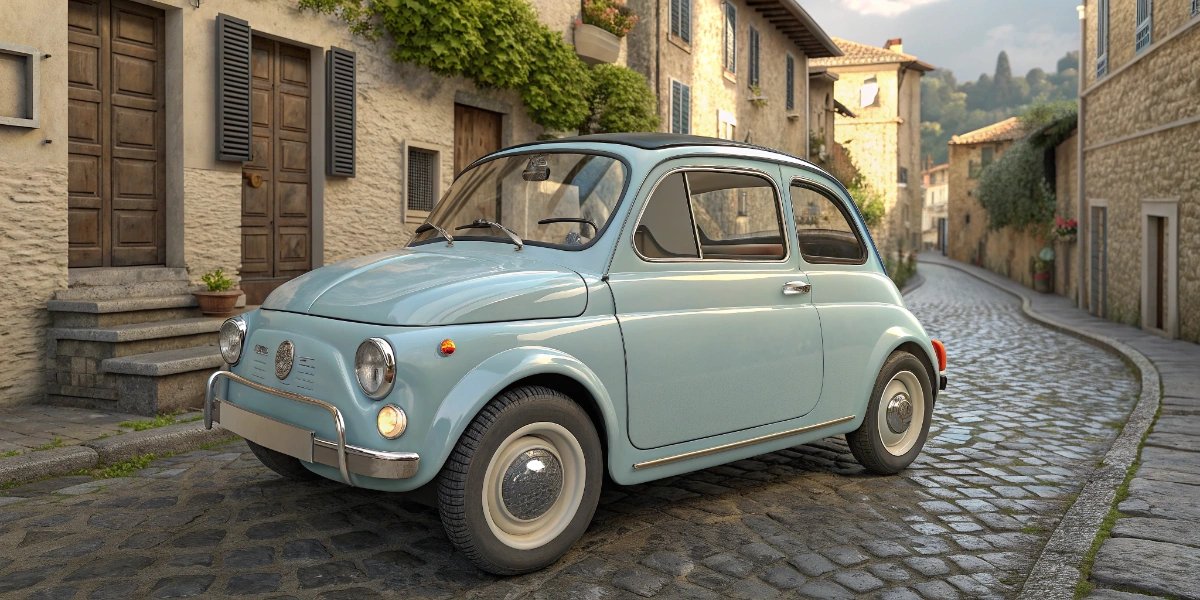
What makes it special: The Fiat 500's tiny size is its superpower—it navigates narrow medieval alleys, parks perpendicular to curb (rear faces street), and turns on tiny radius. Rear-mounted engine saves space (no driveshaft through cabin). Canvas roll-back roof makes tiny cabin feel open. It's minimal engineering executed charmingly—simple mechanics, economical to run, endearing character. The 500 proves small can be lovable, not just acceptable.
Vehicle Length: Tiny Italian Icons vs US Standard
Cultural significance: The Fiat 500 represents Italian postwar miracle—transforming from devastated nation to prosperous society where families could afford cars. It's democratic vehicle—not luxury, just honest transport made delightful through design. The 500 became cultural icon appearing in films, beloved worldwide, and triggering nostalgia for simpler times. Like the Vespa, it shows Italian talent for making everyday objects special.
Fun fact for kids: Fiat 500s are SO tiny they have their own special parking rules in Italian cities! In many Italian cities, 500s can park perpendicular to curb (facing sidewalk) in spots where regular cars must park parallel. This allows more cars to fit on narrow streets. The 500 is shorter than most parking spaces are wide! Some Italian streets are so narrow that two Fiat 500s can barely pass each other—but they can, proving that tiny size was perfect for Italian cities.
Speech sounds: "Fiat 500" has /f/, /t/, /f/, /v/ (500 in Italian is cinquecento) sounds. "Cinquecento" (cheen-kwe-CHEN-toh) teaches Italian number pronunciation—five hundred becomes beautiful word.
When you want a simple, picture-first look at cars, you can also explore the car vehicle page and compare tiny Italian city cars with other car types.
3. Piaggio Ape - The Three-Wheeled Workhorse
The Ape (Italian for "bee," pronounced AH-pay) is three-wheeled commercial vehicle—essentially a Vespa with cargo bed. Launched 1948, it serves as delivery vehicle, mobile shop, and small business workhorse throughout Italy and developing world. Two wheels in front, one in back (opposite of motorcycle trike), with open cargo area or closed van body.
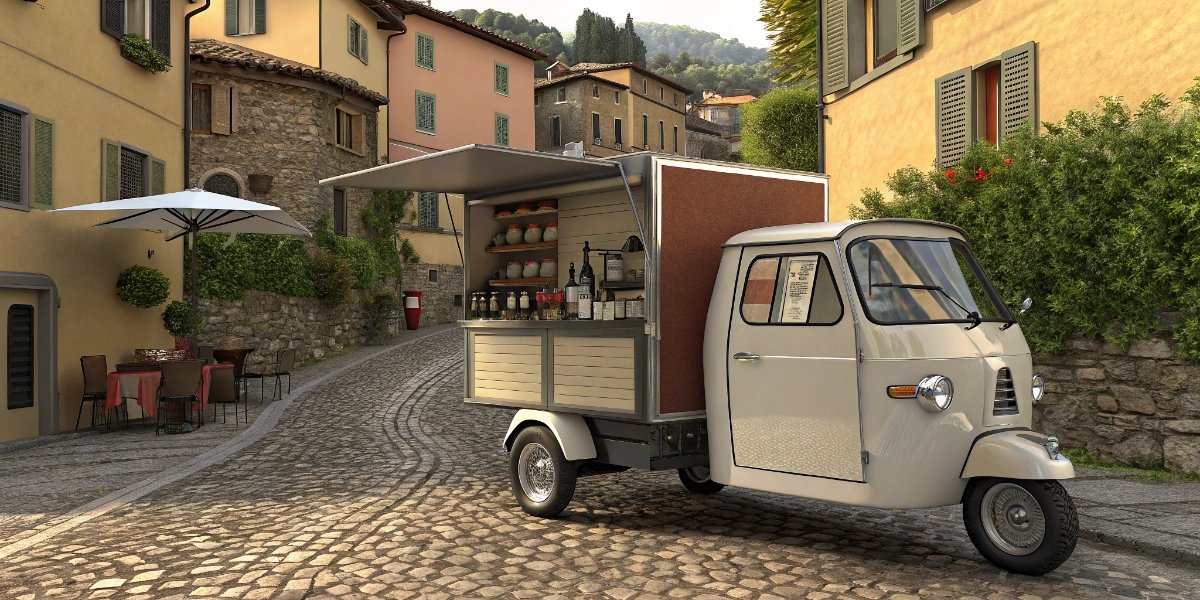
What makes it special: The Ape is perfectly sized for Italian village life—narrow enough for tiny streets, maneuverable as scooter, but carries cargo regular scooter can't. Farmers use them for agricultural work, vendors operate mobile shops (gelato, espresso, pizza), and delivery services navigate historic centers where vans can't go. Modern Apes are more powerful but retain charming character. They're utilitarian vehicles made delightful—very Italian approach.
Cultural significance: The Ape represents Italian small business culture and resourcefulness. It's entrepreneurship on three wheels—enabling one-person businesses without expensive vehicles. Mobile espresso bars, gelato carts, and pizza trucks based on Apes are part of Italian street life. The Ape shows Italian talent for creating practical solutions with character—it's not just functional three-wheeler; it's charming commercial vehicle.
Fun fact for kids: Ape three-wheelers serve as mobile restaurants! In Italy, you'll find Apes converted to espresso bars (full coffee machine mounted in back), gelato shops (freezers and display cases), pizza ovens (wood-fired ovens built into cargo area), and even bars serving cocktails. They're entire businesses on three wheels! Some are elaborately decorated and customized. It's Italian creativity—turning tiny commercial vehicle into traveling restaurant.
Speech sounds: "Piaggio Ape" has /p/, /dʒ/ (j sound), /p/ sounds. "Ape" (AH-pay) pronunciation teaches that Italian "e" at word end is pronounced—not silent like English.
4. Ferrari - The Passion Machine
Ferrari represents Italian automotive passion—cars built for emotion, not just speed. Founded by Enzo Ferrari in 1939 (first Ferrari-branded car 1947), the company creates expensive sports cars emphasizing racing heritage, distinctive engine sound, and emotional connection. The prancing horse logo and signature red ("Rosso Corsa") are automotive icons. Ferrari means passion for driving, not just luxury transport.
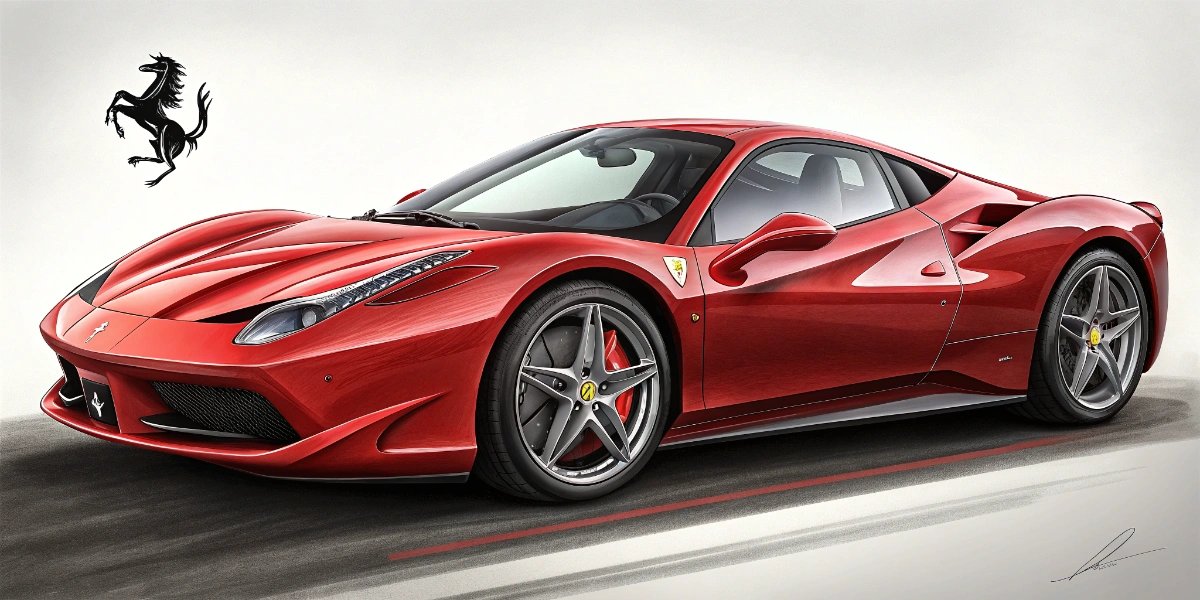
What makes it special: Ferrari engineering prioritizes emotion—engines scream (high RPMs, distinctive sound), styling is dramatic (low, wide, aggressive), and driving experience is visceral. Ferraris aren't the most reliable or practical—they're passionate. Racing heritage (Formula 1 dominance) infuses everything. Hand-built aspects, limited production, and emotional design create cars people love irrationally. It's Italian passion applied to automobiles—why be sensible when you can be thrilling?
Cultural significance: Ferrari represents Italian excellence and passion—showing Italy can compete with anyone when emotion and craft combine. Ferrari success in Formula 1 is national pride. Owning Ferrari is dream for car enthusiasts worldwide. It proves that small Italian company can dominate luxury market through passion, heritage, and design excellence—not massive scale. Very Italian story of craft and emotion beating industrial efficiency.
Fun fact for kids: Ferrari engines sound different than other cars because they're built to sing! Ferrari engineers tune exhausts to create specific sounds—like musical instruments. High-revving V8s and V12s produce distinctive wail. Some Ferraris redline at 9,000 RPM (most cars redline at 6,000)—engine spins so fast it screams. Engineers call it "Ferrari sound"—mechanical symphony. It's engineering for emotion, not just performance. The sound makes drivers smile even sitting still!
Speech sounds: "Ferrari" has /f/, /r/, /r/ (rolled Italian r) sounds. Italian pronunciation (feh-RAH-ree) with rolled "r" teaches that Italian emphasizes beautiful pronunciation—even car names sound musical.
5. Italian Bicycle (Bicicletta) - The City Navigator
Bicycles are essential transport in Italian cities—navigating narrow streets, avoiding traffic, and parking easily in crowded historic centers. Traditional Italian city bikes (bici da città) are practical—upright riding position, fenders protecting from rain, baskets for shopping, simple mechanics. Cities like Ferrara, Bolzano, and Ravenna have extensive bike culture with dedicated lanes and bike-friendly policies.
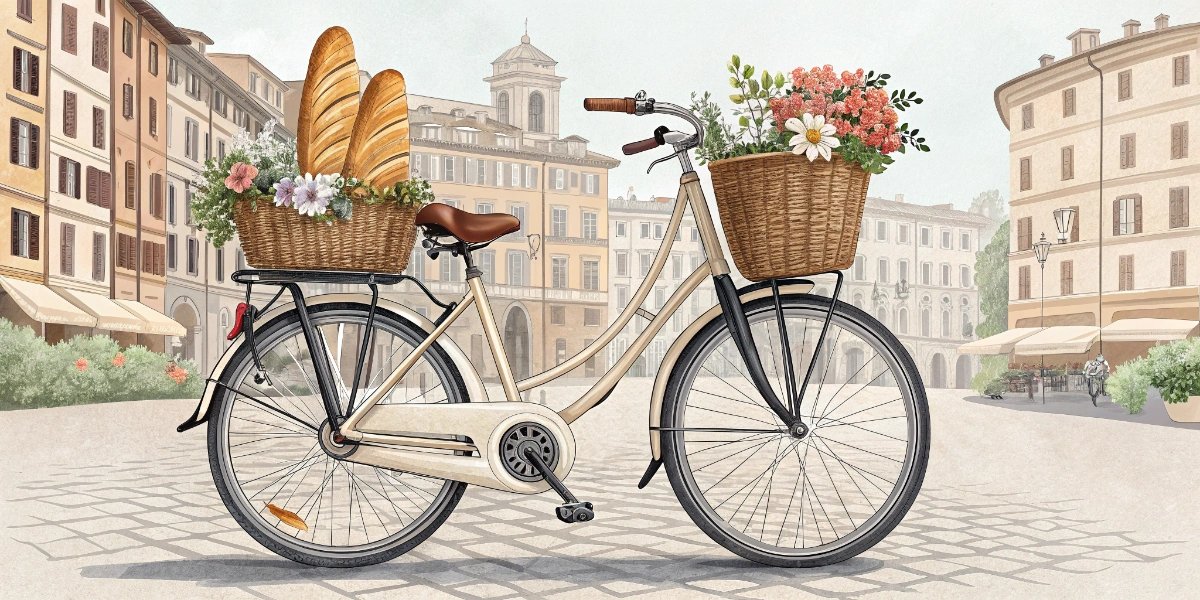
What makes it special: Italian city bikes prioritize comfort over speed—upright position for visibility and comfort, wide saddles, internal hub gears (protected from weather), and chainguards (protecting clothes from grease). Many are classic designs—vintage Bianchis and vintage-style modern bikes. Italians bike in regular clothes (not athletic gear)—to work, shopping, meeting friends. It's transportation, not sport. Style matters—bikes match outfits, accessories are fashionable.
Cultural significance: Bicycles represent Italian urban practicality and connection to human-scale living. In cities where cars barely fit, bikes make sense. Cycling culture is casual—not serious sport but daily transport. This reflects Italian approach to mobility—functional but stylish, practical but enjoyable. Biking to piazza for espresso is lifestyle, not exercise. It's "la dolce vita" on two wheels.
Fun fact for kids: Some Italian cities have more bikes than cars! Ferrara (medieval city) has bike-to-population ratio over 1:1—more bikes than people! The historic center is mostly car-free—narrow streets, bike lanes, and flat terrain make cycling perfect. Students, grandparents, business people—everyone bikes. The city provided incentive programs for buying bikes. It shows that when cities prioritize bikes over cars, people respond. Cycling becomes culture, not just transport.
Speech sounds: "Italian bicycle" has /t/, /l/, /b/, /s/, /k/, /l/ sounds. "Bici" (BEE-chee, Italian for bike) teaches that Italian words often end in vowels creating musical quality.
To compare Italian city bikes with other bicycles, you can visit the bicycle vehicle page for a simple overview.
6. Alfa Romeo - The Driver's Car
Alfa Romeo represents Italian driving passion—cars for people who love driving, not just going places. Founded 1910, Alfa Romeo builds sporty sedans and coupes emphasizing handling, driver engagement, and distinctive Italian character. The triangular badge with Milan cross and crowned serpent (biscione) is historic emblem. Alfas aren't most reliable but are beloved for character and driving joy.
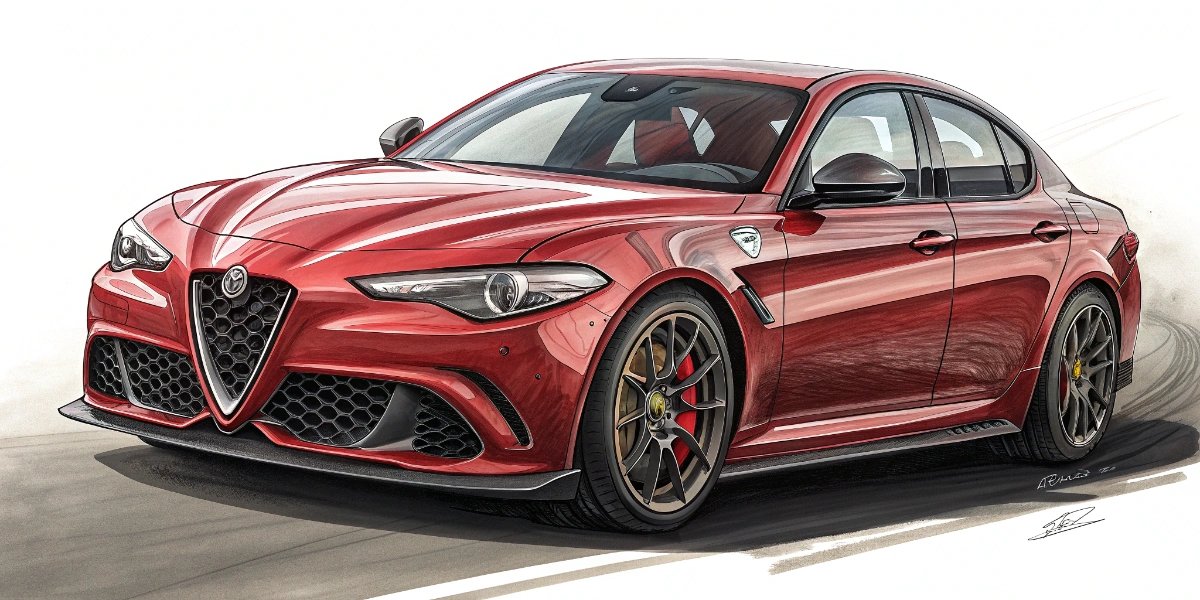
What makes it special: Alfa Romeo engineering prioritizes driver connection—precise steering, balanced chassis, responsive engines, and involving driving experience. They're not luxury cars (like Mercedes) or pure performance (like Ferrari)—they're drivers' cars offering engagement and character. Design is distinctively Italian—emotional curves, dramatic faces, style without pretension. Alfas make daily driving feel special—even grocery run becomes driving experience.
Cultural significance: Alfa Romeo represents Italian automotive soul—passion over perfection, engagement over efficiency. Owners accept occasional quirks because cars provide joy. The saying: "You're not a true petrolhead until you've owned an Alfa Romeo" reflects passionate following. Alfa represents Italian belief that life should be enjoyed, not just endured—even commuting should spark joy. Very Italian philosophy applied to automobiles.
Fun fact for kids: Alfa Romeo has special racing heritage—Enzo Ferrari actually started his career racing Alfas before founding Ferrari! In 1920s-30s, Alfa Romeo dominated racing. Enzo Ferrari managed Alfa racing team (Scuderia Ferrari) before creating his own cars. The connection shows Italian automotive passion runs deep—legends building on legends. Today, Alfas still emphasize driving pleasure over pure practicality. They're cars for people who love driving, not just need transport.
Speech sounds: "Alfa Romeo" has /l/, /f/, /r/, /m/ sounds. Italian pronunciation (AHL-fah roh-MEH-oh) teaches that Italian words emphasize vowels creating flowing, musical speech.
7. Trenitalia Train (Frecciarossa) - The Intercity Connector
Trenitalia operates Italy's national rail network, including high-speed Frecciarossa ("Red Arrow") trains reaching 190 mph. Trains connect Italy's length—Milan to Rome (3 hours), Rome to Naples (1 hour), Venice to Florence (2 hours). Italian trains blend efficiency with style—modern trains have stylish interiors, frequent service, and reasonable fares making trains preferred over driving long distances.
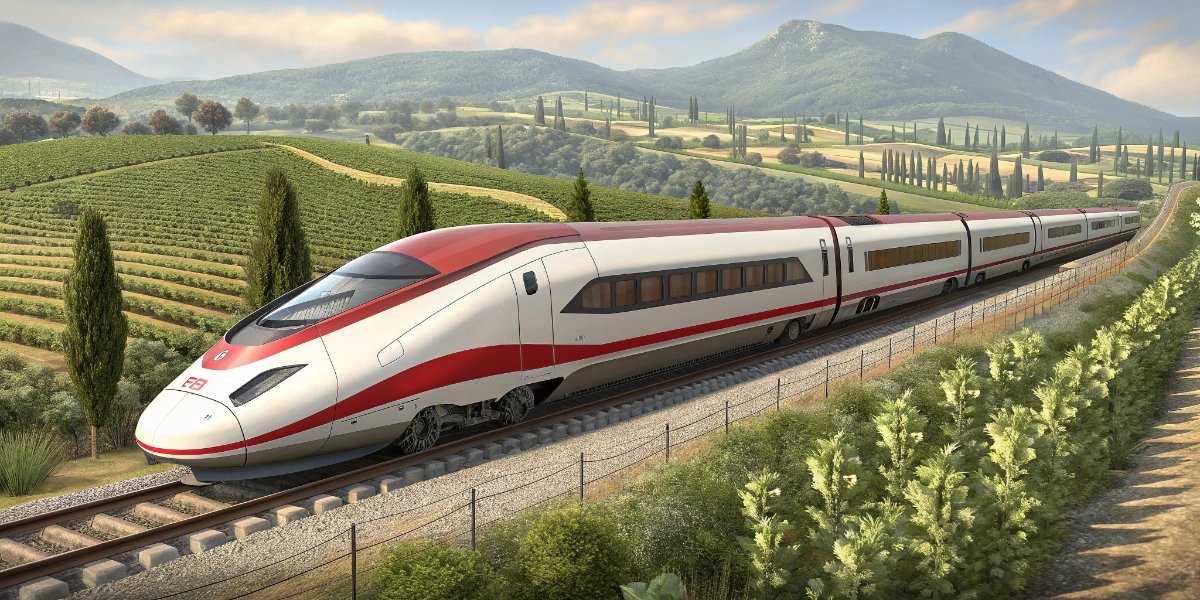
What makes it special: Italian high-speed trains combine engineering (speed, punctuality) with Italian style (interior design, food service, aesthetics). Frecciarossa trains have leather seats, ambient lighting, and restaurant cars serving Italian cuisine. Regional trains connect smaller towns, allowing car-free tourism through Italian landscapes. Integration with local transit means seamless connections—train to metro to bus with one ticket.
Cultural significance: Trains represent Italian connectivity and modernization—linking north and south, cities and countryside, past and future. High-speed trains show Italy competing with Northern European efficiency while maintaining Italian character. Taking train through Italian countryside—passing vineyards, hilltop villages, coastal vistas—is experiencing Italy's beauty while traveling efficiently. It's practical transportation made memorable—very Italian.
Fun fact for kids: Italian trains have restaurant cars serving real Italian food! Not just snacks—proper meals with pasta, pizza, espresso, and wine (for adults). Some routes have regional specialties matching area you're traveling through. The Frecciarossa trains have partnership with Italian chefs creating menus. It's taking Italian dining culture seriously even on trains. Eating well matters to Italians—even when traveling at 190 mph!
Speech sounds: "Trenitalia train" has /tr/, /n/, /t/, /l/, /tr/, /n/ sounds. "Trenitalia" (treh-nee-TAH-lee-ah) combines "treno" (train) and "Italia"—compound word meaning Italian trains.
8. Polizia Car (Auto della Polizia) - The Italian Authority
Italian police (Polizia di Stato) operate distinctive blue cars with white "POLIZIA" lettering and prominent light bars. Fleet includes practical sedans for patrol, high-performance cars for highway duty, and even Lamborghini Huracán for organ transport (legitimately—donated by Lamborghini for emergency medical transport). Police cars represent order in passionate Italy—authority with Italian character.
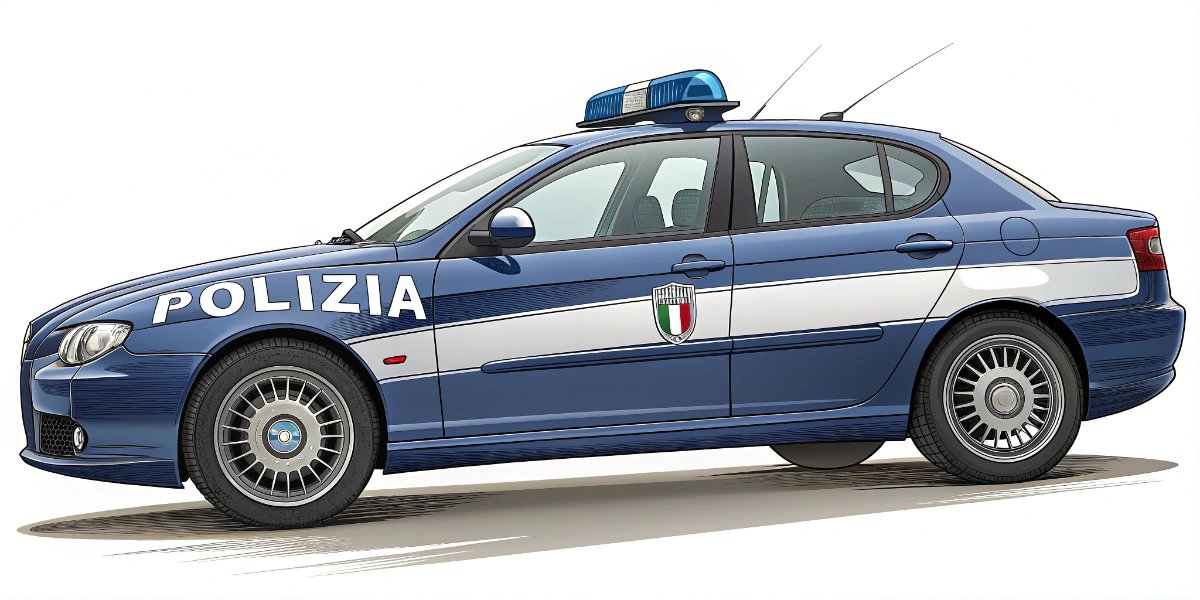
What makes it special: Italian police vehicles reflect Italian values—practical but stylish. Standard patrol cars (Alfa Romeo Giuliettas, Fiat sedans) handle daily policing, but highway patrol uses fast cars (Alfa Romeo Giulias, Subaru WRXs) capable of autostrada speeds. The famous Lamborghini police car (medical transport) shows Italian flair—even emergency services can be distinctive. It's functional with personality—very Italian approach.
Cultural significance: Police cars represent Italian order and style coexisting. Law enforcement is serious but need not be boring—hence blue paint, elegant designs, and high-performance options. Different police forces (Polizia, Carabinieri military police, Guardia di Finanza financial police) have distinctive vehicles and uniforms. It reflects Italian appreciation for aesthetics and tradition even in official functions.
Fun fact for kids: Italian police actually use a Lamborghini Huracán as police car! It's not for chasing criminals—it transports organs for transplant surgeries. The Lamborghini can reach hospitals quickly (can go 200+ mph), has special medical refrigeration for organs, and uses lights/sirens for priority. Lamborghini donated it to police specifically for saving lives. Only in Italy would police receive supercar donation for medical emergencies! It's Italian passion and generosity combined.
Speech sounds: "Polizia car" has /p/, /l/, /ts/ (z in Italian makes "ts" sound), /k/, /r/ sounds. "Polizia" (poh-leet-SEE-ah) teaches Italian pronunciation where "z" can sound like "ts."
Learning Opportunities Through Italian Vehicles
Geography Lessons
Italian vehicles teach geography through adaptation to landscape. Why are Italian vehicles so small? Because medieval cities have narrow streets—built before cars for walking, horses, and carts. Rome, Florence, Venice, Siena—historic centers have alleys barely 6 feet wide. Modern cars don't fit; Fiat 500s and Vespas do. Understanding this teaches that city age determines vehicle needs.
Your child learns that Italy's mountainous terrain (Alps, Apennines) and long peninsula shape create transportation challenges. High-speed trains solve distance problem; tiny vehicles solve narrow street problem; scooters navigate hills efficiently. Geography determines what vehicles make sense—teaching that environment shapes engineering.
Cultural Awareness
Every Italian vehicle reveals cultural values:
- Passion over perfection - Emotion and character matter more than specifications
- Style is essential - Practical things should be beautiful (Vespa, 500, Ferrari)
- Small can be special - Tiny vehicles aren't compromises; they're icons
- Joy in daily life - "La dolce vita" applies even to transportation
- Heritage matters - Racing history, design legacy, artisan craftsmanship valued
These aren't just vehicles—they're expressions of Italian culture. Your child learns that Italian engineering prioritizes emotion: vehicles should make you smile, driving should bring joy, even practical transport can be stylish.
Vocabulary Building
Italian vehicle vocabulary introduces musical language and passionate culture:
- Vespa - Wasp (shape resembles insect)
- Cinquecento - Five hundred (Fiat 500)
- Ape - Bee (three-wheeler buzzes)
- Bici - Bicycle (shortened from bicicletta)
- Frecciarossa - Red arrow (high-speed train)
In Talk & Listen, we include vehicle sounds emphasizing Italian character—Vespa distinctive buzzing, Ferrari engine wail, Fiat 500 tiny engine. These sounds connect to Italian passion and style.
App Connections
Talk & Listen: Practice Italian vehicle sounds—Vespa scooter buzzing (distinctive two-stroke sound), Ferrari engine singing (high-rev passionate wail), tiny Fiat 500 puttering. Learn vocabulary through passionate context: "stylish," "passionate," "joyful," "beautiful."
Create & Play: Kids can design their own Vespa-style scooters with curves and character, create tiny Fiat 500-inspired cars, or build passion-mobile race cars. Italian vehicles inspire emotional design: how would YOU make a scooter that looks like art?
Activity Ideas
Want something to print alongside these? The free printables library has vehicle coloring pages and activity packs — no email required.
- Size challenge: Measure 10 feet (Fiat 500 length)—how tiny is that for a car?
- Narrow street test: Can two objects (representing Fiat 500s) pass in 12-foot space?
- Engine symphony: Compare sounds—Ferrari wail vs. practical car hum
- Italian pronunciation: Practice rolling "r" in "Ferrari," "Rosso," "Romeo"
- Mobile business: Design an Ape-based business—gelato? espresso? pizza?
- Style vs. function: Can something be both practical AND beautiful? (Italian answer: yes!)
- Medieval navigation: Try walking through narrow doorways—like driving narrow streets
Why Italian Vehicles Teach Passion and Beauty
When my toddler said the Vespa looks like a fancy bug, they captured Italian design philosophy—even practical vehicles can have personality and charm. The Vespa isn't just scooter; it's stylish icon. The Fiat 500 isn't just tiny car; it's beloved character. Ferrari isn't just fast; it's passionate. Italian vehicles show that engineering can serve emotion, not just function.
These vehicles teach that constraints inspire creativity. Narrow streets? Make small beautiful (Fiat 500, Ape). Postwar poverty? Create joyful affordability (Vespa). Limited resources? Build with passion (Ferrari). Italian vehicle culture proves that circumstances don't prevent excellence—they inspire distinctive solutions.
Kids appreciate this joy. They learn that transportation can make you smile (Vespa), that tiny can be iconic (500), that passion matters (Ferrari), that style enhances function. Italian vehicles teach that life should be enjoyed—even commuting, even errands, even daily routines deserve beauty and joy. It's "la dolce vita" philosophy applied to wheels.
Explore More World Vehicles
This is part of my World Vehicles series. Already published: Japan, India, UK, Africa, Middle East, Australia, Scandinavia, South America, Southeast Asia, Russia, China, USA, Germany, and France.
For a complete overview across all regions, visit the World Vehicles for Kids: Complete Guide.
Want to explore Italian vehicles interactively? Talk & Listen includes vehicle sounds emphasizing Italian passion and character. In Create & Play, kids can design vehicles inspired by Italian style—from scooters with curves to tiny cars with personality.
You can also give them a quick hands-on game: let them try the free Vehicle Sound Quiz to hear engines and horns, then use the Compare Vehicles tool to put two favorites side by side and talk about which one looks tiniest, loudest, or most exciting.
 Frequently Asked Questions
 Ad-free & offline ready