Why Indian Vehicles Are Unique
India has over 1.4 billion people living in a country one-third the size of the United States. That density creates unique transportation challenges—and brilliant solutions. Indian vehicles reflect resourcefulness: they're compact, adaptable, and often serve multiple purposes. A truck isn't just a truck—it's also mobile advertising, a religious shrine, and folk art canvas.
What strikes kids immediately is the color. Indian vehicles are vibrant—painted trucks, decorated rickshaws, buses covered in marigold garlands during festivals. Transportation isn't purely functional; it's celebratory. Your toddler will love the visual feast of Indian vehicles.
The sounds are equally distinctive: the "putter-putter" of auto rickshaw engines, the "ring-ring" of cycle rickshaw bells, the constant horn honking that creates a unique urban symphony. Let's explore eight vehicles that show how Indian culture approaches movement, community, and creativity.
1. Auto Rickshaw (ऑटो रिक्शा) - The Three-Wheeled Taxi
Auto rickshaws—called "autos," "tuk-tuks," or simply "rickshaws"—are everywhere in Indian cities. These three-wheeled vehicles buzz through traffic like mechanical bees, fitting into spaces regular cars can't access.
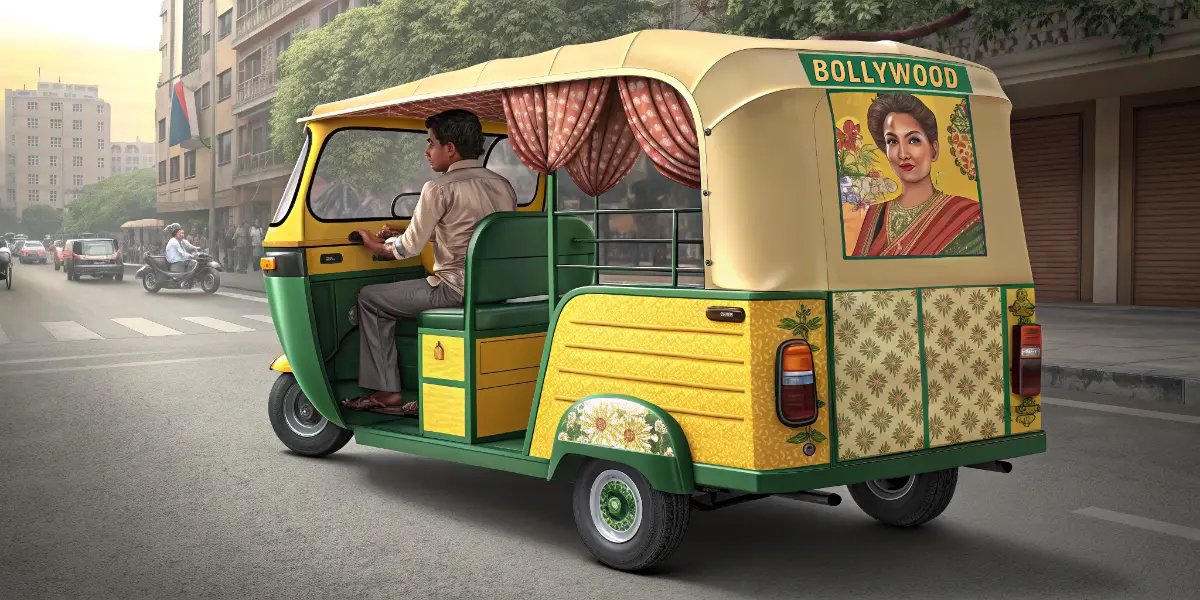
What makes it special: The design is brilliantly simple—a motorcycle front with a covered passenger cabin. They're agile enough for narrow lanes but spacious enough to carry a surprising number of passengers (officially 3, but you'll often see 5-6 squeezed in).
Cultural significance: Auto rickshaws democratize transportation. They're affordable for middle-class families and create employment for millions of drivers. In Mumbai alone, over 250,000 auto rickshaws operate daily.
How Many People Fit? (Official vs Reality)
Fun fact for kids: Drivers often decorate their autos with colorful fabrics, religious symbols, and Bollywood movie posters. Some have sound systems playing music. Each auto has personality!
Speech sounds: "Auto rickshaw" combines vowels beautifully—/ɔ/ (aw), /oʊ/ (oh), /ɪ/ (ih), /ɔ/ (aw). The repeating vowel patterns help toddlers practice vowel discrimination. The /r/ blend in "rickshaw" is great for speech practice.
2. Decorated Truck (ट्रक) - Moving Art Gallery
Indian trucks are impossible to miss. They're covered in elaborate paintings—peacocks, tigers, deities, geometric patterns, and always the phrase "Horn OK Please" on the back. These aren't factory decorations; local artists hand-paint each truck.
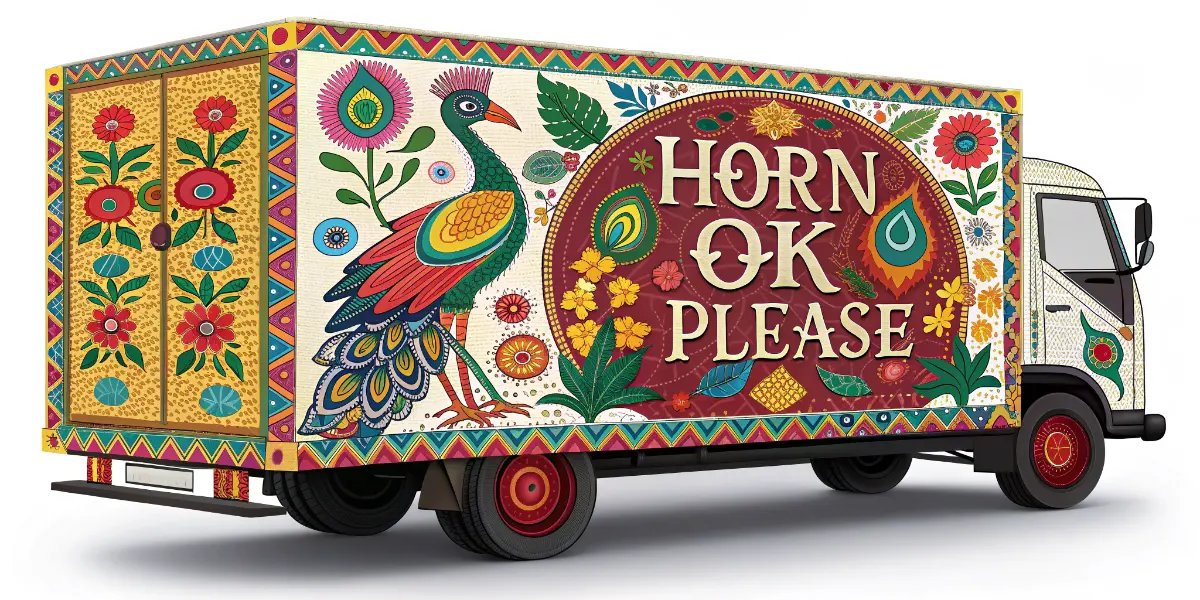
What makes it special: Truck decoration is a folk art tradition called "truck art" or "phool patti" (flower and leaves design). Owners commission artists to paint elaborate designs as both protection (religious symbols) and pride in their vehicle.
Cultural significance: Trucks are drivers' second homes—they spend weeks on the road. Decorating them makes them feel personal and blessed for safe journeys. The art reflects regional styles: Rajasthani trucks have different motifs than Punjab trucks.
Fun fact for kids: "Horn OK Please" painted on truck backs isn't just decoration—it's permission to honk before overtaking! Indian roads rely on horns for communication (not aggression), and this phrase makes it official.
Speech sounds: "Decorated truck" has the /d/ and /t/ sounds—similar but different (voiced vs. unvoiced). This minimal pair helps phonological awareness. In Talk & Listen, we use trucks to teach the /tr/ consonant blend.
3. Cycle Rickshaw (साइकिल रिक्शा) - Human-Powered Taxi
Before auto rickshaws, there were cycle rickshaws—and they're still everywhere. These are bicycles with a covered passenger seat attached to the back, powered entirely by the driver pedaling.
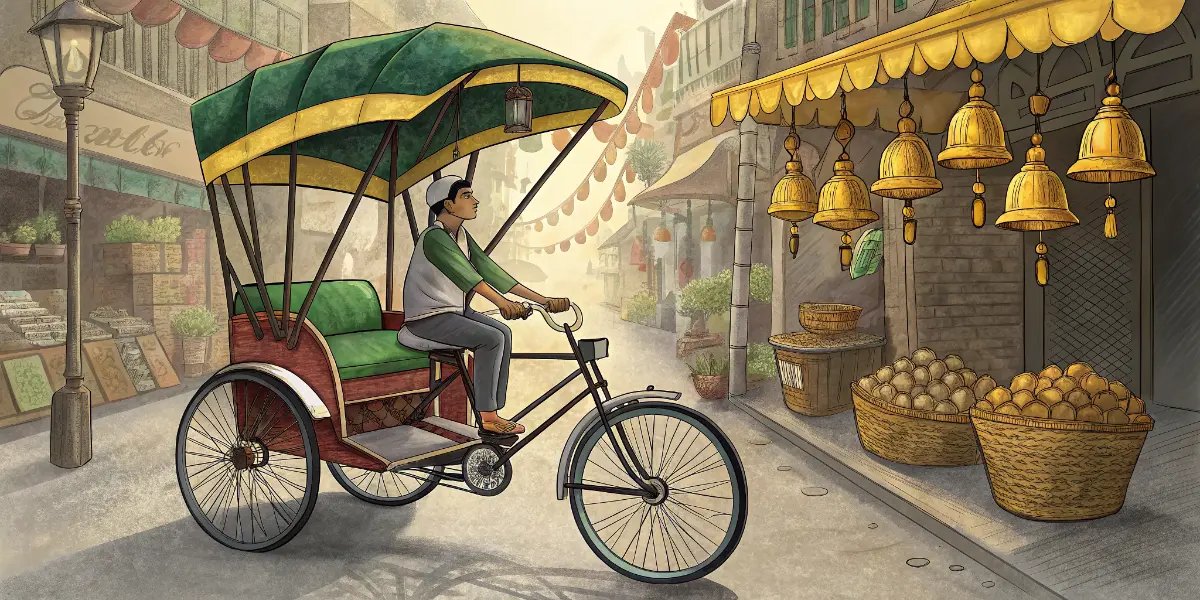
What makes it special: Zero emissions, quiet operation, and ability to navigate the narrowest lanes. Cycle rickshaws can go places even autos can't reach. They're especially popular in Old Delhi's markets where streets are barely 10 feet wide.
Cultural significance: Cycle rickshaws represent sustainable transportation before it was trendy. They also highlight socioeconomic realities—the physical labor required reflects urban inequality, yet they provide crucial income for pullers.
Fun fact for kids: Some cycle rickshaws have bells that play tunes! Drivers ring elaborate bell sequences to announce their arrival. It's like a musical doorbell on wheels.
Speech sounds: "Cycle rickshaw" repeats the /s/ sound (soft 'c' and initial 's') but in different positions. This teaches toddlers that the same sound can appear anywhere in words.
4. Dabbawala Bicycle (डब्बावाला) - Lunch Delivery System
Mumbai's dabbawalas deliver home-cooked lunches to office workers using bicycles, trains, and color-coded containers. It's not just a vehicle—it's a legendary logistics system that Harvard studied for its efficiency.
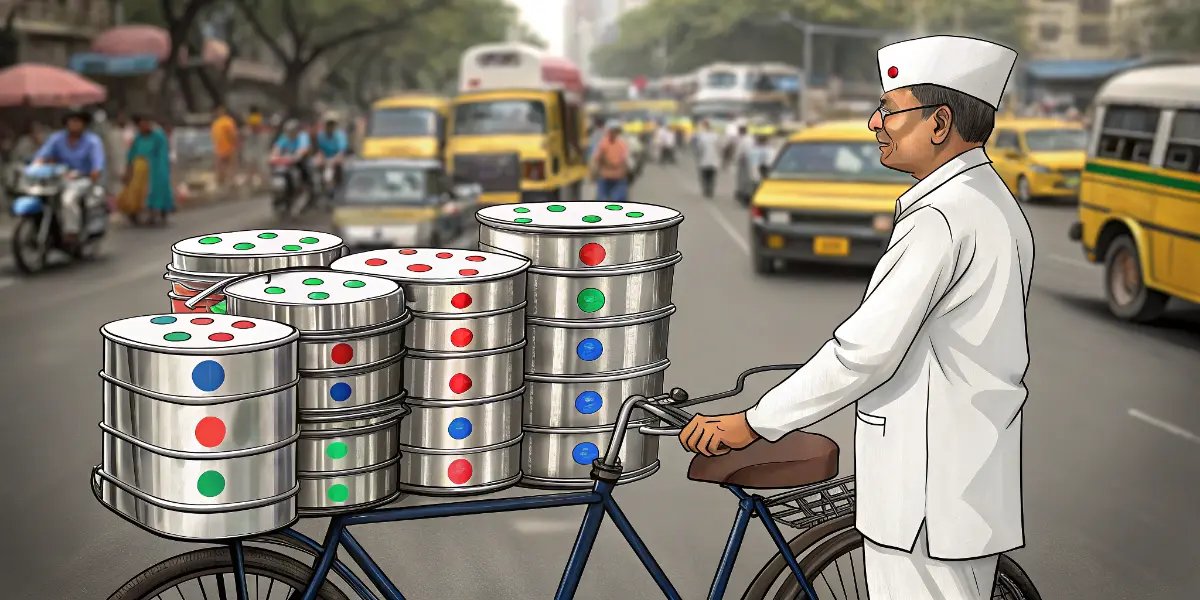
What makes it special: Dabbawalas collect lunch boxes (dabbas) from homes, sort them at train stations using color codes and symbols, then deliver to offices—all in under 3 hours. Their error rate is 1 in 16 million deliveries. Better than Amazon!
Cultural significance: The system relies on trust, teamwork, and a unique coding system that doesn't require literacy. Each dabbawala is an equal partner in a cooperative. Many have worked for 30+ years.
Fun fact for kids: Dabbawalas don't use GPS or smartphones—just color codes, symbols, and memory! Red dot means one neighborhood, blue stripe means another destination. It's a human algorithm.
Speech sounds: "Dabbawala" has repeating /a/ sounds and the /b/ and /w/ consonants. The rhythm is satisfying—dab-ba-WA-la—with stress on the third syllable. Great for prosody practice.
5. Indian Railway Train (भारतीय रेलवे) - The Nation's Lifeline
India's rail network is the world's fourth-largest, carrying over 23 million passengers daily. These aren't sleek bullet trains (though India has some now)—they're colorful, crowded, and absolutely essential to connecting the country.
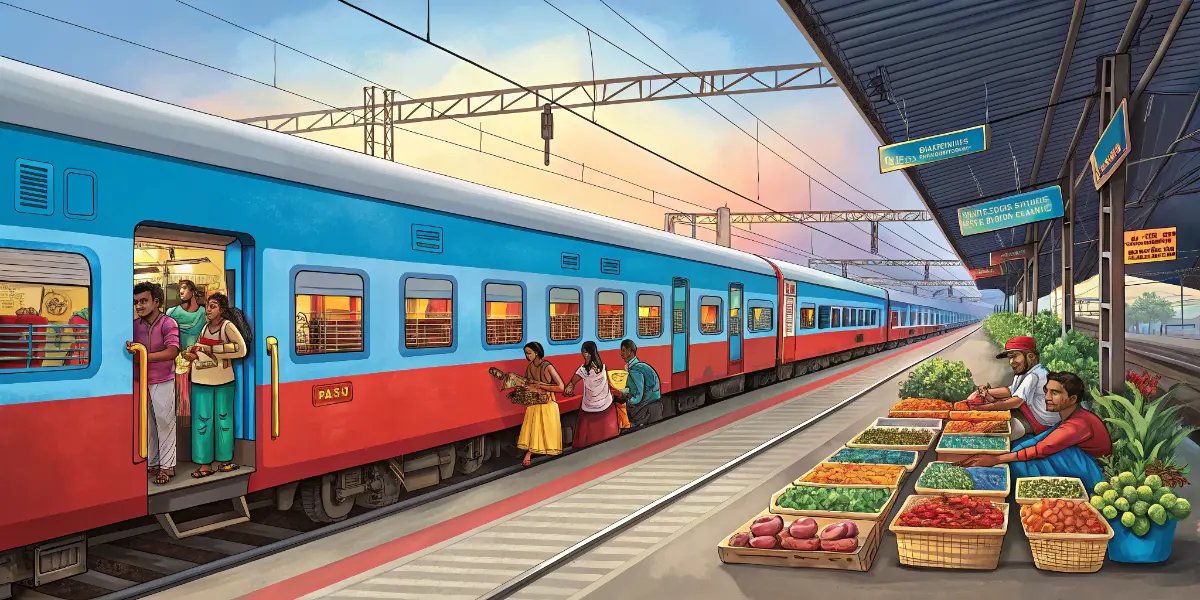
What makes it special: Trains have different classes—from air-conditioned sleeper cars to unreserved general compartments where passengers squeeze together. You'll see vendors walking through selling chai (tea), snacks, and newspapers during stops.
Cultural significance: Trains are the great equalizer—everyone uses them. They're also cultural spaces: people share food, families travel together, friendships form over long journeys. Trains appear in countless Bollywood films as romantic settings.
Fun fact for kids: Some trains have "pantry cars" where cooks prepare fresh meals during the journey! You can order food at one station and it's delivered to your seat hours later at another station via coordinated delivery.
Speech sounds: "Railway" has the /r/ and /w/ approximants—sounds that toddlers master later. The compound word structure (rail + way = pathway for rails) teaches word formation.
If your child wants a simple, picture-first overview of trains, you can also visit the passenger train vehicle page and compare Indian passenger trains with ones in your own country.
6. Ambassador Car (एम्बेसडर) - The Classic Indian Taxi
Though production stopped in 2014, the Ambassador car remains iconic. These boxy white-and-yellow taxis defined Indian city streets for 60 years. Many are still running—a testament to their sturdy build.
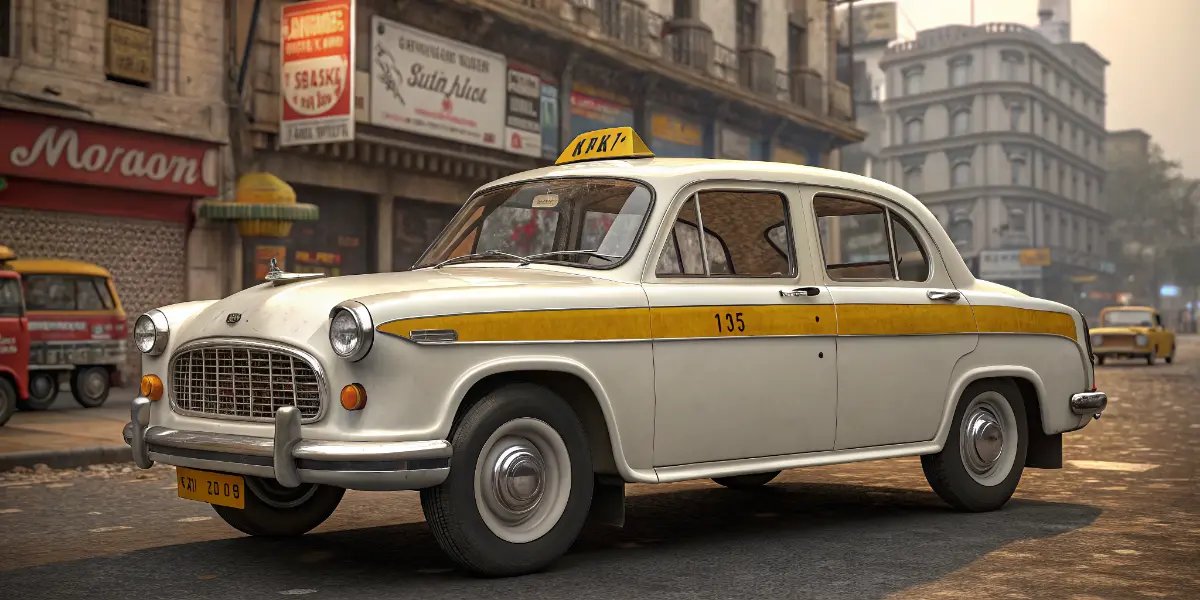
What makes it special: The design barely changed from the 1950s to 2014. High ground clearance handled rough roads, spacious interior fit families comfortably, and simple mechanics meant any roadside mechanic could fix them.
Cultural significance: The Ambassador was the "people's car"—affordable, reliable, and proudly Indian. Government officials used white Ambassadors, taxis were yellow. Seeing one now feels nostalgic, like spotting a classic.
Fun fact for kids: Ambassadors have manual window cranks, no power steering, and bench seats—features that seem ancient now but were standard then. They're time capsules on wheels!
Speech sounds: "Ambassador" is a four-syllable word with alternating stressed syllables (am-BAS-sa-DOR). Great for rhythm and syllable counting—kids can clap each syllable.
7. Mahindra Jeep (महिंद्रा जीप) - Rural Workhorse
Based on the original Willys Jeep design, Mahindra Jeeps are rugged vehicles perfect for India's rural areas. They handle dirt roads, river crossings, and mountain passes with ease.
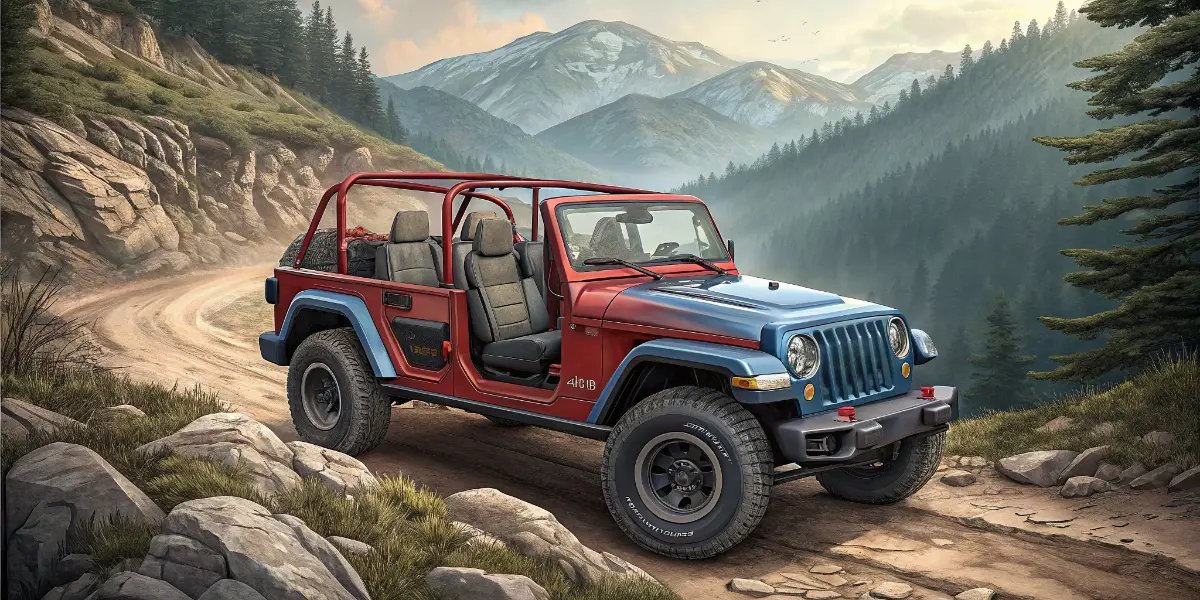
What makes it special: Open sides (or removable canvas covers) allow airflow in hot climates. High ground clearance handles unpaved roads. They're often used as shared taxis in rural areas, carrying 10+ passengers on benches.
Cultural significance: Mahindra started as a tractor company and adapted the Jeep for Indian conditions—stronger suspension, diesel engines, and practical design. It represents Indian engineering adapting foreign technology to local needs.
Fun fact for kids: In hill stations (mountain towns), Jeeps are often painted bright colors and used for adventure tourism. Kids love the open-air ride through mountain roads!
Speech sounds: "Jeep" is a simple word with the /dʒ/ sound (spelled with 'j'). This affricate sound combines /d/ and /ʒ/ into one—a good bridge sound for developing speech.
To show how Jeeps relate to other rugged vehicles, you can open the 4x4 vehicle page and talk about how different countries adapt 4x4s for their own terrain.
8. Camel Cart (ऊंट गाड़ी) - Desert Transportation
In Rajasthan's desert regions, camel-drawn carts remain practical transportation. These wooden carts, pulled by decorated camels, carry goods and passengers across sandy terrain where vehicles struggle.
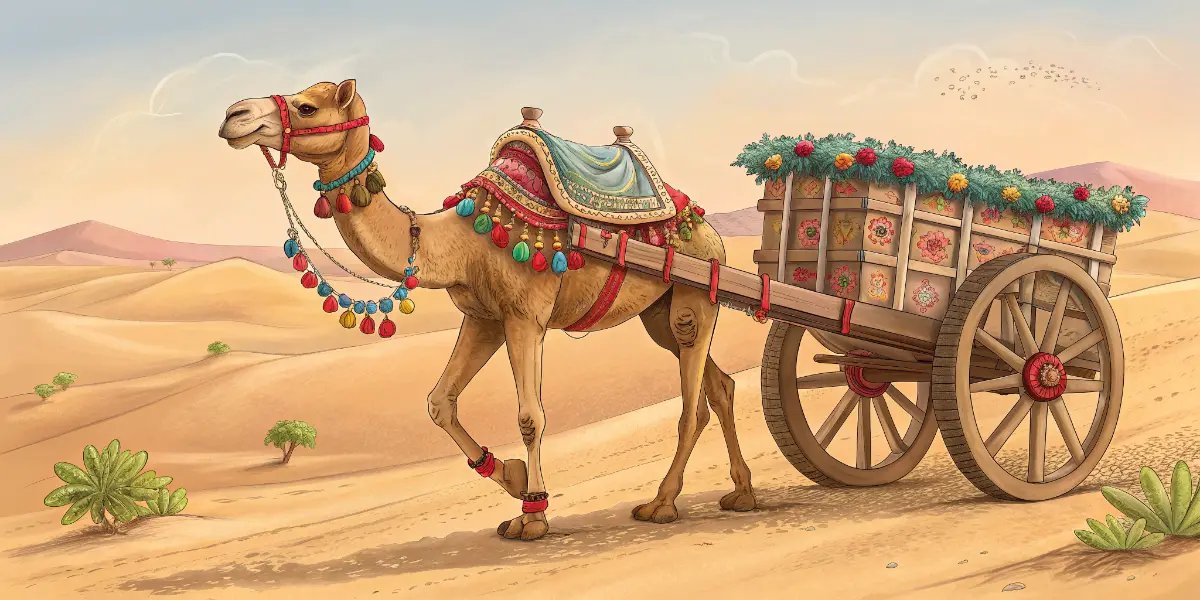
What makes it special: Camels are perfectly adapted to desert conditions—they can go days without water, handle extreme heat, and navigate sand dunes. The carts are simple wooden platforms with wheels, often decorated with colorful textiles.
Cultural significance: Camels are called "ships of the desert" in Rajasthan. Owners decorate them with colorful bridles, bells, and pompoms during festivals. The bond between owner and camel is lifelong.
Fun fact for kids: Camel carts have bells that jingle rhythmically as they move. The sound announces their arrival from far away. Each owner's bell pattern is unique—like a signature sound!
Speech sounds: "Camel cart" alliterates with /k/ sounds (hard 'c'). Alliteration helps phonological memory—words that start with the same sound are easier to remember together.
Learning Opportunities Through Indian Vehicles
Geography Lessons
Indian vehicles teach geography through adaptation. Why cycle rickshaws in narrow Old Delhi lanes? Because medieval city planning created tight spaces. Why camel carts in Rajasthan? Desert conditions favor camels over cars. Why so many trains? India's size requires mass transportation.
Your child learns that environment shapes solutions. Coastal regions have different vehicles than mountains. Dense cities need compact transport. Rural areas prioritize durability over speed.
Cultural Awareness
Every vehicle reveals Indian values:
- Resourcefulness - One vehicle serves many purposes (cargo + passengers + advertising)
- Community - Shared transportation is normal (cycle rickshaws carry multiple passengers)
- Celebration - Even working vehicles are decorated (trucks as art, autos with music)
- Adaptability - Foreign designs are modified for Indian conditions (Jeeps, railways)
These aren't just vehicles—they're cultural expressions. Your child learns that practicality and beauty coexist in Indian design.
Vocabulary Building
Indian vehicle names introduce linguistic diversity:
- Auto rickshaw - Borrowed words (Greek "auto" + Japanese "rickshaw")
- Dabbawala - Hindi compound word (dabba = box, wala = person who handles)
- Tuk-tuk - Onomatopoeia (named after engine sound)
In Talk & Listen, we include auto rickshaw sounds because the "putter-putter" engine noise is distinct and memorable. Kids love mimicking it, which naturally practices the /p/ and /t/ sounds.
App Connections
Talk & Listen: Practice the auto rickshaw's "putter-putter" engine sound, the cycle rickshaw's bell "ring-ring," and the train's "chug-chug." These onomatopoeia words are perfect for early phoneme practice—they're fun to say and easy to remember.
Create & Play: The vehicle sticker feature lets kids decorate their own vehicles with colorful patterns inspired by Indian truck art. They can create their own "Horn OK Please" designs and learn that decoration makes functional objects beautiful.
Activity Ideas
Want something to print alongside these? The free printables library has vehicle coloring pages and activity packs — no email required.
- Create your own "Horn OK Please" sign—what would you paint on the back of a truck?
- Design a color-coding system like dabbawalas use—create symbols for different family members
- Practice vehicle sounds: putter-putter (auto), ring-ring (cycle bell), chug-chug (train)
- Compare transportation: How would you get across a desert? Through a crowded city? Across a country?
- Decoration challenge: Use markers to turn a plain toy car into an Indian-style decorated truck
Why Indian Vehicles Captivate Kids
When my toddler first saw pictures of decorated Indian trucks, they asked: "Why are they so colorful?" That question opened conversations about how different cultures express creativity. In India, even working vehicles become art. Functionality doesn't exclude beauty—they coexist naturally.
Indian vehicles also show resourcefulness. An auto rickshaw isn't trying to be a car—it's solving a different problem (narrow lanes, affordable fares, maneuverability). A cycle rickshaw doesn't apologize for being human-powered—it's eco-friendly and serves its purpose perfectly.
Kids appreciate this. They learn that "different" isn't "less than"—it's adaptive. Indian vehicles work brilliantly for Indian conditions. Understanding this builds critical thinking: what problems does each vehicle solve? What would you design differently?
Compare Indian Vehicles With Other Countries
If your child loves Indian autos and decorated trucks, you can compare them with vehicles from other regions. Try Vehicles of Japan for bullet trains and kei cars, Vehicles of Africa for safari vehicles and matatus, or Vehicles of the Middle East to see how desert 4x4s handle sand. Comparing regions turns your child's questions about "colorful cars" into simple geography and culture lessons.
Explore More World Vehicles
This is part of our World Vehicles series. Already published: Vehicles of Japan (bullet trains and kei cars), Vehicles of the UK (double-decker buses and black cabs), and Vehicles of Africa (safari vehicles and colorful matatus). Coming soon: vehicles of Australia (road trains and utes) and Scandinavia (snowplows and ice road trucks).
Want to explore Indian vehicles interactively? Talk & Listen includes transportation sounds from different cultures, while Create & Play lets kids design their own decorated vehicles inspired by Indian truck art traditions.
 Frequently Asked Questions
 Ad-free & offline ready