Why Australian Vehicles Are Built for Distance
Australia is enormous—about 2,400 miles wide—but 70% of the population lives in just five coastal cities. The interior (called the Outback) is vast, remote, and sparsely populated. A cattle station (ranch) might be the size of Connecticut. The nearest hospital could be 300 miles away. Fuel stations might be 500 miles apart.
This geography created unique vehicle requirements: massive fuel capacity, extreme durability, ability to handle corrugated dirt roads, protection from wildlife collisions, and self-sufficiency for repairs. Australian vehicles aren't just transportation—they're survival equipment for one of Earth's most isolated inhabited regions.
For kids, Australian vehicles show how extreme distances shape design. When the nearest mechanic is 400 miles away, vehicles must be fixable by owners. When roads might not exist, vehicles must create their own paths. Let's explore eight vehicles that show how Australians conquer tyranny of distance.
1. Road Train - The Australian Icon
Road trains are trucks pulling multiple trailers—typically 2-4 trailers stretching 175+ feet long. They haul cattle, sheep, fuel, mining equipment, and supplies across thousands of miles of Outback roads. Seeing one approach is unforgettable—they dominate the road.
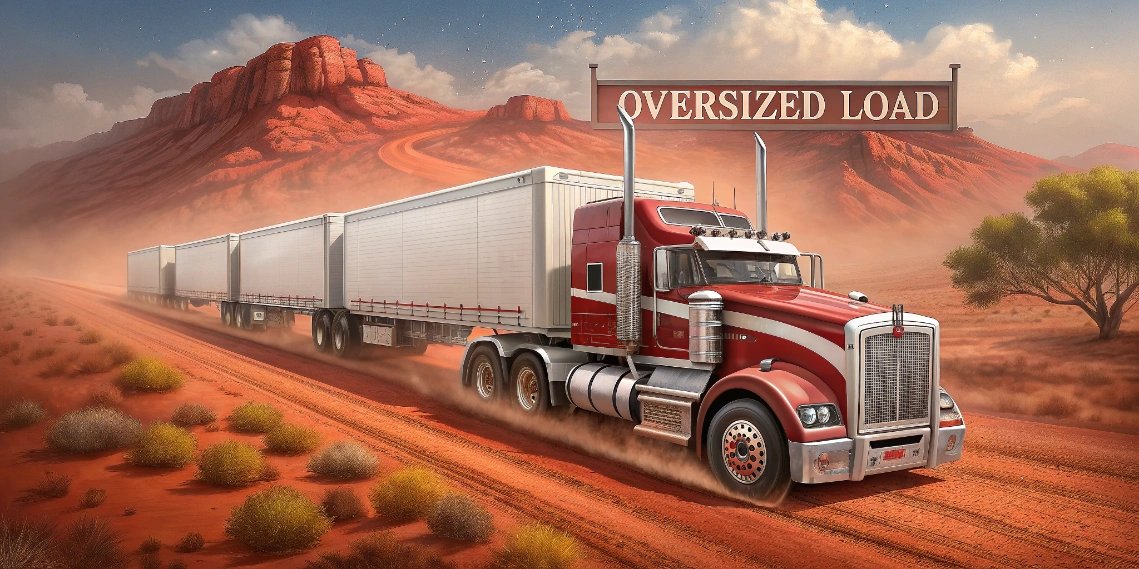
What makes it special: Australian road trains are the longest trucks allowed on public roads anywhere in the world. The standard "B-double" pulls 2 trailers; "B-triple" pulls 3; and "quad" road trains (Northern Territory only) pull 4 trailers weighing up to 200 tons total. They require special licenses, routes, and signage warning other drivers.
How Long is a Road Train?
Cultural significance: Road trains represent Outback resilience and self-sufficiency. They're the only economical way to move goods across vast distances. A single road train trip might cover 2,000 miles—equivalent to driving from Boston to Miami. Drivers are legendary figures, spending weeks on the road navigating extreme conditions.
Fun fact for kids: Road trains are so long that when turning, the back trailer "cuts the corner" significantly. Roads have extra-wide corners specifically for road trains. Some remote highways have "road train assembly areas" where trailers are connected—it takes an hour to hook up a quad road train!
Speech sounds: "Road train" has the /r/ approximant and the /tr/ consonant blend—both sounds toddlers master around age 3-4. The compound word clearly describes function (train of vehicles on the road).
2. Ute (Utility Vehicle) - The Aussie Pickup
Utes are Australia's version of pickup trucks, but with a unique design—they're built on car chassis (not truck frames) with a cargo tray in back. The name comes from "coupe utility," coined when farmers asked Ford to build "a vehicle to go to church on Sunday and carry pigs to market on Monday."
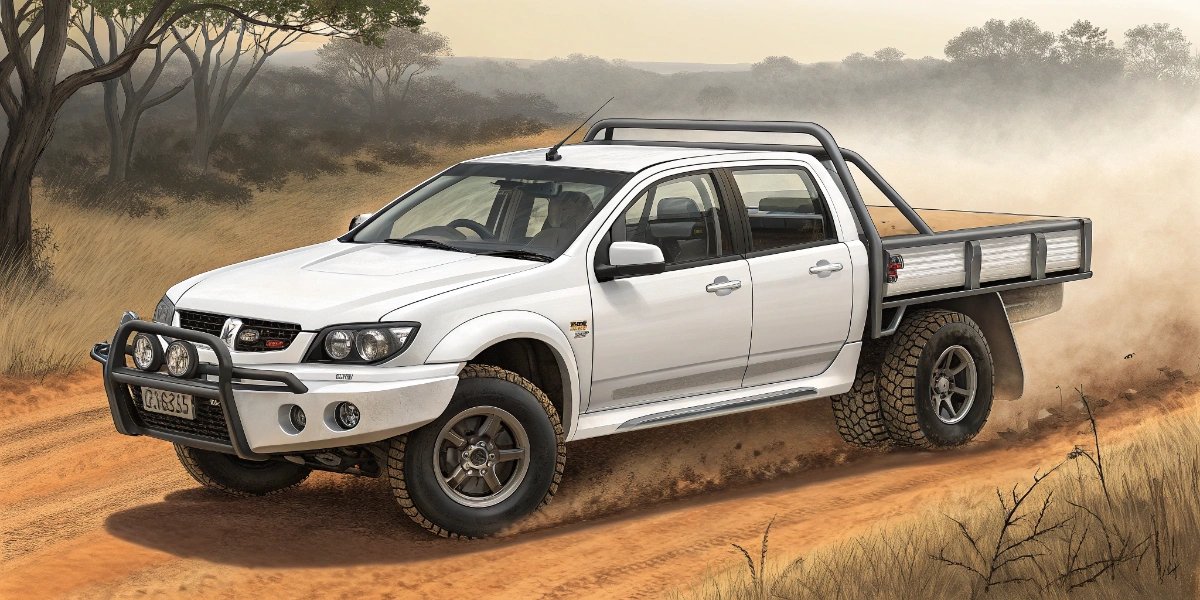
What makes it special: Utes blend car comfort with truck utility. They drive like sedans but carry cargo like pickups. Classic Australian utes (like the Holden Commodore ute) had V8 engines and could tow massive loads. Modern utes are often modified with bull bars, roof racks, off-road tires, and custom cargo solutions.
Cultural significance: Utes represent Australian working-class identity. Tradies (tradespeople—plumbers, electricians, builders) drive utes as work vehicles. The annual "Deni Ute Muster" festival attracts 20,000+ modified utes—it's like Comic-Con for utility vehicles, with contests for best paint job, loudest stereo, and most outrageous modifications.
Fun fact for kids: Some Australians modify utes into "show utes" with elaborate paint jobs, chrome accents, massive sound systems, and hydraulic suspension. Others turn them into "competition utes" for racing! Ute culture is so strong that when production stopped, Australians mourned—utes are part of national identity.
Speech sounds: "Ute" is a simple one-syllable word with the long /u/ vowel sound (as in "cute"). Short, clear, and distinctly Australian—perfect for vocabulary building about regional vehicle names.
3. Outback 4x4 (Toyota LandCruiser or Nissan Patrol)
Outback 4x4s are heavily modified for extreme remote travel. These aren't mall-parking SUVs—they're expedition vehicles with bull bars, snorkels, dual batteries, long-range fuel tanks, roof racks, recovery gear, and communication equipment.

What makes it special: A proper Outback 4x4 can travel 1,000+ miles without refueling (dual tanks hold 200+ liters). Snorkels raise air intake above dust and water for river crossings. Bull bars protect against kangaroo collisions (hitting a large kangaroo at 60 mph can total a vehicle). Suspension lifts provide ground clearance for rocky terrain.
Cultural significance: Outback 4x4s represent adventure and self-reliance. Grey nomads (retirees touring Australia) spend years traveling in modified 4x4s with camper trailers. Outback preparation is serious—travelers carry satellite phones, GPS beacons, weeks of food/water, spare parts, and tire repair kits. Breaking down 300 miles from help is life-threatening.
Fun fact for kids: Outback 4x4s often have "diff breathers" (differential breathers)—tubes that let the axle housings "breathe" during river crossings without sucking in water. Without them, crossing rivers would ruin the vehicle! Every modification serves survival purposes.
Speech sounds: "Outback 4x4" combines the /aʊ/ diphthong in "Outback" with the /f/ and /r/ sounds in "four." The compound "four-by-four" reinforces number concepts through vehicle terminology.
If your child wants to see another example of long-distance off-road vehicles, you can also visit the overlander vehicle page and talk about how expedition 4x4s are prepared for remote travel.
4. Paddy Wagon (Police Van)
Paddy wagons are police vans used to transport arrested individuals. In Australia, they're sturdy vehicles designed to handle long distances in remote areas—sometimes transporting people hundreds of miles to the nearest court or jail.
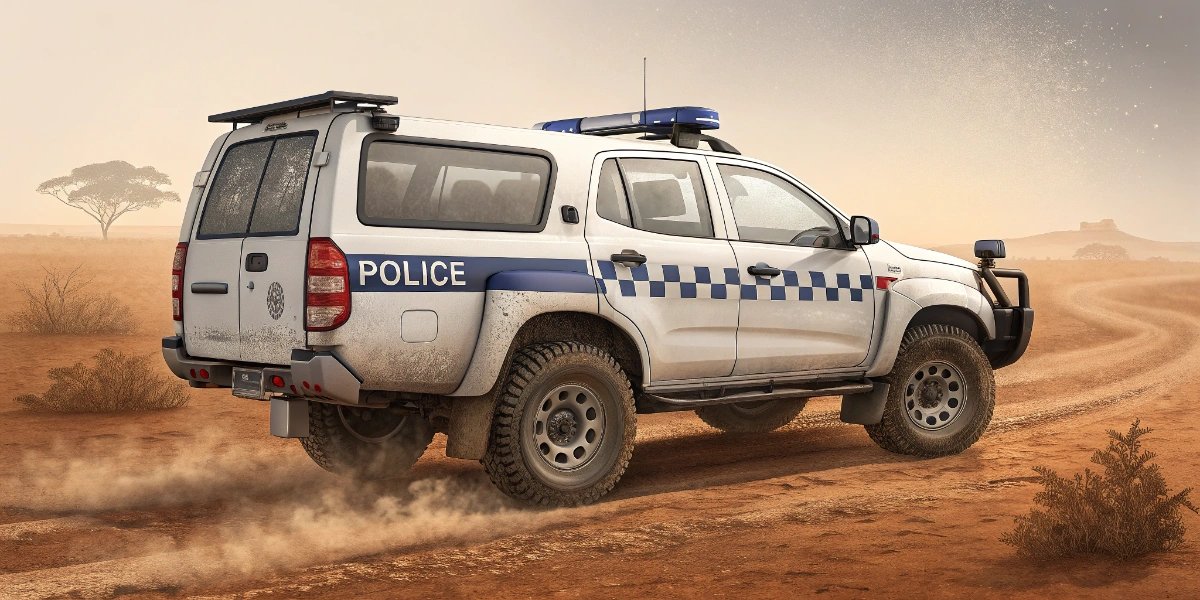
What makes it special: Australian paddy wagons are modified 4x4 vans or trucks with secure compartments, air conditioning (essential in Outback heat), and long-range fuel tanks. Remote area police might drive 500 miles to respond to incidents, requiring vehicles that handle corrugated dirt roads at high speeds.
Cultural significance: The term "paddy wagon" has controversial origins (possibly from Irish immigrants or police officers named Patrick). In modern Australia, they're officially called "prisoner transport vehicles," but the colloquial name persists. They symbolize law enforcement's challenge in policing vast empty spaces.
Fun fact for kids: Some remote Australian police stations serve areas larger than England! A single officer might patrol 50,000 square miles. Their vehicles are equipped like mini-stations: computers, communication equipment, first aid, and sometimes camping gear because responses take days.
Speech sounds: "Paddy wagon" has the /p/, /d/, and /w/ sounds with the vowel /æ/ (as in "cat") repeated. The compound word structure teaches that words can have interesting historical names.
5. Cattle Truck (Livestock Transport)
Cattle trucks transport livestock across Australia's vast cattle stations (ranches). These massive vehicles carry hundreds of animals, sometimes traveling 1,000+ miles from remote stations to coastal processing facilities or export ports.
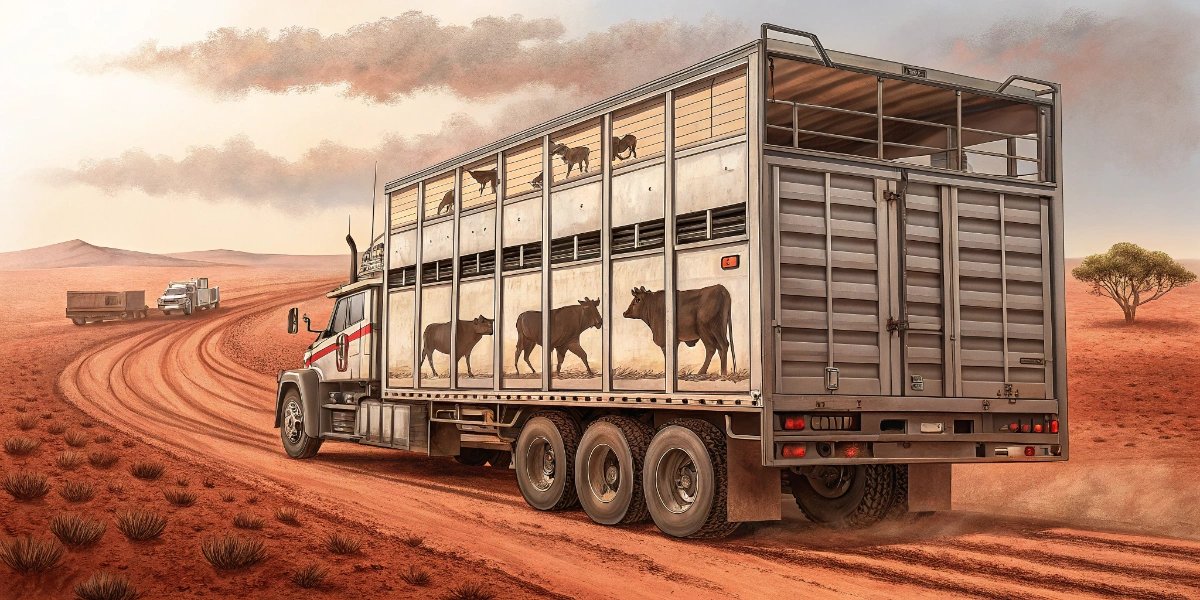
What makes it special: Australian cattle trucks are multi-level vehicles with ventilation systems, watering systems, and designs that minimize animal stress during long journeys. They navigate rough station tracks, corrugated highways, and extreme heat. Drivers must understand animal welfare—livestock handling is regulated to prevent suffering.
Cultural significance: Cattle trucks represent Australia's massive agricultural industry. Australia is one of world's largest beef exporters. Some cattle stations are so remote that livestock must travel days to reach markets. The trucks are mobile barns, essentially—temporary homes for animals during transport.
Fun fact for kids: Cattle trucks have a distinctive smell! People recognize them approaching by scent before seeing them. The trucks are thoroughly cleaned between loads, but the smell lingers. It's part of rural Australian life—city folks complain, but country folks barely notice.
Speech sounds: "Cattle truck" has the /k/ sound (spelled 'c'), the /t/ sound twice, and the /tr/ consonant blend. Great practice for these common voiceless stop consonants.
6. Caravan (Travel Trailer)
Caravans are travel trailers towed by 4x4s or utes, serving as mobile homes for "grey nomads" (retirees) and families touring Australia. Some are basic camping trailers; others are luxurious with full kitchens, bathrooms, and air conditioning.
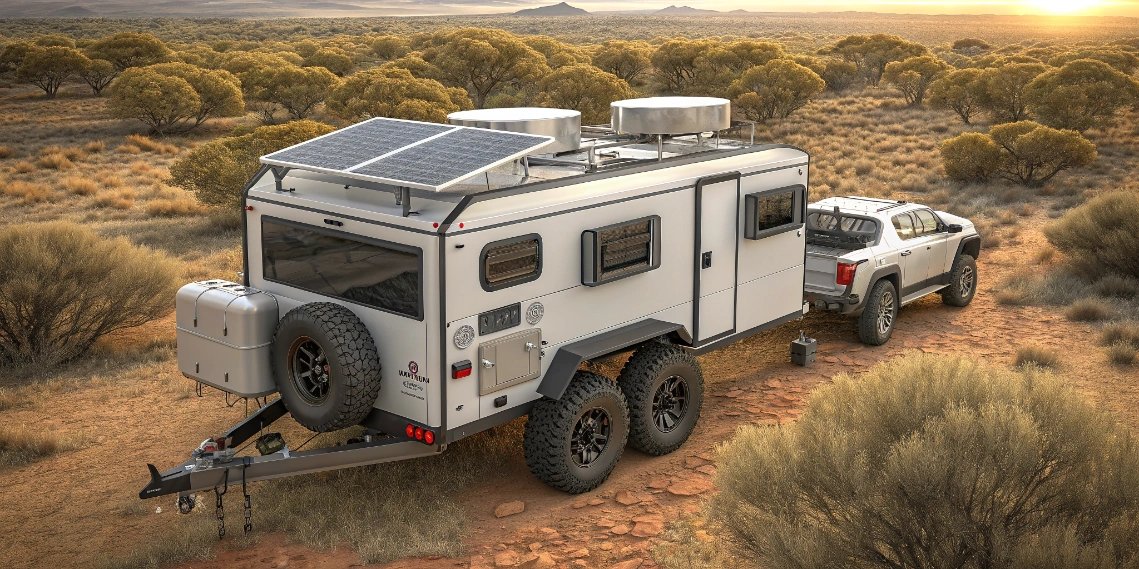
What makes it special: Australian caravans are built tougher than European/American equivalents—they must handle corrugated dirt roads vibrating at 40 mph for hours. Off-road caravans have independent suspension, reinforced chassis, extra water tanks (200+ liters), solar panels, and massive batteries for weeks of independent camping.
Cultural significance: Caravanning is a major Australian lifestyle. Grey nomads spend years circumnavigating the continent—a journey called "doing the lap" (circumference of Australia is about 9,000 miles). Caravan parks are social hubs where travelers share stories, tips, and destinations. It represents freedom and adventure.
Fun fact for kids: Some Australians live permanently in caravans! They're called "permanent travelers." Kids grow up visiting every corner of Australia, learning through travel. It's like homeschooling but with the entire continent as the classroom. Some families travel for years before settling.
Speech sounds: "Caravan" has three syllables (CAR-a-van) with the /k/, /r/, /v/, and /n/ sounds. The stress pattern (first syllable stressed) teaches prosody—rhythm and stress in multisyllabic words.
7. School Bus (Remote Area)
Australian school buses in remote areas are often 4x4 vehicles, not standard buses. Some students travel 100+ miles each way daily, leaving home at 5:30 AM for school starting at 9:00 AM. Others attend "School of the Air" (remote learning) and never ride buses.
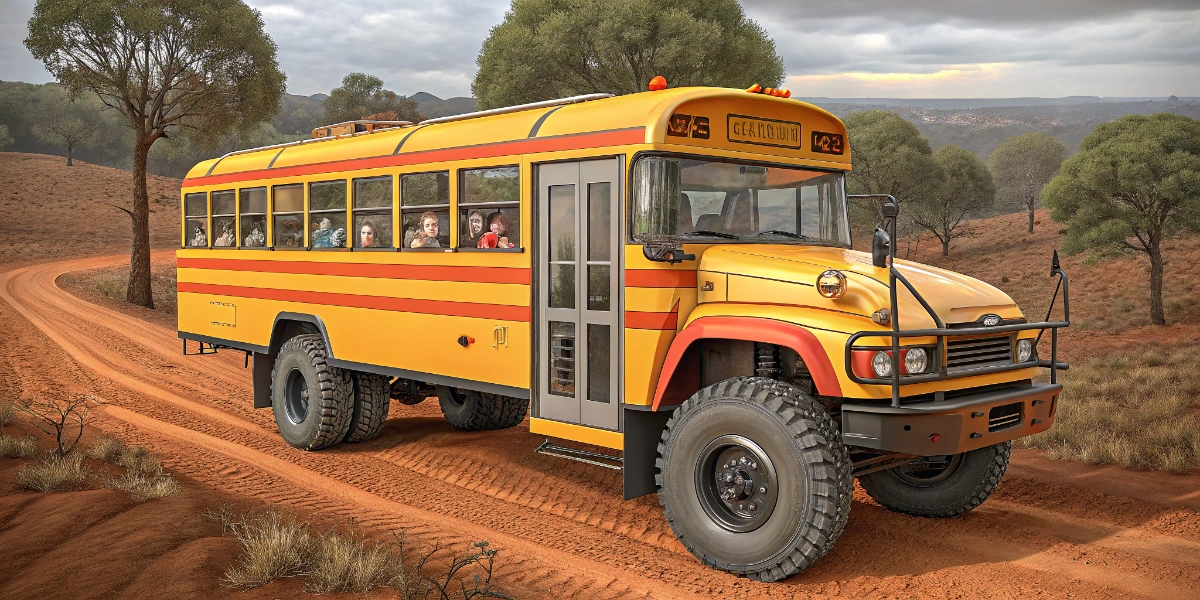
What makes it special: Remote area school buses handle unsealed (dirt) roads, river crossings, and extreme weather. They're equipped with air conditioning, two-way radios, first aid, and survival supplies. Drivers are community heroes—they know every family, deliver mail/supplies, and check on isolated residents.
Cultural significance: School buses symbolize Australia's commitment to education despite tyranny of distance. In the Outback, ensuring every child gets schooling requires extraordinary effort. Some families send children to boarding school during term time; others use distance education; buses serve those in between.
Fun fact for kids: Some Australian students have the world's longest school bus routes—over 100 miles one way! They do homework on the bus, eat lunch on the bus, and become close friends with other bus kids. The bus driver becomes like family. It's a unique childhood experience.
Speech sounds: "School bus" has the /sk/ consonant cluster at the beginning (which appears as 'sch' spelling) and the /b/ sound. Short, clear compound word perfect for early phoneme practice.
To connect this story to a simple bus overview, you can also visit the school bus vehicle page and compare remote Australian school buses with the ones in your own area.
8. Mining Haul Truck (Outback Mega-Vehicles)
Australia's mining industry uses massive haul trucks—some of Earth's largest vehicles. These aren't road-legal—they operate in mines, moving iron ore, coal, or gold-bearing rock. Some stand 24 feet tall with tires 13 feet in diameter.
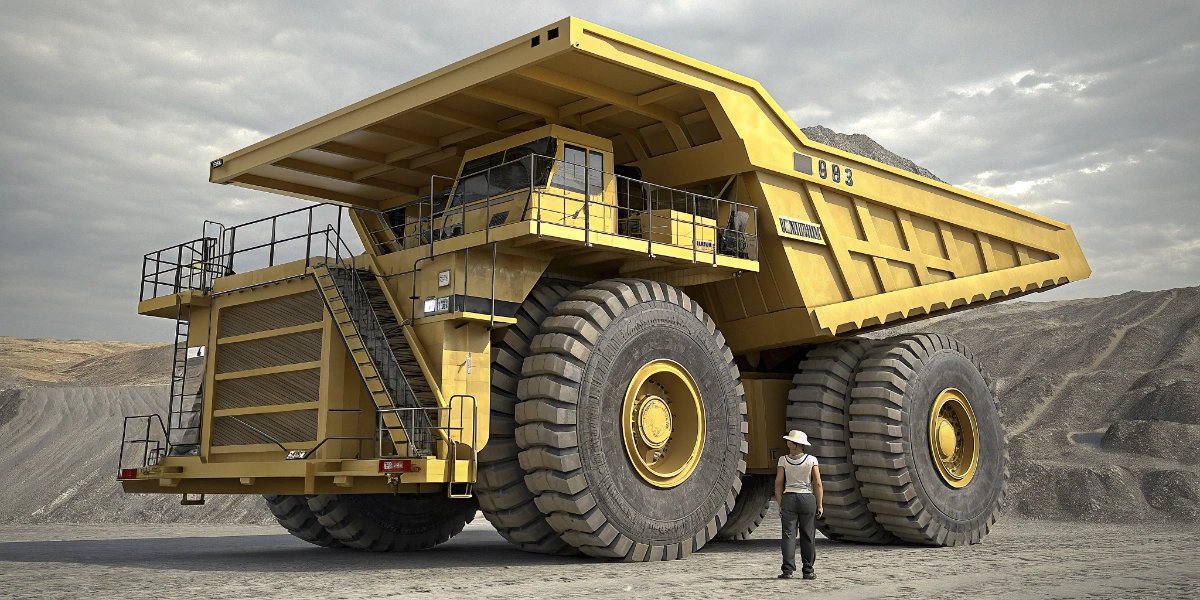
What makes it special: Mining haul trucks carry 400+ tons per load—equivalent to 200 cars. They're so large that drivers climb stairs to reach the cab. Some are now autonomous (driverless), controlled remotely from offices thousands of miles away. They operate 24/7 in extreme Outback conditions.
Cultural significance: Mining haul trucks represent Australia's resource economy. Mining contributes 10% of Australia's GDP and employs hundreds of thousands. These trucks symbolize the scale of Australian mining—entire mountains are moved, piece by piece, by fleets of these giants.
Fun fact for kids: Some mining haul trucks are so expensive (over $5 million) that they're never turned off! They run continuously, refueling while moving. When maintenance is needed, mechanics work on them while they idle. Stopping and restarting such massive machines wastes fuel and time.
Speech sounds: "Mining haul truck" has three words with great phoneme variety—/m/, /n/, /h/, /l/, /tr/, /k/. The /tr/ consonant blend appears again, reinforcing this challenging sound cluster.
Learning Opportunities Through Australian Vehicles
Geography Lessons
Australian vehicles teach geography through scale. Why are road trains so long? Because it's 1,500 miles from Darwin to Adelaide—efficiency requires moving maximum cargo per trip. Why do 4x4s have 200-liter fuel tanks? Because service stations might be 400 miles apart. Every vehicle modification reflects Australia's vast distances.
Your child learns that size and distance shape everything. Australia's area (2.9 million square miles) with small population (26 million) creates unique challenges. Geography determines vehicle design.
Cultural Awareness
Every Australian vehicle reveals cultural values:
- Self-reliance - Vehicles must be repairable by owners; help is far away
- Practicality - Utes blend work function with daily usability
- Adventure - Caravanning culture celebrates exploration and freedom
- Resilience - Vehicles work in extreme heat, rough roads, and isolation
- Community - School buses and truck drivers connect remote populations
These aren't just vehicles—they're lifelines connecting one of Earth's most sparsely populated inhabited regions. Your child learns that humans adapt to any environment with clever engineering.
Vocabulary Building
Australian vehicle terminology introduces regional language:
- Ute - Australian term for pickup truck (shortened from "utility")
- Road train - Unique Australian vehicle type not found elsewhere
- Grey nomads - Australian term for traveling retirees
- Bull bar vs. American "brush guard" - regional naming
- Caravan vs. American "trailer" - same vehicle, different words
In Talk & Listen, we include vehicle sounds from different environments—the distinctive rumble of road trains on corrugated roads, the crunch of 4x4 tires on red desert sand. These sounds connect to Australian landscapes.
App Connections
Talk & Listen: Practice Australian vehicle sounds—road train engine rumble (deeper than regular trucks), ute acceleration, 4x4 off-road sounds. Learn vocabulary through environmental context: "Outback," "desert," "station," "remote."
Create & Play: Kids can design their own road trains with multiple trailers, create ute modifications for the Deni Ute Muster, or plan caravan routes around Australia. Australian vehicles inspire problem-solving: how would YOU prepare a vehicle for 1,000-mile trips?
Activity Ideas
Want something to print alongside these? The free printables library has vehicle coloring pages and activity packs — no email required.
- Distance challenge: Mark distances on a map—how far could a road train travel in one day?
- Survival kit: What would you pack in an Outback 4x4 for remote travel?
- Fuel calculation: If fuel stations are 400 miles apart, how big does your tank need to be?
- Road train assembly: Use toy trailers to understand how coupling works
- Ute customization: Design your dream ute for the Deni Ute Muster
- Caravan route planning: Map a "lap of Australia" journey with stops
- Wildlife collision prevention: Why are bull bars essential? What animals pose risks?
Why Australian Vehicles Teach Scale
When my toddler asked how many cars make up a road train, we talked about why Australia needs such large vehicles. That conversation expanded to discussions about distance, efficiency, and problem-solving at scale. Australian vehicles demonstrate that geography drives engineering.
Road trains aren't "too big"—they're exactly right for Australian conditions. Utes aren't "weird pickups"—they're brilliantly adapted for their purpose. Understanding that "normal" depends on context builds critical thinking. What works in Tokyo doesn't work in the Outback. Australian vehicles show that solutions must match problems.
Kids appreciate this adaptability. They learn that there's no single "best" vehicle—only vehicles best-suited to specific challenges. This thinking applies beyond transportation: solutions must fit contexts. Understanding this builds problem-solving flexibility.
Explore More World Vehicles
This is the sixth in our World Vehicles series. Already published: Vehicles of Japan (bullet trains and kei cars), Vehicles of India (auto rickshaws and decorated trucks), Vehicles of the UK (double-decker buses and black cabs), Vehicles of Africa (safari vehicles and matatus), and Vehicles of the Middle East (desert 4x4s and water tankers). Coming soon: vehicles of Scandinavia (snowplows and ice road trucks) and South America (mountain transport).
Want to explore Australian vehicles interactively? Talk & Listen includes vehicle sounds adapted for different terrains—from smooth highways to corrugated Outback roads. In Create & Play, kids can design their own vehicles inspired by Australian ingenuity—from road trains to expedition 4x4s.
 Frequently Asked Questions
 Ad-free & offline ready