Why Russian Vehicles Are Built for Extremes
Russia is enormous—covering one-eighth of Earth's land surface. It spans from European Russia (similar climate to Scandinavia) to Siberia (some of Earth's coldest inhabited places) to Far East Russia near Japan. This creates extreme vehicle requirements: winter temperatures reaching -90°F in Oymyakon (coldest inhabited place on Earth), summer heat exceeding 100°F, mud season when dirt roads become impassable soup, and permafrost that shifts roads annually.
What makes Russian vehicles fascinating is their "built-for-worst-case" philosophy. Western vehicles might work fine in moderate conditions but fail when stressed. Russian vehicles assume extreme conditions—they're over-engineered, simplified for field repairs, and designed to survive abuse that would destroy other vehicles. This creates rugged, reliable machines that keep running despite conditions that would stop other transportation.
For kids, Russian vehicles show how extreme geography demands extreme engineering. When the nearest repair shop is 300 miles away and temperature is -50°F, vehicles can't be delicate. Let's explore eight vehicles that show Russian toughness and adaptability.
1. UAZ Off-Roader (УАЗ внедорожник) - The Siberian Workhorse
UAZ (Ulyanovsk Automobile Plant) vehicles are Russia's iconic off-roaders—boxy, military-derived trucks and SUVs designed for extreme conditions. The UAZ-452 "bukhanka" (loaf of bread, named for its shape) and UAZ Patriot are workhorses across rural Russia, used by farmers, hunters, emergency services, and anyone traveling far from paved roads.

What makes it special: UAZ vehicles have simple, robust designs—high ground clearance, four-wheel drive, minimal electronics (easier to repair), and parts that can be fixed with basic tools. Engines are designed to start at -40°F. Bodies are steel (not aluminum)—heavier but stronger. They're built to survive decades of abuse on roads that aren't really roads—frozen rivers, forest tracks, tundra.
Cultural significance: UAZ represents Russian self-reliance. In Siberia, a UAZ isn't luxury—it's survival equipment. Owners can fix them roadside with improvised parts. They're ambulances in remote areas, rescue vehicles in blizzards, and family transport where paved roads don't exist. UAZ ownership means independence from infrastructure—you go where roads can't.
Fun fact for kids: UAZ vehicles have almost unchanged designs from the 1970s-80s! While other countries constantly redesign vehicles, UAZ keeps proven designs because rural Russians trust them. A mechanic who learned to fix UAZ in 1985 can still fix 2024 models—continuity creates expertise. It's design as cultural knowledge.
Speech sounds: "UAZ off-roader" has the vowel sequence /u/-/a/-/z/ followed by /ɔf/-/r/—interesting vowel-consonant patterns. The acronym UAZ (spoken as letters or "oo-ahz") teaches that vehicle names can be abbreviations.
If your child wants a simple overview of everyday cars and tough vehicles, you can also visit the car vehicle page and compare ordinary family cars with rugged off-roaders like UAZ.
2. Trans-Siberian Railway Train (поезд Транссибирской магистрали) - The Iron Road East
The Trans-Siberian Railway is the world's longest railway line—5,772 miles from Moscow to Vladivostok, crossing 8 time zones. Trains make the journey in about 7 days, providing essential connection between European Russia and the Far East. It's both passenger service and freight lifeline for Siberian communities.

What makes it special: Trans-Siberian trains operate year-round despite extreme conditions. Special heating systems prevent pipes from freezing at -50°F. Locomotives are designed for temperature extremes. Tracks are built on permafrost (permanently frozen ground) using special techniques to prevent shifting. The railway connects remote Siberian towns to the rest of Russia—without it, many communities would be isolated for months during winter.
World's Longest Train Rides (Miles)
Cultural significance: The Trans-Siberian represents Russian engineering ambition and connection across vast distances. Built 1891-1916, it symbolizes binding together of the empire/nation. For Siberians, it's lifeline—bringing supplies, connecting families, enabling travel. Many Siberian towns exist because the railway goes through them.
Fun fact for kids: Trans-Siberian trains have entire dining cars serving traditional Russian food! Passengers eat borscht (beet soup), blini (pancakes), and drink tea from samovars (traditional tea urns) while watching Siberian forests pass by. The journey takes a week—trains become temporary homes with sleeping berths, dining, and social spaces.
Speech sounds: "Trans-Siberian Railway train" has complex phoneme sequences—/tr/, /ns/, /s/, /b/, /r/, /l/, /w/, /tr/. The prefix "trans-" (meaning across) teaches geography through language—trans-Siberian = across Siberia.
For a simple picture-led overview of passenger trains, you can also explore the passenger train vehicle page together and compare long-distance trains in different countries.
3. Tracked Vehicle (Вездеход) - The All-Terrain Master
Vezdekhod means "goes everywhere" in Russian—tracked vehicles that operate in conditions where wheeled vehicles can't. They have tank-like tracks instead of wheels, allowing them to cross deep snow, swamps, tundra, and broken ice. They're used for Arctic expeditions, oil/gas field work, and remote village supply.
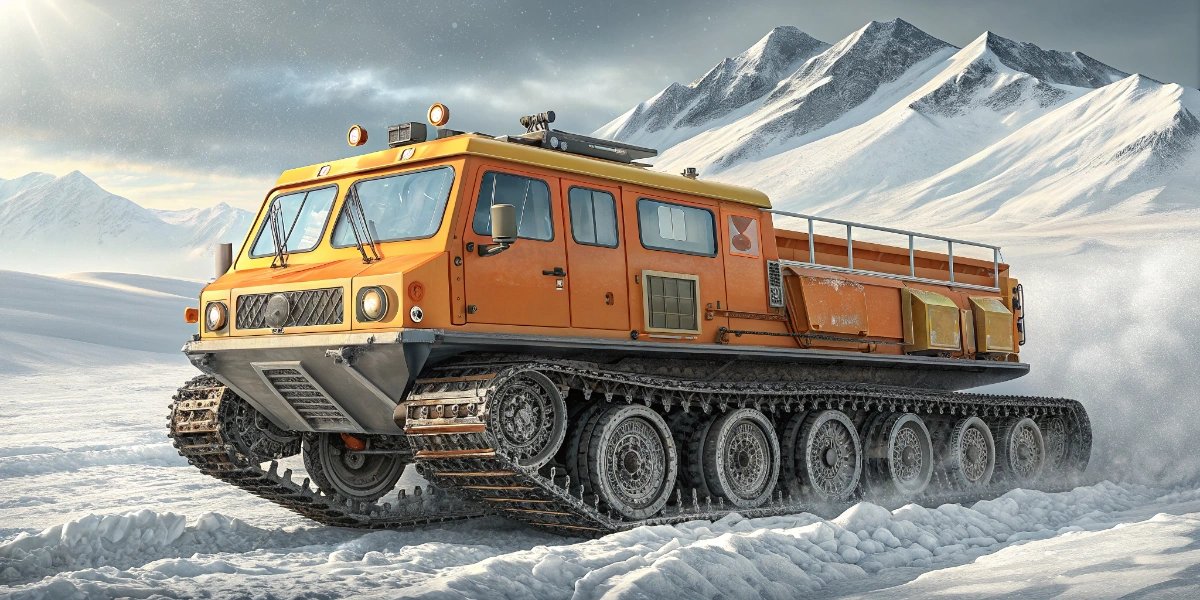
What makes it special: Tracked vehicles distribute weight over large surface area (like snowshoes), preventing them from sinking in snow or mud. They can cross rivers (some are amphibious), climb steep slopes, and operate at temperatures below -60°F. Models like the DT-30 Vityaz can carry 30 tons across terrain that's impassable for trucks. They're slow (15-30 mph maximum) but unstoppable.
Cultural significance: Tracked vehicles represent Russian conquest of hostile environments. Siberia and Arctic regions have few roads—tracked vehicles create mobility where infrastructure doesn't exist. They're tools of resource extraction (oil/gas industries), scientific research (Arctic expeditions), and community support (supplying remote villages). They symbolize technology enabling human presence in extreme places.
Fun fact for kids: Some Russian tracked vehicles are articulated—they have two connected segments that bend in the middle! This lets them navigate obstacles and tight turns despite their size. The front segment steers while the rear follows, creating snake-like movement. It's tank technology adapted for civilian transport.
Speech sounds: "Tracked vehicle" has the /tr/, /kt/, /v/, and /k/ sounds. "Vezdekhod" (Russian name) has the /v/, /z/, /d/, /kh/ (guttural) sounds—teaching that Russian words have different sound patterns than English.
If your child loves snow machines and Arctic adventures, you can also visit the Polar Explorer vehicle page to see how a kid-friendly tracked vehicle is designed for icy worlds.
4. Marshrutka (маршрутка) - The Minibus Network
Marshrutkas (from marshrutnoe taksi = route taxi) are minibuses serving as primary urban transport across Russian cities. They're faster than buses (fewer stops), cheaper than taxis, and more flexible than metros. Most are white or yellow minivans or small buses following semi-fixed routes, departing when full.
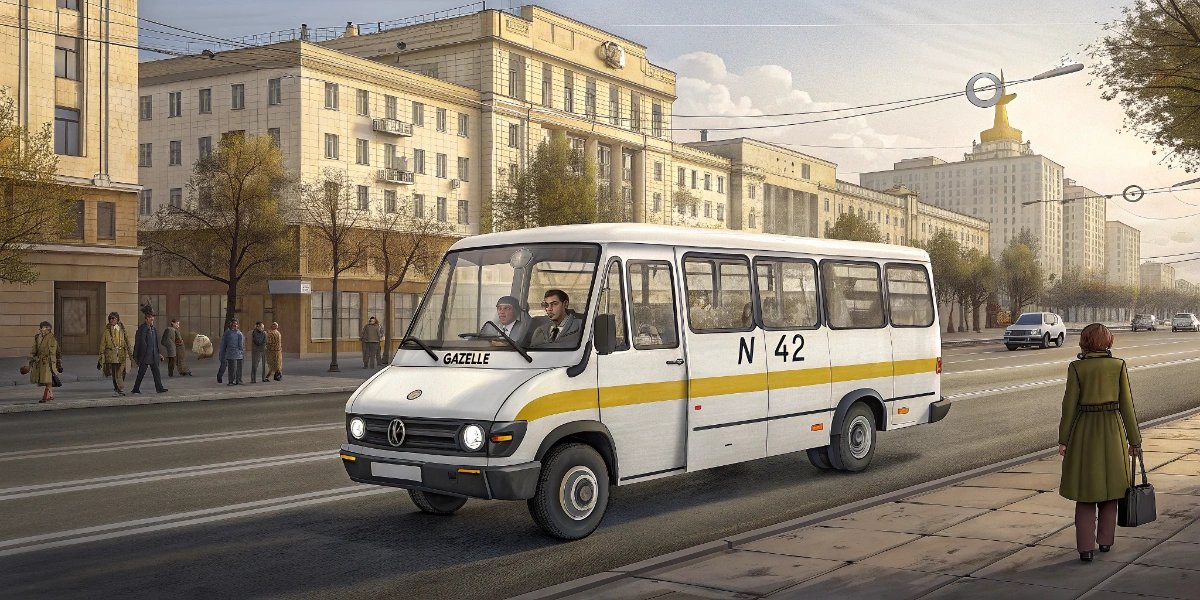
What makes it special: Marshrutkas fill gaps in formal public transit. They operate routes buses don't serve, run later hours, and adjust to demand. Drivers own or lease vehicles (private enterprise within public transit system). Payment happens inside—passengers pass rubles forward to driver, change passes back. It's organized informality creating efficient transport.
Cultural significance: Marshrutkas represent post-Soviet entrepreneurship. When state bus systems declined in the 1990s, marshrutkas emerged as private solution to public need. They're now essential infrastructure—many Russians ride marshrutkas daily. The system shows how informal private initiative can supplement formal public services.
Fun fact for kids: Marshrutka passengers have special etiquette! When you want to get off, you say "Na ostanovke!" (At the stop!). Money passes from hand to hand forward to the driver—everyone participates in payment process. There are unwritten rules about seat priority, window opening, and luggage space. It's community cooperation in motion.
Speech sounds: "Marshrutka" has the /m/, /r/, /ʃ/ (sh), /t/, /k/ sounds. Russian pronunciation (mar-SHROOT-ka) with stress on second syllable teaches that borrowed words from other languages may sound different than English spelling suggests.
5. Kamaz Truck (КАМАЗ грузовик) - The Russian Road Train
Kamaz trucks are Russia's heavy-duty workhorses—large cargo trucks built in Naberezhnye Chelny for extreme Russian conditions. They're famous internationally for winning the Dakar Rally truck category multiple times despite competing against Western trucks costing 5-10 times more. In Russia, they haul everything everywhere.
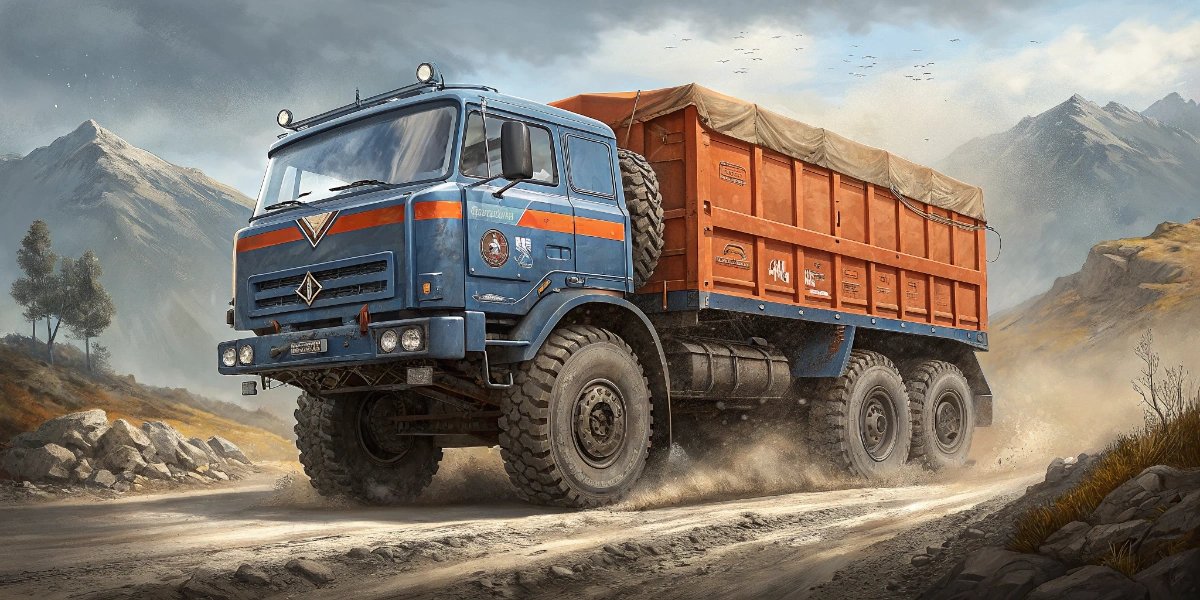
What makes it special: Kamaz trucks are built tough and simple. Engines start at -40°F. Components are designed for rough roads and minimal maintenance. They're built to be repaired by drivers—complex electronics that require dealers are avoided. Kamaz trucks work when and where others fail, making them essential for Russian logistics across vast distances and terrible roads.
Cultural significance: Kamaz represents Russian industrial capability and engineering pragmatism. These aren't the most sophisticated trucks—they're the most reliable for Russian conditions. Kamaz success in Dakar Rally proves that reliability beats sophistication in extreme conditions. For truck drivers, Kamaz is trusted companion on long, difficult journeys.
Fun fact for kids: Kamaz builds special Arctic versions of their trucks for northern oil fields! These have even thicker insulation, triple batteries, extended fuel tanks, and can operate continuously at -50°F. Some have heated fuel tanks because diesel fuel gels (becomes solid) at extreme cold. Everything is engineered for survival.
Speech sounds: "Kamaz truck" has the /k/, /m/, /z/, /tr/, and /k/ sounds. The acronym KAMAZ (Kama Automobile Plant) teaches industrial naming conventions—factories often name vehicles after themselves.
6. Snowplow (снегоуборочная машина) - Russian Winter Maintenance
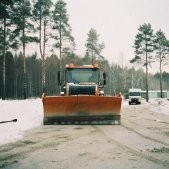
Russian snowplows are massive machines clearing roads in conditions that would shut down other countries. They operate in blizzards, at -50°F, clearing snow that falls continuously for months. Some are truck-mounted; others are specialized vehicles wider than normal trucks, clearing multiple lanes simultaneously.

What makes it special: Russian snowplows must handle extreme snow volumes—Siberian cities receive 6+ feet of snow per winter. Plows operate 24/7 during storms. They're built with heated blades (preventing snow from sticking), extra lighting (for polar darkness), and robust heating for operator cabins. Many use diesel engines with frost-protected fuel systems.
Cultural significance: Snowplows represent Russian determination to maintain normalcy despite winter. Schools stay open, businesses operate, life continues—because snowplows keep roads passable. In Siberia, snowplow operators are community heroes. Their work enables everything else—without them, cities would shut down for 5-6 months annually.
Fun fact for kids: Some Russian cities have "snow removal plans" coordinated like military operations! Plows work in coordinated waves—first pass clears main roads, second pass does side streets, third pass clears sidewalks. Snow is loaded into dump trucks and hauled to "snow dumps" outside cities. It's logistical choreography involving hundreds of vehicles.
Speech sounds: "Snowplow" has the /sn/ consonant cluster, /pl/ blend, and /aʊ/ diphthong. The compound word clearly describes function (plow for snow), teaching straightforward word formation.
If your child is fascinated by winter maintenance vehicles, you can also explore the snowplow vehicle page and compare Russian snowplows with designs from other cold countries.
7. GAZ Volga (ГАЗ «Волга») - The Classic Soviet Sedan
GAZ Volga sedans (produced 1956-2010) were iconic Soviet/Russian cars—sturdy sedans used as taxis, police cars, and government vehicles. Though no longer produced, thousands still operate. They're simple, repairable, and built for Russian roads—which means built to survive abuse most cars wouldn't tolerate.

What makes it special: Volgas have high ground clearance (for bad roads), simple mechanical systems (points ignition, carburetors—no complex electronics), and robust construction. They're designed assuming drivers have mechanical knowledge—manuals include instructions for roadside repairs. Many Russians learned mechanics on Volgas, creating cultural knowledge spanning generations.
Cultural significance: GAZ Volga represents Soviet industrial era and cultural continuity. For older Russians, Volgas evoke nostalgia—they were the "good" Soviet car (better than Lada but not as rare as imported cars). They're still seen as taxis in smaller cities, maintained through mechanical skill and spare part availability. They symbolize make-it-work resourcefulness.
Fun fact for kids: Volga owners often paint them bright colors after buying used government vehicles! Official cars were always black, but private owners repaint them—yellow for taxis, bright colors for personal use. Some become "tuning" projects with modern engines, sound systems, and custom interiors. Old vehicles get new lives through creativity.
Speech sounds: "GAZ Volga" has the /g/, /z/, /v/, /l/, /g/ sounds. The two-part name (manufacturer + model) teaches vehicle naming conventions—GAZ is the factory, Volga is the model name (named after Volga River).
8. Metro Train (поезд метро) - Moscow/St. Petersburg Underground
Moscow Metro is one of world's busiest subway systems—moving 9+ million passengers daily. Built starting in 1935, many stations are architectural palaces with marble, mosaics, chandeliers, and sculptures. St. Petersburg Metro (opened 1955) is world's deepest metro—some stations are 300+ feet underground because of soft soil and groundwater.

What makes it special: Russian metro systems were built as showcases of Soviet achievement—stations are beautiful, not just functional. Moscow Metro stations are tourist attractions themselves. Trains run frequently (90-second intervals during rush hour) and prices are very low (equivalent to $0.50-1.00). The systems are extremely deep—escalators take 3-4 minutes to reach platforms, descending 200+ feet.
Cultural significance: Metro represents Soviet investment in public infrastructure and belief in collective benefit over individual car ownership. The beautiful stations show philosophy that public spaces should inspire, not just serve functional needs. For Russians, metro is essential urban infrastructure—reliable, affordable, and architecturally magnificent.
Fun fact for kids: Moscow Metro stations were built as bomb shelters! During WWII, people sheltered in stations during air raids. Some stations have blast doors and can be sealed off. The deep construction (which made building expensive) provides protection. They're dual-purpose—daily transport and emergency shelter.
Speech sounds: "Metro train" has the /m/, /tr/, /n/ sounds with the long /e/ vowel. "Metro" is international word used across many languages—teaching that some words are nearly universal.
Learning Opportunities Through Russian Vehicles
Geography Lessons
Russian vehicles teach geography through extreme scale and conditions. Why such robust vehicles? Because Russia spans 11 time zones with temperature extremes from -90°F to 110°F. Why tracked vehicles? Because vast areas have no roads—just tundra, taiga forest, and frozen rivers. Why Trans-Siberian Railway? Because distances are so vast that road transport would be impractical. Geography determines everything.
Your child learns that size matters—Russia's enormous territory creates unique challenges. Climate extremes require extreme engineering. Lack of infrastructure demands self-sufficient vehicles. Understanding this builds appreciation for how geography shapes technology.
Cultural Awareness
Every Russian vehicle reveals cultural values:
- Robustness over sophistication - Simple, repairable vehicles beat complex ones that fail
- Self-reliance - Drivers must fix their own vehicles; help is far away
- Collective infrastructure - Metros and railways serve everyone affordably
- Endurance culture - Life continues despite conditions that would stop others
- Engineering pragmatism - Designs prioritize survival over aesthetics
These aren't just vehicles—they're expressions of Russian adaptation to harsh reality. Your child learns that different environments create different solutions and values.
Vocabulary Building
Russian vehicle vocabulary introduces engineering and geographic terms:
- UAZ - Acronym for Ulyanovsk Automobile Plant
- Vezdekhod - Russian for "goes everywhere" (all-terrain vehicle)
- Marshrutka - Diminutive of "route taxi"
- Taiga - Subarctic forest biome covering Siberia
- Permafrost - Permanently frozen ground affecting construction
In Talk & Listen, I include vehicle sounds from extreme environments—UAZ engines starting in cold, tracked vehicles crunching through snow, metro trains echoing in deep stations. These sounds connect to Russian landscapes.
App Connections
Talk & Listen: Practice Russian vehicle sounds—UAZ diesel engines (distinctive robust sound), tracked vehicles on snow, train sounds in deep metro stations. Learn vocabulary through environmental context: "cold," "snow," "vast," "tough."
Create & Play: Kids can design their own UAZ color schemes, plan Trans-Siberian Railway journeys across time zones, or build tracked vehicles for snow navigation. Russian vehicles inspire problem-solving: how would YOU adapt a vehicle for -50°F?
Activity Ideas
Want something to print alongside these? The free printables library has vehicle coloring pages and activity packs — no email required.
- Temperature challenge: Compare your winter to Siberian winter (-60°F)
- Distance mapping: Track Trans-Siberian Railway across 11 time zones
- Survival kit: What would you pack in a UAZ for Siberian travel?
- Track vs. wheels: Compare toy vehicles on snow (which works better?)
- Time zone math: If it's noon in Moscow, what time in Vladivostok?
- Metro depth: How many stairs to reach a platform 300 feet underground?
- Engineering trade-offs: Simple vs. sophisticated—which survives extremes?
Why Russian Vehicles Teach Resilience
When my toddler asked why UAZ vehicles look so tough, we talked about engineering for survival, not comfort. That conversation expanded to discussions about environments shaping design, necessity driving simplicity, and resilience as engineering philosophy. Russian vehicles demonstrate that harsh conditions demand robust solutions.
These vehicles show that sophistication isn't always better. A simple UAZ that starts at -50°F beats a luxury SUV with complex electronics that freeze. A Kamaz truck that drivers can repair roadside beats a Western truck requiring dealer diagnostics. Understanding this builds appreciation for appropriate technology—solutions matched to conditions, not just latest features.
Kids appreciate this pragmatism. They learn that "best" depends on context. The toughest environment on Earth requires the toughest vehicles. Russian engineering prioritizes what matters—reliability, repairability, endurance. These vehicles teach that surviving harsh conditions requires smart compromises, not wishful thinking.
Explore More World Vehicles
This is the tenth in our World Vehicles series. Already published:Vehicles of Japan,Vehicles of India,Vehicles of the UK,Vehicles of Africa,Vehicles of the Middle East,Vehicles of Australia,Vehicles of Scandinavia,Vehicles of South America, andVehicles of Southeast Asia. Coming soon: Vehicles of China and USA! You can see the complete overview at World Vehicles for Kids: Complete Guide.
Want to explore Russian vehicles interactively? Talk & Listen includes vehicle sounds from extreme environments. In Create & Play, kids can design their own vehicles inspired by Russian engineering—from UAZ off-roaders to tracked snow vehicles.
 Frequently Asked Questions
 Ad-free & offline ready