Why Chinese Vehicles Span Ancient to Future
China is a country of extremes and contrasts. It has ancient cities with narrow hutong alleys where only bicycles fit, and futuristic cities with maglev trains and autonomous vehicles. Rural areas still use traditional cargo tricycles, while urban areas have more electric vehicles than the rest of the world combined. Population density (1.4 billion people) creates massive demand for efficient transport, driving innovation and scale.
What makes Chinese vehicles fascinating is the coexistence of traditional and cutting-edge. You might see a cargo tricycle hauling vegetables next to a Tesla on the same street. A pedicab driver pedals past a station for 200+ mph bullet trains. This isn't contradiction—it's pragmatism. Different needs require different solutions. China keeps what works (cargo tricycles are perfect for narrow alleys) while building the future (world's largest high-speed rail network).
For kids, Chinese vehicles show how rapid development happens while maintaining practical traditions. When you have the world's largest population, you need transportation solutions that scale. Let's explore eight vehicles that show China's unique blend of old and new.
1. High-Speed Train (Fuxing 复兴号高速列车) - The Bullet Train Network
China's high-speed rail network is the world's largest—over 26,000 miles of track connecting every major city. The Fuxing ("Rejuvenation") trains are the newest generation, reaching speeds of 217 mph in regular service (capable of 268 mph in tests). They're sleek, white trains with distinctive streamlined noses designed to reduce air resistance.
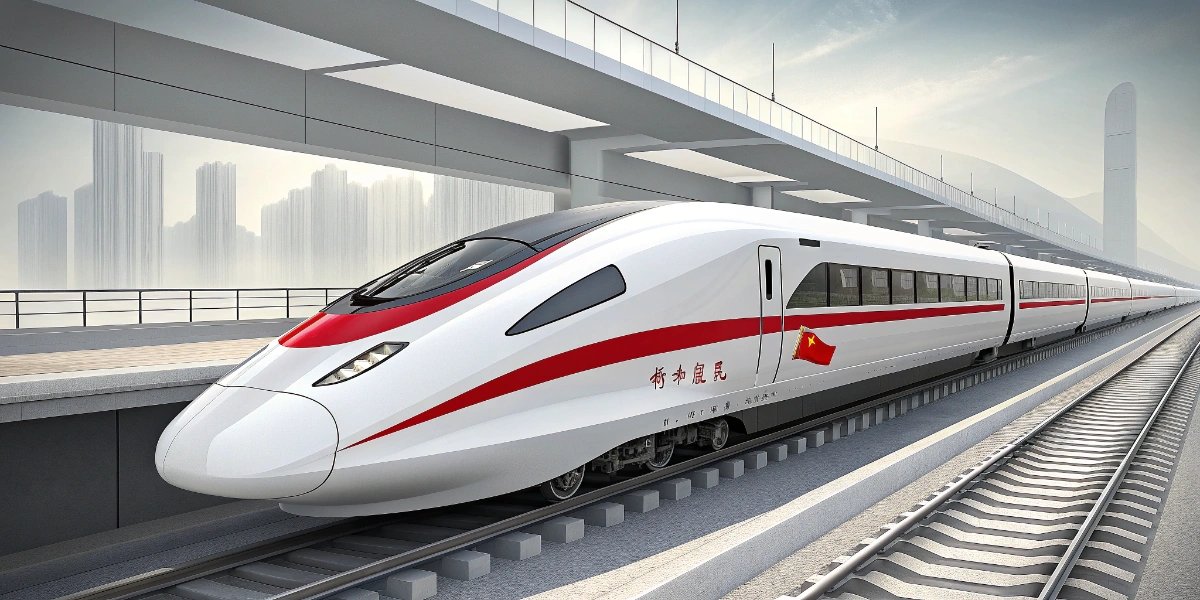
What makes it special: China built this massive network in just 15 years (2008-2023)—faster than any country in history. Trains run on time (average delay: less than 2 minutes), are incredibly smooth (you can balance coins on armrests at 200+ mph), and connect cities that once required 20+ hour journeys in just 4-5 hours. Beijing to Shanghai (800 miles) takes 4.5 hours—faster than flying when including airport time.
Cultural significance: High-speed rail represents China's technological ambition and infrastructure investment. The network connects the nation, making travel accessible to hundreds of millions who couldn't afford flights. It's symbol of rapid modernization—from developing country to world leader in just decades. For Chinese people, high-speed trains demonstrate what their country can achieve.
Fun fact for kids: Chinese high-speed trains have special "quiet cars" where talking is discouraged, and "family cars" where children can play! They also have power outlets at every seat, free Wi-Fi, and attendants serving hot meals. Some routes have observation cars with large windows for scenic views. It's like airplane comfort but without the stress!
Speech sounds: "High-speed train" has the /h/, /s/, /p/, /d/, /tr/, and /n/ sounds. "Fuxing" (foo-shing) has the /f/, /ʃ/ (sh), and /ŋ/ (ng) sounds—teaching that Chinese words have different phonetic patterns than English.
If your child wants a simple, picture-led introduction to fast trains, you can also visit the high-speed train vehicle page together for basic facts and visuals.
2. Electric Scooter (电动摩托车) - The Urban Swarm
Electric scooters are everywhere in Chinese cities—over 300 million nationwide. They're not the standing scooters Americans know—these are sit-down electric bikes/scooters that look like small motorcycles but run on batteries. They're silent, emission-free, and perfect for dense urban environments. Many cities have more e-scooters than cars.
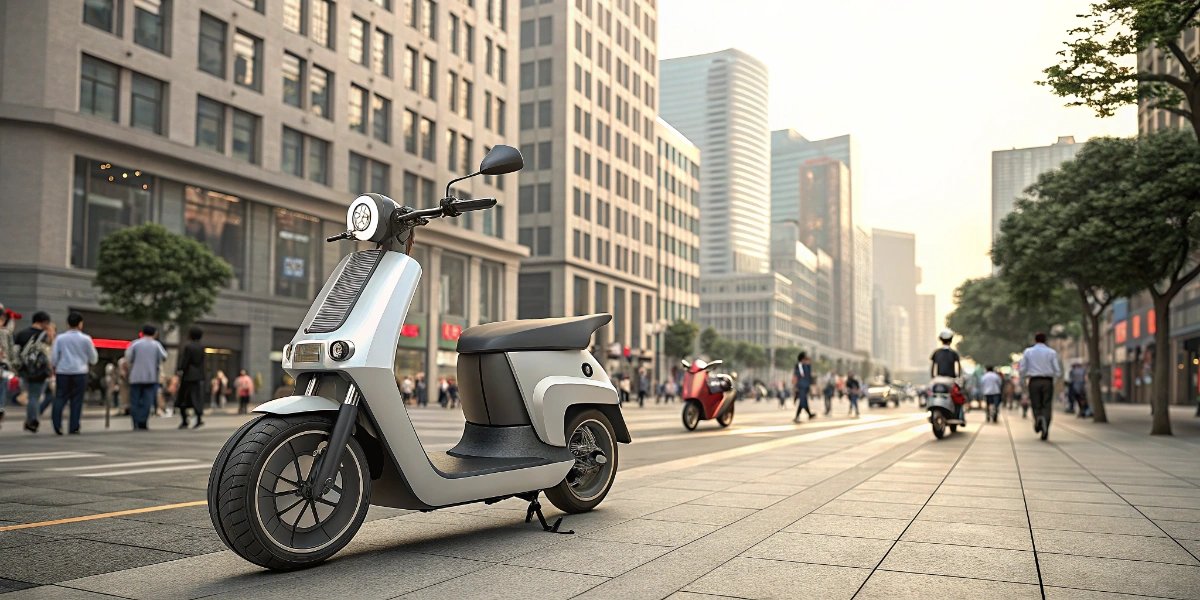
What makes it special: Chinese e-scooters are practical urban transport—they go 15-30 mph (perfect for city traffic), charge overnight from regular outlets, and cost very little to operate. They navigate narrow lanes, park easily, and don't require special licenses in most cities. Delivery workers, commuters, and families all rely on them. Some models have cargo carriers or child seats, making them family vehicles.
Cultural significance: E-scooters represent China's electric vehicle revolution and urban adaptation. Beijing, Shanghai, and other cities restricted gasoline scooters due to pollution—electric versions filled the gap. They're democratic transport—affordable for working-class families while serving as convenient option for middle class. The silent streets (no engine noise) completely change urban soundscapes.
Fun fact for kids: Chinese parents carry children to school on e-scooters—kids sit on special child seats or stand on footboards! In morning rush hour, streets fill with parent-child pairs on e-scooters heading to schools. Some families have custom rain covers that shelter both adult and child. It's bonding time during daily commute.
Speech sounds: "Electric scooter" has the /l/, /k/, /tr/, /sk/, /t/, and /r/ sounds. The compound structure (electric + scooter = scooter powered by electricity) teaches how descriptive words modify nouns.
For a simple, child-friendly overview of scooters, you can also open the electric scooter vehicle page and point out how everyday scooters compare to the dense scooter traffic in Chinese cities.
3. Cargo Tricycle (三轮货运车) - The Street Entrepreneur
Cargo tricycles are ubiquitous in Chinese cities—three-wheeled vehicles (one wheel front, two back) with large cargo platforms. They're powered by pedaling, electric motors, or small gasoline engines. Street vendors use them as mobile shops, delivery workers haul packages, recyclers collect materials, and construction workers transport supplies.
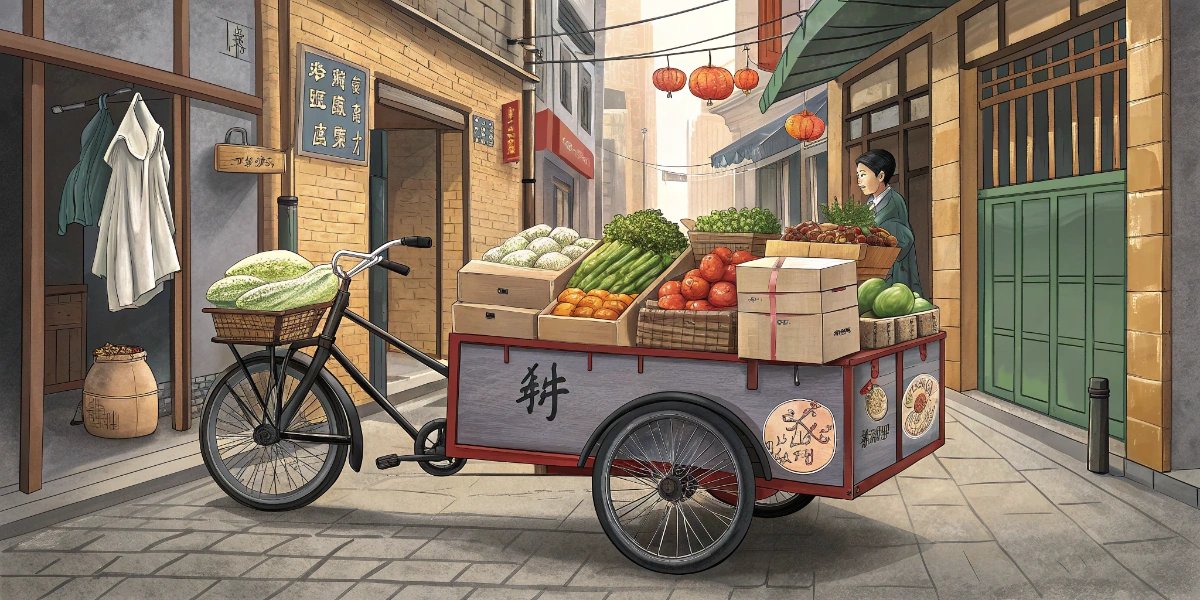
What makes it special: Cargo tricycles are perfectly adapted to Chinese urban environments. They navigate narrow hutong alleys where trucks can't go, carry enormous loads (vendors stack goods 6 feet high), and serve as mobile businesses. Food vendors cook meals from tricycle kitchens. Knife sharpeners, fruit sellers, and junk collectors all operate from tricycles. They're entrepreneurship on three wheels.
Cultural significance: Cargo tricycles represent informal urban economy and working-class resourcefulness. For migrant workers in cities, a tricycle means economic independence—ability to earn living without employer. They're visible symbol of China's development stage—modern cities still rely on human-scale transport for last-mile delivery and services traditional trucks can't provide.
Fun fact for kids: Some Chinese cargo tricycle vendors have incredibly specialized businesses! There are tricycles selling only steamed buns, others selling live goldfish, some carrying entire locksmith workshops, and even mobile phone repair tricycles with tools and parts. Each tricycle is customized for its specific business—it's tiny shop on wheels.
Speech sounds: "Cargo tricycle" has the /k/, /r/, /g/, /tr/, /s/, /k/, and /l/ sounds. "San lun che" (sahn lwun chuh) introduces Chinese pronunciation with tones—teaching that Chinese words use pitch to convey meaning.
4. Shanghai Maglev Train (上海磁悬浮列车) - The Floating Bullet
The Shanghai Maglev is the world's first commercial magnetic levitation train—it floats above the track using powerful magnets, eliminating friction. It connects Shanghai Pudong Airport to the city, covering 19 miles in just 7 minutes at speeds reaching 268 mph. There's no sensation of wheels—it glides silently above the track.
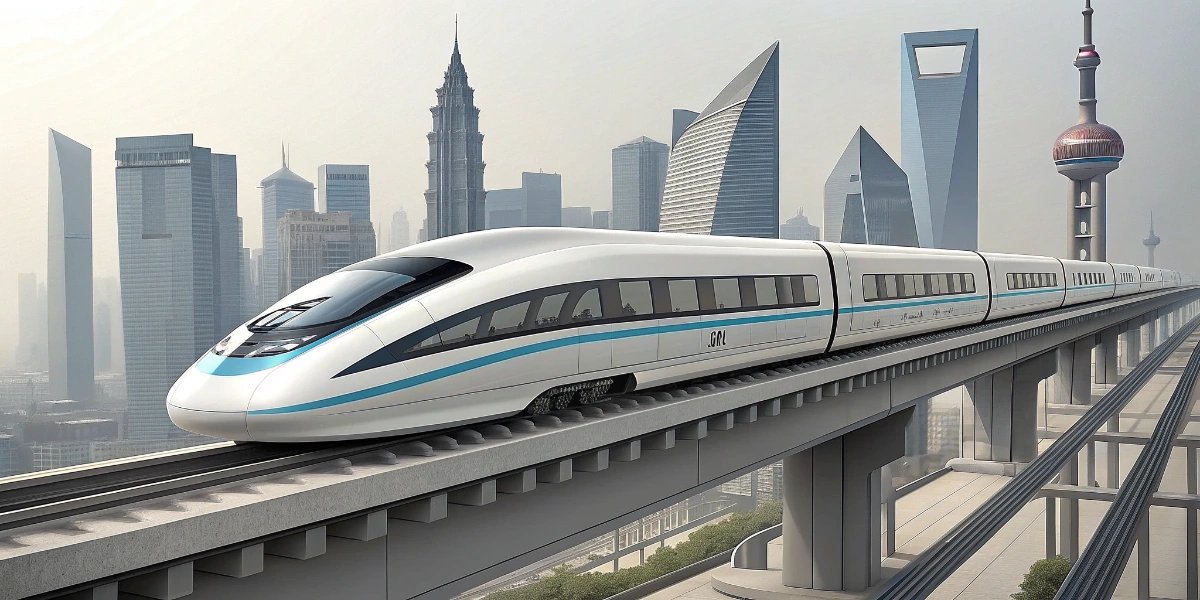
What makes it special: Maglev technology uses electromagnetic force to levitate the train 0.4 inches above the track—no physical contact, no friction, no wheel noise. This allows incredible speeds with smooth, quiet ride. The Shanghai Maglev is the fastest commercial train operation in the world, demonstrating technology most countries only have as prototypes.
How Fast Can We Go?
Cultural significance: The maglev represents China's willingness to invest in experimental technology at scale. While other countries build test tracks, China built commercial service. It symbolizes ambition to lead in transportation technology, not just follow. For visitors, riding the maglev is introduction to China's technological capabilities—arriving at airport and immediately experiencing the future.
Fun fact for kids: The Shanghai Maglev has a speedometer visible to passengers showing real-time speed! Kids watch it climb from 0 to 268 mph in about 4 minutes, then slow back down. At peak speed, the train is going faster than Formula 1 race cars—but so smoothly you can walk around the cabin normally. It's like flying but on the ground!
Speech sounds: "Shanghai Maglev train" has the /ʃ/ (sh), /ŋ/ (ng), /h/, /m/, /g/, /l/, /v/, /tr/, and /n/ sounds. "Maglev" is blend word (magnetic + levitation) teaching how technical terms are created from descriptive words.
5. Metro Train (地铁列车) - Subway Systems
Chinese cities have built massive metro systems incredibly fast. Shanghai Metro is the world's longest (over 500 miles of track), Beijing Metro serves 10+ million riders daily, and even second-tier cities have modern metro systems. Many opened in just the last 15 years. Stations are modern, clean, and often use facial recognition or QR code payment.
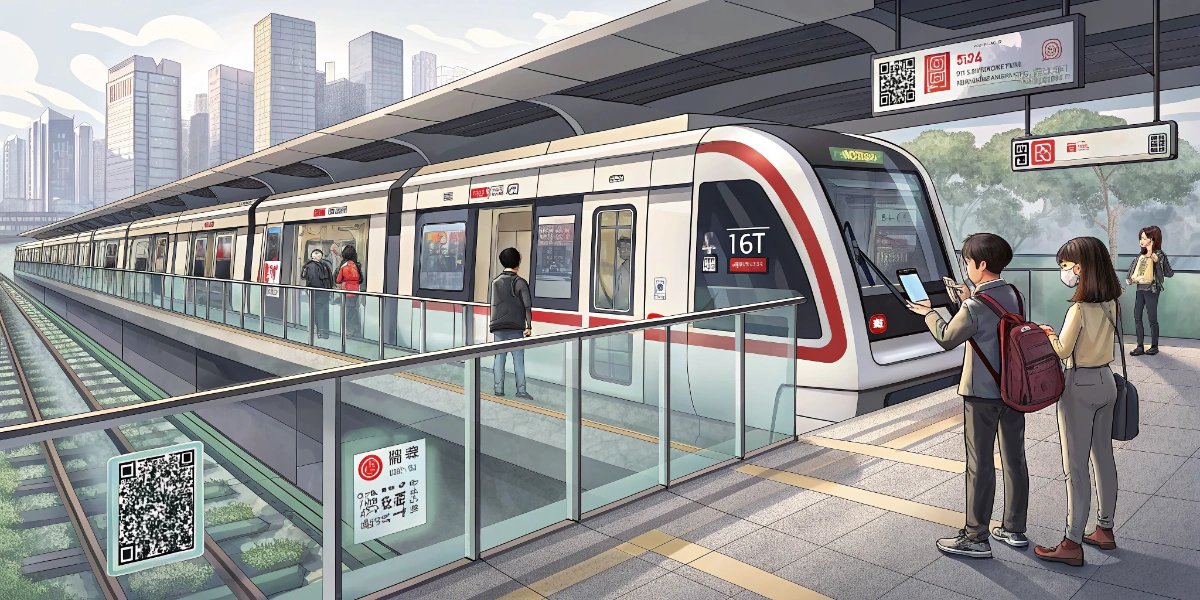
What makes it special: Chinese metro systems are new, extensive, and technologically advanced. Platforms have glass barriers (preventing accidents), trains run at 2-3 minute intervals during rush hour, and stations have air conditioning. Payment is seamless—scan QR code or use facial recognition to enter. Some systems have airport-style security screening at station entrances for safety.
Cultural significance: Metro systems represent China's urban planning focus and infrastructure investment. Cities prioritize public transit over car-centric development. The rapid construction (Beijing added 200+ miles of metro in 10 years) shows government ability to execute large-scale projects. For residents, metros make megacities livable—moving 10 million people daily would be impossible with cars alone.
Fun fact for kids: Some Chinese metro stations are underground palaces! Shanghai's metro art stations have sculptures, murals, and themed designs. Chengdu's "Panda stations" have panda art everywhere. Hong Kong's stations have underground shopping malls—you can shop, eat, and watch movies without going outside. Metro stations are destinations, not just transit points.
Speech sounds: "Metro train" has the /m/, /tr/, and /n/ sounds with short, clear syllables. "Metro" is international word (from "metropolitan") teaching that some words are used globally for similar concepts.
6. Bicycle (自行车) - Traditional and Modern
Bicycles were once China's primary transport—the "Kingdom of Bicycles" with millions cycling to work. While car ownership has grown, bicycles remain essential. Now bike-sharing programs (dockless bikes you unlock with phone apps) have revived cycling. Cities have millions of shared bikes available anywhere, anytime for tiny fees.
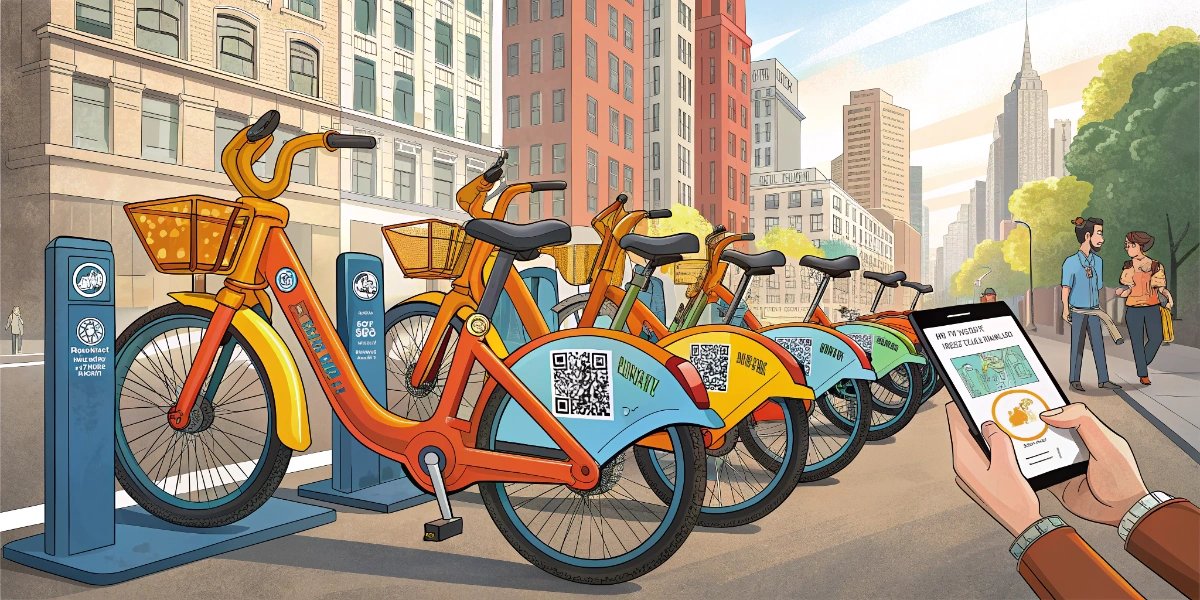
What makes it special: Chinese bike-sharing revolutionized urban transport. Companies like Mobike and Ofo deployed millions of GPS-tracked bikes across cities. Users find bikes via apps, unlock with QR codes, ride wherever, and leave bikes anywhere (no docking stations). It's incredibly convenient—but also created problems when too many bikes were deployed (bike graveyards of unused bikes).
Cultural significance: Bicycles represent both China's past and evolving present. Older generation remembers when everyone biked to work—modern version (bike-sharing) applies technology to traditional transport. The boom-and-bust of bike-sharing companies shows both innovation and growing pains of rapid technological adoption. For daily life, bikes remain practical last-mile solution connecting metro stations to homes.
Fun fact for kids: Chinese bike-sharing bikes come in crazy colors—orange, yellow, blue, green—so many that streets look like rainbows! Each company had its own color to differentiate bikes. At peak, some intersections had hundreds of colorful bikes parked everywhere. It was both convenient and chaotic—too much of good thing creating new problems (sidewalk clutter, waste).
Speech sounds: "Bicycle" has three syllables (BI-cy-cle) with the /b/, /s/, /k/, and /l/ sounds. The prefix "bi-" (meaning two) teaches that word parts indicate numbers—bicycle = two-wheeled vehicle.
When you want a simple, picture-first look at bikes, you can also explore the bicycle vehicle page and talk about how everyday bikes in your neighborhood compare to the brightly colored bike-share fleets in Chinese cities.
7. Delivery Electric Tricycle (快递三轮车)
China's e-commerce boom created massive demand for last-mile delivery. Electric tricycles became the solution—three-wheeled electric vehicles with large cargo boxes delivering packages, food, and groceries. Companies like JD.com and Meituan operate fleets of thousands. They're faster than bicycles, cheaper than vans, and navigate city streets efficiently.
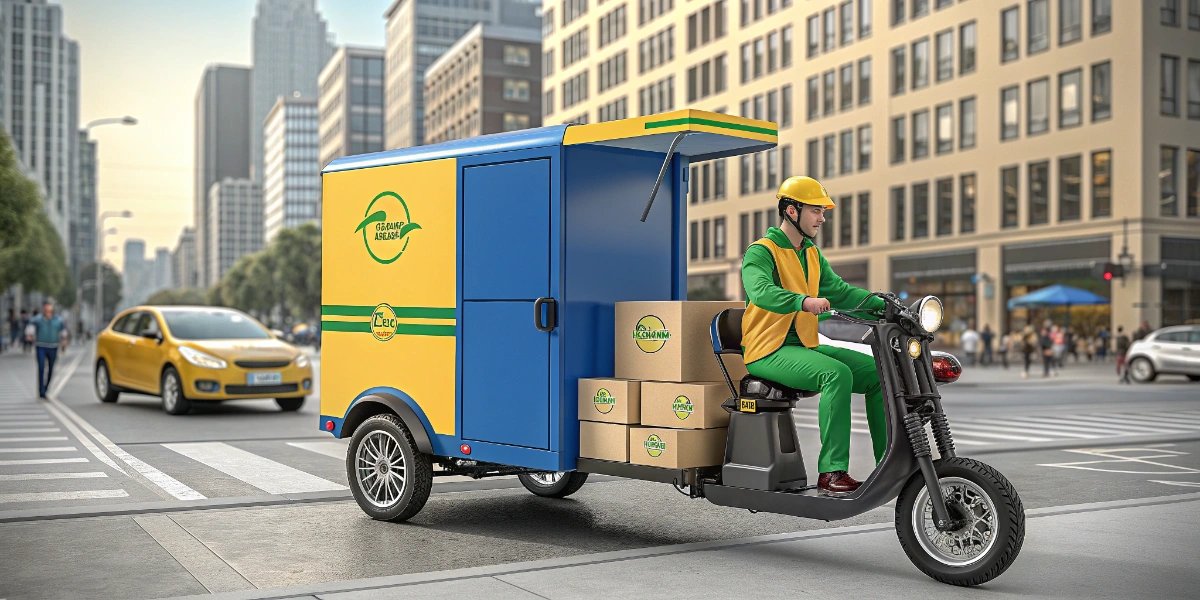
What makes it special: Delivery tricycles are optimized for Chinese urban density. The electric motor handles weight (up to 500 pounds of packages), while three wheels provide stability. Large cargo boxes are insulated (keeping food hot/cold) or have compartments (organizing many deliveries). GPS tracking, route optimization, and real-time communication make delivery incredibly efficient. Orders placed online arrive within 30-60 minutes.
Cultural significance: Delivery tricycles enable China's lifestyle transformation—almost everything can be delivered quickly and cheaply. This changed urban living—people order groceries, meals, packages multiple times daily. The tricycles are infrastructure of convenience economy. For delivery workers, they're tools of gig economy—opportunity for income but also physically demanding work.
Fun fact for kids: Chinese delivery workers are speed champions! They race through traffic, navigate shortcuts, and deliver dozens of orders per hour. Some wear company uniforms color-coded by company—blue for JD, yellow for Meituan. During lunch and dinner rushes, intersections fill with delivery tricycles waiting for lights—it's like race starting grid for food delivery!
Speech sounds: "Delivery electric tricycle" has /d/, /l/, /v/, /r/, /l/, /k/, /tr/, /tr/, /s/, /k/, /l/ sounds—long compound teaching how multiple descriptive words build specific meaning (delivery + electric + tricycle = specific vehicle type).
To compare these tricycles with a more familiar option, you can also visit the delivery truck vehicle page and talk about why a big truck might handle highway routes while smaller electric tricycles handle short city deliveries.
8. Bus (公交车) - City and Intercity
Chinese cities operate extensive bus networks—thousands of routes serving areas metro doesn't reach. Buses are mostly electric now (China leads world in electric bus adoption with 400,000+ electric buses). They have GPS tracking, real-time arrival apps, and cashless payment. Intercity buses connect smaller towns to major cities across highways.
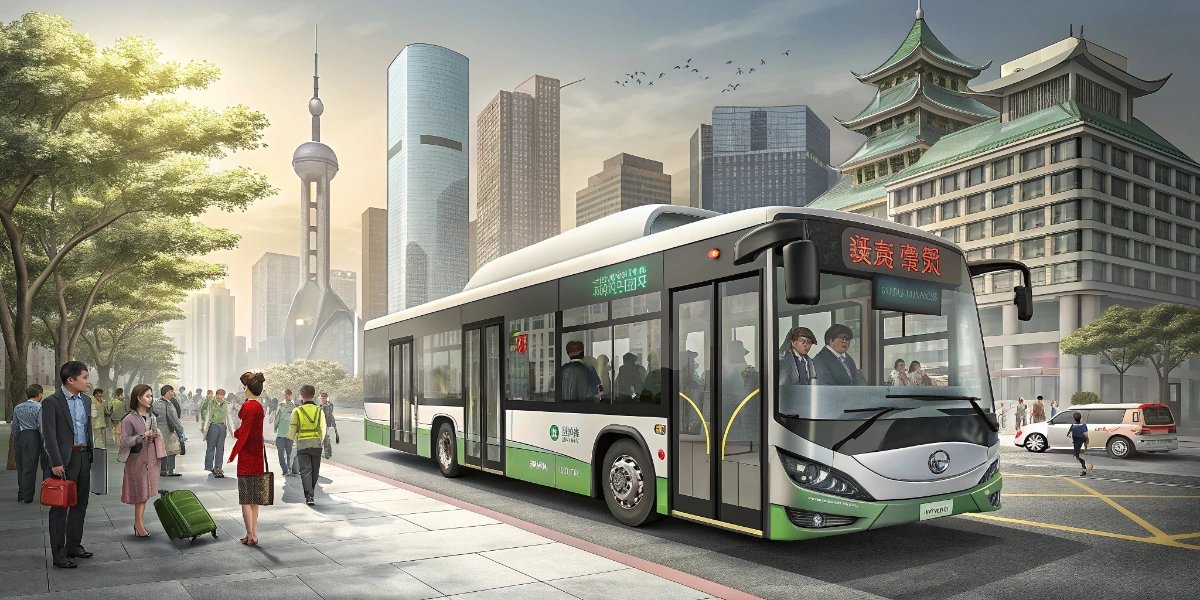
What makes it special: China's commitment to electric buses transformed urban air quality. Cities like Shenzhen electrified their entire bus fleet (16,000+ buses)—largest electric bus fleet in the world. Silent electric buses reduce noise pollution dramatically. Bus stops have digital displays showing real-time arrivals, and apps predict exact arrival times. The system is integrated with metros—one payment card works on all public transit.
Cultural significance: Buses represent democratic urban transport—serving everyone from migrant workers to middle class. The electric transition shows environmental priority despite economic costs (electric buses cost more initially). For smaller cities and rural areas, intercity buses provide essential connections—not everyone lives near high-speed rail stations. Buses fill gaps in transportation network.
Fun fact for kids: Some Chinese buses have priority seating culture that's strongly enforced! Seats near front are reserved for elderly, pregnant women, or people with children. If young person sits there, others will politely (or not so politely) suggest they move. It's social expectation backed by public pressure—teaching respect through daily practice.
Speech sounds: "Bus" is simple one-syllable word with the /b/ and /s/ sounds. Short, clear, and internationally recognized—perfect for early vocabulary. The simplicity makes it ideal for toddlers learning vehicle names.
For a focused, child-friendly overview of buses, you can open the city bus vehicle page and then come back to the Chinese bus section to compare how buses look and work in different countries.
Learning Opportunities Through Chinese Vehicles
Geography Lessons
Chinese vehicles teach geography through scale and density. Why such massive metro systems? Because cities have 20-30 million people each. Why high-speed trains? Because China is vast (similar size to USA) with major cities separated by hundreds of miles. Why so many electric scooters? Because urban density makes short-distance travel most common. Geography determines transportation needs.
Your child learns that population size shapes infrastructure. With 1.4 billion people, everything must scale. Transportation solutions must move millions efficiently. Understanding this builds appreciation for how demographics affect planning.
Cultural Awareness
Every Chinese vehicle reveals cultural values:
- Rapid modernization - Coexistence of traditional (tricycles) and futuristic (maglev)
- Technology adoption - QR codes, facial recognition, mobile payments integrated everywhere
- Collective efficiency - Public transit prioritized over individual car ownership
- Environmental shift - World's largest electric vehicle adoption despite being developing nation
- Infrastructure ambition - Building world's largest networks at unprecedented speed
These aren't just vehicles—they're expressions of China's transformation. Your child learns that rapid development creates unique coexistence of old and new, that government focus can build infrastructure quickly, and that technology adoption happens faster in some places than others.
Vocabulary Building
Chinese vehicle vocabulary introduces technical and cultural terms:
- Maglev - Blend word (magnetic + levitation)
- San lun che - Chinese for three-wheeled vehicle
- Fuxing - Chinese for "rejuvenation" (train name)
- E-scooter - Electric scooter (tech abbreviation)
- Kuaidi - Chinese for "fast delivery"
In Talk & Listen, I include vehicle sounds from modern environments—the whoosh of high-speed trains, the silence of electric scooters, the bustle of delivery tricycles. These sounds connect to rapidly modernizing urban landscapes.
App Connections
Talk & Listen: Practice Chinese vehicle sounds—high-speed train whoosh (different from regular trains), silent electric scooter (teaching that some vehicles make almost no sound), delivery tricycle beeping (warning pedestrians). Learn vocabulary through modern urban context: "fast," "electric," "future," "city."
Create & Play: Kids can design their own high-speed train color schemes, create cargo tricycle businesses, or plan metro routes through megacities. Chinese vehicles inspire future-thinking: what will transportation look like in 20 years?
Why Chinese Vehicles Show Rapid Transformation
When my toddler said the bullet train looks futuristic, they captured something essential about Chinese transportation—it's built for tomorrow, not yesterday. China leapfrogged stages other countries went through, jumping from bicycles to bullet trains in single generation. This creates unique landscape where centuries coexist on same street.
Chinese vehicles show that rapid development means embracing contradictions. Traditional cargo tricycles work perfectly alongside maglev trains. Both solve real problems. Understanding this builds appreciation for appropriate technology—sometimes old solutions work fine, sometimes leapfrogging to newest technology makes sense. China does both simultaneously.
Kids appreciate this mix of old and new. They learn that progress isn't linear—you can adopt newest technology while keeping traditional solutions that work. That different parts of society modernize at different rates. That the future arrives unevenly but inevitably. Chinese vehicles teach that transformation happens fast when will, resources, and need align.
Explore More World Vehicles
This is the eleventh in my World Vehicles series. Already published:Vehicles of Japan,Vehicles of India,Vehicles of the UK,Vehicles of Africa,Vehicles of the Middle East,Vehicles of Australia,Vehicles of Scandinavia,Vehicles of South America,Vehicles of Southeast Asia, andVehicles of Russia. Coming soon: Vehicles of USA!
Want to explore Chinese vehicles interactively? Talk & Listen includes vehicle sounds from modern urban environments. In Create & Play, kids can design their own vehicles inspired by Chinese innovation—from bullet train color schemes to cargo tricycle businesses.
For a complete overview across all 12 regions, visit the World Vehicles for Kids: Complete Guide.
 Frequently Asked Questions
 Ad-free & offline ready