Why Southeast Asian Vehicles Are Colorful and Open
Southeast Asia combines tropical heat, dense urban populations, and vibrant cultural expression. Temperatures stay warm year-round (75-95°F), making enclosed vehicles uncomfortable without air conditioning. Cities like Manila, Bangkok, and Ho Chi Minh City have narrow streets built before cars existed, requiring small, maneuverable vehicles. And cultural traditions emphasize decoration, color, and personal expression.
What makes Southeast Asian vehicles fascinating is how they adapt to tropical conditions while celebrating cultural identity. Open sides provide ventilation in heat. Bright colors reflect cultural aesthetics. Extended vehicles maximize passenger capacity in limited road space. And mechanical ingenuity keeps decades-old vehicles running through constant repairs and modifications.
For kids, Southeast Asian vehicles show how climate and culture shape transportation. When it's always hot, you don't need doors. When streets are narrow, smaller is better. When communities value decoration, vehicles become art. Let's explore eight vehicles that show Southeast Asian ingenuity and style.
1. Jeepney (Dyipni, Philippines) - The King of the Road
Jeepneys are the Philippines' most iconic vehicles—stretched World War II-era jeeps transformed into public buses. American soldiers left thousands of Willys jeeps behind after WWII; Filipinos extended the chassis, added bench seats, and created a unique vehicle that's now a national symbol.
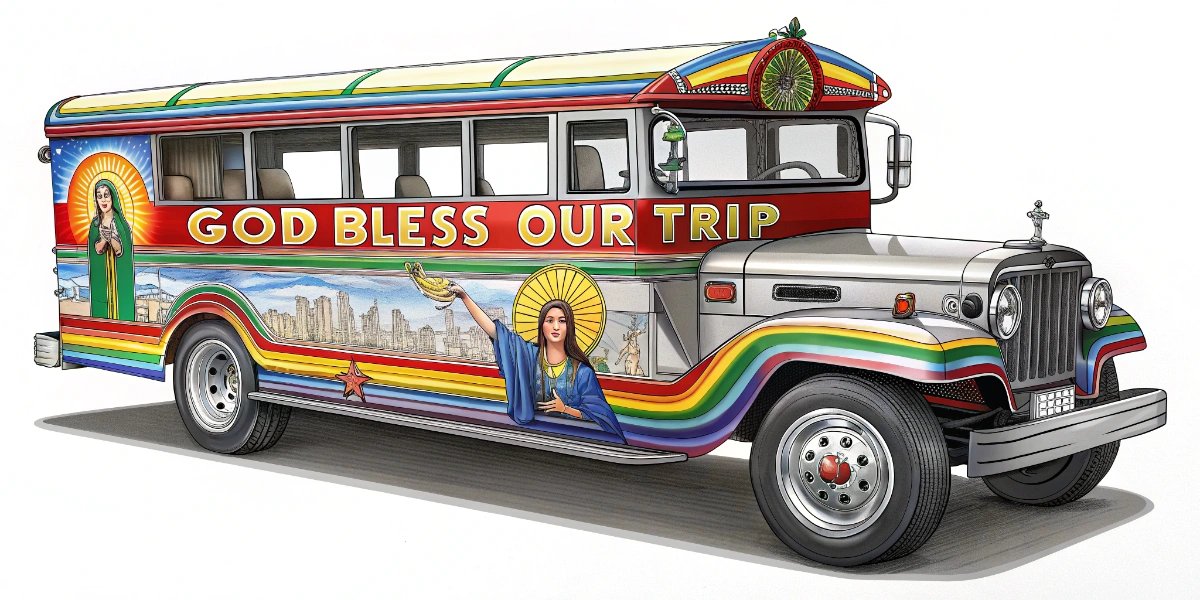
What makes it special: Jeepneys are elaborately decorated with chrome horse sculptures on hoods, religious imagery, family names, and vibrant paint jobs. No two look alike—owners commission artists to create unique designs. Inside, disco balls hang from ceilings, LED lights line interiors, and sound systems play music. They're mobile art galleries that happen to transport passengers.
Cultural significance: Jeepneys represent Filipino resourcefulness and creativity. What started as wartime surplus became beloved cultural icons. They're called "King of the Road" because they dominate Manila's streets. Jeepney drivers and operators form family dynasties—vehicles are passed through generations, maintaining family colors and routes.
Fun fact for kids: Jeepney decoration has rules and traditions! Chrome horses on the hood must face forward (for good luck). Religious images protect passengers during journeys. Family names honor ancestors. The phrase "God Bless Our Trip" appears on most jeepneys—it's both prayer and promise. Decoration isn't just aesthetic—it's spiritual protection.
Speech sounds: "Jeepney" has the /dʒ/ sound (spelled with 'j'), the long /e/ vowel, /p/, and /n/. The word combines "jeep" + "jitney" (an old term for shared taxi), teaching how new words form from blending existing ones.
2. Tuk-Tuk (ตุ๊กตุ๊ก, Thailand) - The Three-Wheeled Wonder
Tuk-tuks are Thailand's version of auto rickshaws—three-wheeled motorized vehicles with covered passenger compartments. The name comes from the sound they make: "tuk-tuk-tuk" from the two-stroke engine. They're essential Bangkok transport, weaving through traffic faster than cars.
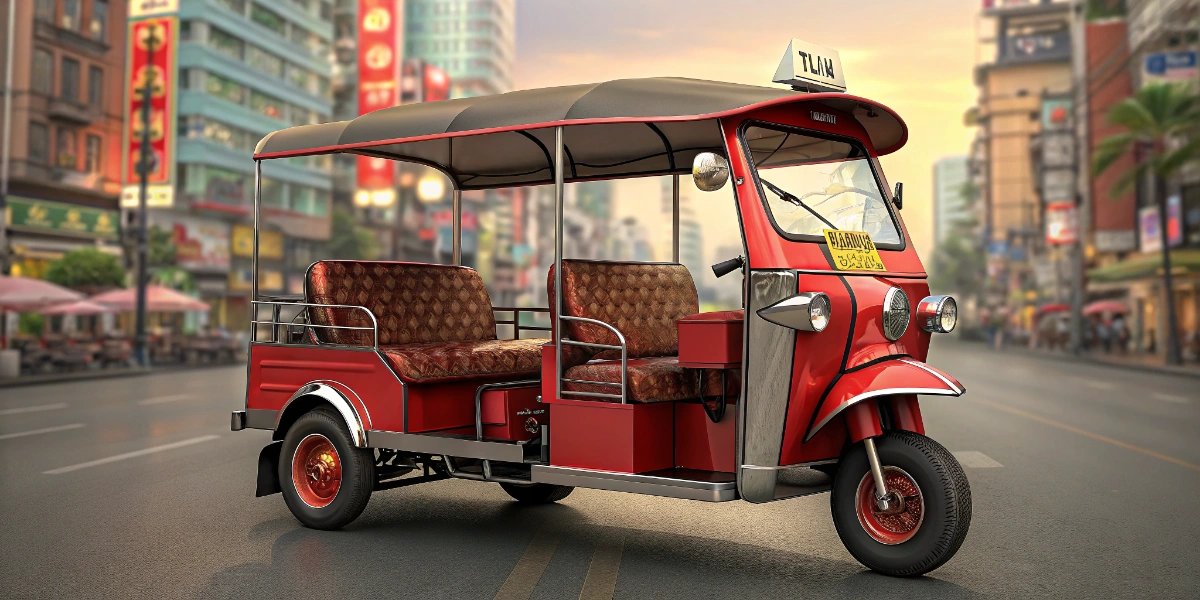
What makes it special: Tuk-tuks have distinctive rounded roofs, bright colors (often red, yellow, or green), and completely open sides (no doors or windows). Drivers customize them extensively—LED lights, custom paint, upgraded engines, and modified seats. Some tourist tuk-tuks have themed decorations (Hello Kitty tuk-tuks exist!).
Count the Wheels: Street Traffic
Cultural significance: Tuk-tuks represent Bangkok's solution to traffic congestion and narrow sois (side streets). They're faster than taxis in gridlock, cheaper than private cars, and part of Thai street life. Tourists love them, locals depend on them. Tuk-tuk drivers know every shortcut, making them mobile guides to city navigation.
Fun fact for kids: Bangkok has tuk-tuk races! Drivers compete in time trials and obstacle courses, showing off driving skills and vehicle modifications. Some tuk-tuks are modified with racing engines, reaching speeds of 60+ mph (though normal city speeds are much slower). It's like NASCAR but with three wheels!
Speech sounds: "Tuk-tuk" is perfect onomatopoeia—the word sounds like the vehicle! The /t/ and /k/ sounds (voiceless stops) mimic the engine noise. Reduplication (repeating syllables) teaches that words can describe sounds they make.
3. Tricycle (Traysikel, Philippines) - Motorcycle Plus Sidecar
Filipino tricycles are motorcycles with passenger sidecars—but not like Western sidecars. These are elaborate covered compartments that can carry 4-6 passengers, plus the driver on the motorcycle. They're primary transport in smaller Philippine cities and towns where jeepneys can't navigate narrow streets.
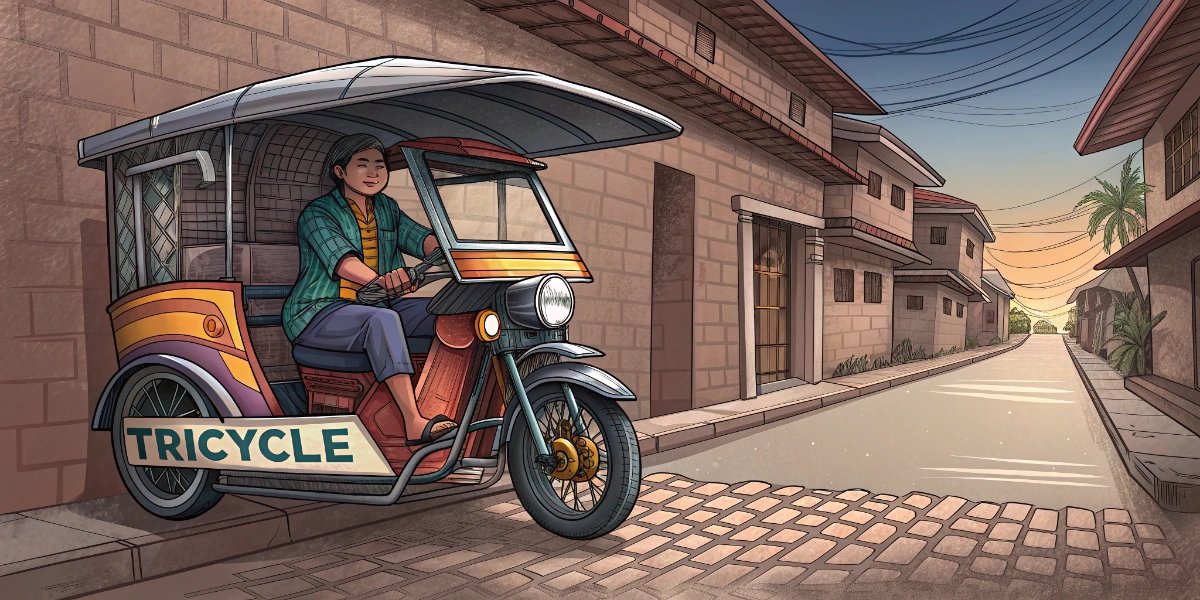
What makes it special: Tricycle sidecars are custom-built—welded metal frames with roofs, seats, and sometimes plastic windows. Each municipality has different designs—Bohol tricycles look different from Cebu tricycles look different from Palawan tricycles. Designs reflect local culture and geography. They're personalized with names, decorations, and unique paint schemes.
Cultural significance: Tricycles represent Filipino adaptation and local craftsmanship. Every sidecar is hand-built by local welders and fabricators, creating employment and supporting small businesses. They're community vehicles—drivers know regular passengers, deliver packages, and serve as informal information networks. In rural areas, they're often the only motorized transport available.
Fun fact for kids: Some Philippine tricycles have "special" features—baby seats welded inside for parents with infants, cargo racks for groceries, or extended roofs for tall passengers. Drivers customize based on their regular riders' needs. It's personal service—your tricycle driver might remember your schedule and show up without being called!
Speech sounds: "Tricycle" has three syllables (TRI-cy-cle) with the /tr/ consonant blend, /s/, /k/, and /l/ sounds. The prefix "tri-" means three (three wheels), teaching how prefixes indicate numbers.
4. Songthaew (สองแถว, Thailand) - The Red Truck Bus
Songthaews are pickup trucks converted into shared taxis—the truck bed is fitted with two bench seats facing each other (songthaew means "two rows" in Thai). They operate on semi-fixed routes, picking up and dropping off passengers along the way. Most are painted red, though some cities use different colors.
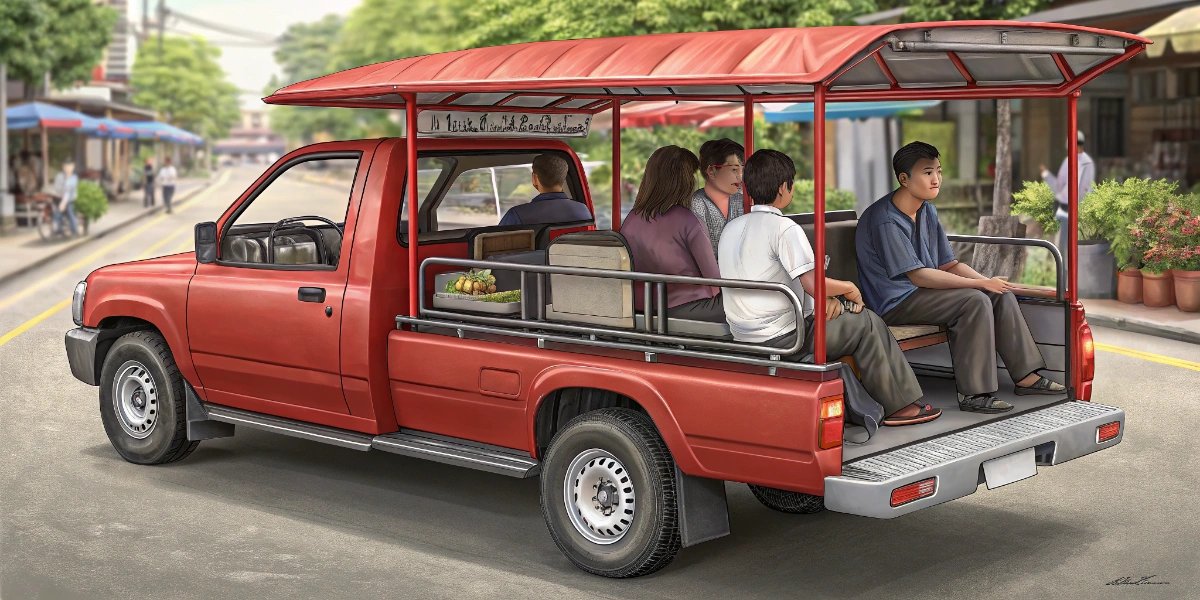
To compare these red trucks to everyday pickups, you can open the pickup truck vehicle page and talk about how people modify trucks for different jobs.
What makes it special: Songthaews combine the efficiency of buses with the flexibility of taxis. They follow general routes but adjust for passengers, creating a semi-organized public transit system. Passengers signal drivers to stop by pressing a buzzer. Fares are low (equivalent to $0.30-$1.00), making them accessible to everyone. The open back provides ventilation in tropical heat.
Cultural significance: Songthaews represent Thai practical ingenuity. Why build expensive buses when modified pickup trucks work perfectly? They're environmentally efficient (one vehicle carries many passengers) and economically accessible. In cities like Chiang Mai, songthaews are the primary public transit—more common than buses or trains.
Fun fact for kids: Different Thai cities use different songthaew colors to indicate routes! In Phuket, blue songthaews go to beaches, green ones go to different areas. It's like color-coded public transit—you know where a songthaew goes by its color. No need to read signs; just look for your color!
Speech sounds: "Songthaew" has the /s/, /ŋ/ (ng sound), /th/, and /aʊ/ sounds. The Thai pronunciation (SONG-tao) teaches that words from other languages may have unfamiliar sound combinations—great for phonological awareness.
5. Cyclo (Xích lô, Vietnam) - The Bicycle Rickshaw
Cyclos (pronounced SEE-clo) are bicycle rickshaws where the passenger sits in front and the driver pedals from behind. They're slower than motorized vehicles but provide leisurely, quiet transport through Vietnam's old city quarters. Once dominant in Vietnamese cities, they're now mostly used by tourists, but they remain cultural icons.
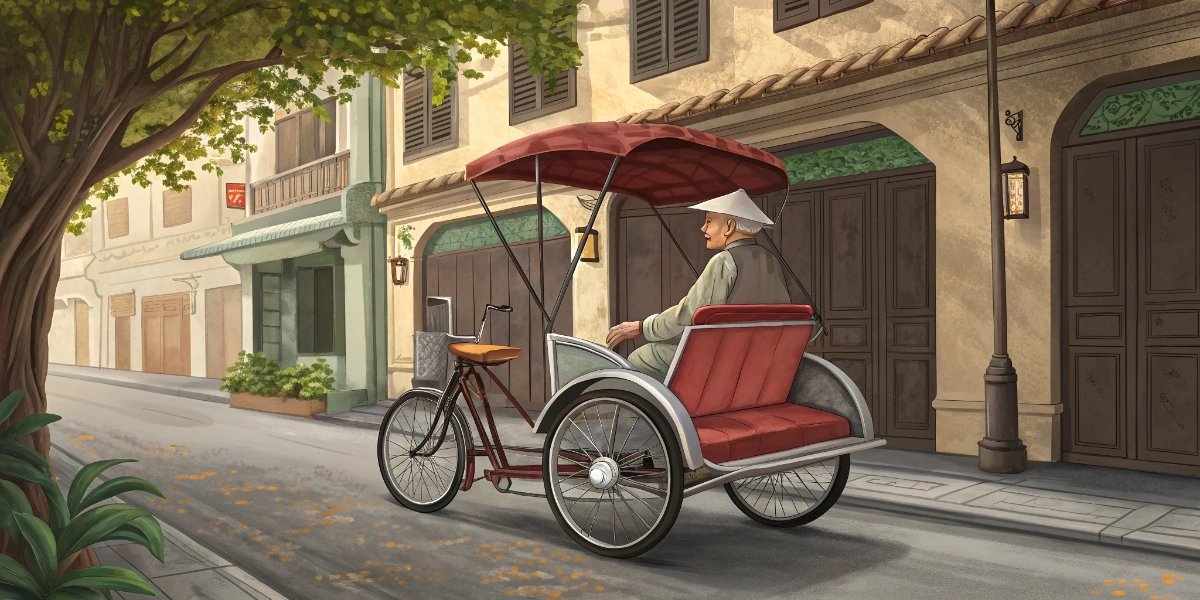
What makes it special: Unlike most rickshaws where passengers sit behind the driver, cyclos put passengers in front. This gives riders unobstructed views and protects them if the cyclo is hit from behind. The design is uniquely Vietnamese—invented in the 1930s during French colonial period, adapted for local conditions. Seats are padded and often have canopies for shade.
Cultural significance: Cyclos represent old Hanoi and Saigon (Ho Chi Minh City). They're slower-paced, human-powered, and environmentally friendly. Many cyclo drivers are elderly men who've operated the same vehicle for decades. Riding a cyclo is time travel—experiencing cities at human speed, not car speed. They symbolize Vietnam's history and resilience.
Fun fact for kids: Vietnamese cyclo drivers have incredible leg strength! They pedal all day carrying passengers through hilly streets. Some drivers are in their 70s and still working—cycling keeps them healthy and strong. It's both transportation and exercise. Many tourists tip generously because they appreciate the hard physical work.
Speech sounds: "Cyclo" has the /s/ sound (spelled with 'c'), /k/, /l/, and the long /o/ vowel. The shortened form of "cycle" teaches how words are abbreviated in different languages.
6. Motorcycle (Southeast Asia's Workhorse)
Motorcycles dominate Southeast Asian streets—in Vietnam, there are more motorcycles than people! They're used for everything: commuting to work, family transport (entire families of 4-5 ride together), cargo hauling, mobile businesses, and even moving furniture. Motorcycles are the most versatile vehicles in the region.
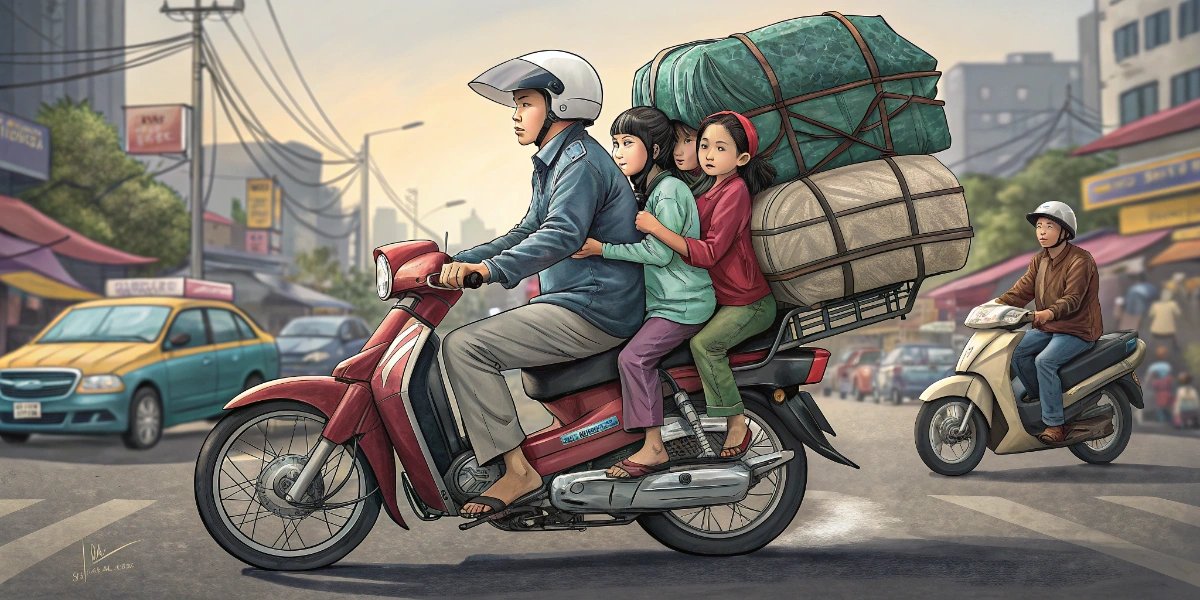
For a simple overview of this everyday vehicle, you can also visit the motorcycle vehicle page and compare typical bikes with the heavily loaded versions used in Southeast Asia.
What makes it special: Southeast Asian motorcycle culture is unique. Riders carry enormous loads—stacks of goods taller than the rider, live pigs, entire furniture sets, dozens of potted plants. Families ride together—parents in front, kids sandwiched in middle, baby held in arms. It looks chaotic but functions smoothly through unspoken traffic rules and incredible balance skills.
Cultural significance: Motorcycles represent economic mobility and freedom. They're affordable (used motorcycles cost $200-500), fuel-efficient, and navigate traffic/narrow streets better than cars. For many Southeast Asian families, a motorcycle is their only vehicle—serving as car, truck, and family transport combined. Motorcycle ownership enables work opportunities and independence.
Fun fact for kids: Vietnamese street vendors operate entire businesses from motorcycles! Coffee vendors have espresso machines mounted on bikes. Food vendors have cooking equipment, ingredients, and serving supplies. They're mobile restaurants—parking at corners, serving customers, then moving to new locations. It's entrepreneurship on two wheels!
Speech sounds: "Motorcycle" has the /m/, /t/, /r/, /s/, /k/, and /l/ sounds. The compound word structure (motor + cycle = cycle with a motor) clearly teaches word formation and mechanical concepts.
7. School Bus (Modified Pickup Trucks)
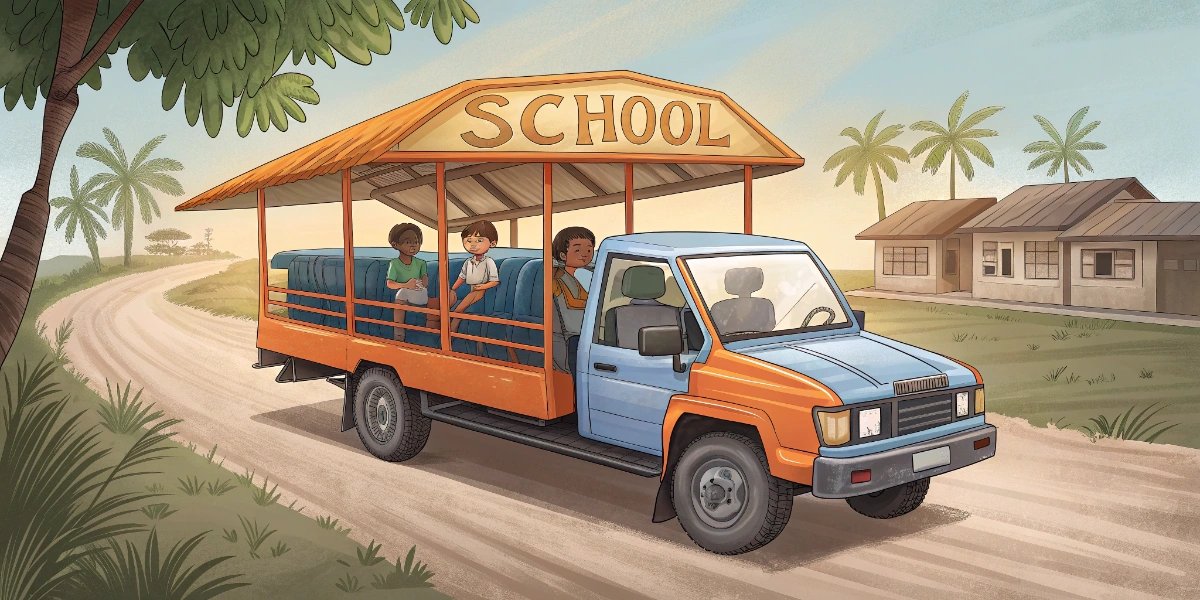
Southeast Asian school buses are often modified pickup trucks—not the yellow buses Americans know. Truck beds are fitted with benches and canopies, creating open-air school transport. In rural areas, these modified trucks carry children along unpaved roads to schools that might be 10+ miles from villages.
To connect this story to a simple bus overview, you can also visit the school bus vehicle page and compare Southeast Asian school buses with ones in your own area.
What makes it special: School buses adapt to local conditions—open sides provide ventilation in heat, pickup trucks handle rough roads better than standard buses, and capacity flexibility accommodates varying student numbers. Many are painted bright colors (orange, blue, green) with "SCHOOL" written in English and local languages. They're essential infrastructure connecting rural children to education.
Cultural significance: School buses represent commitment to education despite geographic challenges. Southeast Asian countries prioritize getting children to school even in remote areas. The modified pickup truck solution is practical engineering—using available vehicles rather than expensive purpose-built buses. It's resourcefulness serving educational access.
Fun fact for kids: Some Southeast Asian school buses have student monitors—older students who ensure everyone's safely seated before the bus moves! They also help younger kids get on/off and make sure nobody's left behind. It's student leadership and community responsibility built into daily transport. Kids learn cooperation through their commute.
Speech sounds: "School bus" has the /sk/ consonant cluster (spelled 'sch'), long /u/ vowel, and /b/ sound. Short, clear compound word perfect for early phoneme practice and vehicle vocabulary.
8. Police Motorcycle (Traffic Navigators)
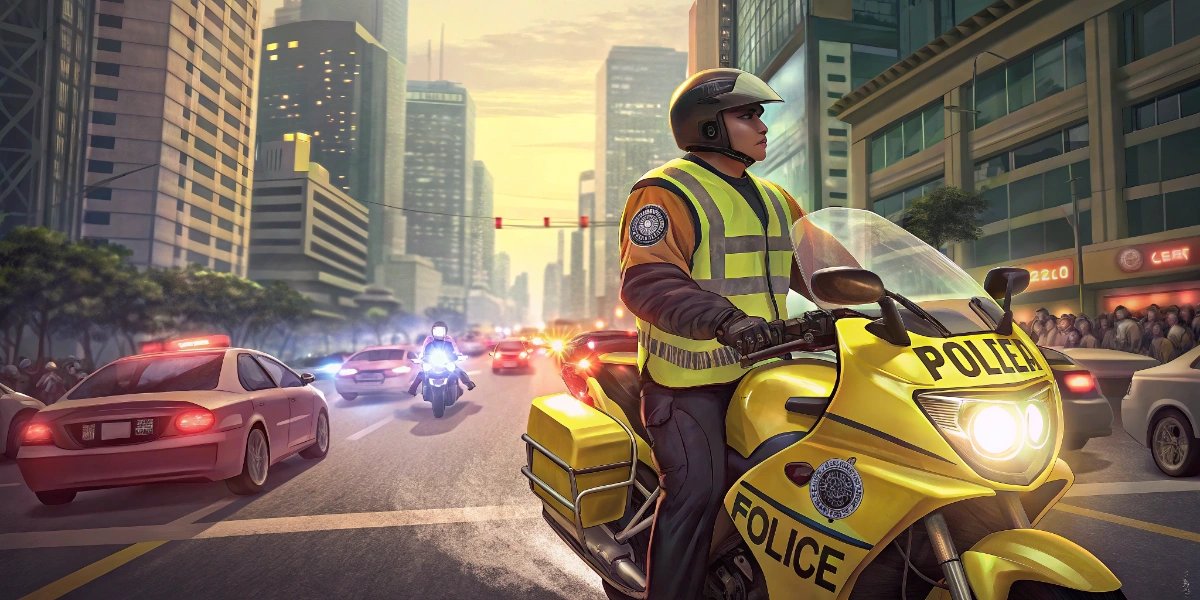
Southeast Asian police motorcycles are essential for urban traffic management. In cities where car traffic moves at walking speed during rush hour, police on motorcycles can actually navigate streets, respond to emergencies, and enforce traffic laws. Many are brightly colored (fluorescent yellow or orange) for visibility.
To see how police bikes compare around the world, you can visit the police motorcycle vehicle page for more pictures and simple facts.
What makes it special: Police motorcycles in Southeast Asia often have unique features—sirens that play different tones, emergency equipment mounted creatively to avoid adding width, and sometimes go-pro cameras for traffic documentation. Officers undergo specialized training in high-density urban riding because navigating Bangkok or Manila traffic requires exceptional skill.
Cultural significance: Police motorcycles represent adaptation to traffic reality. When gridlock is the norm, motorcycles provide police mobility. They're also more approachable than patrol cars—officers on motorcycles can interact with communities, provide directions, and be visible presences. This community policing approach fits Southeast Asian cultural values of personal relationships.
Fun fact for kids: Some Southeast Asian police forces use motorcycle escorts for VIP vehicles—creating "rolling roadblocks" where motorcycle officers ride ahead clearing traffic! It's coordinated choreography at high speed. Escorts position themselves strategically, using sirens and hand signals to communicate. It's precision teamwork on two wheels.
Speech sounds: "Police motorcycle" has /p/, /l/, /s/, /m/, /t/, /r/, /s/, /k/, and /l/ sounds. Long compound word with excellent phoneme variety for practicing multiple sounds in sequence.
Learning Opportunities Through Southeast Asian Vehicles
Geography Lessons
Southeast Asian vehicles teach geography through climate adaptation. Why are sides open on jeepneys and tuk-tuks? Because tropical heat (80-95°F year-round) makes enclosed vehicles uncomfortable. Why small vehicles? Because cities have narrow streets—many built before cars existed. Every vehicle design reflects tropical geography and dense urban environments.
Your child learns that climate dramatically affects vehicle design. Tropical regions need ventilation, not heating. Monsoon seasons require vehicles that dry quickly. Dense cities need maneuverability over size. Geography determines what works.
Cultural Awareness
Every Southeast Asian vehicle reveals cultural values:
- Resourcefulness - WWII jeeps become public buses; pickup trucks become school buses
- Decoration as identity - Vehicles become canvases expressing family, faith, and pride
- Community cooperation - Shared vehicles require trust and social coordination
- Practical ingenuity - Solutions are improvised, adapted, and locally fabricated
- Entrepreneurship - Motorcycles become mobile businesses; drivers own their vehicles
These aren't just vehicles—they're expressions of Southeast Asian culture. Your child learns that similar needs (urban transport) get solved differently based on local resources, climate, and values.
Vocabulary Building
Southeast Asian vehicle vocabulary introduces regional terms:
- Jeepney - Filipino blend word (jeep + jitney)
- Tuk-tuk - Thai onomatopoeia (imitating engine sound)
- Songthaew - Thai compound (song = two, thaew = row)
- Cyclo - Vietnamese abbreviation of bicycle rickshaw
- Tricycle - Universal term with local variations in design
In Talk & Listen, we include vehicle sounds from different environments—the distinctive "tuk-tuk-tuk" of Thai engines, the rumble of jeepney diesel motors. These sounds connect to tropical urban soundscapes.
App Connections
Talk & Listen: Practice Southeast Asian vehicle sounds—tuk-tuk engines (distinctive two-stroke sound), jeepney horns (musical patterns drivers use), motorcycle buzzing through traffic. Learn vocabulary through cultural context: "tropical," "colorful," "decorated," "shared."
Create & Play: Kids can design their own jeepney decorations with chrome horses and religious imagery, create tuk-tuk paint schemes, or build tricycle sidecars. Southeast Asian vehicles inspire creativity: what would YOU paint on a jeepney?
Activity Ideas
Want something to print alongside these? The free printables library has vehicle coloring pages and activity packs — no email required.
- Jeepney decoration challenge: Create the most elaborate vehicle art possible
- Sound imitation: Say "tuk-tuk-tuk" practicing the engine sound
- Balance challenge: How much could you carry on a motorcycle safely?
- Route mapping: Plan efficient songthaew routes through a neighborhood
- Cultural patterns: Study and recreate Filipino jeepney art patterns
- Climate adaptation: Why do tropical vehicles have open sides?
- Compare vehicles: Jeepney vs. chicken bus vs. matatu—similarities and differences?
Why Southeast Asian Vehicles Celebrate Community
When my toddler said jeepneys look like parties on wheels, they captured something essential about Southeast Asian transportation. These vehicles aren't just functional—they're social spaces, cultural expressions, and community connectors. A jeepney ride means sitting close to strangers, sharing space, and participating in collective experience.
Southeast Asian vehicles show that transportation can be both practical and joyful. Why should a bus be boring when it can be beautiful? Why waste space when you can squeeze together? Why own a car when motorcycles and shared vehicles work better for most needs? Understanding this builds appreciation for different approaches to urban life and community cooperation.
Kids appreciate this creativity and cooperation. They learn that vehicles reflect values—individualism (one person, one car) versus collectivism (shared vehicles, shared space). That decoration matters. That communities can self-organize transport without top-down planning. Southeast Asian vehicles teach that innovation happens everywhere, expressed through vibrant colors, ingenious modifications, and community-focused solutions.
Explore More World Vehicles
This is the ninth in the World Vehicles series. Already published:Vehicles of Japan,Vehicles of India,Vehicles of the UK,Vehicles of Africa,Vehicles of the Middle East,Vehicles of Australia,Vehicles of Scandinavia, andVehicles of South America. More regions coming soon! You can see the complete overview at World Vehicles for Kids: Complete Guide.
Want to explore Southeast Asian vehicles interactively? Talk & Listen includes vehicle sounds from tropical urban environments. In Create & Play, kids can design their own vehicles inspired by Southeast Asian creativity—from jeepney artwork to tuk-tuk color schemes.
 Frequently Asked Questions
 Ad-free & offline ready