Why South American Vehicles Are Colorful and Resourceful
South America combines extreme geography with vibrant culture. The Andes Mountains create roads that switchback up cliff faces at dizzying heights. The Amazon Basin floods seasonally, requiring vehicles that handle water as well as mud. Cities sprawl across hillsides with steep, narrow streets. And economic realities mean vehicles must last decades through constant repairs and improvisation.
What makes South American vehicles fascinating is how they blend function with expression. A bus isn't just transportation—it's a canvas for cultural identity. A truck isn't just cargo hauler—it's rebuilt, repainted, and personalized until it becomes unique. Mechanical necessity drives creativity: when new parts aren't available, mechanics fabricate them. When roads are terrible, drivers modify vehicles to survive.
For kids, South American vehicles show how constraints spark both artistry and ingenuity. When you can't afford new vehicles, you maintain old ones with pride. When roads are challenging, you adapt. Let's explore eight vehicles that show South American resourcefulness and cultural expression.
1. Chicken Bus (Camioneta) - Retired School Bus Reborn
Chicken buses are retired American school buses—typically 15-25 years old when sold at auction—shipped to Central and South America, then completely transformed. They're repainted with elaborate designs, fitted with chrome accents, upgraded with massive sound systems, and put back to work as primary public transportation.
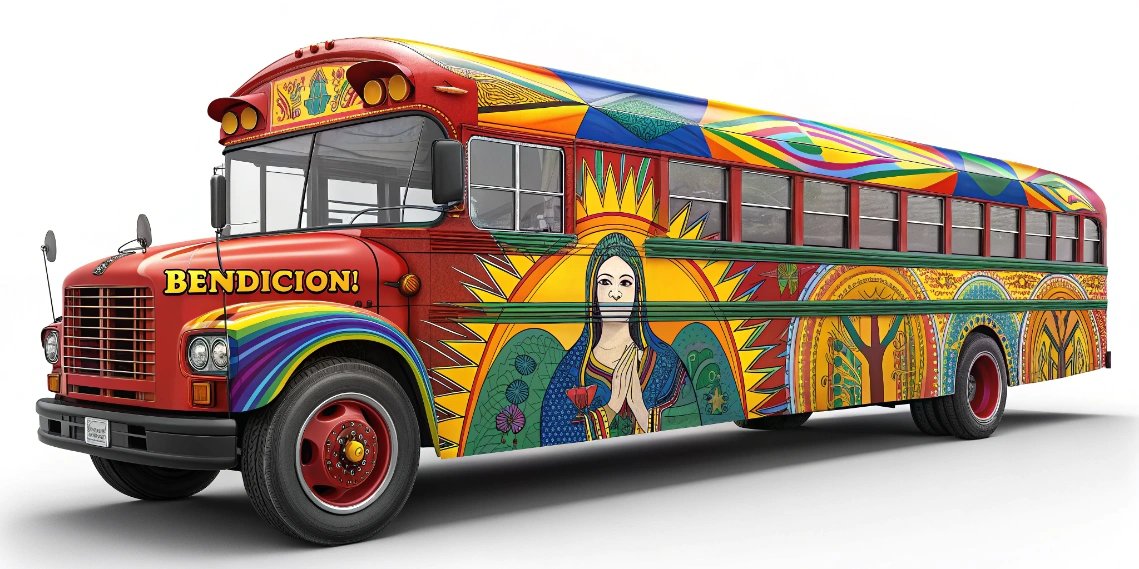
What makes it special: No two chicken buses look alike. Owners commission artists to paint religious imagery, geometric patterns, landscape scenes, or abstract designs. Chrome trim is welded onto every surface. Windshields get decorative stickers. Inside, original seats are replaced with bench seats (fitting more passengers), LED lights line the ceiling, and speakers blast music. It's folk art meets public transit.
Bus Lifespan: New Life for Old Buses
Cultural significance: Chicken buses represent economic recycling and cultural expression. What Americans discard, Latin Americans transform into art. The name "chicken bus" comes from rural routes where passengers bring livestock, produce, and goods—chickens riding alongside people. They're working-class transport elevated to cultural icons.
Fun fact for kids: Chicken bus artists are local celebrities! The best painters charge premium prices for their work. Owners compete to have the most eye-catching bus because passengers choose which bus to ride based on appearance and music. Beauty attracts customers—it's marketing through art.
Speech sounds: "Chicken bus" has the /tʃ/ sound (spelled 'ch'), the /k/, /n/, /b/, and /s/ sounds. The compound word humorously describes vehicles where chickens ride—perfect for teaching that names can be literal and descriptive.
2. Chiva (Bus colombiano de fiesta)
Chivas are uniquely Colombian vehicles—open-sided buses with bench seats, brightly painted, and used for celebrations, tours, and parties. Traditional chivas were rural buses; modern ones are party vehicles complete with sound systems, bars, and dance floors.
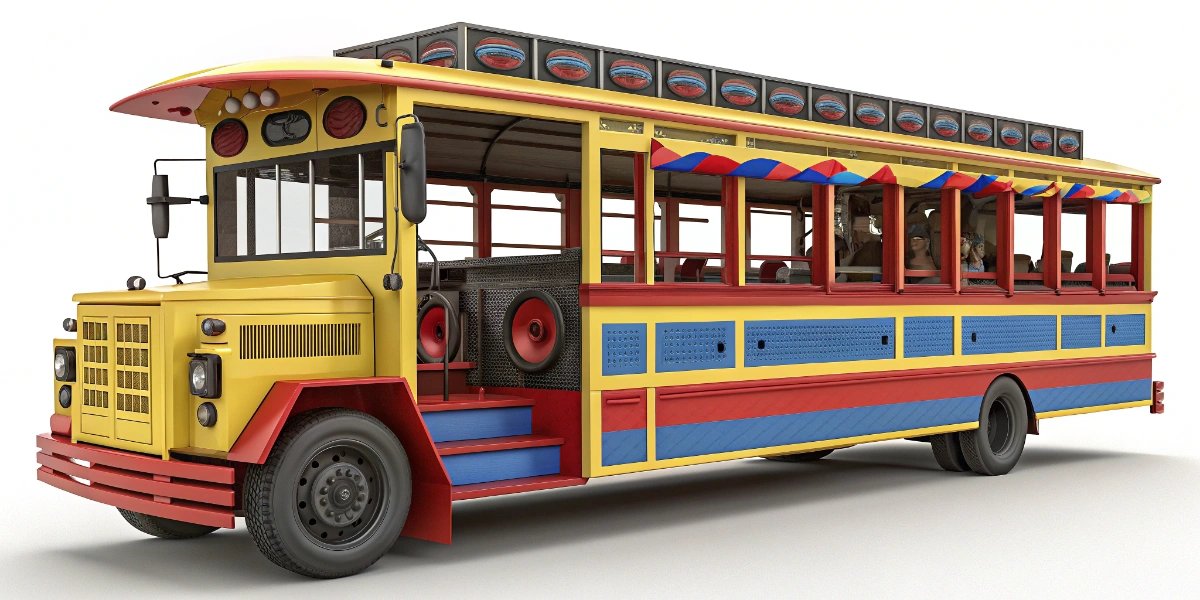
What makes it special: Chivas have no windows or doors—they're completely open on the sides with bench seats facing outward. Passengers sit looking out at scenery, waving to people. Modern party chivas have built-in bars serving drinks, massive speakers playing vallenato music, and sometimes dance floors. They cruise cities while passengers celebrate.
Cultural significance: Chivas represent Colombian joy and celebration. They're used for everything from birthday parties to corporate events to tourist tours. The open design reflects Colombian climate (warm enough that walls aren't needed) and culture (openness, friendliness, celebration). Riding a chiva is an experience, not just transportation.
Fun fact for kids: Some chivas are family businesses passed through generations! Families maintain and operate chivas for decades, painting them in family colors and developing loyal customer bases. The oldest chivas still operating date from the 1950s—kept running through constant mechanical care.
Speech sounds: "Chiva" has the /tʃ/ sound (spelled 'ch'), the /v/, and the /a/ vowel. Spanish pronunciation (CHEE-vah) teaches that words from other languages may sound different than English spelling suggests.
3. Mountain Truck (Camión de montaña andino)
Andean mountain trucks navigate some of Earth's most terrifying roads—single-lane dirt tracks carved into cliff faces at 10,000-15,000 feet elevation, with no guardrails and thousand-foot drops. These trucks haul mining equipment, agricultural goods, and supplies to remote mountain communities.
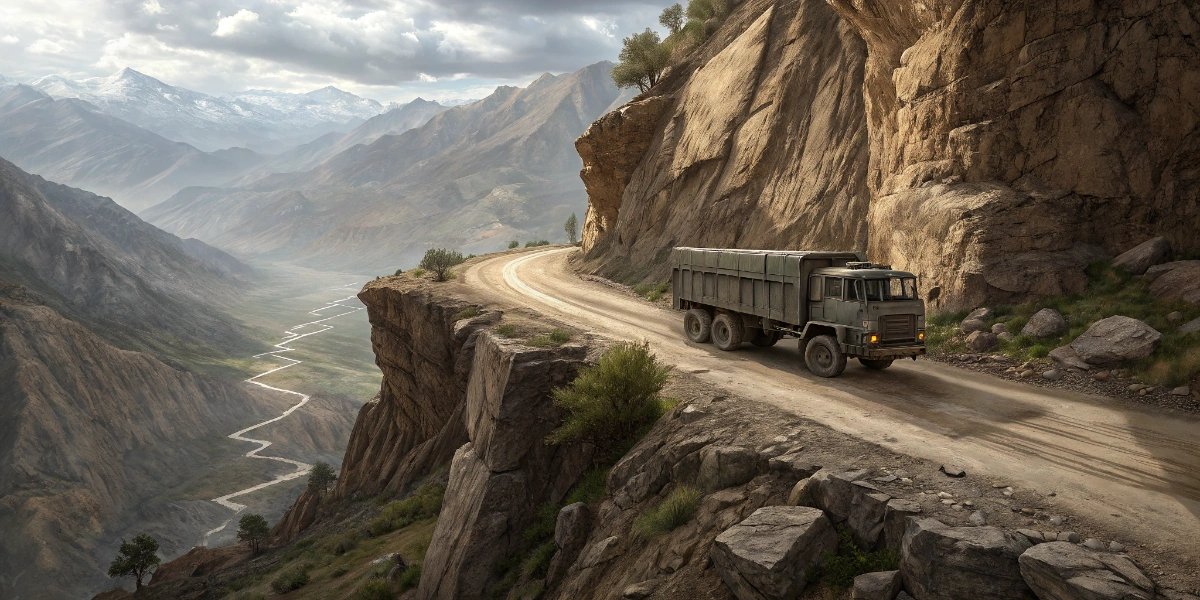
What makes it special: Mountain trucks have reinforced brakes (regular brakes would fail from constant use descending mountains), low-gear transmissions for climbing steep grades, and drivers with nerves of steel. Many roads are so narrow that trucks use mirrors to check if wheels are staying on the road edge. Drivers honk before blind corners to warn oncoming traffic.
Cultural significance: Mountain truck drivers are heroes in Andean communities. They risk their lives bringing supplies to villages accessible only by these dangerous roads. Many villages depend entirely on weekly truck deliveries—no trucks means no fuel, medicine, or goods. It's essential, dangerous work respected across the Andes.
Fun fact for kids: Some Andean roads have "passing places"—wider sections where trucks can squeeze past each other. When two trucks meet on a narrow section, one must reverse (sometimes for miles!) to reach a passing place. Drivers use radios to coordinate who reverses. It requires incredible skill backing up on cliff edges!
Speech sounds: "Mountain truck" has the /m/, /aʊ/ diphthong, /n/, /t/, /tr/, and /k/ sounds. Great variety of sounds including the challenging /tr/ consonant blend.
4. Collectivo (Taxi compartido)
Collectivos are shared taxis that operate on fixed routes but without fixed schedules—they leave when full. They're smaller than buses (usually vans or sedans) and serve as unofficial public transit across South America. Some are legal; others operate informally.
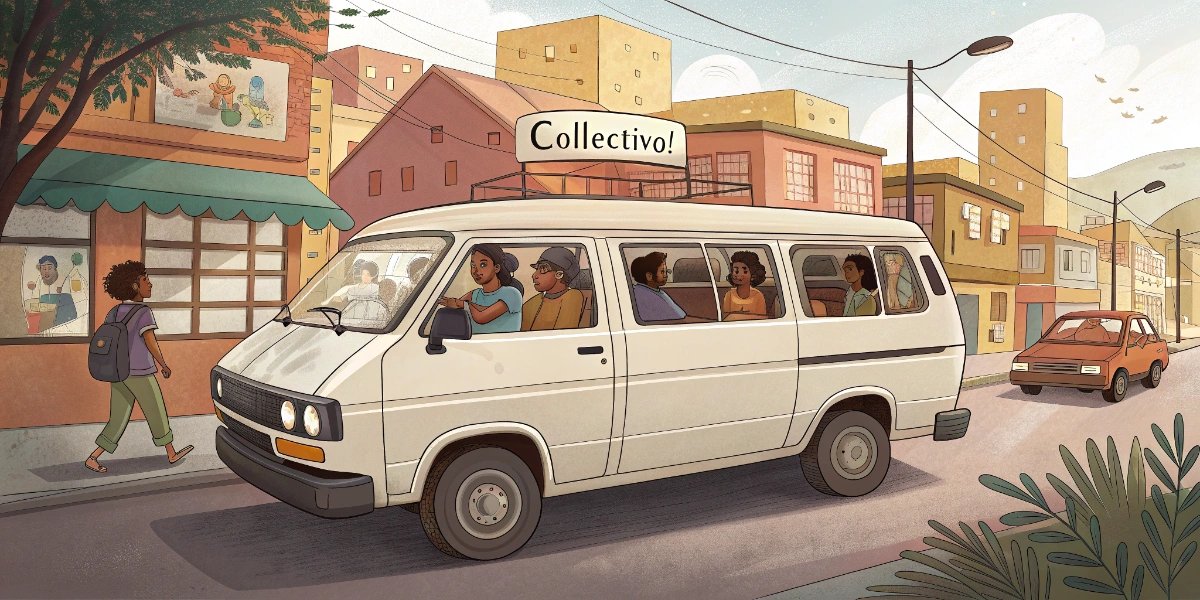
What makes it special: Collectivos fill the gap between expensive private taxis and inconvenient buses. Passengers share costs, making rides affordable. Drivers know their routes intimately, picking up regular customers and adjusting routes slightly to accommodate passengers. It's organized chaos—no apps, just human coordination.
Cultural significance: Collectivos represent informal economy and community trust. Passengers trust drivers with their safety; drivers trust passengers to pay fair prices. They're social spaces where strangers become temporary communities during shared journeys. In countries with limited formal transit, collectivos keep cities moving.
Fun fact for kids: Collectivo drivers have hand signals to communicate! A certain wave means "I'm full," another means "looking for passengers going to X neighborhood." They can coordinate routes, warn about traffic, or share information—all through gestures while driving. It's like a secret driver language!
Speech sounds: "Collectivo" has four syllables (co-lec-TI-vo) with the hard /k/ sound, /l/, /t/, and /v/. Spanish pronunciation teaches syllable stress patterns—third syllable stressed.
5. Motorcycle Taxi (Mototaxi)
Mototaxis are motorcycles with covered passenger compartments—essentially motorcycle rickshaws. They're common in smaller cities and towns across South America, navigating narrow streets and providing door-to-door service where larger vehicles can't reach.
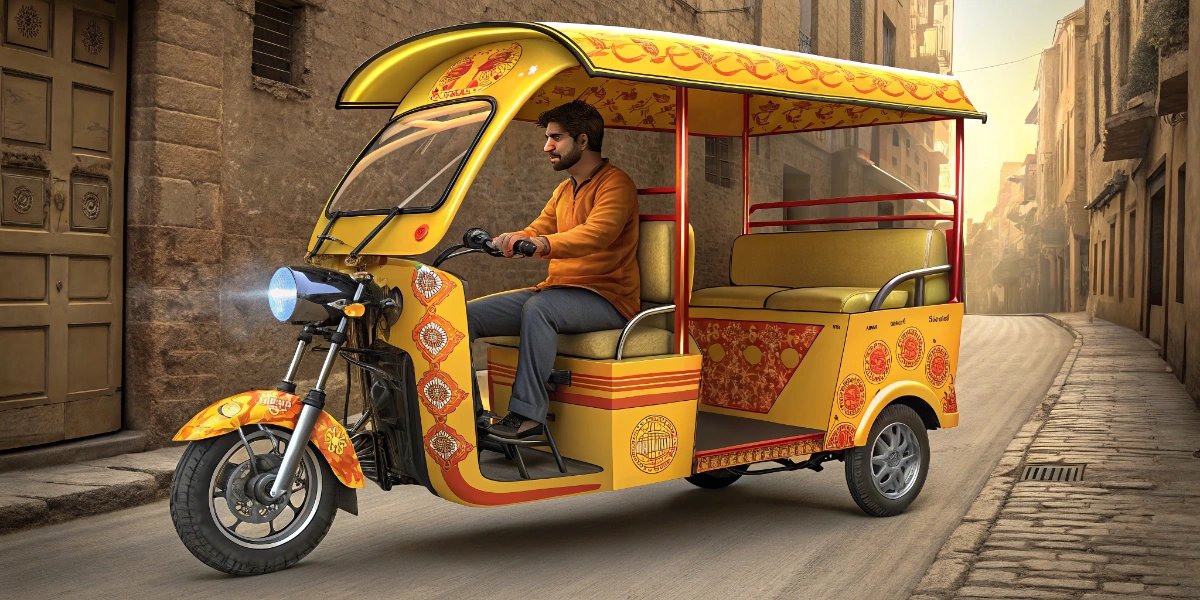
What makes it special: Mototaxis have covered passenger areas (protecting from rain and sun), can squeeze through tight spaces, and cost less than cars. They're perfect for Latin American geography—narrow colonial streets, steep hills, dense neighborhoods. Many are brightly painted and decorated like chicken buses—mobile art on two wheels.
Cultural significance: Mototaxis provide employment for thousands and affordable transport for millions. They're especially important in areas with informal economies—no licenses, no regulations, just people providing services their communities need. They represent entrepreneurship and self-employment.
Fun fact for kids: Some mototaxi drivers decorate their vehicles elaborately—painting religious symbols, family names, or favorite soccer teams. In Peru and Ecuador, mototaxi decoration competitions happen annually, with prizes for best artwork. It's like the Deni Ute Muster but for motorcycle taxis!
Speech sounds: "Mototaxi" has repeating /t/ sounds and the compound structure (moto + taxi = motorized taxi). Spanish/Portuguese hybrid word teaches how languages blend in multicultural regions.
6. Pickup Truck (Camioneta de carga)
South American pickup trucks are utilitarian vehicles modified for maximum functionality. They haul cargo, transport workers, serve as mobile workshops, and handle terrible roads. Most are Toyota Hilux trucks—known for indestructibility—maintained for decades through constant improvised repairs.
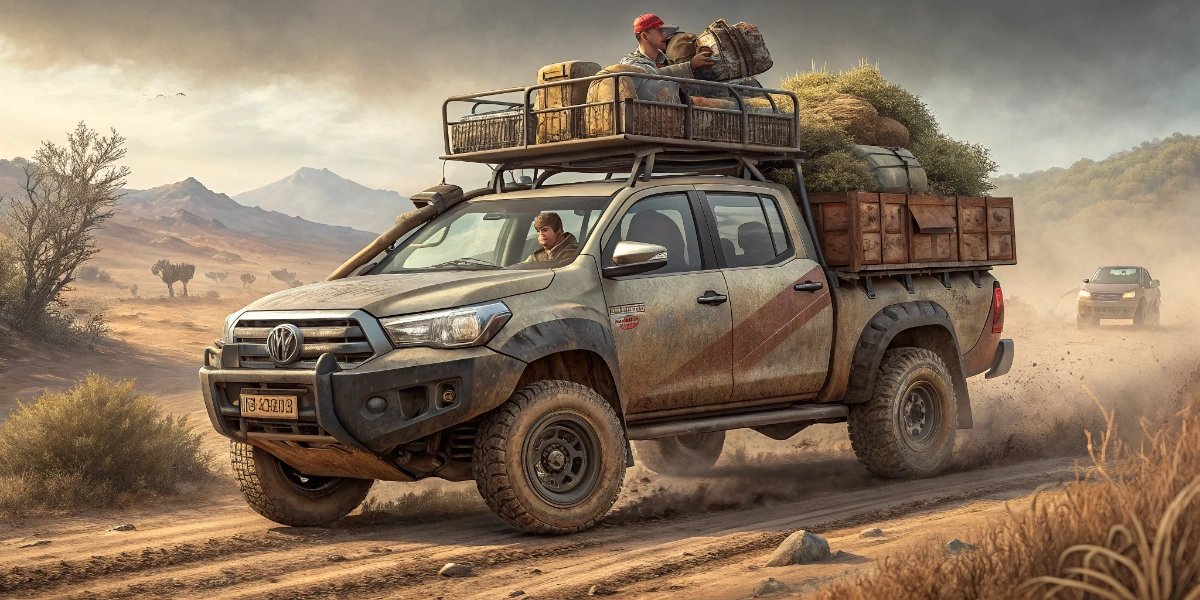
For a simple overview of this everyday workhorse, you can also visit the pickup truck vehicle page and compare South American pickups with the ones you see in your own area.
What makes it special: South American pickups often have custom-built cargo boxes, extended cabs (fitting more passengers), reinforced suspensions, and protection against theft (everything locks). They're workhorses that do everything—construction, agriculture, family transport, small business logistics. One truck serves many purposes.
Cultural significance: Pickup trucks represent self-reliance and mechanical ingenuity. Owners maintain them indefinitely, fabricating parts when originals aren't available. A 30-year-old truck running strong is a point of pride—it shows skill in maintenance and refusal to waste functional equipment. This contrasts with disposable consumer culture.
Fun fact for kids: Some South American mechanics can rebuild entire engines with improvised tools! They fabricate gaskets from cardboard, make replacement parts on lathes, and keep vehicles running without manufacturer parts. It's mechanical artistry born from necessity—creativity solving problems that money could fix elsewhere but ingenuity fixes here.
Speech sounds: "Pickup truck" has the /p/, /k/, /tr/, and final /k/ sounds. The /tr/ consonant blend appears again—consistent practice across this series for this challenging sound.
7. Garbage Truck (Camión de basura comunitario)
South American garbage trucks vary wildly—from modern compactor trucks in wealthy neighborhoods to simple flatbed trucks in poorer areas. Many cities have informal waste collectors who use any available vehicle—motorcycles with trailers, horse carts, or modified pickups.
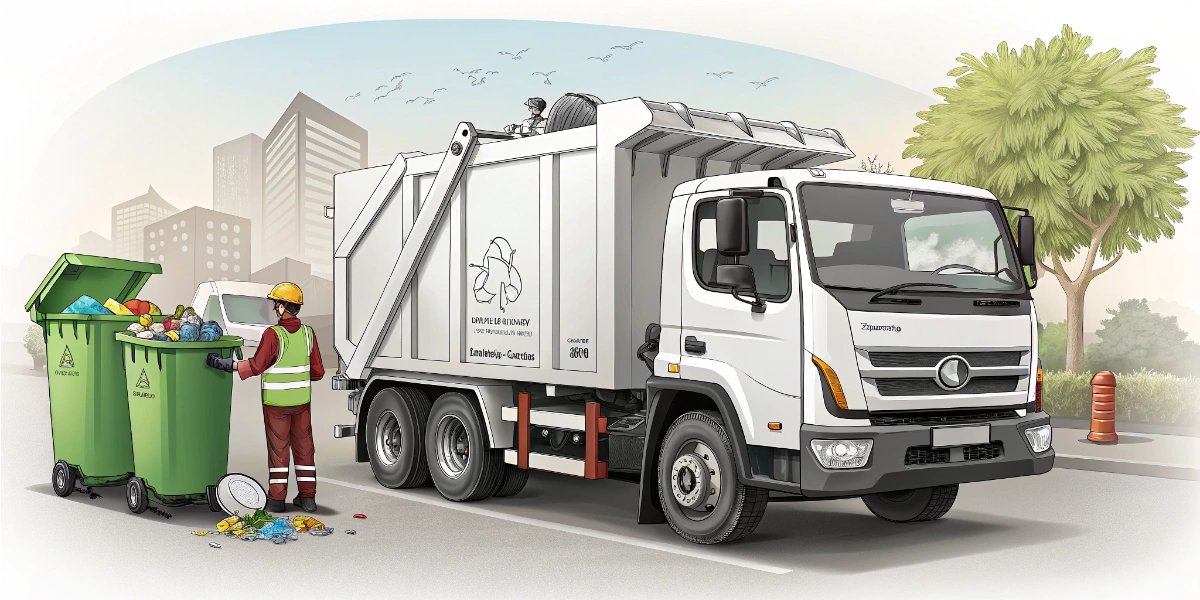
If your child loves big trash trucks, you can explore the garbage truck vehicle page to see how different countries handle waste and recycling.
What makes it special: Garbage collection reflects economic inequality. Wealthy areas have regular municipal service; poorer areas depend on informal collectors (cartoneros or recicladores) who sort recyclables for resale. These collectors often work from modified vehicles—motorcycles pulling carts, bicycles with huge loads, or walking with handcarts.
Cultural significance: Waste collection vehicles represent both municipal infrastructure and informal economy. Cartoneros perform essential environmental service while earning livelihood from materials wealthier people discard. They've organized into cooperatives, demonstrating community organization and environmental awareness despite economic challenges.
Fun fact for kids: Some South American cities have "reverse garbage trucks"—residents bring recyclables to collection points where trucks pay for materials! This incentivizes recycling and provides income for collectors. It's waste management that benefits everyone—environment, collectors, and residents.
Speech sounds: "Garbage truck" has the /g/, /r/, /b/, /dʒ/, /tr/, and /k/ sounds. Lots of consonant variety including the challenging /tr/ blend and the affricate /dʒ/ (spelled with 'g').
8. Police Motorcycle (Motocicleta de policía)
South American police motorcycles navigate dense urban traffic, responding to emergencies faster than cars. They're essential in cities where traffic congestion makes car patrol impractical. Many are standard motorcycles modified with sirens, lights, and communication equipment.
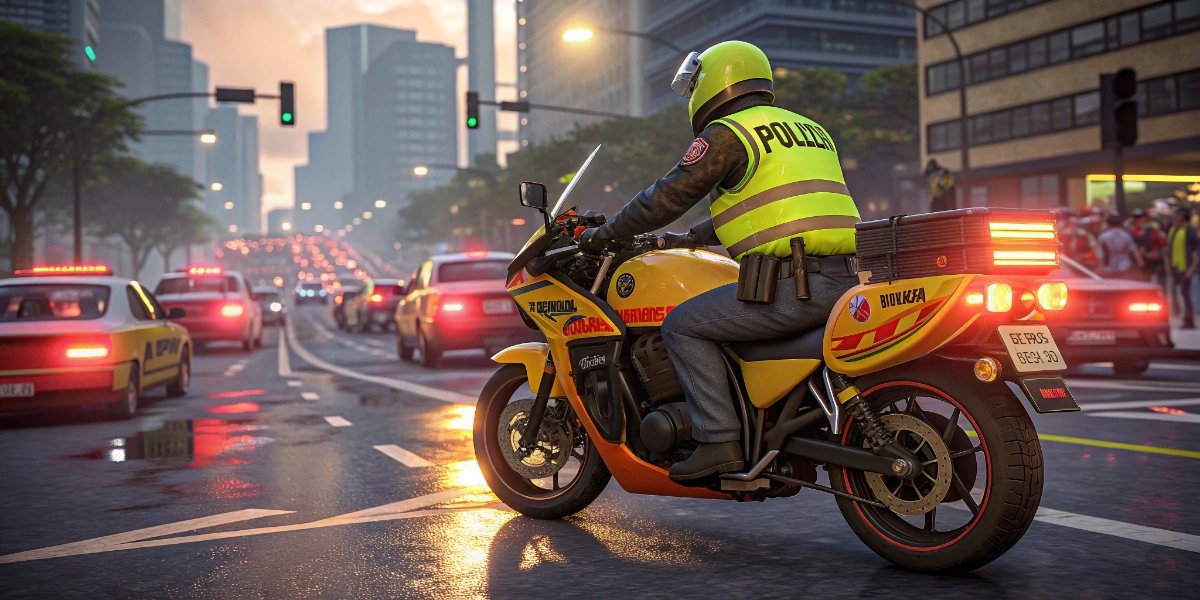
To see how police bikes compare around the world, you can visit the police motorcycle vehicle page for more pictures and simple facts.
What makes it special: Police motorcycles can squeeze between lanes, mount curbs when necessary, and navigate narrow streets where patrol cars can't fit. Officers undergo specialized training in high-speed urban riding. Many motorcycles are brightly colored (not just black and white) for visibility—some are fluorescent yellow or orange.
Cultural significance: Police motorcycles represent adaptation to urban reality. South American cities like São Paulo, Buenos Aires, and Bogotá have notorious traffic congestion. Motorcycles provide mobility when cars would sit gridlocked. They also symbolize visible policing—officers on motorcycles are more accessible to communities than those in patrol cars.
Fun fact for kids: Some South American police forces use motorcycle "flying squads"—groups of 10-20 motorcycles that respond together to situations requiring rapid deployment. They can navigate traffic as a coordinated unit, arriving quickly anywhere in the city. It's like a motorcycle cavalry!
Speech sounds: "Police motorcycle" has the /p/, /l/, /s/, /m/, /t/, /r/, /s/ sounds with the long /i/ vowel. The compound word structure teaches about specialized vehicle types—police + motorcycle = motorcycle used by police.
Learning Opportunities Through South American Vehicles
Geography Lessons
South American vehicles teach geography through extreme terrain. Why do mountain trucks need reinforced brakes? Because Andean roads descend thousands of feet. Why are chicken buses so durable? Because they travel unpaved roads for decades. Why collectivos instead of formal buses? Because cities sprawl organically across challenging topography. Geography shapes every vehicle adaptation.
Your child learns that South America's diversity—mountains reaching 22,000 feet, rainforests flooding seasonally, cities built on steep hillsides—creates diverse transportation challenges. Each region requires different solutions.
Cultural Awareness
Every South American vehicle reveals cultural values:
- Creativity under constraint - Limited resources spark artistic and mechanical innovation
- Cultural expression - Vehicles become canvases for identity and pride
- Community cooperation - Shared vehicles and informal systems serve collective needs
- Mechanical ingenuity - Repairs happen with improvisation and skill
- Celebration of life - Even working vehicles (chivas) become party spaces
These aren't just vehicles—they're expressions of resilience, creativity, and community. Your child learns that innovation flourishes everywhere, not just in wealthy regions.
Vocabulary Building
South American vehicle vocabulary introduces Spanish/Portuguese terms:
- Camioneta - Spanish for small bus (what chicken buses are called locally)
- Chiva - Colombian term for open-sided party bus
- Collectivo - Shared taxi (used across Spanish-speaking South America)
- Mototaxi - Motorcycle taxi (Spanish/Portuguese hybrid)
- Cartonero - Informal waste collector (literally "cardboard person")
In Talk & Listen, we include vehicle sounds from different environments—the distinctive rumble of chicken buses, the honk patterns mountain trucks use on cliff roads. These sounds connect to South American landscapes and cultures.
App Connections
Talk & Listen: Practice South American vehicle sounds—chicken bus engines (older, distinct from new buses), mountain truck air brakes, mototaxi buzzing through streets. Learn vocabulary through cultural context: "mountain," "colorful," "celebration," "community."
Create & Play: Kids can design their own chicken bus decorations with vibrant colors and patterns, create chiva party buses with bench seats and music, or build mountain roads for trucks to navigate. South American vehicles inspire creativity: what would YOU paint on a bus?
Activity Ideas
Want something to print alongside these? The free printables library has vehicle coloring pages and activity packs — no email required.
- Chicken bus design challenge: Create the most colorful bus decoration possible
- Mountain road engineering: How would you make cliff roads safer?
- Collectivo route planning: Map efficient routes for shared taxis
- Cultural patterns: Study and recreate South American folk art patterns
- Mechanical ingenuity: How would you repair a broken toy using household items?
- Celebration vehicle: Design your own party bus like a chiva
- Compare vehicles: Chicken bus vs. regular school bus—what changed?
Why South American Vehicles Celebrate Creativity
When my toddler asked why chicken buses are so colorful, we talked about how people transform necessity into art. That conversation expanded to discussions about resourcefulness, cultural expression, and making the best of what you have. South American vehicles demonstrate that constraints don't limit creativity—they redirect it.
These vehicles show that "old" doesn't mean "worthless." Americans retire school buses at 15 years; Latin Americans rebuild them and operate them for 30+ more years. That's not poverty—it's ingenuity and environmental consciousness. Understanding this builds respect for different approaches to resources and appreciation for mechanical skill.
Kids appreciate this creativity. They learn that beauty can exist anywhere—even on working buses. That mechanical knowledge matters. That communities solve problems through cooperation. South American vehicles teach that innovation happens everywhere, expressed through vibrant colors, mechanical improvisation, and community organization.
Explore More World Vehicles
This is the eighth in our World Vehicles series. Already published:Vehicles of Japan (bullet trains and kei cars),Vehicles of India (auto rickshaws and decorated trucks),Vehicles of the UK (double-decker buses and black cabs),Vehicles of Africa (safari vehicles and matatus),Vehicles of the Middle East (desert 4x4s and water tankers),Vehicles of Australia (road trains and utes), andVehicles of Scandinavia (snowplows and ice road trucks). More regions coming soon! You can see the complete overview at World Vehicles for Kids: Complete Guide.
Want to explore South American vehicles interactively? Talk & Listen includes vehicle sounds from different cultures and terrains. In Create & Play, kids can design their own vehicles inspired by South American creativity—from chicken bus artwork to chiva party buses with colorful patterns.
 Frequently Asked Questions
 Ad-free & offline ready