Why African Vehicles Are Unique
Africa is the world's second-largest continent with incredibly diverse terrain—deserts, rainforests, mountains, savannas, and wetlands. This geography demands vehicles that can handle extreme conditions: deep sand, flooding rivers, rocky mountain passes, and roads that might be 500 miles of dirt track.
What makes African vehicles fascinating is their dual nature: they're both practical workhorses and creative canvases. A matatu minibus in Nairobi isn't just transportation—it's mobile art gallery, concert venue, and community gathering space. A safari vehicle isn't just a jeep—it's a quiet observation platform designed around animal welfare.
For kids, African vehicles show resourcefulness in action. When a vehicle breaks down 200 miles from the nearest town, repairs happen with improvised parts. When a single vehicle must serve an entire village, it carries people, cargo, livestock, and mail—all at once. Let's explore eight vehicles that show how Africans adapt, innovate, and express cultural identity through transportation.
1. Safari Vehicle (4x4 Game Drive Jeep)
Safari vehicles are specially modified 4x4s designed for wildlife viewing. The most common is the Toyota Land Cruiser with a raised roof and open sides—recognizable from nature documentaries and picture books.
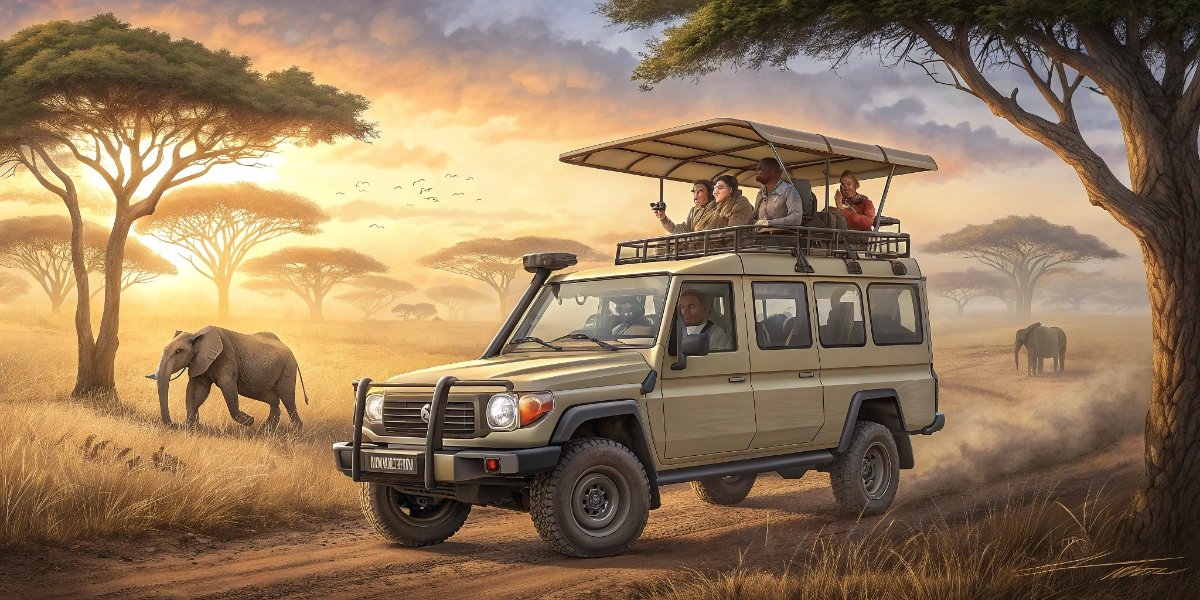
What makes it special: The roof pops up or has an open framework so passengers can stand and photograph animals from above. Suspensions are raised for better visibility over tall grass. Engines are quieter than standard vehicles to avoid disturbing wildlife. Most have 9-10 seats arranged stadium-style (each row higher than the one in front).
Cultural significance: Safari vehicles represent responsible tourism—designed to observe animals without interfering with their behavior. Guides follow strict rules: maintain distance from predators, never chase animals, stay on designated tracks. The vehicle becomes a mobile classroom teaching wildlife conservation.
Fun fact for kids: Safari drivers can identify individual animals! They know which elephant herd uses which water hole, recognize leopards by their spot patterns, and track lion prides across territories. The vehicle is their research station.
Speech sounds: "Safari" has the /s/ and /f/ fricative sounds, plus repeating /a/ vowels—sa-FAR-ee with stress on the middle syllable. The word comes from Swahili (meaning "journey"). In Talk & Listen, the safari vehicle is featured with its distinctive engine rumble and the sounds of the African savanna.
When your child wants a simple, picture-led view of this vehicle, you can also explore the safari car vehicle page for basic facts and visuals.
2. Matatu (Kenyan Minibus) - Mobile Art Gallery
Matatus are Kenya's (and East Africa's) most colorful vehicles—minibuses covered in elaborate paintings, LEDs, custom sound systems, and cultural messages. No two matatus look alike because owners compete to attract passengers with the most eye-catching designs.
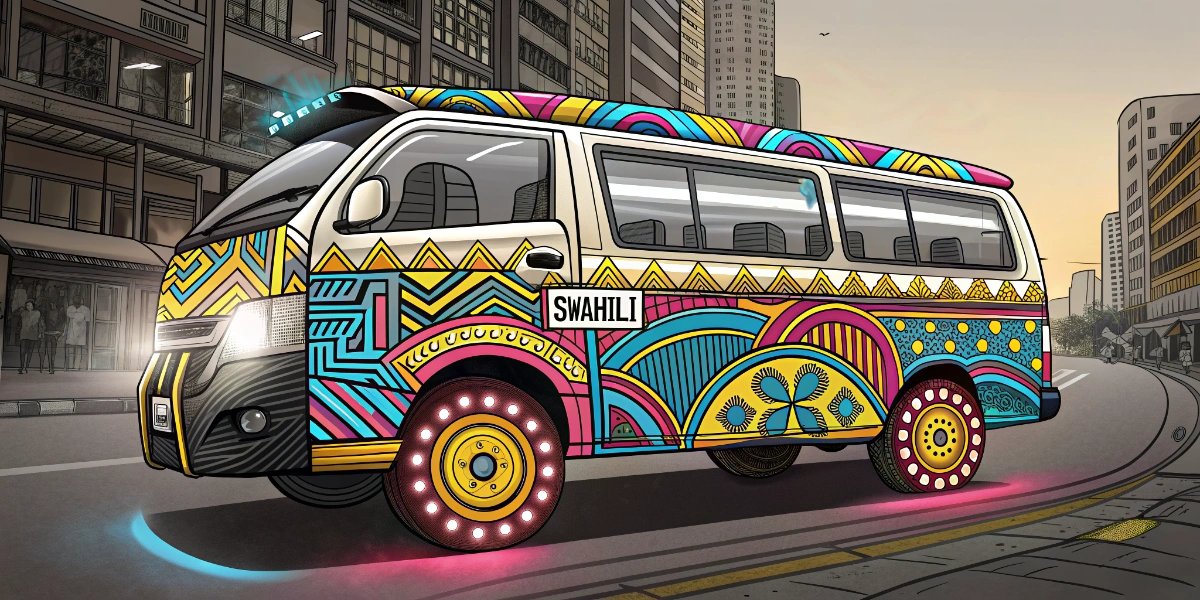
What makes it special: Matatus are rolling art installations. They're painted with Swahili proverbs, religious messages, soccer team logos, cartoon characters, or portraits of celebrities. Inside, they have massive sound systems (some costing more than the vehicle itself), fiber-optic lights, flat-screen TVs, and custom upholstery.
Vehicle Capacity: Rated vs Reality
Cultural significance: Matatu culture is uniquely Kenyan. The vehicles express youth culture, hip-hop influence, and entrepreneurial spirit. Each matatu has a personality. The name comes from Swahili "matatu tatu" (meaning "three coins")—the original fare in the 1950s.
Fun fact for kids: Matatu artists are celebrities in Kenya! The best painters are commissioned for specific designs. Some matatus have themes—Star Wars matatus, superhero matatus, even matatus dedicated to specific musicians. People choose which matatu to ride based on design!
Speech sounds: "Matatu" has repeating /t/ sounds and alternating vowels (/a/ and /u/)—ma-TA-too. The rhythm is satisfying to say. Perfect for practicing syllable stress and the /t/ sound in different positions.
3. Bush Taxi (Shared 4x4 or Van)
Bush taxis are shared vehicles that travel between towns and villages, especially in West Africa. They leave when full (not on a schedule) and travel dirt roads connecting remote areas to cities.
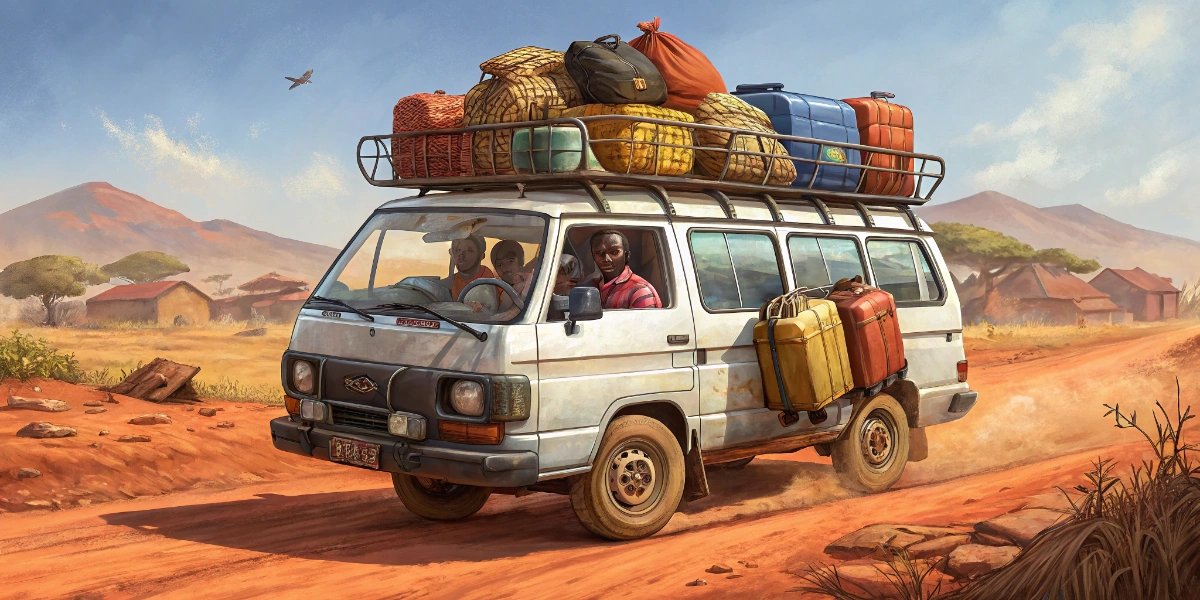
What makes it special: Bush taxis carry everything—passengers inside, luggage on the roof, chickens tied to the back, produce, mail, medicine for clinics. A vehicle rated for 7 passengers might carry 12 people plus cargo. They drive routes regular buses won't serve, connecting isolated villages to regional markets.
Cultural significance: Bush taxis are lifelines for rural communities. They bring news, connect families, transport goods to market, and provide the only mechanized transport available. The "wait until full" system means lower costs (shared fuel) but unpredictable departure times.
Fun fact for kids: Bush taxi drivers know everyone along their route! They deliver messages, carry packages for people, and act as informal postal service. "Tell Ahmed in the next village his sister will visit Thursday" gets communicated through the bush taxi network.
Speech sounds: "Bush taxi" has the /b/ and /sh/ sounds close together—challenging but great for practicing consonant blends. The /t/ and /k/ sounds (voiceless stops) appear in "taxi."
4. Boda-Boda (Motorcycle Taxi)
Boda-bodas are motorcycle taxis found throughout East Africa. The name comes from "border-to-border"—they originally ferried people across the Kenya-Uganda border where cars couldn't pass.
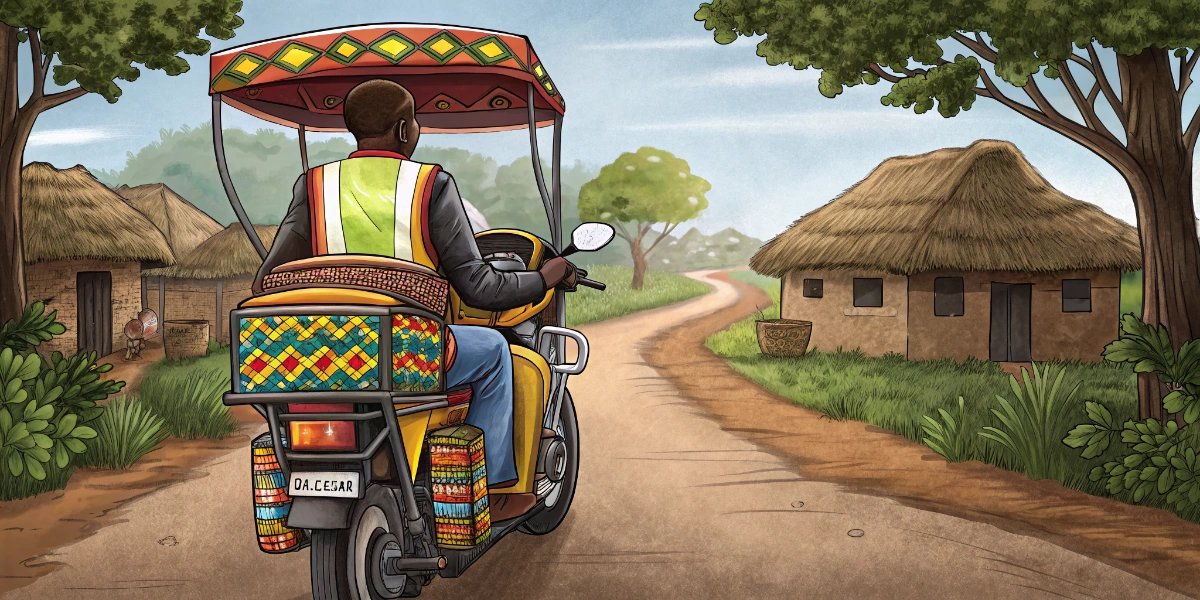
What makes it special: Boda-bodas go where cars can't—narrow village paths, muddy tracks during rainy season, steep hillsides. They're faster than walking, cheaper than cars, and can navigate traffic jams by squeezing between vehicles. Many are now electric in cities like Kigali, Rwanda.
Cultural significance: Boda-bodas employ millions of young people across Africa. For many, owning a boda-boda means economic independence. They're controversial (safety concerns) but essential (mobility for people who can't afford cars). Some cities regulate them; others embrace them as vital infrastructure.
Fun fact for kids: Boda-boda drivers decorate their motorcycles! They add colorful seats, paint flames or patterns, hang trinkets from handlebars, and give their bikes names. It's like matatu culture but for motorcycles.
Speech sounds: "Boda-boda" repeats the /b/ and /d/ sounds—both voiced stops that toddlers typically master early. The reduplication (repeating pattern) makes it memorable and fun to say.
5. Toyota Land Cruiser - The African Workhorse
The Toyota Land Cruiser (especially the 70-series) is Africa's most trusted vehicle. It's used by safari operators, aid organizations, UN missions, mining companies, and wealthy farmers. If you see a 4x4 in Africa, it's probably a Land Cruiser.
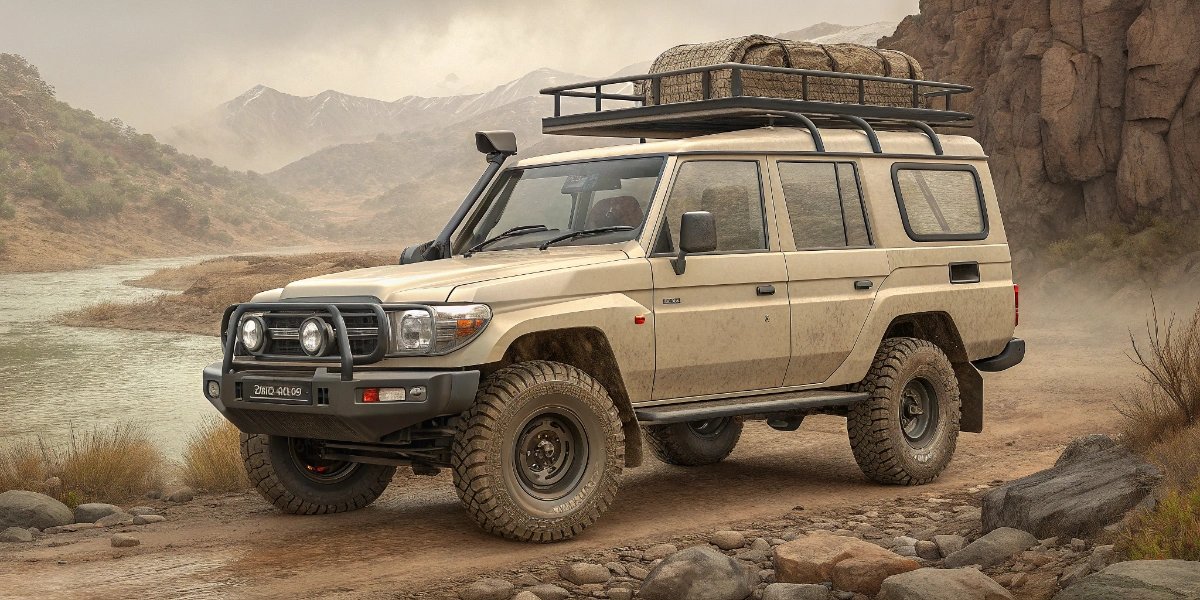
What makes it special: Land Cruisers are built for reliability in extreme conditions. High ground clearance handles deep sand and rocks. Simple diesel engines can be repaired anywhere. They carry massive loads (up to 1 ton) without breaking. Many have been running for 30+ years with improvised repairs.
Cultural significance: The Land Cruiser represents durability and status. Owning one means you can reach remote areas, handle rainy season roads, and maintain independence from unreliable public transport. They hold value—20-year-old Land Cruisers sell for good prices because they still work.
Fun fact for kids: Land Cruisers are so reliable that when they finally break down beyond repair, the parts are salvaged and used to fix other Land Cruisers! There's a thriving market in used Land Cruiser parts across Africa.
Speech sounds: "Land Cruiser" has the /l/ and /r/ approximants—sounds toddlers often confuse. The compound word structure (land + cruiser = vehicle that cruises over land) teaches word formation.
If your child wants a simple, picture-led overview of rugged adventure vehicles, you can also visit the overlander vehicle page and talk about how Land Cruisers and other 4x4s are used for long-distance off-road trips.
6. Cargo Truck (Lorry) - Overloaded and Decorated
African cargo trucks carry staggering loads—furniture stacked three times higher than the cab, hundreds of people riding on top, massive logs, or pyramids of agricultural produce. They're essential for moving goods between cities.
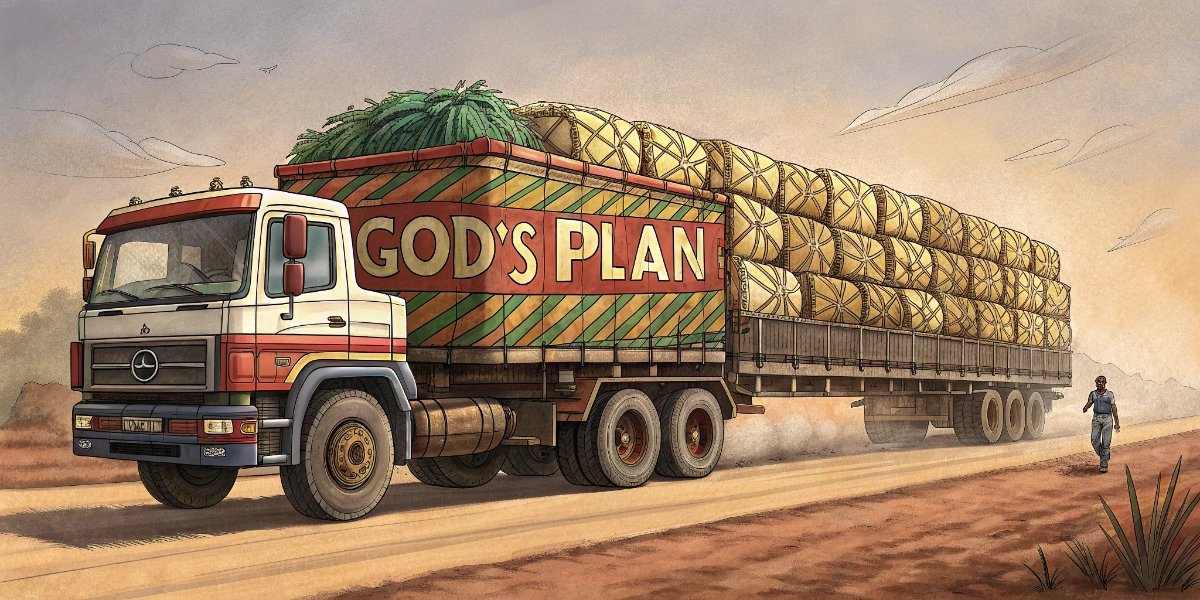
What makes it special: African trucks handle loads that would be illegal elsewhere. A truck rated for 10 tons might carry 25 tons. They travel on roads that are barely roads—rocky, potholed, sometimes washed away. Drivers are master mechanics, making repairs with improvised parts in remote locations.
Cultural significance: Trucks connect economies—bringing city goods to villages and village produce to cities. They're decorated with religious messages ("God's Plan," "Allah Protects"), warnings ("Overtake With Care"), or witty sayings ("World Bank—No Refund"). Like matatus, drivers personalize their trucks.
Fun fact for kids: Truck drivers in West Africa have a language system using horn patterns! Different honks mean different things—"I'm passing," "danger ahead," "thank you." It's like Morse code but with truck horns.
Speech sounds: "Cargo truck" has the hard /k/ sound twice (in "cargo" and "truck"), plus the /g/ sound. The /tr/ consonant blend in "truck" is excellent for phoneme practice.
7. Donkey Cart - Ancient Technology Still Working
In rural areas, especially in the Sahel region, donkey carts remain primary transportation. These simple wooden carts pulled by one or two donkeys carry water, firewood, produce, building materials, and sometimes passengers.
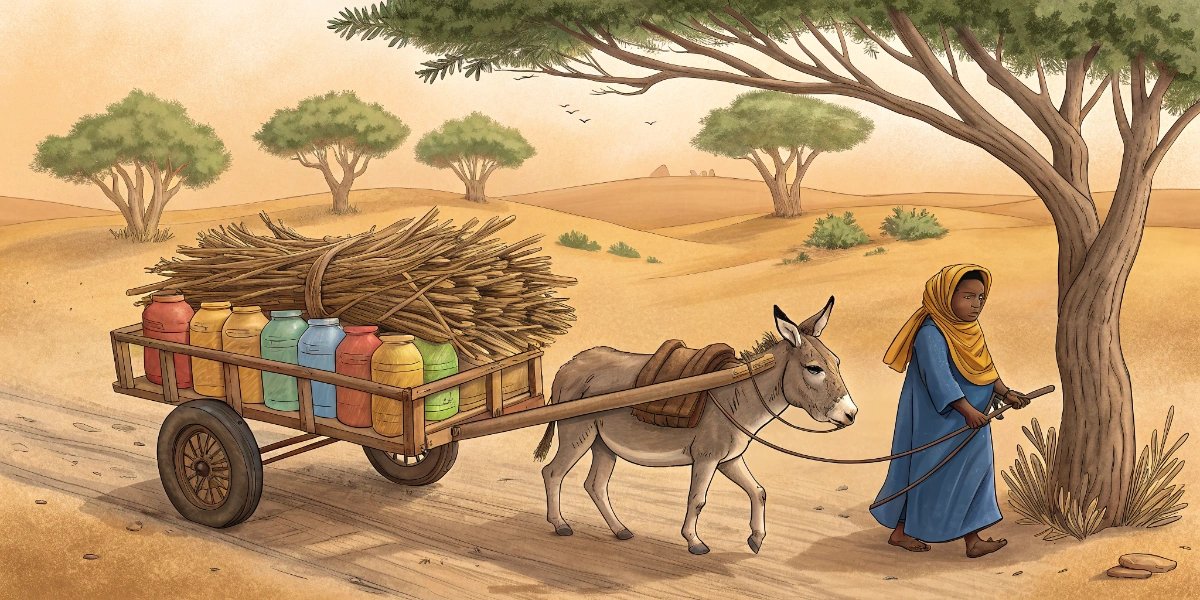
What makes it special: Donkey carts require no fuel, minimal maintenance, and work where motorized vehicles can't go (soft sand, narrow village paths). Donkeys handle extreme heat, need little water, and can carry 200+ pounds. The carts are made from local materials—wood, rope, sometimes old vehicle wheels.
Cultural significance: Donkey carts represent sustainable, appropriate technology. In areas with limited fuel access or money, they're practical solutions. Women often use them to carry water from wells, reducing the physical burden of head-carrying. They're not "primitive"—they're smart adaptation to local conditions.
Fun fact for kids: Donkeys are incredibly smart! They remember water sources, navigate home in darkness, and refuse to work in extreme heat (unlike horses). Cart owners develop close bonds with their donkeys, naming them and understanding their personalities.
Speech sounds: "Donkey cart" has the /d/ and /k/ sounds (voiced and voiceless stops), plus the nasal /n/. The compound word is clear and descriptive—perfect for early vocabulary.
8. Ambulance (Mobile Clinic Vehicle)
In remote African areas, ambulances often double as mobile clinics. These modified 4x4s carry medical equipment, supplies, and healthcare workers to villages with no permanent facilities. Some operate as flying doctor services using land vehicles instead of planes.
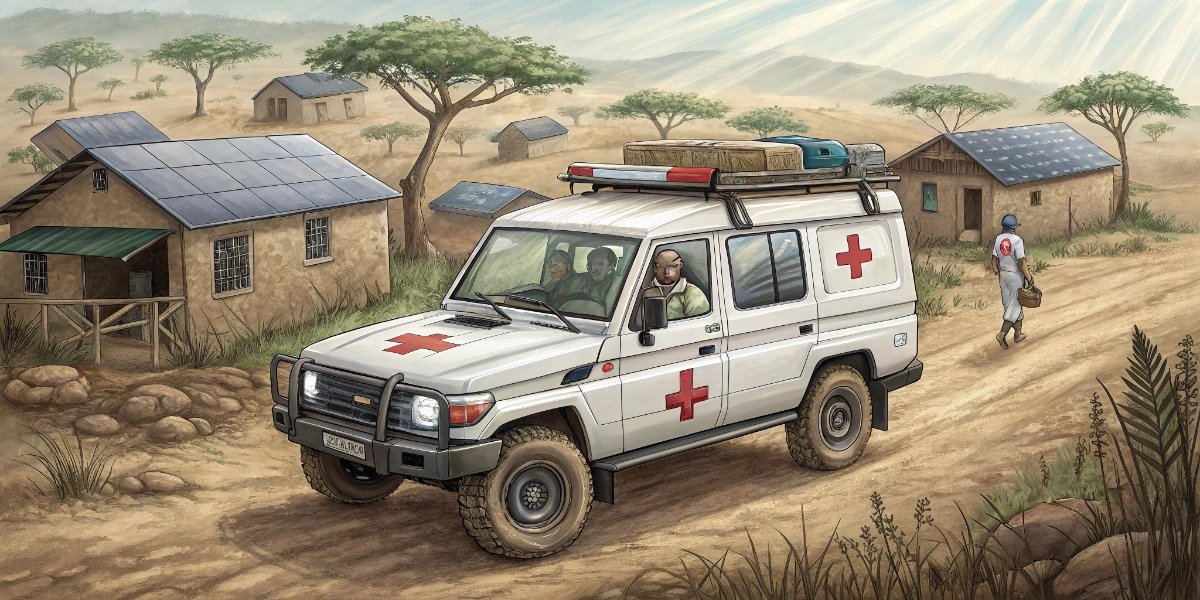
What makes it special: African ambulances are equipped for multiple roles—emergency transport, vaccination campaigns, prenatal care, HIV testing. They must handle terrible roads to reach isolated communities. Some are solar-powered for refrigerating vaccines. Many are donated by international organizations but maintained by local mechanics.
Cultural significance: Mobile health vehicles represent commitment to universal healthcare despite infrastructure challenges. They bring services to people who can't reach hospitals—traveling 8 hours on dirt roads to vaccinate children, delivering babies in emergencies, or evacuating critical patients.
Fun fact for kids: Some mobile clinics have exam rooms built into modified shipping containers that open up into full clinics! They're transported by truck to villages, opened for the day, then packed up and moved to the next location.
Speech sounds: "Ambulance" has the /m/ and /b/ bilabial sounds (made with both lips), plus the challenging /l/ and /s/ sounds. The three-syllable structure (AM-bu-lance) practices stress patterns.
To connect this story to a simple emergency-vehicle overview, you can also explore the ambulance vehicle page and compare how ambulances look and work in different countries.
Learning Opportunities Through African Vehicles
Geography Lessons
African vehicles teach geography through adaptation. Why do safari vehicles have raised suspensions? Because savanna grass grows 6 feet tall. Why are bush taxis 4x4s? Because rainy season turns roads to mud. Why do matatus have such powerful engines? Nairobi's hills are steep. Every vehicle design reflects environmental challenges.
Your child learns that Africa's diversity (54 countries, countless terrains) creates diverse transportation needs. Desert vehicles differ from rainforest vehicles. Mountain transport differs from coastal transport. Geography determines what works.
Cultural Awareness
Every African vehicle reveals cultural values:
- Resourcefulness - Vehicles are repaired with improvised parts; nothing is wasted
- Community - Vehicles serve multiple purposes (cargo, passengers, postal service)
- Creativity - Matatus and trucks become art, expressing identity and culture
- Resilience - Vehicles keep running despite challenging conditions
- Sharing - Bush taxis and boda-bodas make transportation accessible to everyone
These aren't just vehicles—they're survival tools, economic engines, and cultural expressions. Your child learns that innovation happens everywhere, not just in wealthy countries.
Vocabulary Building
African vehicle names introduce linguistic diversity:
- Safari - Swahili word (meaning "journey") now used globally
- Matatu - Swahili phrase (matatu tatu = three coins)
- Boda-boda - English phrase adapted ("border-to-border")
- Bush taxi - English compound describing function
In Talk & Listen, the safari vehicle is featured with authentic African savanna sounds—the vehicle's engine rumble mixed with wildlife calls. This multisensory approach connects vehicle sounds to the environments where they're used.
App Connections
Talk & Listen: The safari vehicle is a featured vehicle! Practice its distinctive 4x4 engine sound, learn vehicle vocabulary through high-interest wildlife context, and explore how vehicles help us observe nature responsibly. The African safari setting provides rich vocabulary: "savanna," "wildlife," "conservation."
Create & Play: Kids can design their own matatu decorations—choose colors, add messages, create patterns inspired by East African art. They can also create safari vehicle routes through grasslands, learning about animal habitats while playing.
Activity Ideas
Want something to print alongside these? The free printables library has vehicle coloring pages and activity packs — no email required.
- Design your own matatu: What colors, messages, or images would you paint?
- Safari scavenger hunt: Use toy vehicles to "drive" through picture book savannas
- Load the bush taxi: How would you pack a vehicle with different cargo?
- Map reading: Plan a safari route from camp to water hole to acacia trees
- Sound matching: Safari vehicle engine vs. wildlife sounds—what do you hear?
- Resourcefulness challenge: How would you repair a broken toy car with only household items?
- Cultural messages: Create family "proverbs" to paint on a pretend matatu
Why African Vehicles Inspire Resourcefulness
When my toddler asked why the safari jeep in their book had an open top, I talked about observing animals without disturbing them. That conversation expanded to how African vehicles solve problems creatively—limited resources spark innovation.
African vehicles show that constraints don't limit possibility—they redirect it. Can't afford a new part? Improvise one. Can't reach remote villages by road? Use motorcycles. Can't afford individual transport? Share vehicles efficiently. Need to make public transport appealing? Turn it into art.
Kids appreciate this ingenuity. They learn that creativity flourishes under constraint. African vehicles aren't "less advanced"—they're brilliantly adapted to their contexts. Understanding this builds problem-solving skills and respect for different approaches to challenges.
Compare African Vehicles With Other Countries
If your child loves safari jeeps and colorful matatus, you can compare them with vehicles from other regions. Try Vehicles of Japan for high-speed trains and musical garbage trucks, Vehicles of India for decorated trucks and rickshaws, or Vehicles of the Middle East to see how desert 4x4s handle sand and extreme heat. Comparing regions shows kids that every place solves transportation challenges in its own smart way.
Explore More World Vehicles
This is the fourth in our World Vehicles series. Already published: Vehicles of Japan (bullet trains and kei cars), Vehicles of India (auto rickshaws and decorated trucks), Vehicles of the UK (double-decker buses and black cabs), and Vehicles of the Middle East (desert 4x4s and water tankers). Coming soon: vehicles of Australia (road trains and utes) and Scandinavia (snowplows and ice road trucks).
Want to explore African vehicles interactively? The safari vehicle is featured in Talk & Listen with authentic savanna sounds and vehicle engine audio. In Create & Play, kids can design their own vehicles inspired by African creativity—from matatu art to safari routes through grasslands.
 Frequently Asked Questions
 Ad-free & offline ready