Why German Vehicles Emphasize Engineering Excellence
Germany has a unique relationship with vehicles. The country invented the automobile in 1886 (Karl Benz's Patent-Motorwagen), pioneered modern highway systems, and built automotive brands that dominate global luxury markets. But German vehicle culture isn't about flashiness—it's about "Technik" (technical excellence), precision, and the belief that things should be engineered properly the first time.
What makes German vehicles distinctive is the application of engineering principles to everything. German cars aren't just transportation—they're precisely engineered machines. Trains don't just run—they arrive within seconds of scheduled times. Even garbage trucks have sophisticated separation systems ensuring proper recycling. This isn't accident; it's cultural value. Germans prize "Ordnung" (order), efficiency, and quality craftsmanship in their vehicles.
For kids, German vehicles show how cultural values shape engineering priorities. When a society values precision, vehicles reflect it. When environmental consciousness matters, public transit excels. Let's explore eight vehicles that show German engineering culture and automotive heritage.
1. Autobahn Car - The Unlimited Highway Experience
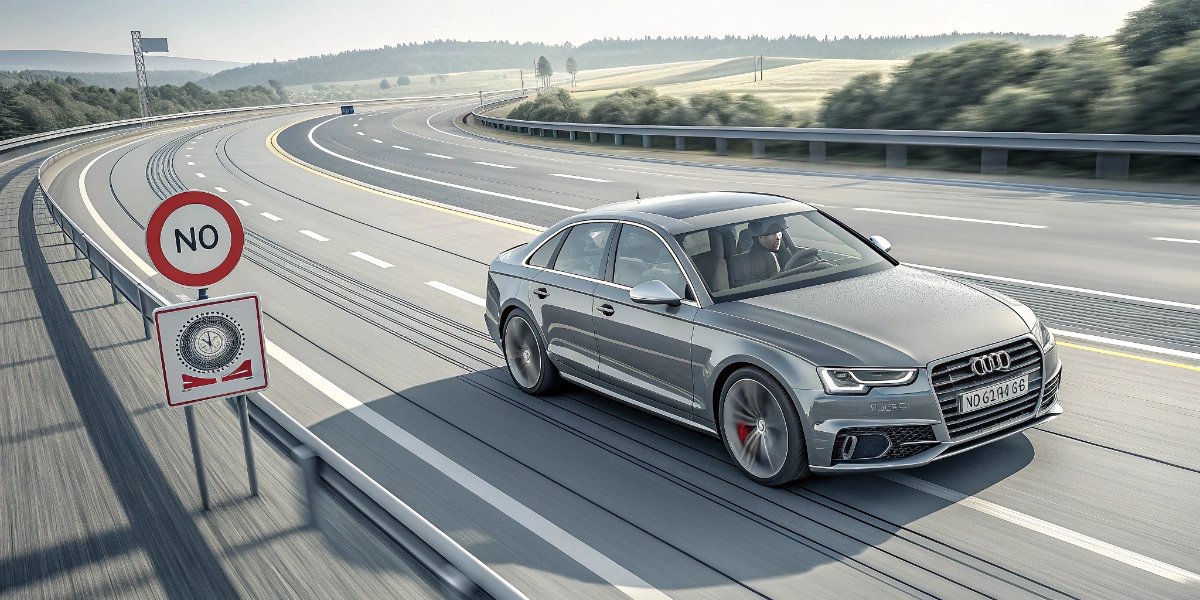
The autobahn is Germany's highway system, famous for sections with NO speed limits. Drivers can legally go as fast as their cars allow—some drive 150+ mph. While 70% of autobahn now has speed limits (due to safety and environmental concerns), unrestricted sections remain where high-speed driving is normal. Cars are engineered for sustained high-speed safety.
If your child is curious about everyday vehicles, you can explore the car vehicle page to see how cars differ around the world.
What makes it special: Autobahn driving requires different vehicle engineering. German cars have stronger chassis, better brakes (stopping from 150 mph), superior handling, and engines designed for sustained high speeds. Drivers use strict passing rules—left lane is ONLY for passing, slower vehicles stay right. It's disciplined high-speed driving culture, not chaos. Cars flash headlights to signal "move over" at high speed approaches.
Highway Speed Limits (MPH)
Cultural significance: The autobahn represents German attitudes toward personal freedom and responsibility. Unlike speed-limit-everywhere approaches, Germany trusts driver discipline. But this freedom comes with responsibility—aggressive driving, tailgating, and unsafe behavior are heavily penalized. It's freedom within order—very German philosophy. The autobahn also showcases German engineering—vehicles must handle sustained high speeds safely.
Fun fact for kids: On unrestricted autobahn sections, the "recommended" speed is 130 km/h (80 mph)—but there's no actual limit! If your car can safely go 200 mph, it's legal. However, if you crash while speeding, insurance may not fully cover damages. This teaches that freedom requires responsibility—you CAN go fast, but YOU'RE responsible for consequences.
Speech sounds: "Autobahn" has the /aʊ/ diphthong, /t/, /b/, and /n/ sounds. German pronunciation (OW-toh-bahn) teaches that German words often have different stress patterns—compound words with clear syllable divisions.
2. ICE Train (InterCity Express) - The Precision Express
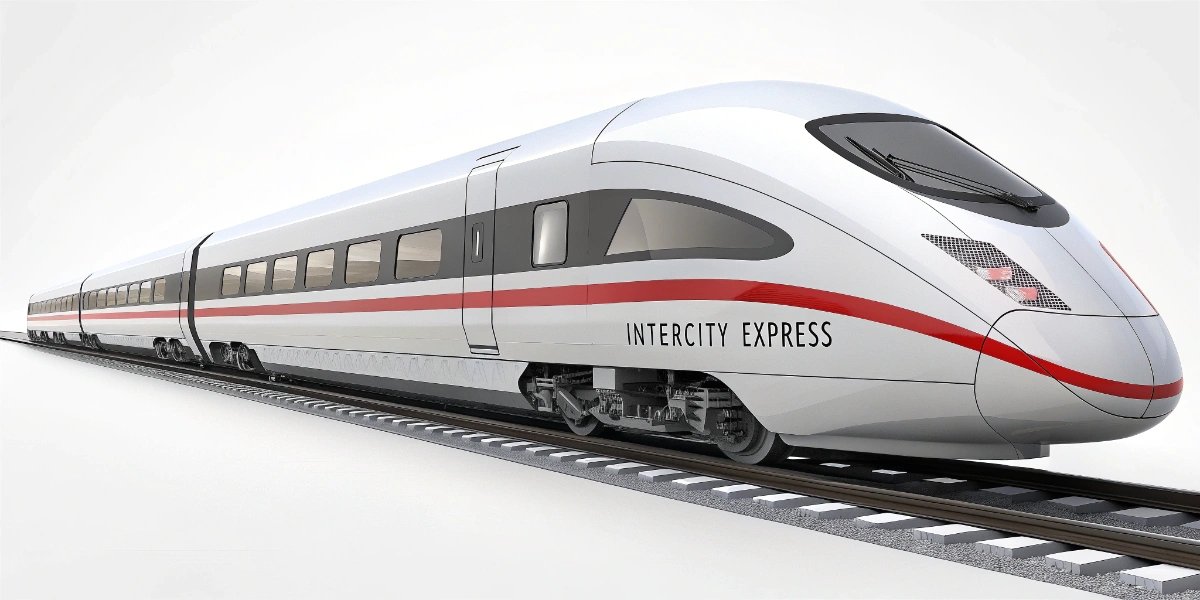
ICE trains are Germany's high-speed rail system, reaching 205 mph on dedicated tracks. They connect major German cities and neighboring countries with punctual, comfortable service. Deutsche Bahn (German Rail) operates over 300 ICE trains daily, and trains typically arrive within minutes of scheduled time—94% punctuality rate.
For more about trains that carry people, check out the passenger train vehicle page to learn how they connect cities globally.
What makes it special: ICE trains embody German engineering precision. They're aerodynamically designed, tilt into curves maintaining speed, and have sophisticated braking systems. Inside, power outlets at every seat, restaurant cars serving meals, and free WiFi (on newer trains) make long journeys productive. The tilting technology allows trains to take curves 30% faster without slowing, maintaining schedules. Punctuality is obsession—delays of even 6 minutes are considered failures.
Cultural significance: Trains represent German efficiency and engineering prowess. Unlike countries where trains are budget option, German trains are premium choice—business travelers prefer trains over flights for routes under 300 miles because trains are more reliable and productive (you can work while traveling). Punctuality is cultural expectation—Germans plan arrivals trusting trains arrive precisely on time.
Fun fact for kids: ICE trains have a special "quiet car" where talking is discouraged and phones must be silent! Germans value order and consideration—the quiet car lets people work or rest without disturbance. There's also a children's play area car on many routes with toys, games, and entertainment. Germans design for everyone's needs—workers need quiet, families need play space.
Speech sounds: "ICE train" has the long /aɪ/ (I), /s/ (C), long /e/ (E), /tr/, and /n/ sounds. The acronym ICE (InterCity Express) teaches that technical names are often shortened to memorable combinations.
3. BMW Car - The Ultimate Driving Machine
BMW (Bayerische Motoren Werke, or Bavarian Motor Works) cars are German luxury vehicles emphasizing driver experience. BMW's slogan is "The Ultimate Driving Machine"—cars are engineered for how they feel to drive, not just transportation. Models range from compact sedans to luxury SUVs, all prioritizing handling, acceleration, and driving pleasure.
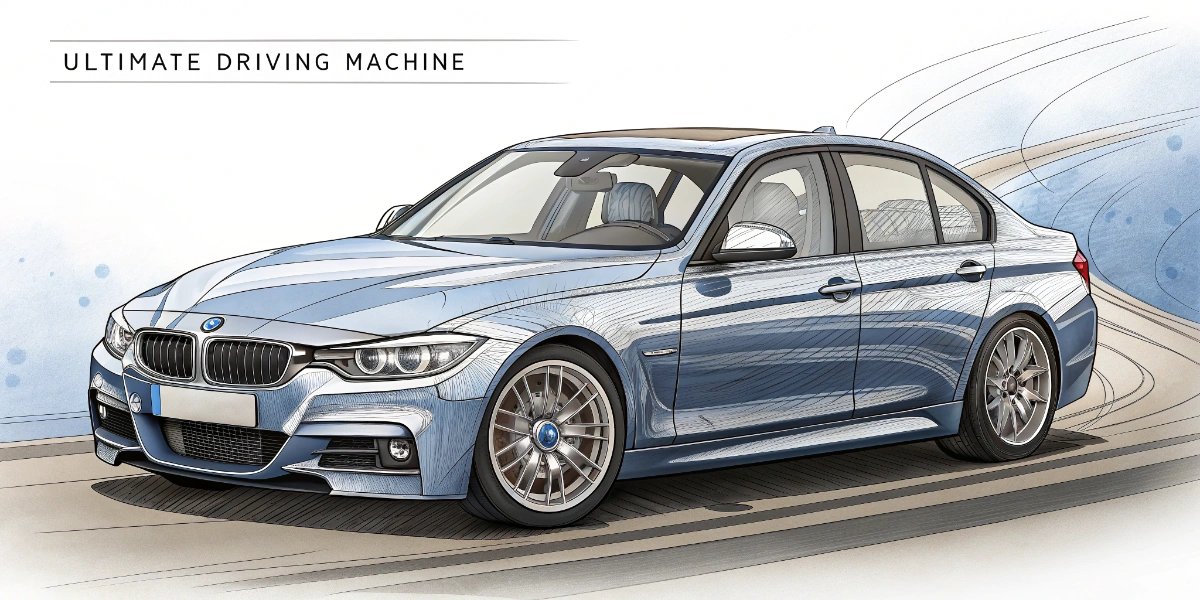
What makes it special: BMW engineering focuses on balance—50/50 weight distribution (front and rear) creates precise handling. Rear-wheel drive (power to back wheels) gives driving "feel" enthusiasts love. Inline-six engines (six cylinders in straight line) are BMW signature, known for smooth power delivery. Quality control is obsessive—manufacturing tolerances are measured in hundredths of millimeters. It's engineering perfectionism applied to driving pleasure.
Cultural significance: BMW represents German automotive excellence and premium manufacturing. These aren't just cars—they're precisely engineered machines showcasing German "Technik" culture. BMW ownership signals appreciation for engineering quality over flashy style. The brand competes globally but represents German engineering values: precision, performance, and craftsmanship that justifies premium prices.
Fun fact for kids: BMW started making airplane engines in 1917! The blue-and-white logo represents a spinning airplane propeller against blue sky (though this is debated). The company switched to cars after World War I when airplane production was banned. BMW's engineering expertise came from aviation—building airplane engines that must be perfect or planes crash. That obsession with reliability transferred to cars.
Speech sounds: "BMW car" has the /b/, /m/, /w/, /k/, and /r/ sounds. The acronym BMW teaches letter pronunciation and that companies often use initials—easier to say than "Bayerische Motoren Werke."
4. Straßenbahn (Tram) - The City Connector
Straßenbahn (street railway or tram) systems operate in most German cities—electric trains running on rails embedded in streets. They're more than buses (higher capacity, no traffic jams) but less expensive than subways. Trams connect neighborhoods to city centers efficiently, running every 5-10 minutes during the day.
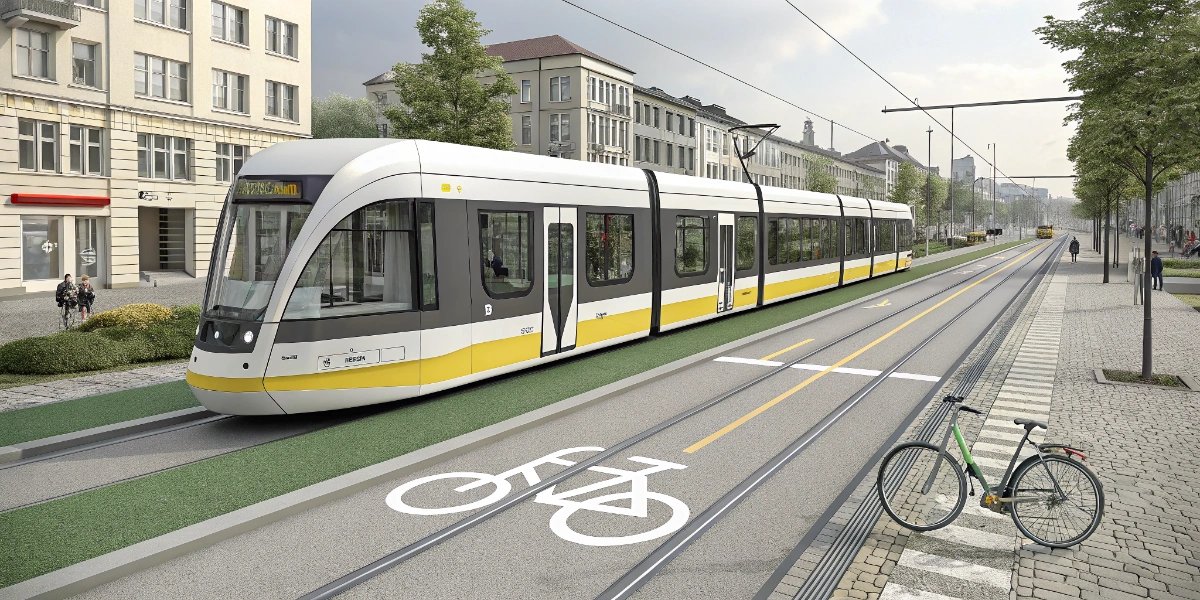
What makes it special: German trams are modern, quiet, and efficient. Many are low-floor designs (no steps to enter—platforms are level with tram floors), making them accessible for strollers, wheelchairs, and bicycles. They integrate perfectly with other transit—same ticket works on trams, buses, trains, and metros. Real-time displays show exact arrival times. Trams have traffic signal priority—lights turn green for approaching trams, keeping schedules tight.
Cultural significance: Trams represent German commitment to efficient public transit over car dependency. Unlike countries that demolished tram systems for cars, Germany maintained and modernized them. This reflects environmental consciousness and urban planning prioritizing public good over individual convenience. Trams are democratic transport—everyone from students to business executives uses them. They're clean, reliable, and integrated into daily life.
Fun fact for kids: Some German trams are so new they have USB charging ports at every seat! Modern trams have air conditioning, low noise, and smooth rides. In Berlin, some trams have "multifunctional areas" where you can stand your bicycle while you ride—you don't need to collapse it. Germans engineer for real user needs, not just basic function.
Speech sounds: "Straßenbahn" has the /ʃtr/ consonant cluster, /s/, /n/, /b/, and /n/ sounds. German pronunciation (SHTRAH-sen-bahn) with the "ß" (eszett) making an "s" sound teaches that German has unique letters and sound combinations.
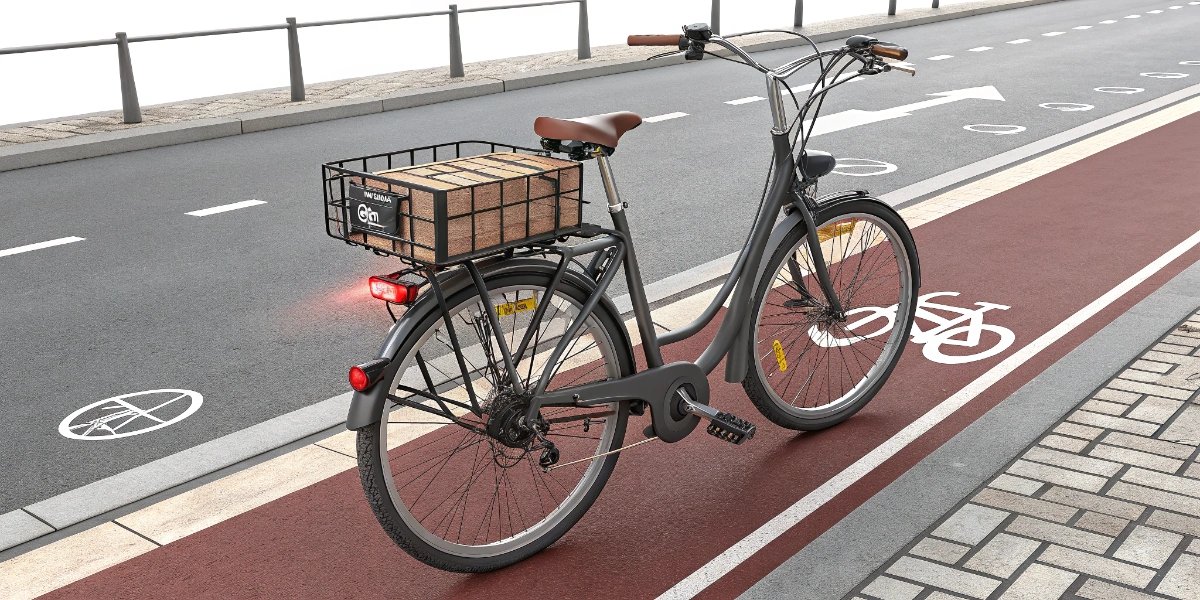
5. Bicycle (Fahrrad) - The Urban Priority Vehicle
Bicycles are serious transportation in German cities—not just recreation. Cities have extensive bike lanes (protected from cars), bike traffic signals, and parking infrastructure. Many Germans bike to work, school, and shopping year-round. Electric bikes (e-bikes) are increasingly popular, making cycling accessible to more people and handling hilly terrain.
To see different kinds of bikes, visit the bicycle vehicle page and learn why they are so popular worldwide.
What makes it special: German bike infrastructure treats cyclists as equal road users. Dedicated bike lanes (often physically separated from car traffic) connect across entire cities. Bike signals at intersections give cyclists their own light phases. Parking includes bike racks, covered shelters, and even "bike parking garages" at train stations with thousands of spaces. It's systematic approach treating bikes as genuine transportation, not hobby.
Cultural significance: Bikes represent German environmental consciousness and practical efficiency. Why drive a car for short trips when biking is faster (no parking hassles), healthier, and better for environment? This pragmatic thinking drives infrastructure investment. Bikes also reflect social equality—company CEOs and students use same bike lanes. It's democratic transport eliminating status differences.
Fun fact for kids: In Germany, you can take your bicycle on trains! Most trains have "bike cars" where you roll your bike aboard and secure it. This combines bike and train travel—bike from home to station, train across city, bike from station to destination. It's integrated thinking. There's small additional ticket cost for bikes, teaching that fair systems charge for resources used.
Speech sounds: "Bicycle" has three syllables (BI-cy-cle) with /b/, /s/, /k/, and /l/ sounds. The prefix "bi-" (two) teaches word construction—bicycle = two-wheeled vehicle, teaching that word parts have meanings.
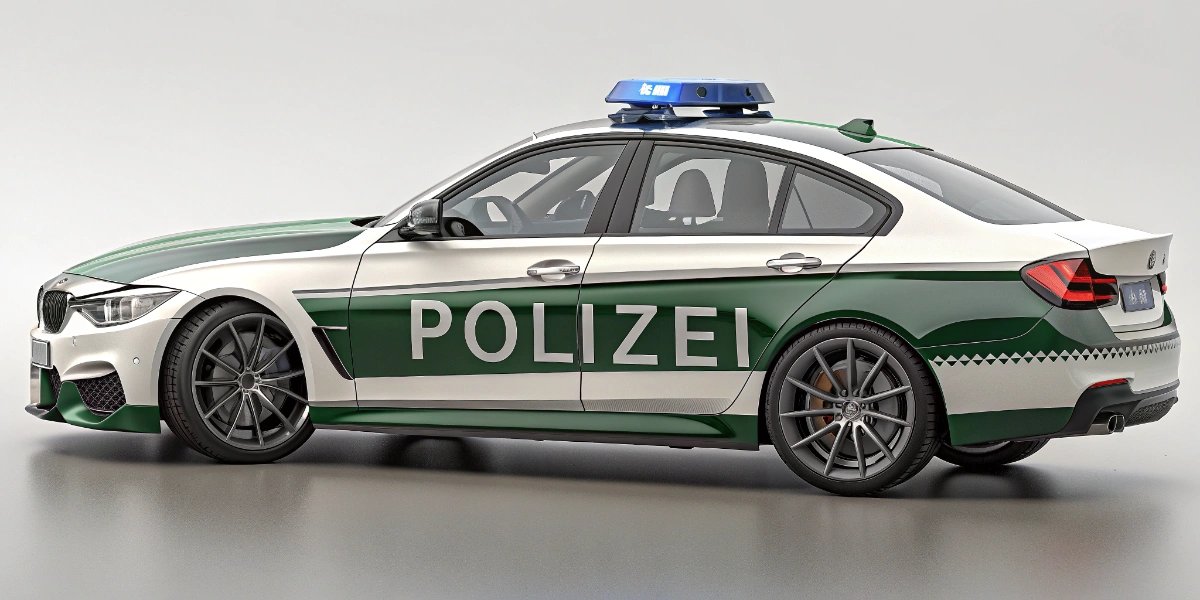
6. Polizei Auto (Police Car) - The Green-and-White Authority
German police cars are typically green and white (though some states use silver-blue), often BMW, Mercedes, or Volkswagen models. They're high-performance vehicles capable of autobahn speeds for highway patrol. Police use advanced technology—automatic license plate readers, video recording systems, and computer connections to national databases.
For a look at emergency vehicles in other countries, check out the police car vehicle page to compare sirens and colors.
What makes it special: German police vehicles are high-quality—using same premium cars as civilians but modified for police work. They need sustained high-speed capability for autobahn patrol, where criminals might flee at 150+ mph. Interior computers allow real-time checks of vehicle registrations, driver licenses, and criminal records. Many use BMW 5-series or Mercedes E-class—vehicles capable of matching any car on the autobahn.
Cultural significance: Police cars represent German order and authority. The green-and-white scheme (or silver-blue) is instantly recognizable. Police are generally respected—Germans view them as professionals maintaining order, not adversaries. This reflects broader German respect for rules and systems. Police vehicles are well-maintained, reflecting belief that public servants deserve quality tools to do jobs effectively.
Fun fact for kids: German police cars have special "blue light and horn" (Blaulicht und Martinshorn) that make distinctive European siren sound—different from American sirens! The sound pattern is two alternating tones creating "nee-nah, nee-nah" sound. It's designed to be heard clearly even at high speeds. Different countries have different siren sounds—teaching that even emergency signals vary by culture.
Speech sounds: "Polizei auto" has /p/, /l/, /ts/ (z), /aʊ/ (au), /t/ sounds. German pronunciation (po-lee-TSY OW-toh) teaches that German "z" makes "ts" sound and compound words combine smoothly.
7. Müllwagen (Garbage Truck) - The Recycling Specialist
German garbage trucks are sophisticated sorting vehicles reflecting Germany's extensive recycling system. Different colored bins require different collection trucks: black (general waste), blue (paper), yellow (plastics/metals), brown (organic/compost), and glass (collected at neighborhood containers). Trucks have multiple compartments for sorted collection.
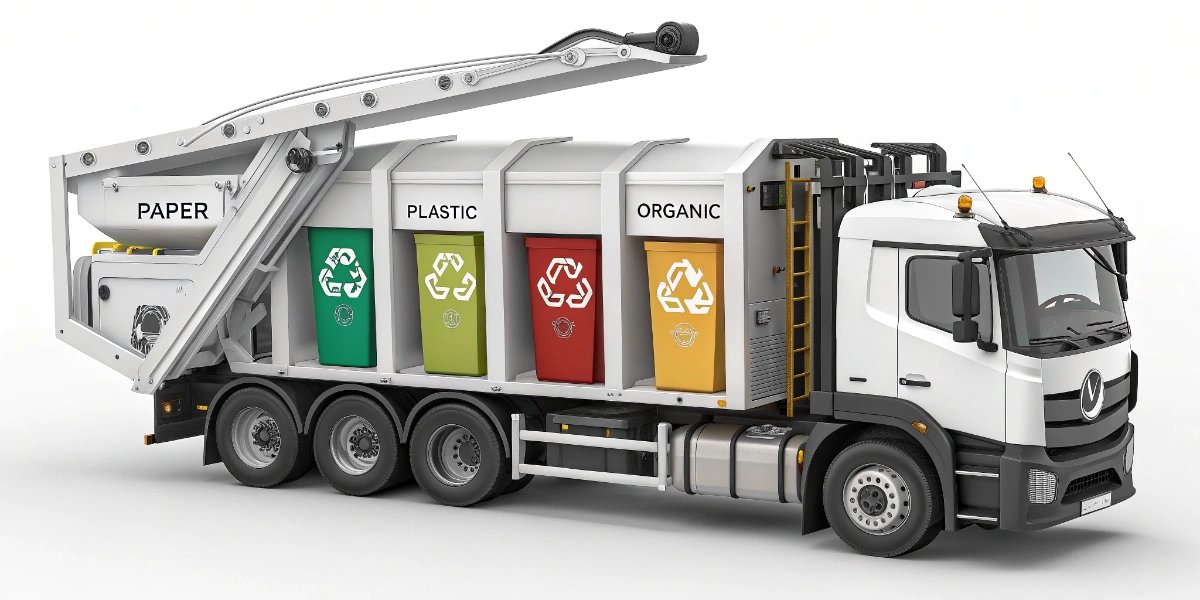
If your child loves big trucks, visit the garbage truck vehicle page to see how different countries handle recycling and waste.
What makes it special: German garbage trucks often have split compartments—one truck collects two waste types simultaneously (paper and plastics, for example), making collection efficient. Automated lifting arms grab bins, empty them, and return them to curb while driver operates from cab. GPS tracking ensures every street is covered on schedule. Sophisticated weighing systems track waste amounts per household for billing (in some cities, you pay by weight).
Cultural significance: Garbage trucks represent German environmental consciousness and systematic approach to problems. Germany recycles ~67% of municipal waste—one of world's highest rates. This requires complex logistics: different collection schedules, multiple truck types, citizen compliance with sorting rules. Germans accept this complexity because it serves environmental goals. It's collective effort for common good—very German approach.
Fun fact for kids: German garbage trucks are often powered by the garbage they collect! Many run on biogas created from organic waste—turning food scraps and garden waste into fuel. The organic waste collected in brown bins goes to facilities producing biogas, which powers trucks, heating systems, and electricity generation. It's circular system—waste becomes fuel, fuel powers collection, collection gathers more waste. Engineering solution to environmental problem!
Speech sounds: "Müllwagen" has /m/, /l/, /v/, /g/, and /n/ sounds. German pronunciation (MOOL-vah-gen) with the umlaut "ü" (pronounced like "ew") teaches that German has vowel sounds English doesn't have.
8. Volkswagen Beetle - The People's Car Icon
The Volkswagen Beetle (German: Käfer) is one of history's most iconic cars—originally designed in 1930s as affordable car for average Germans (Volkswagen means "people's car"). Over 21 million were built through 2003, making it one of longest-running car designs ever. The distinctive round shape and rear engine made it instantly recognizable worldwide.
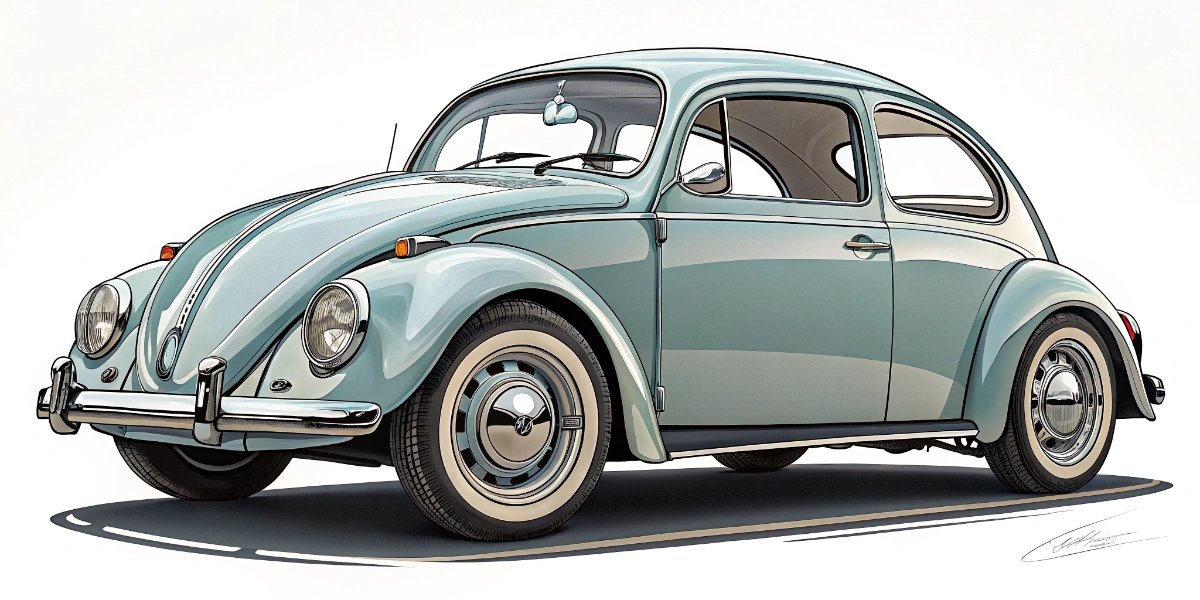
What makes it special: The Beetle was revolutionary—simple design, air-cooled rear engine (no radiator to freeze or leak), and robust construction made it reliable and repairable. It was designed for ordinary families, not luxury buyers. The curved shape was distinctive and practical—aerodynamic, structurally strong, and iconic. Post-WWII, Beetles became symbols of German recovery and democratic values—affordable quality for everyone.
Cultural significance: The Beetle represents German democratization of automobiles and engineering serving people. Unlike luxury brands (BMW, Mercedes), Volkswagen was explicitly for "Volk" (people)—making cars accessible to working families. The Beetle became cultural icon—appearing in movies, becoming symbol of 1960s counterculture, and spreading worldwide. It shows German engineering applied to affordability, not just premium markets.
Fun fact for kids: Volkswagen Beetles were SO reliable they were used as taxis worldwide! In Mexico, distinctive green-and-white Beetle taxis operated until 2012—over 70 years of service. In some countries, Beetles still operate as taxis. This longevity comes from simple, durable engineering—parts are easy to fix, engines are robust, and design is timeless. It's engineering philosophy: build something that lasts, not something that looks fancy for two years.
Speech sounds: "Volkswagen Beetle" has /v/, /k/, /s/, /w/, /g/, /b/, /t/, and /l/ sounds. "Volkswagen" (FOLKS-vah-gen) teaches German pronunciation and compound words (Volk = people, Wagen = car, literally "people's car").
Learning Opportunities Through German Vehicles
Geography Lessons
German vehicles teach geography through infrastructure and engineering. Why autobahn sections with no speed limits? Because Germany has well-maintained roads, driver education requirements, and engineered vehicles capable of safe high speeds. Why extensive rail networks? Because German cities are relatively close together (unlike vast countries like Russia or USA), making trains efficient for intercity travel. Geography determines what infrastructure makes sense.
Your child learns that Germany's central European location influenced development—trains connect to France, Belgium, Netherlands, Denmark, Poland, Czech Republic, Austria, and Switzerland. This connectivity required coordination and engineering excellence. Understanding geography builds appreciation for how location shapes infrastructure.
Cultural Awareness
Every German vehicle reveals cultural values:
- Engineering excellence - "Technik" culture prizes precision and quality
- Order and efficiency - "Ordnung" means systems work properly
- Environmental consciousness - Recycling, public transit, bike infrastructure
- Freedom with responsibility - Autobahn freedom requires driver discipline
- Democratic access - Quality vehicles for everyone, not just elite
These aren't just vehicles—they're expressions of German culture. Your child learns that engineering priorities reflect societal values: Germans prize reliability, punctuality, environmental responsibility, and quality accessible to all.
Vocabulary Building
German vehicle vocabulary introduces compound words and engineering terms:
- Autobahn - Auto (car) + Bahn (path/way) = car highway
- Straßenbahn - Straße (street) + Bahn (railway) = street railway/tram
- Müllwagen - Müll (trash) + Wagen (wagon/vehicle) = garbage truck
- Volkswagen - Volk (people) + Wagen (car) = people's car
- ICE - InterCity Express (fast train between cities)
In Talk & Listen, we include vehicle sounds with German precision—ICE train smooth acceleration, autobahn car engine at speed, tram bell at intersections. These sounds connect to German engineering culture.
App Connections
Talk & Listen: Practice German vehicle sounds—ICE train whoosh (smooth, quiet high-speed), tram bell (distinctive European sound), police siren (two-tone "nee-nah" pattern). Learn vocabulary through engineering context: "fast," "precise," "efficient," "quality."
Create & Play: Kids can design their own autobahn cars emphasizing speed and safety, create tram systems connecting neighborhoods, or build bicycles with integrated lights and baskets. German vehicles inspire systematic thinking: how would YOU engineer a train that's always on time?
Activity Ideas
Want something to print alongside these? The free printables library has vehicle coloring pages and activity packs — no email required.
- Speed challenge: How fast is 205 mph (ICE train)? Compare to cars, planes
- Punctuality tracking: Set a timer—can you arrive exactly on time like German trains?
- Recycling sorting: Practice German waste sorting (paper, plastic, organic, general)
- Compound words: Break down German vehicle names (Auto+bahn, Straße+bahn)
- Engineering trade-offs: Fast vs. safe—how do you make autobahn work?
- Public transit math: One tram carries 200 people—how many cars is that?
- Bike route planning: Map safest bike route from home to park
Why German Vehicles Teach Engineering Thinking
When my toddler asked why autobahn cars go so fast, we talked about engineering for specific purposes—German cars are built for sustained high speeds with safety margins. That conversation expanded to discussions about precision engineering, systems thinking, and how cultural values shape design priorities. German vehicles demonstrate that quality comes from systematic engineering, not accidents.
These vehicles show that "good enough" isn't German philosophy—things should be engineered properly. ICE trains arrive within seconds of schedule because precise engineering makes that possible. Recycling works because systems are designed thoroughly. This builds appreciation for craftsmanship and attention to detail that produces reliability.
Kids appreciate this precision. They learn that punctuality requires engineering (trains need precise timing systems), that freedom requires responsibility (autobahn requires driver discipline), that environmental goals require systematic solutions (recycling needs infrastructure). German vehicles teach that excellence comes from combining good engineering with cultural values supporting quality.
Explore More World Vehicles
This is the thirteenth in our World Vehicles series. Already published:Japan,India,UK,Africa,Middle East,Australia,Scandinavia,South America,Southeast Asia,Russia,China, andUSA. See the complete overview at World Vehicles for Kids: Complete Guide.
Want to explore German vehicles interactively? Talk & Listen includes vehicle sounds emphasizing precision engineering. In Create & Play, kids can design vehicles inspired by German engineering—from high-speed trains to efficient city trams.
When your child wants more after this article, you can turn it into a quick game: let them try the free Vehicle Sound Quiz to hear real vehicle sounds, then use the Compare Vehicles tool to put two favorites from this page side by side and talk about which one feels bigger, louder, or more powerful.
 Frequently Asked Questions
 Ad-free & offline ready