Important Notice: This content is for educational purposes only and is not medical advice. Visual schedules are an evidence-based support tool but do not diagnose or treat ADHD, autism, or other conditions. If you have concerns about your child's attention, focus, behavior, or development, consult your pediatrician, developmental pediatrician, psychologist, or occupational therapist for proper evaluation.
The Groundhog Day Morning
"Go get dressed."
Five minutes later: "Did you get dressed yet?"
Ten minutes later: "Why are you still in pajamas? I asked you to get dressed!"
Fifteen minutes later, louder: "GET. DRESSED. NOW."
Sound familiar?
You repeat the same instructions every single morning. Your child seems to genuinely forget what comes next, even though you've done this routine for months. You feel like a broken record. They feel nagged. Nobody's happy.
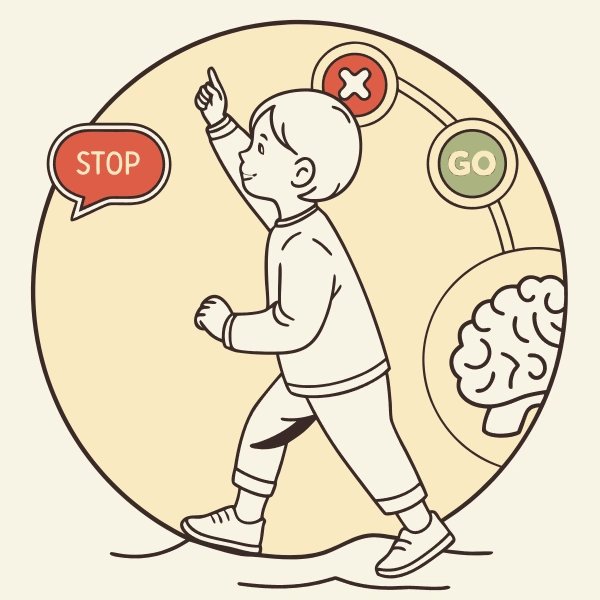
Verbal reminders don't work well for developing brains because toddlers have weak working memory and limited ability to translate heard instructions into action. Visual schedules work WITH their brain's strengths instead of against its weaknesses.
Why Visual Schedules Are "Magic" (Spoiler: It's Neuroscience)
The Working Memory Problem
"Go brush your teeth" requires your child to: hear and process words, hold "brush teeth" in mind, remember where bathroom is, inhibit impulse to play with toys they pass, remember instruction while walking, and initiate the task. That's 6+ executive function demands for a brain that can maybe handle 2-3.
Visual schedules solve this by removing the memory demand entirely. The picture SHOWS what's next. They don't have to remember—they just look.
The Auditory Processing Challenge
When you verbally tell your child what to do for the 10th time, their brain stops processing your words with the same attention. It's habituation—repeated auditory input becomes background noise.
Visual schedules provide permanent, retrievable information. The picture doesn't disappear after 2 seconds like your words do.
Why Especially Helpful for ADHD
Children with ADHD have significant executive function deficits in working memory, task initiation, sustained attention, and time awareness. Research consistently shows visual supports and environmental modifications are more effective than trying to improve internal executive function through willpower or consequences.
Types of Visual Schedules
1. Routine-Specific Schedule (Most Common Starting Point)
What: Shows steps of a SPECIFIC routine (morning, bedtime, after-school).
Morning example: Get dressed → Eat breakfast → Brush teeth → Put on shoes → Get backpack
Best for: Ages 2-6, ALL children, beginning users
2. First-Then Schedule (Simplest Version)
What: Shows just TWO steps: what they need to do first, then what happens next.
Examples: First: Clean up toys → Then: Snack time
Best for: Ages 18 months-4 years, high-motivation needed
3. Daily Routine Schedule
What: Shows entire day from wake-up to bedtime.
Best for: Ages 4-6, children with autism, children who need "the big picture"
4. Task Analysis Schedule
What: Shows ALL micro-steps of a SINGLE task (like "Get Dressed" broken into 6 steps).
Best for: Children with developmental delays, teaching new skills
How to Create Your First Visual Schedule
Step 1: Start Small
Pick ONE routine that's currently chaotic. Morning or bedtime works best for most families.
Step 2: Identify 3-5 Key Steps
Age guidelines:
- Ages 2-3: 3 steps max
- Ages 4-5: 3-5 steps
- Ages 5-6: 5-8 steps
Step 3: Choose Your Format
Option 1: Real Photos (BEST for ages 2-4)
Photos of YOUR child doing the actual task are most meaningful. Use phone, print 4x6, laminate, add velcro.
Option 2: Generic Icons
Search "visual schedule icons free printable." Quick but less personally meaningful.
Option 3: Apps
Choiceworks, First Then Visual Schedule. Portable but less tactile.
Step 4: Create the Display
- Divide board into "To Do" and "All Done" sections
- Attach pictures in sequence (top to bottom OR left to right)
- Mount at child's eye level
- Place WHERE the routine happens
Step 5: Teach How to Use It
During calm time: Introduce it, walk through pictures, let them practice moving to "done."
During routine: Guide heavily at first, then fade to "Check your schedule—what's next?"
Fading Your Involvement
Week 1: Full guidance ("Let's check your schedule")
Week 2: Verbal prompts ("Check your schedule—what's next?")
Week 3-4: Visual prompts only (point to schedule)
Month 2+: Child checks independently
Key: When they forget, don't tell them what to do. Say "Check your schedule." Build the habit of checking, not waiting for your instructions.
Troubleshooting Common Problems
Child Ignores the Schedule
- Too many steps → Reduce to 3
- Not developmentally appropriate → Use real photos
- Not motivating → Add reward component
- You're still verbally directing → Stop telling, point to schedule only
Works Great, Then Stops
Novelty wore off. Add new element, refresh pictures, re-teach system, increase praise for independence.
Meltdown When Schedule Changes
Build in "surprise" card. Prepare them night before. Show visual change. Use "first-then" for transitions.
Advanced Applications
Emotion Regulation Schedule
Visual showing coping strategies: Take breaths → Hug stuffed animal → Go to calm corner → Ask for help
Social Story with Visual Schedule
For new/scary situations (doctor visit, first day school). Shows sequence to reduce anxiety.
Token Economy Combination
Complete routine independently = earn token. Collect 5 = bigger reward.
When Visual Schedules Aren't Enough
Consider professional evaluation if:
- Schedule + consistency doesn't help after 4-6 weeks
- Child can't complete even 2-3 step sequences with full support
- Extreme rigidity about schedule (meltdowns at ANY deviation)
- Multiple concerning behaviors beyond executive function
Who to see: Occupational Therapist, Psychologist, or Developmental Pediatrician
The Bottom Line
Visual schedules work because they accommodate developmental reality: toddlers have weak executive function, limited working memory, and difficulty processing verbal instructions—especially repeated ones.
Instead of expecting your child to improve through willpower or consequences, visual schedules provide external structure that works WITH their developing brain.
The result:
- Less nagging from you
- More independence for them
- Fewer power struggles
- Smoother transitions
- Actual follow-through on routines
Start small. One routine. 3-5 pictures. Give it 2-4 weeks of consistency. Watch your child's capability for independence emerge.
References & Further Reading
Research & Organizations
- Center on the Developing Child, Harvard University. (2023). Executive Function & Self-Regulation. developingchild.harvard.edu
- Barkley, R. A. (2013). Taking Charge of ADHD (3rd edition). Guilford Press.
- Autism Speaks. (2024). Visual Supports and Autism Spectrum Disorder. autismspeaks.org
Books
- Hodgdon, L. (2012). Visual Strategies for Improving Communication. QuirkRoberts Publishing.
- Buron, K. D., & Curtis, M. (2012). The Incredible 5-Point Scale. AAPC Publishing.
Related Reading
- Why Can't My Toddler Calm Down? Complete Regulation Guide53 mins
Science-backed guide to toddler meltdowns and emotional regulation. Learn co-regulation, what's normal at each age, and when to seek help.
- Is Toddler Defiance Normal? What Developmental Science Says11 mins
Your toddler says no to everything. Is this defiance a problem or developmentally appropriate? Brain science reveals why "terrible twos" are actually crucial for healthy development.
- My Toddler Won't Listen Until I Yell: Breaking the Guilt Cycle10 mins
Stuck in the yelling cycle? Gentle parenting isn't working because you're missing the tools between asking nicely and losing it. Here's what actually works without screaming.