
Every parent of a vehicle-obsessed toddler has experienced it: the refusal to leave the house without the favorite truck. The ability to identify every vehicle type on the road. The bedroom floor covered in carefully arranged cars, buses, and trains. The endless requests to read the same vehicle book for the 47th time.
If you're wondering whether this is normal, the answer is yes—extremely normal. And if you're wondering whether there's a deeper reason behind this fascination, the answer is also yes. Vehicle obsessions aren't random quirks. They're windows into how young brains make sense of the world.
This article is about the neurodivergent side of vehicle fascination — transport schemas, intense interests, and when an interest is worth mentioning to someone. If you are after the general picture instead — why it happens, what is typical at each age, and what to do with it — start with the complete guide to toddler vehicle obsession.
We've channeled this natural obsession into Talk & Listen, where vehicle collecting becomes speech practice—turning screen time into skill-building time.
The Transport Schema: More Than Just "Likes Trucks"
In early childhood education, particularly in the Reggio Emilia and schema theory frameworks, researchers have identified recurring patterns of behavior called schemas. These are cognitive frameworks that children use to explore and understand concepts.
One of the most common is the transport schema: a fascination with things that move, carry, and transfer.
Children exploring the transport schema aren't just interested in vehicles themselves—they're trying to understand:
- How things move through space
- How objects can carry other objects
- Cause and effect (what makes things go, stop, turn)
- Speed and direction
- Systems and organization (roads, tracks, airways)
Transport schema — the drive to move things, and themselves, from place to place — is one of the most commonly observed play patterns in toddlers, and it tends to peak somewhere between two and three. It is not a boys' thing, whatever the toy aisle implies; the intensity shows up across the board at this age.
The study also revealed something interesting: children who engaged deeply with their dominant schema showed accelerated development in related cognitive skills. Those fascinated by transport showed stronger spatial reasoning and systems thinking later on.
Why Vehicles Specifically?
Of all the ways to explore movement and transportation, why do vehicles capture attention so intensely?
Several factors converge:
They're everywhere in daily life
Unlike dinosaurs or unicorns, vehicles are constantly present. Every car ride, every walk, every window view includes them. This repeated exposure reinforces interest.
They make compelling sounds
Engine noise, sirens, horns, train whistles—vehicles provide rich auditory input that toddlers find fascinating. And as we discussed in our article on onomatopoeia, these sounds become powerful vocabulary tools.
They have clear purposes
Fire trucks rescue people. Garbage trucks collect trash. Ambulances help sick people. These clear, concrete functions appeal to developing minds trying to understand how the world works.
They come in categories
Vehicles offer perfect opportunities for categorization practice: land/water/air, fast/slow, big/small, passenger/cargo. Categorization is a fundamental cognitive skill, and vehicles provide endless sorting possibilities.
Adults respond positively
When a toddler points at a fire truck and says "truck!" adults typically respond with enthusiasm and elaborate: "Yes! That's a fire truck! It has a ladder! It's red!" This social reinforcement strengthens the interest.
The Neurodivergent Connection
Here's where the conversation gets more nuanced. While vehicle fascination is common in typical development, research also shows it's particularly pronounced in some neurodivergent children, especially those who are autistic.
A 2022 study in the Journal of Autism and Developmental Disorders compared special interests across neurotypical and autistic toddlers. Both groups showed focused interests, but autistic children's interests tended to be:
Interest Intensity: Neurotypical vs Autistic
- More intense (longer duration of focused attention)
- More specific (particular vehicle types or features)
- More resistant to interruption
- More likely to involve systematic exploration (organizing, categorizing, memorizing details)
The researchers emphasized that focused interests—including vehicle fascination—aren't inherently concerning. In fact, they can be valuable:
- They provide predictability and comfort
- They serve as bridges for communication and social connection
- They support deep learning in related areas
- They can become foundations for future skills and careers
Related: Explore more about creative outlets for toddlers during indoor days.
People Also Ask
What is transport schema and why does it matter?▼
Transport schema is a cognitive stage where toddlers explore movement, transformation, and cause-effect through vehicles. It's not just interest—it's how their brains are wired to learn about the world. Supporting this schema builds categorization, prediction, and systems thinking skills.
Does strong vehicle interest mean my child is autistic?▼
No. Most vehicle-obsessed toddlers are neurotypical. While vehicle fascination can be particularly pronounced in some neurodivergent children, having a strong vehicle interest alone is not an indicator of autism. It's a common developmental stage for all children.
How can I use vehicle obsession for learning?▼
Use vehicles to teach vocabulary (vehicle names, action words), math (counting wheels, comparing sizes), categorization (sorting by type, function), problem-solving (which vehicle for which job), and spatial concepts (in/out, up/down). The intrinsic motivation makes learning easier.
From Fascination to Learning
Smart educators and parents don't fight focused interests—they harness them. This is why Talk & Listen and Create & Play are built around vehicles.
When you align learning with existing interest, you get:
Sustained attention
A child who won't sit for letter drills will happily practice speech sounds if they involve their favorite fire truck.
Intrinsic motivation
They're not learning because you asked—they're learning because they want to know more about their interest.
Memory enhancement
Information connected to a strong interest gets encoded more deeply than arbitrary information.
Reduced resistance
Practice doesn't feel like work when it involves something they love.
A 2023 study in Cognitive Development demonstrated this practically. Researchers taught the same vocabulary words to two groups of toddlers—one group through flashcards, another through play with vehicles. The vehicle group learned faster, retained better, and needed fewer repetitions.
The researchers concluded that "leveraging focused interests creates a cognitive advantage that exceeds the benefits of varied presentation."
Practical Applications for Parents
If your child is vehicle-obsessed, here's how to channel it productively:
Build vocabulary naturally
Don't just say "truck"—specify: "cement mixer," "tow truck," "dump truck," "pickup truck." Vehicle interest naturally expands vocabulary.
Practice math concepts
"How many cars do you have? Let's count them." "Which truck is bigger?" "Can you give me two buses?"
Develop storytelling
"Where is the ambulance going? Who needs help? What happens next?" Vehicle play naturally creates narratives.
Teach social skills
"The fire truck needs help. Can the tow truck share the road? How can they work together?"
Explore cause and effect
"What happens when we push the car down the ramp? Why did it go fast? What if we make the ramp steeper?"
Introduce writing and drawing
Tracing wheels creates circles. Drawing roads develops line control. Writing vehicle names builds letter recognition.
When Interest Becomes Concern
Most focused interests are healthy and temporary. But occasionally, parents wonder if the interest has crossed into concerning territory.
Consider consulting your pediatrician if:
- The interest completely prevents other activities (can't transition away, becomes extremely distressed)
- It interferes with daily functioning (won't eat unless vehicles are present, won't sleep without specific vehicle)
- Your child becomes distressed by minor changes to their vehicle routines
- The interest is accompanied by other developmental concerns (limited social interaction, significant language delays, repetitive behaviors beyond the interest itself)
But if your child can transition between activities, shows interest in other things occasionally, and uses their vehicle fascination for imaginative play and learning, you're observing healthy development—even if it's more intense than you expected.
The Long View
Many parents worry: "Will my child ever care about anything else?"
The answer is almost always yes. Most children's focused interests evolve:
- Vehicles → construction equipment → machines → engineering
- Vehicles → transportation systems → geography → travel
- Vehicles → vehicle functions → community helpers → careers
- Vehicles → a completely different interest (animals, space, art)
What carries forward aren't necessarily the vehicles themselves, but the skills developed through deep engagement:
- The ability to focus intensely
- Systems thinking and categorization
- Memory for details
- Persistence in learning
- The joy of mastery
Many engineers, architects, pilots, and transportation professionals trace their careers back to childhood vehicle fascination. That toy truck collection isn't just clutter—it's the foundation of a learning style.
The Bottom Line
Your toddler's vehicle obsession isn't random and it isn't limiting. It's a cognitive strategy—a transport schema that helps them understand movement, cause and effect, systems, and categories.
It's also an opportunity. When you meet children where their interests already live, learning becomes effortless. They're not studying—they're exploring what they love.
So instead of trying to broaden their interests prematurely, consider going deeper. Add more vehicle vocabulary. Create more complex vehicle stories. Introduce vehicle-themed learning activities.
That toy truck in their hand? It's not just a plaything. It's a tool for understanding the world.
You Might Also Like
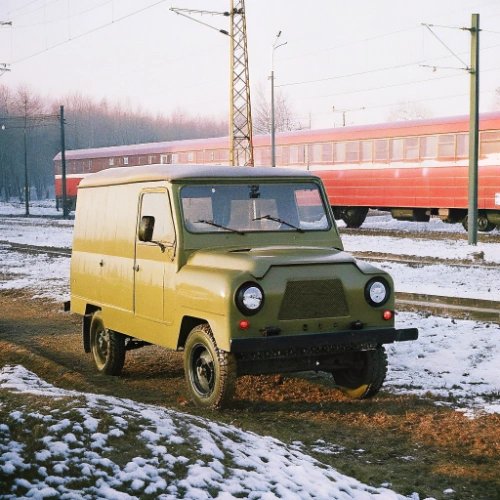
Vehicles of Russia for Kids - UAZ Off-Roaders, Winter Trucks & More
Discover Russian vehicles built for extreme conditions! UAZ off-roaders, winter transport, and Trans-Siberian trains. Free coloring pages and cultural learning for ages 2-6.

Vehicles of India for Kids - Auto Rickshaws, Decorated Trucks & More
Discover colorful Indian vehicles! Auto rickshaws, cycle rickshaws, and decorated trucks. Free coloring pages and cultural learning for ages 2-6.

Vehicles of Africa for Kids - Safari Vehicles, Matatus & More
Discover colorful African vehicles! Safari 4x4s, decorated matatus, and bush taxis. Free coloring pages and cultural learning for ages 2-6.
 Frequently Asked Questions
 Ad-free & offline ready


