Why Korean Vehicles Show Fast Development
In the early 1950s, South Korea emerged from devastating war as one of the world's poorer nations. Much of the country relied on agriculture, infrastructure was damaged, and industry was still emerging. Fast-forward a few generations and South Korea is a wealthy, highly urbanized nation known for companies like Samsung, Hyundai, and LG. This transformation—from oxcarts to bullet trains within a single lifetime—is one of the most dramatic development stories of the modern era.
Korean vehicles document this compressed modernization. In the 1960s, many farmers still used oxcarts and bicycles. In the 1970s, Hyundai built its first mass-produced cars with heavy influence from Japanese and European designs. In the 1980s, the Seoul Metro opened and began modernizing urban transit. In 2004, the KTX bullet train launched, reaching very high speeds and joining the global high-speed rail club. In the 2010s and 2020s, smart buses with GPS tracking, real-time apps, and cashless payment became normal, and Hyundai electric cars began competing with global leaders. This progression—from copying to innovating—shows Korea's journey from poverty to prosperity, follower to leader.
These eight vehicles reveal Korean characteristics often credited with this success: a focus on efficiency (systems tuned so very little is wasted), enthusiasm for technology integration (adding digital layers to almost everything), investment in education and engineering talent, a strong work ethic, and export ambition (building products for the global market, not just at home). Korean vehicles are not just transportation—they are physical manifestations of national values and development strategy.
What makes Korean vehicles special?
South Korea went from oxcarts to bullet trains in one lifetime—one of history's fastest development transformations. KTX bullet trains reach 305 km/h (190 mph), Seoul Metro serves 8+ million daily riders with seamless payment integration, and Hyundai/Kia evolved from copying to innovating (now competing globally with EVs). Korean vehicles reflect compressed modernization, tech integration, and export ambition.
1. KTX Bullet Train (Korea Train Express) - Compressed Modernization
What It Is
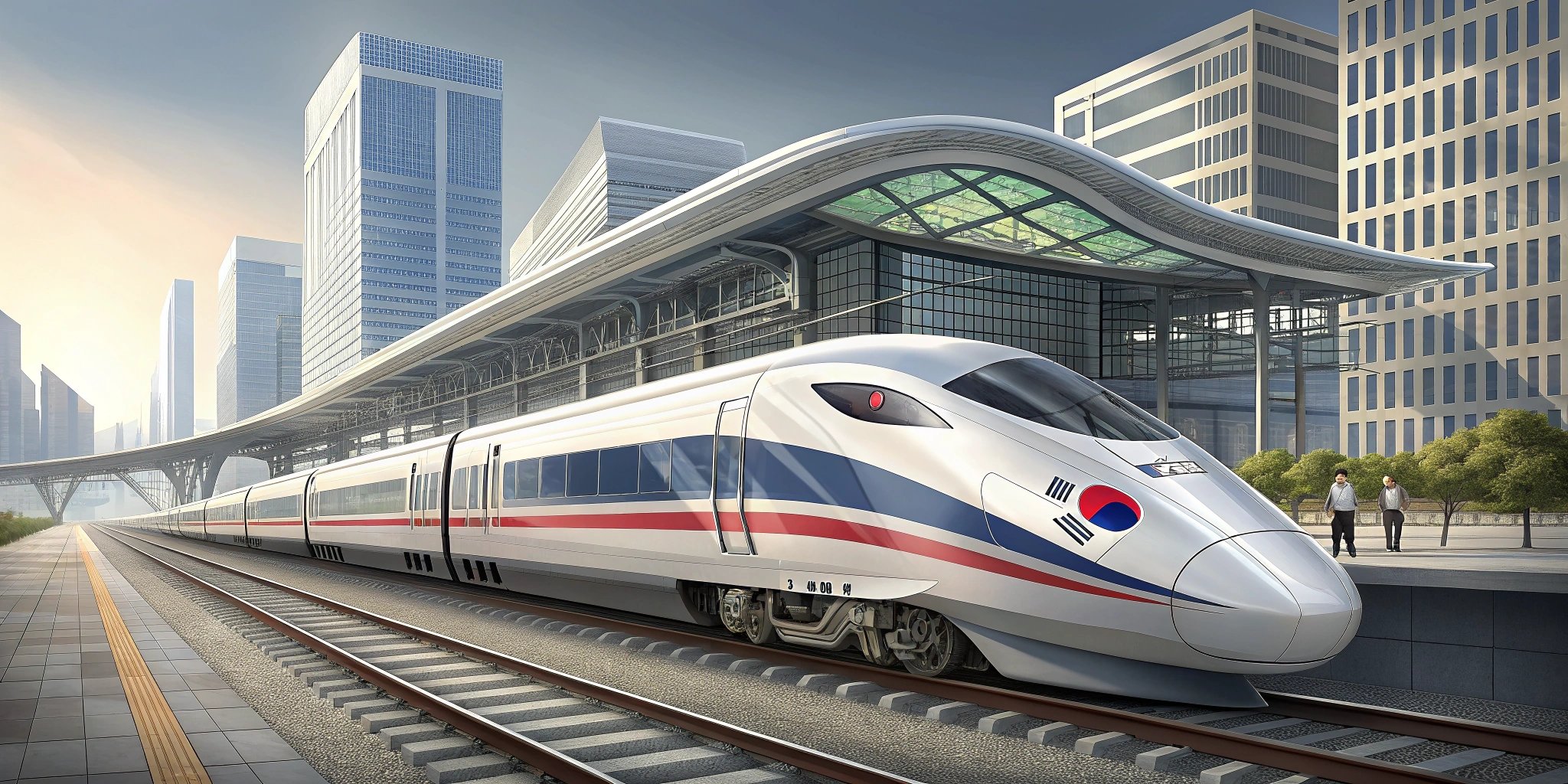
The KTX (Korea Train eXpress) is South Korea's high-speed rail system, launched in 2004 to connect Seoul to major cities at very high speeds. The original KTX trains were based on licensed French TGV technology, but newer KTX-Sancheon and KTX-Eum models are Korean-designed and manufactured by Hyundai Rotem. The network dramatically reduces travel time between cities and carries large numbers of passengers every day—showing Korea's commitment to efficient, modern rail.
Why It Matters
Compressed modernization strategy: Rather than slowly upgrading conventional rail over many decades, Korea invested heavily to jump quickly into high-speed rail. Licensing proven technology from abroad, learning it thoroughly, and then designing domestic models allowed Korea to shorten the usual development timeline.
Seoul to Busan Travel Time (Hours)
Note: Oxcart value is scaled down; real trip took weeks!
Technology transfer and independence: The original KTX deal included learning from French engineers. Over time, Korean engineers moved from operating imported trains to designing and building their own. That path—from buyer, to learner, to independent manufacturer, to exporter—shows how technology transfer can become long-term capacity rather than permanent dependence.
National connectivity and balance: High-speed trains make it realistic to live in one city and work or study in another. Smaller cities gain better access to Seoul's universities and jobs without everyone needing to move to the capital. This helps reduce extreme capital-city concentration and supports more balanced regional development.
Cultural Significance
KTX symbolizes Korean pride in rapid development. For many families, older generations remember rural poverty while younger generations ride sleek trains with Wi-Fi and power outlets. The trains become everyday reminders of how far the country has come in a short time.
Fun Facts
- Later-generation KTX trains were designed and built by Korean engineers at Hyundai Rotem.
- On major corridors, KTX departures are so frequent that schedules feel more like metro service than long-distance rail.
- Seats include power outlets and many cars now offer Wi-Fi—helping commuters work or study in transit.
- Dedicated high-speed rail lines separate fast trains from slower freight, making schedules more reliable.
Teaching Moment
KTX is a powerful example for kids of how countries can learn from others and then build their own strengths. Families can talk about why Korea licensed technology first instead of inventing everything from scratch, and how that choice helped it catch up more quickly.
2. Seoul Metro - Highly Connected Underground
What It Is
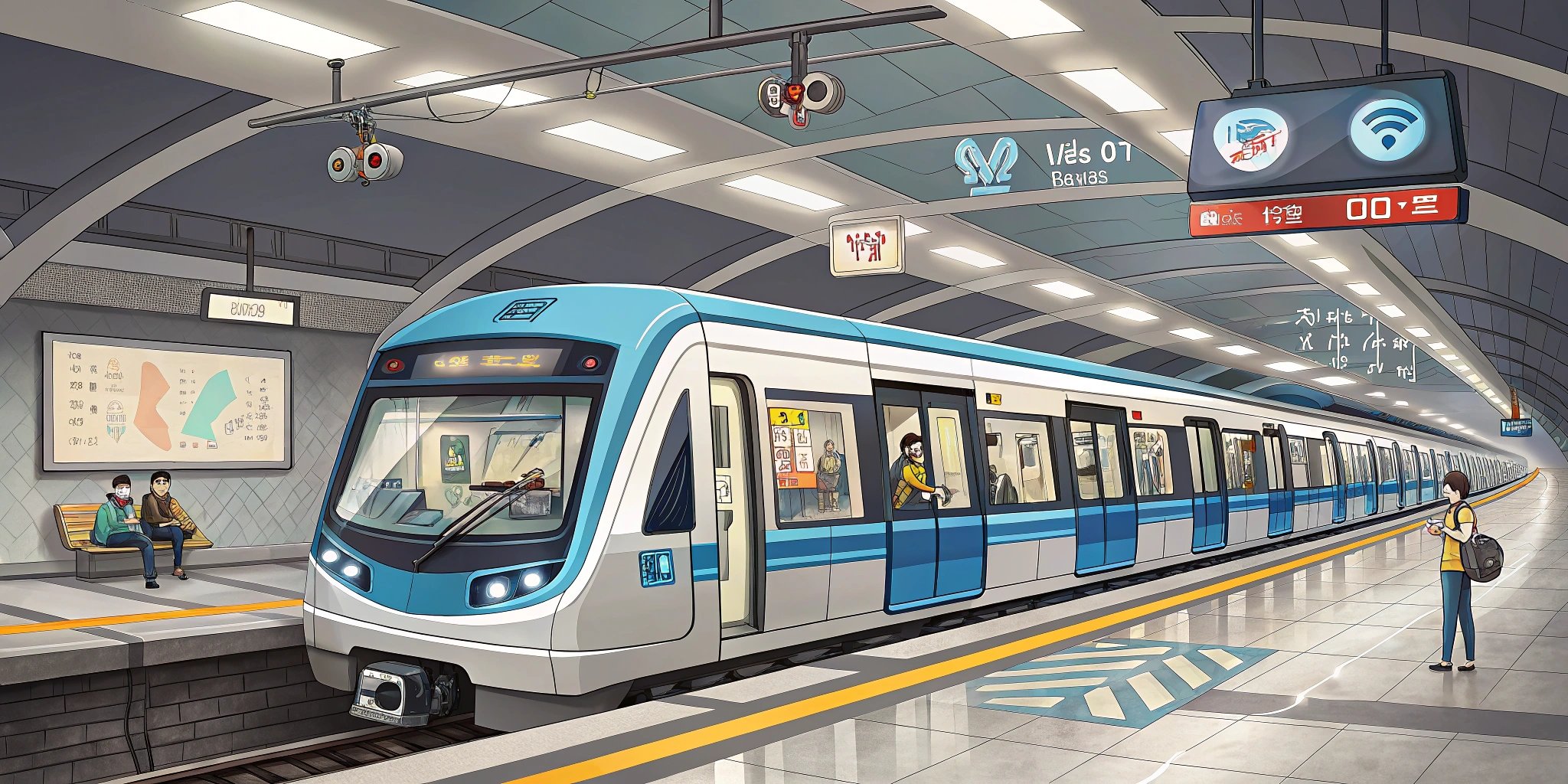
Seoul Metro is one of the busiest subway systems in the world, moving millions of passengers each day across dozens of lines and hundreds of stations. What sets it apart is how deeply technology is integrated: free Wi-Fi throughout most of the system, platform screen doors at nearly all stations, heated seats in winter, air conditioning in summer, and smartphone apps showing real-time train locations and crowding levels. A single payment card (T-Money) can be used on metro, buses, and many taxis.
Why It Matters
Technology integration: Seoul Metro treats features like Wi-Fi, digital displays, and real-time information as basic expectations, not optional extras. This reflects a broader Korean pattern of adding digital layers to physical infrastructure.
Safety by design: Platform screen doors, good lighting, and clear signage are examples of engineering solutions to safety concerns. Rather than relying only on rules, Korea often redesigns environments to prevent accidents.
Economic efficiency: Dense cities make metro systems more efficient. Because so many people ride, trains can be frequent and well-maintained. This shows how urban design (density) and transportation choices support each other.
Cultural Significance
The metro is a shared public space where people from many backgrounds ride together. Its cleanliness and reliability are points of pride, and its technology features reflect Korea's broader identity as a highly connected, modern society.
Fun Facts
- Many stations include underground shopping areas and food courts—mini cities beneath the streets.
- Platform screen doors were gradually added across the network to improve safety and climate control.
- Real-time crowding information helps riders choose less-packed cars when possible.
- Some stations display artwork or small museum-style exhibits on their walls.
Teaching Moment
Seoul Metro is a great example for kids of how infrastructure, technology, and design all interact. Parents can talk about why features like doors, signs, and apps make the system easier and safer to use—and how those ideas could apply to systems in their own city.
3. Smart Bus (Seoul/Busan) - GPS Tracking and Real-Time Apps
What It Is
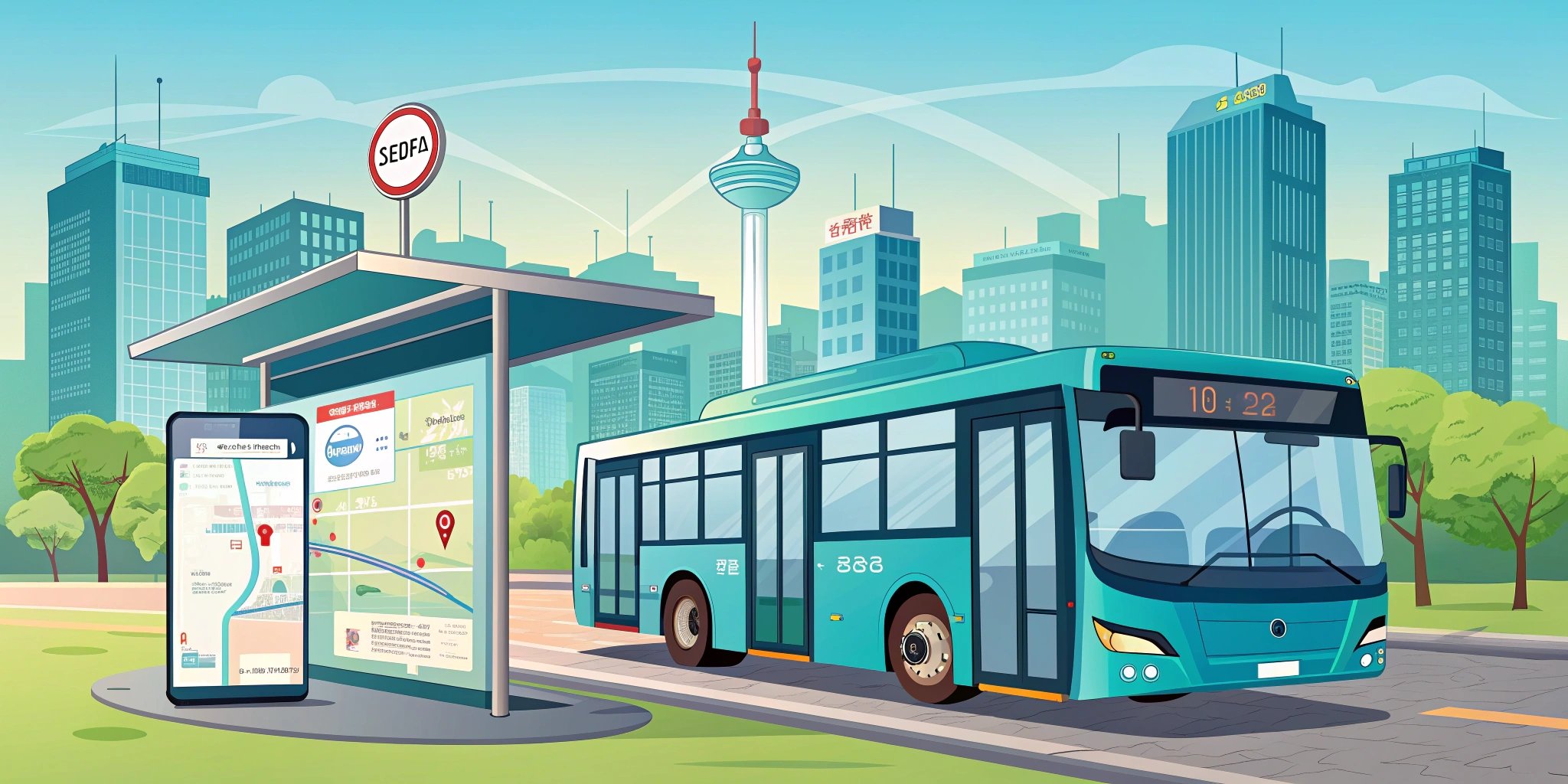
Many Korean city buses are part of a "smart" system that integrates GPS tracking, real-time arrival predictions, mobile apps, and cashless payment. Digital boards at bus stops show when the next buses will arrive. Smartphone apps display live bus locations on maps and estimate arrival times based on traffic. Riders tap payment cards or phones instead of using cash. Some buses also offer onboard Wi-Fi and USB charging.
Why It Matters
Reducing uncertainty: Real-time information changes how waiting feels. Knowing that a bus will arrive in 4 minutes feels very different from standing at a stop with no idea how long the wait will be.
System integration: Using the same payment card across buses, metro, and many taxis makes the whole system feel unified. Transfers become simpler and more affordable, which encourages people to use public transit instead of private cars.
Digital-first thinking: Designing systems around smartphones and digital cards reflects Korea's high technology adoption. It also raises questions about how to support people who are less comfortable with technology.
Cultural Significance
Smart buses are a clear example of Korea's tendency to solve everyday problems with digital tools. Rather than accepting confusion or long wait times as normal, engineers built systems that give riders more information and control.
Fun Facts
- Bus stop displays update frequently as GPS data comes in from moving buses.
- Color-coding and numbering help riders quickly identify bus types and routes.
- Transfer discounts encourage riders to combine buses and metro in a single journey.
- Some major corridors use dedicated bus lanes to keep transit moving even in heavy traffic.
Teaching Moment
Smart buses help kids see how information and design can improve something as simple as waiting for a ride. Families can talk about how they would redesign their own local bus stops if they had access to similar tools.
4. Hyundai/Kia Electric Car - From Copying to Innovating
What It Is
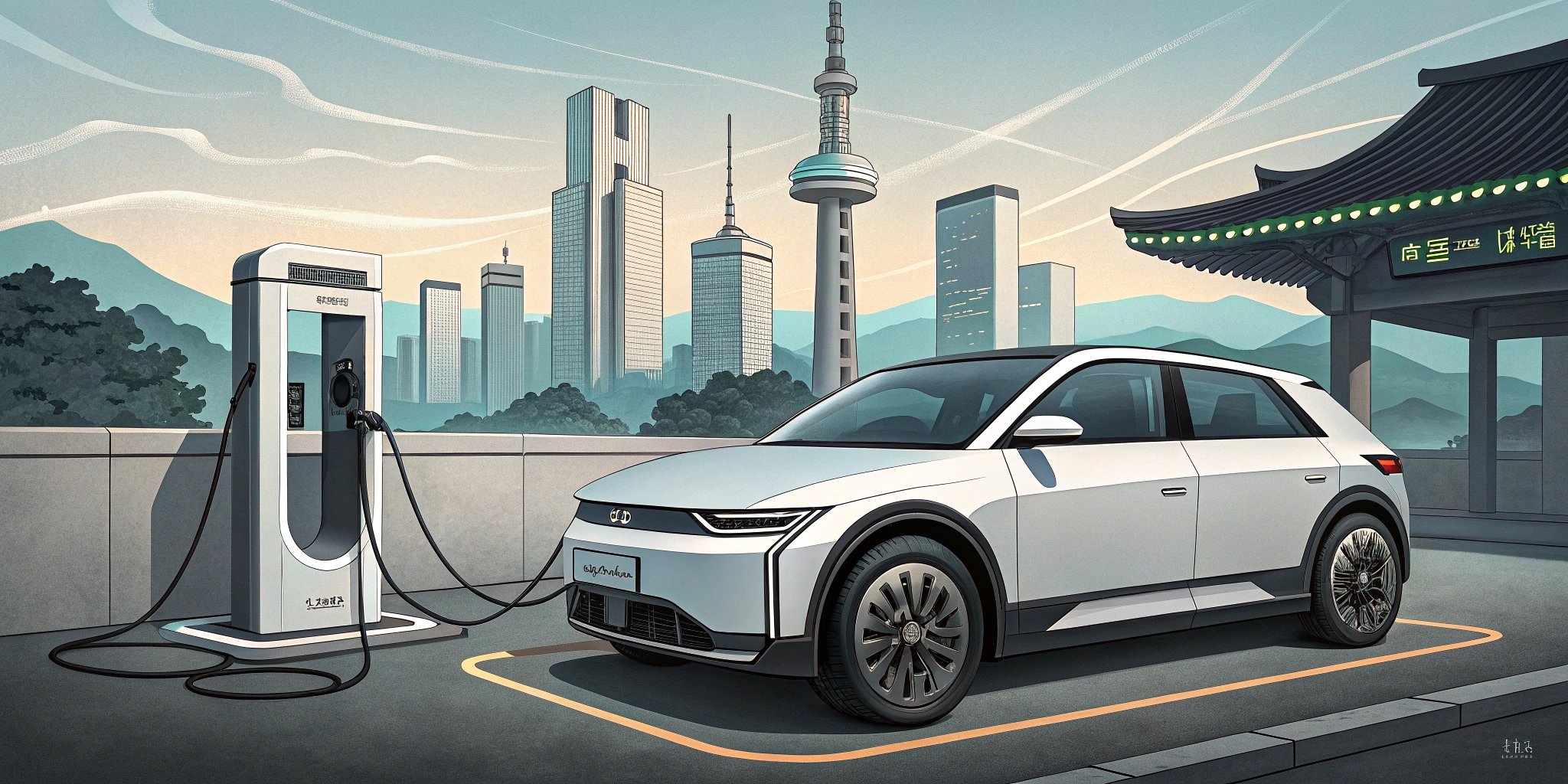
Electric vehicles like the Hyundai Ioniq 5 and Kia EV6 are Korean EVs competing globally with well-known brands. They offer long driving ranges, fast charging, and advanced driver-assistance features. Hyundai's history began with licensed models and budget cars, but over decades the company improved quality, invested heavily in design, and developed its own platforms. Today, its electric vehicles are praised for design, technology, and practicality.
Why It Matters
From imitation to innovation: Hyundai's story follows a path common to many developing economies: starting with licensed production, then copying, then competing on price, and finally competing on quality and innovation. Reaching the innovation stage required long-term investment in engineering and design.
Electric transition opportunity: The global shift from gasoline engines to electric power created a chance for newer players to shine. Korean companies with strengths in batteries and electronics were well-positioned to compete in this new landscape.
Export focus: Hyundai and Kia sell vehicles around the world. That export focus means they must meet many different countries' safety, emissions, and customer expectations—driving quality improvements that benefit Korean drivers as well.
Cultural Significance
The rise of Korean electric cars from once-humble beginnings is a source of national pride. Generations who remember cheap, basic cars now see Korean brands winning awards and topping review lists. This mirrors Korea's broader shift from being seen mainly as a manufacturing base to being recognized as a source of innovation.
Fun Facts
- Some Korean EVs can power appliances during power outages—using vehicle batteries like mobile generators.
- Hyundai and Kia share modular EV platforms, lowering costs and speeding up development.
- Korean battery companies are among the largest suppliers for EVs worldwide.
- Design awards for models like the Ioniq 5 highlight Korea's growing design reputation.
Teaching Moment
Hyundai's journey helps kids understand that excellence often comes after many years of learning and improvement. Parents can trace the timeline from early budget cars to modern EVs and talk about how feedback, practice, and persistence lead to better results.
5. Delivery Scooter (Food Delivery) - App-Powered Meals
What It Is
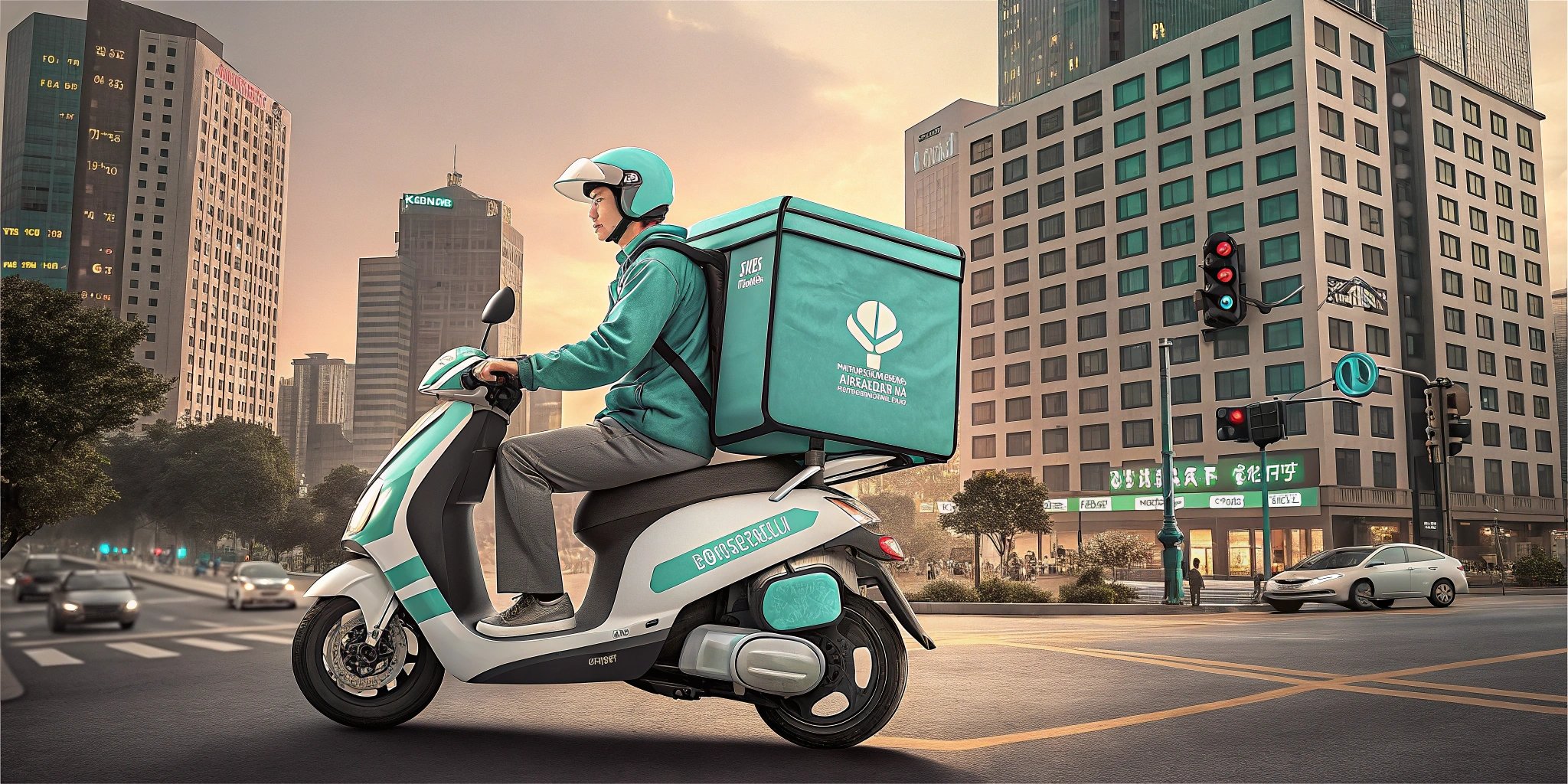
Food delivery apps in Korea (like Baemin and others) have made ordering meals to your door a daily habit instead of a rare treat. Delivery riders on motorcycles and electric scooters weave through traffic with insulated backpacks, bringing everything from fried chicken to late-night snacks. Dense cities, strong smartphone adoption, and busy work schedules make this kind of rapid delivery system especially common in Korea.
Why It Matters
Convenience culture: Delivery makes it possible for people working long hours to eat hot meals without cooking or going out. Over time, this convenience can reshape expectations—what feels like a special treat in some countries becomes everyday normal in Korea.
Gig economy work: Many delivery riders work as independent contractors. Their flexible schedules and pay-per-delivery structure can create opportunities but also insecurity. This raises questions about how societies protect workers in flexible, app-based jobs.
Density and logistics: Dense city layouts make short delivery distances possible. That density allows riders to complete many orders per hour, which helps the system function economically.
Cultural Significance
Delivery scooters are part of the visual and sound landscape in Korean cities. They reflect how quickly new technologies—smartphones, apps, GPS—can change everyday life when combined with local culture and urban form.
Fun Facts
- Delivery apps in Korea handle everything from full meals to small grocery orders.
- Many riders use weatherproof gear to operate year-round in rain, snow, and summer heat.
- Some high-rise buildings have special delivery zones to organize drop-offs more safely.
- Electric scooters reduce fuel costs and local air pollution compared to gasoline motorcycles.
Teaching Moment
Delivery scooters are a starting point for talking about convenience and its hidden costs. Kids can think about who makes convenience possible and what trade-offs (safety, noise, worker stress) come with getting everything delivered quickly.
6. Taxi (Standard and Premium) - App-Based Rides
What It Is
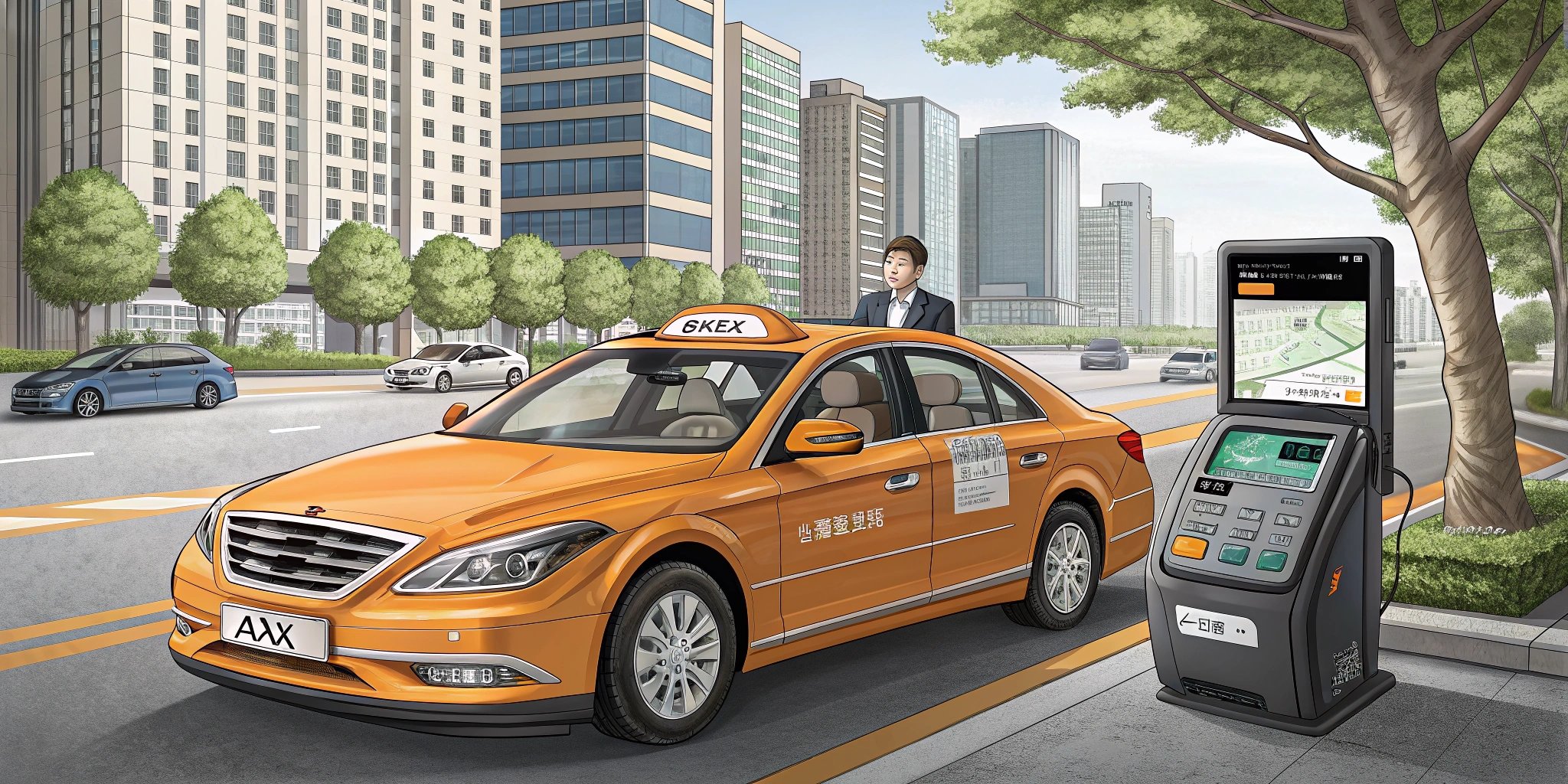
Korean taxis often use app-based booking through services like Kakao T. Riders can see where the car is, how long it will take to arrive, and what the estimated fare will be. Standard taxis typically use midsize sedans, while premium taxis use larger or more luxurious models. Many taxis accept the same payment cards used for buses and metro, keeping transportation payment consistent.
Why It Matters
Integration over disruption: App-based taxi systems in Korea tend to work with existing taxis instead of replacing them. This approach adds technology layers (apps, tracking, digital payment) while keeping the underlying system familiar.
Super-app ecosystem: Integrating ride-hailing into widely used messaging apps makes adoption easier—people do not need separate accounts and logins for each service.
Cashless transition: Widespread card and phone payments mean riders rarely need cash. That shift has implications for budgeting, privacy, and convenience.
Cultural Significance
Taxis show Korea's tendency to adopt global ideas (like ride-hailing) but adapt them to local conditions and regulations. They also highlight the strong role of domestic tech platforms in daily life.
Fun Facts
- Some premium taxis offer language support for tourists.
- Rating systems give riders and drivers feedback on their experiences.
- Taxi fares are generally set by regulation rather than negotiated on the spot.
- Drivers often rely on navigation apps that account for real-time traffic.
Teaching Moment
Taxis and ride-hailing apps help kids understand how technology can sit on top of existing systems. Families can compare how taxis work in Korea versus their own city and talk about why different places choose different rules.
7. Campus Shuttle Bus (University) - Student Mobility
What It Is
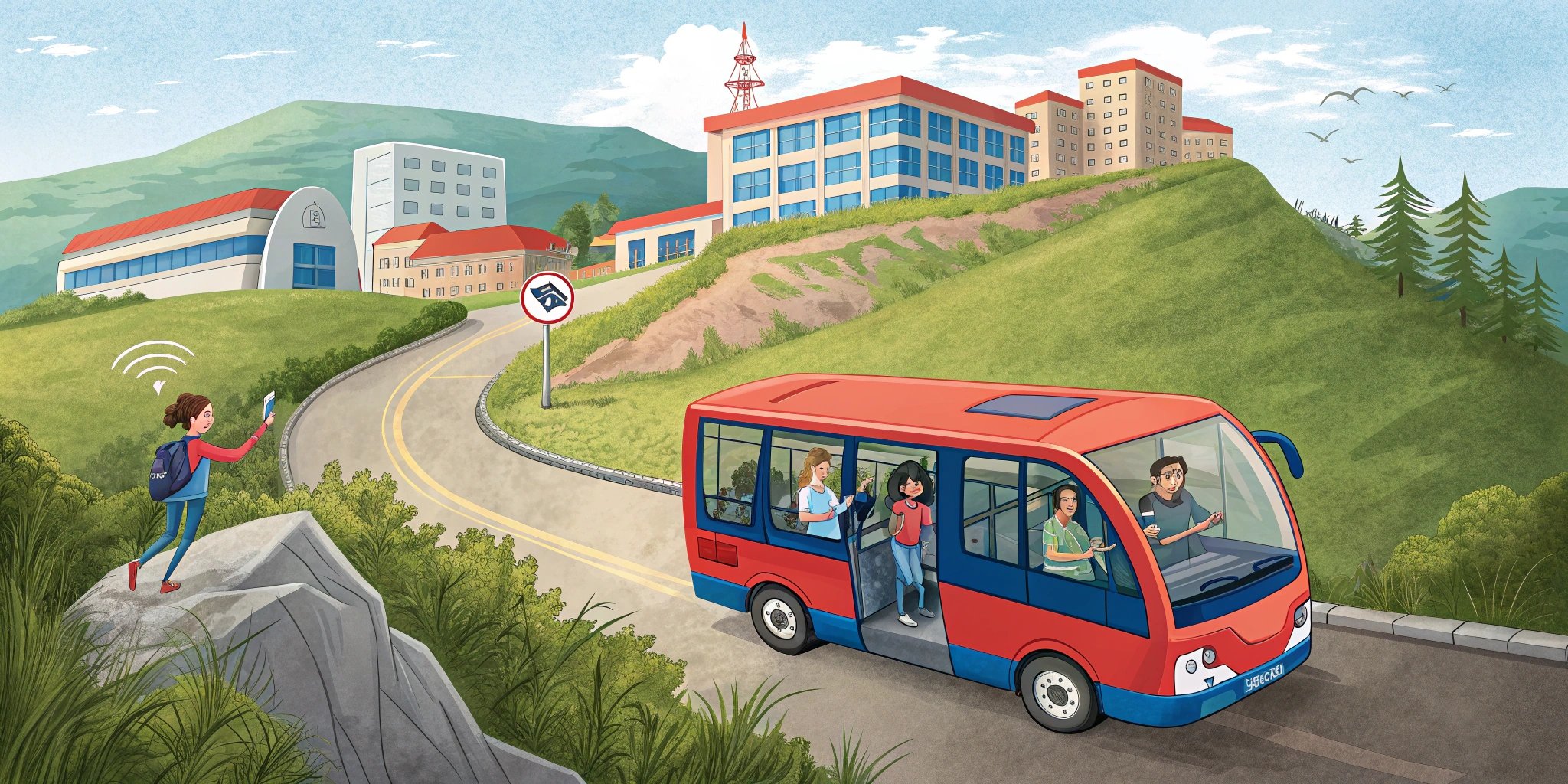
Many Korean universities sit on hillsides or spread across large areas. To help students move between gates, lecture halls, dorms, and nearby subway stations, schools operate shuttle buses on set routes. During busy class times, these shuttles can arrive every few minutes and often have apps or displays showing their locations.
Why It Matters
Geography shaping design: Korea's mountainous terrain makes some campuses steep and spread out. Shuttle buses solve a very physical problem: long, tiring walks between important locations.
Student-centered services: Operating free or low-cost shuttle networks shows universities investing in students' daily experience, not just in classrooms and labs.
Reuse of smart-transit ideas: The same concepts used in city transport—GPS tracking, route planning, predictable timetables—also appear on campuses at a smaller scale.
Cultural Significance
Campus shuttles highlight the importance Koreans place on education. Making it easier to get to classes, libraries, and labs shows how seriously universities take their role in students' lives.
Fun Facts
- Some routes are timed around class schedules so students can move campuses efficiently between periods.
- Shuttle routes often connect directly to nearby subway stations, extending public transit onto campus.
- Frequency increases during the main semester and drops during vacations.
- Routes are sometimes adjusted based on student feedback and changing building usage.
Teaching Moment
Campus shuttles are a good case study in how institutions design services to match their geography and mission. Kids can think about how their own school or community might change if similar shuttles existed.
8. Electric Kickboard (E-Scooter) - Last-Mile Connection
What It Is
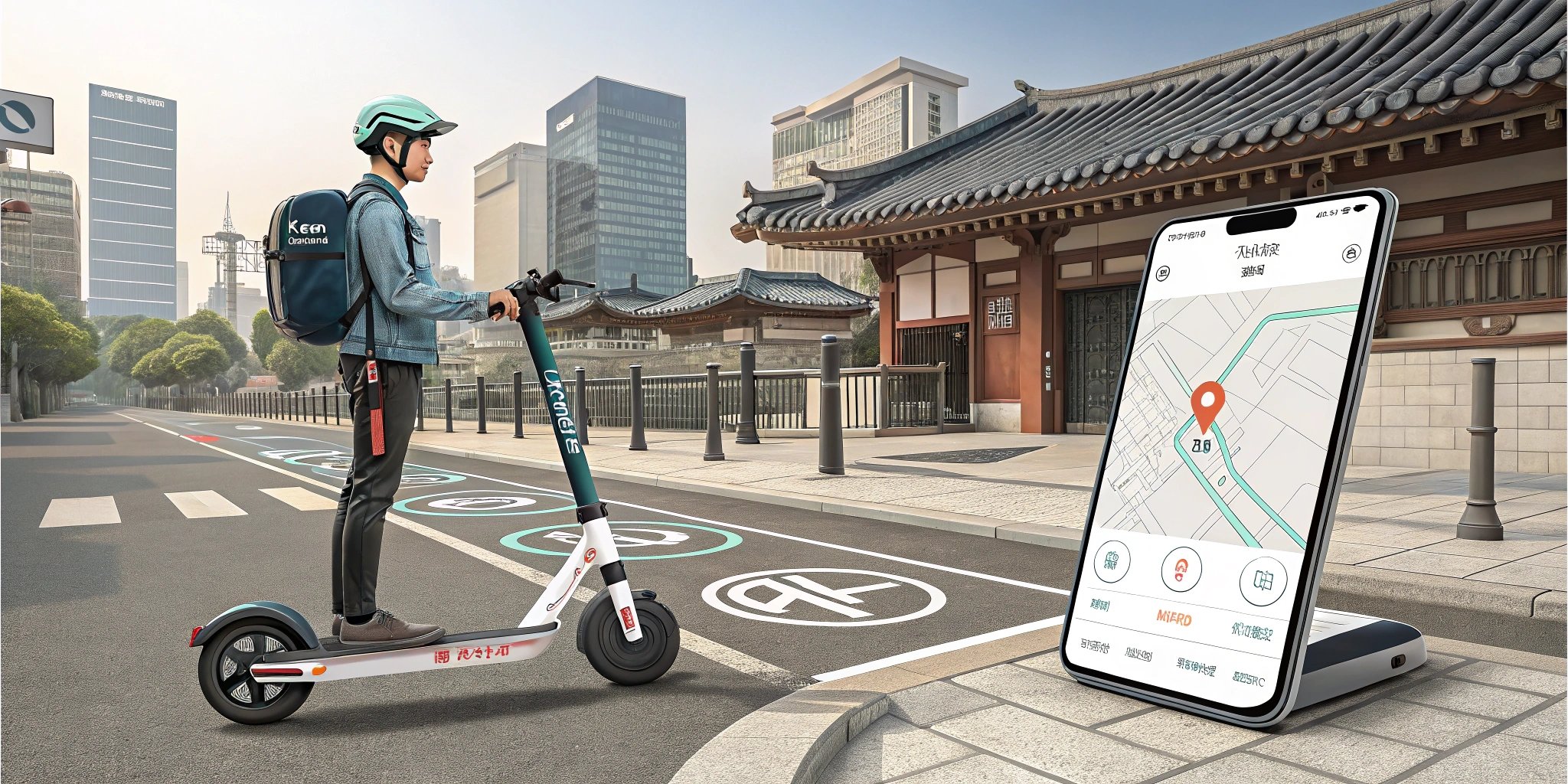
Shared electric kickboards (e-scooters) have become common in Korean cities. Riders unlock them with smartphone apps, ride from subway stations to homes or workplaces, and park them in designated areas. They help solve the "last-mile" problem—connecting people from major transit stops to their final destinations when the distance is a bit far to walk.
Why It Matters
Last-mile challenge: Even excellent transit systems need ways to connect the last stretch of a journey. E-scooters provide a flexible option that is faster than walking but lighter than a car.
Innovation and regulation: E-scooters spread quickly, then cities introduced helmet rules, speed limits, and parking zones to address safety and sidewalk clutter. This shows how new technologies often arrive before rules catch up.
Public space questions: Deciding where scooters can ride and park involves balancing convenience with safety and accessibility for pedestrians, wheelchair users, and others.
Cultural Significance
E-scooters are another example of how quickly Korean cities adopt new mobility options. They also spark conversations about responsibility: riders must follow rules to keep shared spaces safe and pleasant.
Fun Facts
- Apps usually show battery level and range so riders know how far they can go.
- Some areas use geofencing to slow scooters automatically in crowded zones.
- Companies must reposition scooters each night to keep sidewalks clear.
- Helmets are strongly recommended and sometimes legally required, especially for younger riders.
Teaching Moment
E-scooters help kids understand that new ideas bring both benefits and challenges. Families can talk about how they would design rules for shared scooters in their own city to balance fun, safety, and convenience.
What These Vehicles Reveal About Korean Culture
Compressed Modernization and Leapfrogging
Korean vehicles show a development strategy that emphasizes learning quickly and moving fast. Instead of following a slow, linear path, Korea often jumps directly to advanced solutions—licensing proven ideas, adapting them, then building improved versions.
Technology Integration Obsession
From subway Wi-Fi to bus tracking apps and integrated payment cards, Korea makes digital tools part of almost every system. This reflects a belief that information and connectivity can reduce friction and improve daily life—but also raises questions about privacy and inclusion.
Efficiency and Avoiding Waste
Many of these vehicles and systems are optimized so that time, fuel, and effort are used carefully. Frequent buses and trains, well-timed shuttles, and unified payment all reduce wasted motion.
From Follower to Leader
Stories like Hyundai's shift from budget cars to award-winning EVs mirror Korea's broader transition from being seen as a manufacturing follower to being recognized as an innovator. Vehicles become everyday symbols of that identity shift.
Learning Opportunities for Kids
How Countries Learn from Each Other
KTX and Korean EVs show how countries can adopt ideas from elsewhere, learn quickly, and then create their own improvements. This helps kids understand that learning from others is a strength, not a weakness.
Technology's Role in Daily Life
Smart transit and delivery systems provide concrete examples of how technology changes what people expect from everyday services. Families can discuss when technology truly helps and when it might create new problems.
Urban Form and Transportation
Comparing dense Korean cities to more spread-out places helps kids see how city shape influences which vehicles make sense. Dense cities support subways, buses, delivery scooters, and e-scooters in ways that low-density areas cannot easily copy.
Discussion Questions for Parents and Kids
- Why do you think Korea invested so heavily in trains, buses, and metros instead of focusing only on cars?
- How might daily life change if your city had Korean-style transit and delivery systems?
- What are some good things and challenging things about relying on apps for transportation?
- How can countries balance learning from others with creating their own ideas?
- Do you think convenience (like fast delivery) is always good? When might it have hidden costs?
Explore More East Asian Vehicle Cultures
South Korea is part of our East Asian development stories. Compare different paths to modernization:
- Japan – high-speed trains, dense cities, and long history of rail innovation
- China – rapid expansion of high-speed rail and huge urban transit networks
See the complete overview at World Vehicles for Kids: Complete Guide.
App Connection: Learning Through Modernization
In Talk & Listen, children learn vehicle names including trains, buses, scooters, and cars. Understanding Korean vehicles shows that the same vehicle type (train, bus, car) can look and function very differently depending on a country's history and development choices. This builds flexible thinking about categories and prepares kids to notice both similarities and differences in the wider world.
 Frequently Asked Questions
 Ad-free & offline ready