Why Racing Vehicles Are Ultimate Engineering Experiments
Racing vehicles reveal what's possible when engineers face single constraint: go as fast as possible in specific conditions. Cost doesn't matter (Formula One teams spend $400+ million annually), practicality is irrelevant (dragsters can't turn, get 0.5 mpg, and engines last 4 seconds), and comfort is sacrificed (drivers endure extreme G-forces, heat, vibration). This singular focus—pure speed—produces machines that push physical limits: materials operating at failure threshold, engines producing maximum power before exploding, and aerodynamics generating forces that would tear normal vehicles apart.
Different racing disciplines define "fast" differently: NASCAR measures endurance speed (200 mph for 500 miles while surviving contact), Formula One emphasizes cornering speed (5G lateral forces through turns), rally racing values adaptability (sliding through dirt then snow then tarmac), drag racing isolates pure acceleration (0-330 mph in under 4 seconds), and motocross prioritizes jumping/landing control (70-foot flights through air). Each definition requires completely different vehicle design—showing that engineering is about solving specific problems, not achieving universal "best."
Racing also demonstrates technology transfer: innovations developed for competition eventually reach road cars. Anti-lock brakes (ABS) came from racing, turbochargers moved from racing to production, carbon fiber now appears in consumer vehicles, and hybrid technology perfected in Formula One is spreading to everyday cars. Racing serves as testing ground: pushing technology to extremes reveals improvements that benefit everyone. These eight racing vehicles show different approaches to speed—each optimized for its specific challenge, each revealing different engineering principles, and each demonstrating what humans build when chasing ultimate performance.
For hands-on racing vehicle activities and printables, visit our Zoomy Wheels racing category with coloring pages and learning resources for toddlers ages 2-6.
What makes racing vehicles different from regular cars?
Racing vehicles are specialized machines built for single purpose: going as fast as possible in specific conditions. Unlike regular cars that balance comfort, fuel economy, and practicality, racing vehicles sacrifice everything for performance. NASCAR stock cars withstand 200 mph for 500 miles, Formula One cars generate 5G cornering forces through aerodynamics, rally cars adapt to dirt/snow/gravel surfaces, and dragsters accelerate 0-330 mph in under 4 seconds. Each racing type demands completely different vehicle design—showing that 'fast' means different things in different contexts.
Racing Vehicle Comparison: Different Types, Different Speeds
| Racing Type | Top Speed | Track Type | Key Feature | Race Duration |
|---|---|---|---|---|
| NASCAR | 200 mph | Oval tracks | Endurance & drafting | 3-4 hours (500 miles) |
| Formula One | 230+ mph | Road courses | Cornering speed & downforce | 1.5-2 hours (190 miles) |
| Rally | 125 mph (avg) | Dirt/gravel/snow | Adaptability across surfaces | Multiple days (stages) |
| Top Fuel Dragster | 330 mph | Straight drag strip | Pure acceleration (0-330 in 3.7s) | 4 seconds (quarter-mile) |
| Motocross | 60-80 mph | Off-road dirt tracks | Jumping & suspension (70+ ft) | 30-45 minutes (motos) |
| IndyCar | 240 mph | Ovals & road courses | Open-wheel versatility | 2-3 hours (500 miles) |
Key Insight: "Fastest" depends on context. Dragsters have highest acceleration, F1 has highest top speed, but a dragster can't turn and an F1 car can't handle dirt. Each racing type optimizes for its specific challenge.
1. NASCAR Stock Car - Oval Track Endurance Racing
What It Is
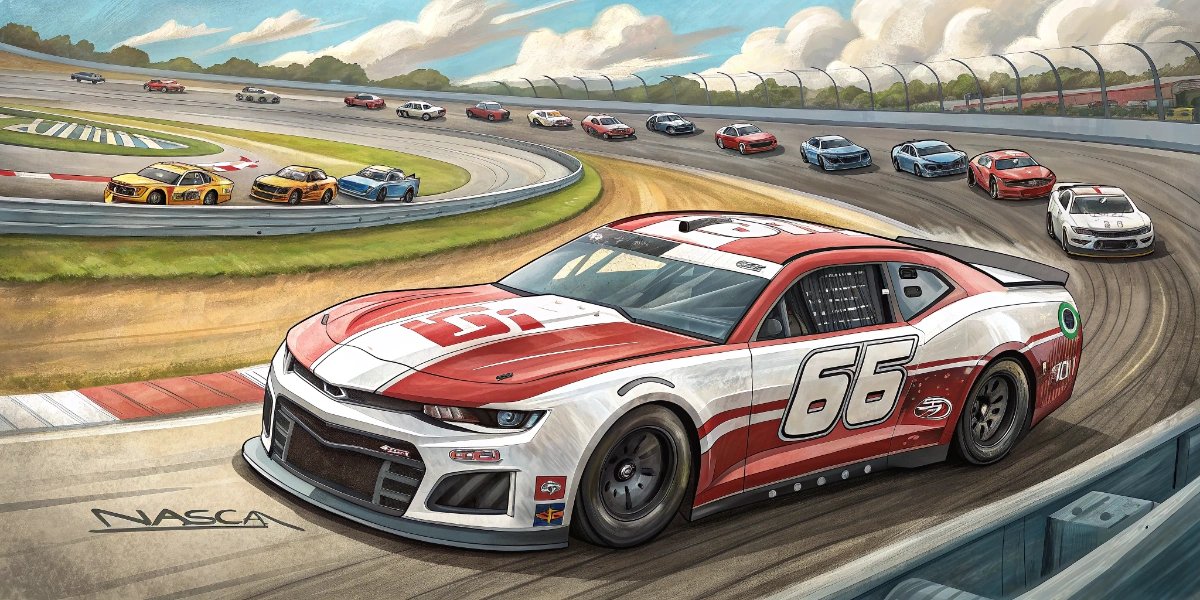
NASCAR stock cars are purpose-built race cars disguised as production vehicles (Chevrolet Camaro, Ford Mustang, Toyota Camry body shapes) competing on oval tracks (Daytona, Talladega) and road courses. Despite appearance, nothing is "stock"—tube-frame chassis, 670 HP V8 engines (restricted by NASCAR rules), four-speed manual transmissions, minimal aerodynamics (compared to Formula One), and safety equipment including roll cage, window net, SAFER barriers on tracks, and five-point harnesses.
Why It Matters
Drafting and pack racing dynamics: On superspeedways (Daytona, Talladega), cars run 200+ mph in tight packs inches apart—"drafting" where following car reduces lead car's aerodynamic drag, both cars going faster together than alone. This creates dynamic where passing requires cooperation: two cars working together catch leading pack, then competing for position.
2. Formula One Car - Ultimate Road Course Technology
What It Is
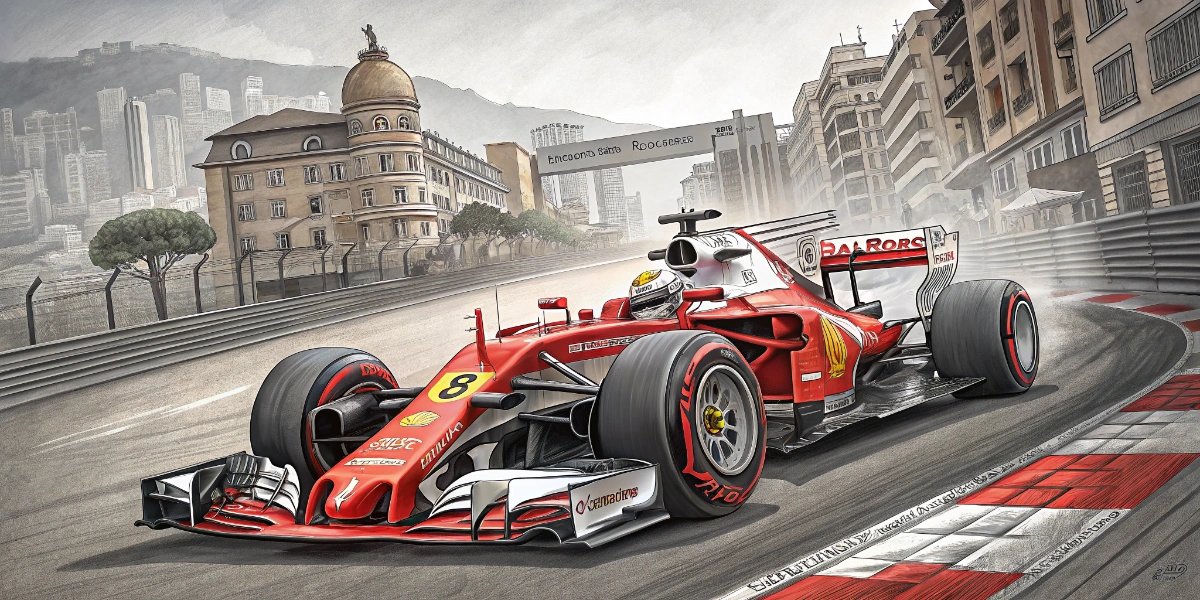
Formula One cars are pinnacle of motorsport technology—open-wheel, open-cockpit single-seaters racing on road courses (Monaco, Silverstone, Monza) worldwide. Current regulations (2024): 1.6L V6 hybrid engines producing 1,000+ HP combined (internal combustion + electric motor), carbon fiber chassis weighing 1,752 lbs minimum, complex aerodynamics generating massive downforce.
3. Rally Car - Sliding Through Dirt, Snow, and Gravel
What It Is
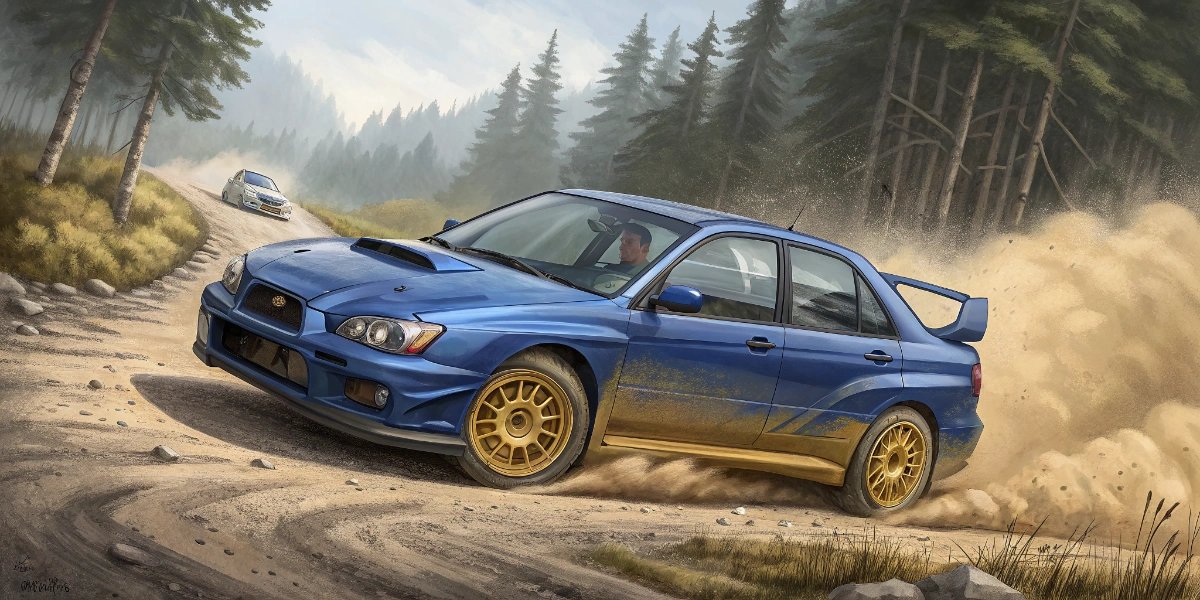
Rally cars are heavily modified production vehicles (Subaru WRX, Toyota GR Yaris, Ford Fiesta) racing on closed public roads—dirt, gravel, snow, tarmac—in timed "stages" spanning forests, mountains, deserts. Cars feature: 380+ HP turbocharged engines, all-wheel drive with sophisticated differentials, sequential gearboxes, extensive roll cages, racing suspension with massive travel (wheels move up/down 8-10 inches), skid plates protecting undercarriage, and co-driver navigating using "pace notes" describing upcoming corners/obstacles. Races span 2-3 days covering 200-400 miles of stages—cars must survive rough terrain, jumps, and varied conditions while running against clock (not wheel-to-wheel racing).
Why It Matters
Adaptability across surfaces and conditions: Rally cars must perform on: gravel (sliding through loose rock), snow/ice (limited grip requiring careful throttle), tarmac (paved roads allowing higher speeds), and mud (extremely slippery, easy to get stuck). No other racing discipline demands this versatility—NASCAR only races on pavement, F1 only on prepared circuits. Rally teams adjust car setup between stages: changing suspension stiffness, differential settings, and tire choice based on upcoming surface. This adaptability is engineering challenge: optimizing for one surface compromises others. Rally cars are compromises—adequate everywhere rather than perfect anywhere.
Co-driver and pace notes system: Rally drivers have co-drivers reading "pace notes"—detailed descriptions of upcoming road previewed during pre-race reconnaissance. Example pace note: "Six right tightens, crest, into three left over jump, don't cut." This code tells driver: upcoming corner is medium-speed right that gets sharper, followed by blind crest, leading to tight left turn over jump where cutting inside is dangerous. Co-driver reads these notes while driver focuses on controlling car at limit—partnership requiring absolute trust.
Fun Facts
- Power: 380+ HP from 1.6L turbocharged engines—extremely high specific output
- Suspension travel: 8-10 inches—absorbing jumps and rough terrain impacts
- Jump distances: 100+ feet through air—cars regularly become airborne on stage crests
- Pace notes: Developed through reconnaissance drives—co-driver's notebook is bible
- Group B era (1982-1986)—"Golden Age" of rally, unlimited power, many deaths, eventually banned
4. Top Fuel Dragster - Pure Acceleration Extreme
What It Is
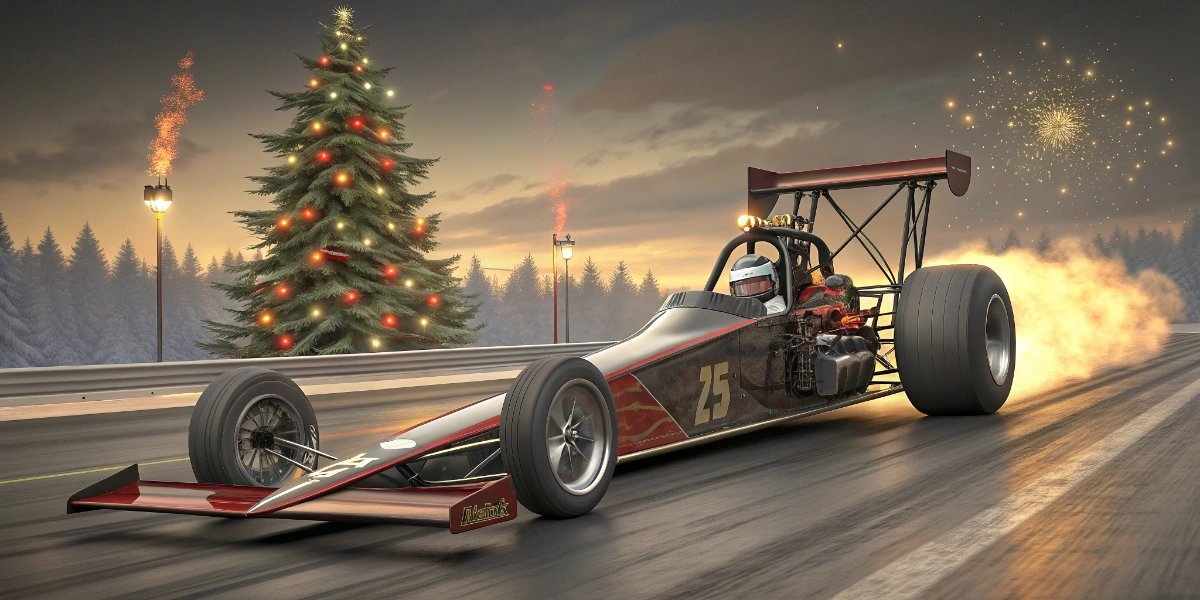
Top Fuel dragsters are quickest-accelerating vehicles on Earth—purpose-built machines for quarter-mile (1,320 feet) straight-line acceleration. Specifications: 11,000+ HP supercharged nitromethane-fueled V8 engines, 0-100 mph in 0.8 seconds, 0-330 mph in 3.7 seconds covering quarter-mile, peak acceleration exceeding 5 Gs (faster than fighter jets), parachutes for braking (mechanical brakes insufficient), and engines lasting approximately 4 seconds before requiring complete rebuilds. Cars are 25 feet long, weigh 2,350 lbs, cost $300,000+, and burn 15-20 gallons of nitromethane per run (getting approximately 0.05 mpg—20 feet per gallon).
Why It Matters
Extreme specialization and trade-offs: Dragsters are optimized for single task: accelerate as fast as physically possible over quarter-mile, then stop. Everything else is sacrificed: they can't turn (no steering lock), can't drive more than quarter-mile (no cooling system, engines overheat immediately), get terrible fuel economy (20 feet per gallon), and require complete engine rebuilds after each run (pistons, rings, bearings all replaced). This extreme specialization demonstrates that optimizing for one goal means failing at everything else.
Acceleration forces affecting human perception: Dragster drivers experience 5+ G acceleration (equivalent to fighter jets), causing: vision graying out (blood draining from head), difficulty breathing (chest compressed), and time dilation sensation (quarter-mile feels longer than 3.7 seconds). Drivers describe "tunnel vision" where peripheral vision disappears, focusing only on track ahead.
Fun Facts
- 0-100 mph: 0.8 seconds—quicker than you can blink, faster than any production vehicle
- Peak speed: 330+ mph—approaching half the speed of sound, requiring parachutes to stop
- Acceleration: 5+ G—fighter jet forces, blood drains from head causing vision graying
- Engine lifespan: 4 seconds—complete rebuild required after each run
- Fuel consumption: 15+ gallons per quarter-mile—approximately 20 feet per gallon
5. Motocross Bike - Flying Through Air on Two Wheels
What It Is
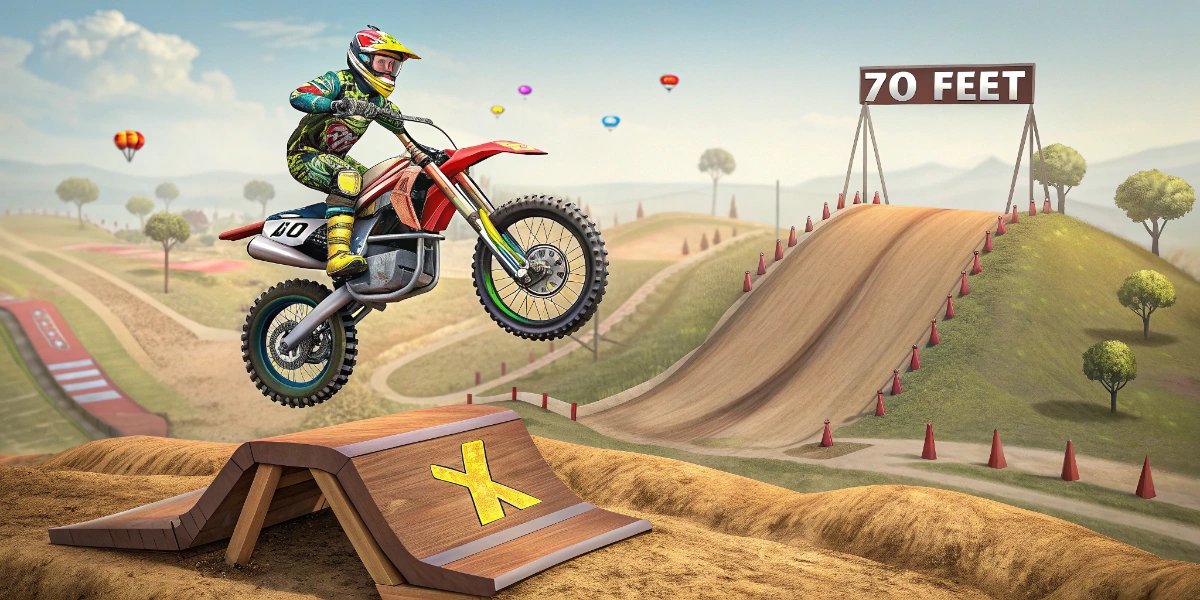
Motocross bikes are lightweight off-road motorcycles (220 lbs) racing on closed dirt tracks with jumps, whoops (series of bumps), berms (banked turns), and varied terrain. Bikes feature: 250-450cc two-stroke or four-stroke engines (40-60 HP), 12+ inches suspension travel front and rear (absorbing massive jumps), knobby tires for dirt traction, aggressive geometry for jumping/landing, and minimal weight (no unnecessary components). Races include: outdoor motocross (natural terrain tracks), supercross (indoor stadium tracks with artificial obstacles), and freestyle motocross (trick competition with 70+ foot jumps).
Why It Matters
Suspension travel for massive jumps: Motocross bikes have 12-14 inches suspension travel (wheels move up/down foot+)—compared to 3-5 inches for street motorcycles. This travel absorbs landing impacts from 70-foot jumps without breaking bike or rider's bones. When rider lands from 20-foot-high jump, suspension compresses completely absorbing impact energy—springs/dampers dissipate forces gradually rather than transmitting shock directly to rider/frame.
Balance and control while airborne: Motocross riders control bikes mid-air using: throttle (revving engine spins rear wheel pulling bike's nose down or up through gyroscopic effect), body position (shifting weight forward/back rotates bike), and handlebar input (adjusting trajectory slightly). This aerial control is physics demonstration: spinning wheel creates gyroscopic forces, weight distribution affects rotation, and small inputs have large effects when airborne.
Fun Facts
- Jump distances: 70+ feet—longer than basketball court, clearing massive gaps
- Height: 20+ feet in air—jumping over two-story buildings routinely
- Suspension travel: 12-14 inches—wheels move foot+ absorbing landing impacts
- Weight: 220 lbs—incredibly light, allowing huge jumps without excessive impact forces
- Travis Pastrana—legendary rider, first motocross double backflip (2006)
6. Rally Raid Truck (Dakar) - Desert Endurance Racing
What It Is
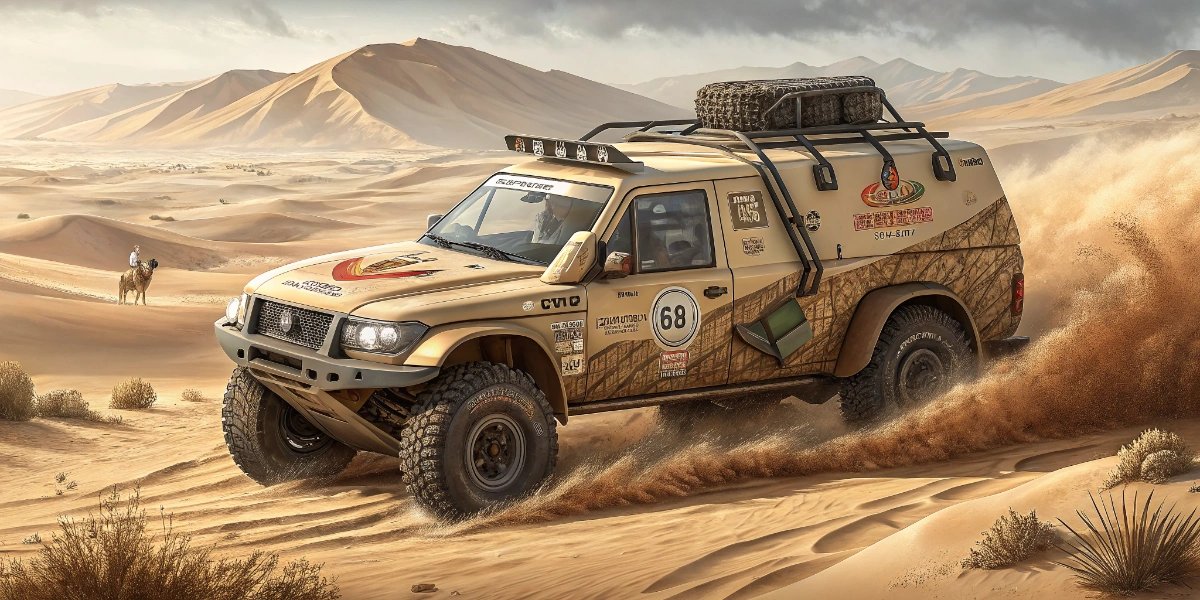
Rally raid vehicles (Dakar Rally) are heavily modified trucks/buggies racing across deserts, mountains, and dunes for 5,000+ miles over 14 days. Vehicles include: purpose-built buggies (tubular space frame, 400+ HP engines, huge suspension travel), modified production trucks (Toyota Hilux, Ford Ranger heavily reinforced), and T1 Ultimate class unlimited prototypes. Features: massive ground clearance (riding over rocks/obstacles), enormous fuel tanks (80-100+ gallons for remote desert stages), navigation equipment (GPS, roadbooks), and survival gear (food, water, communications for when lost/broken).
Why It Matters
Navigation through trackless terrain: Rally raid isn't following marked course—it's finding your own way through desert using GPS coordinates and "roadbook" (written directions with distances/headings). Teams can get lost for hours, take wrong routes adding 100+ miles, or become hopelessly stuck in dunes. Navigation skills matter as much as driving: reading terrain, choosing routes balancing speed/safety, and maintaining direction without landmarks.
Endurance across hostile environments: Dakar Rally spans 5,000+ miles across 14 days through: Sahara Desert (endless dunes, 120°F heat, getting stuck = disaster), rocky mountains (vehicle-destroying terrain, high altitude), and isolated areas (no services for 500+ miles). Vehicles must survive mechanical abuse—constant pounding, extreme heat, sand infiltrating everything—while carrying fuel/water for remote stages.
Fun Facts
- Distance: 5,000-8,000 miles over 14 days—equivalent to driving coast-to-coast USA twice
- Fuel capacity: 80-100+ gallon tanks—stages span 500+ miles through areas with no fuel
- Attrition rate: 30-40% fail to finish—mechanical breakdowns, crashes, getting hopelessly lost
- Deaths: 75+ fatalities since 1978—competitors, spectators, crew members; danger is real
- Carlos Sainz Sr.—legendary rally raid driver, 3x Dakar winner, father of F1 driver Carlos Sainz Jr.
7. IndyCar - American Open-Wheel Racing
What It Is
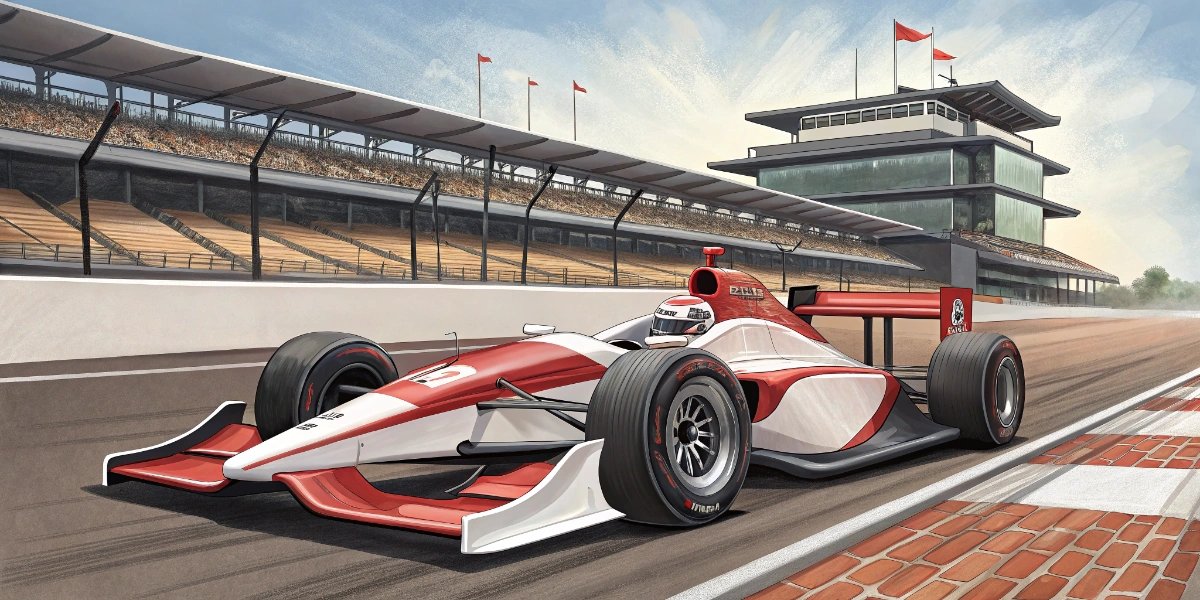
IndyCar is American premier open-wheel racing series—similar to Formula One but less technology-focused, more competitive, and distinctly American. Cars race on: oval tracks (Indianapolis Motor Speedway, Texas), road courses (Laguna Seca, Road America), and street circuits (Long Beach, St. Petersburg). Regulations mandate: spec chassis (Dallara IR-18 used by all teams), 2.2L twin-turbo V6 engines producing 700+ HP (Honda or Chevrolet), less complex aerodynamics than F1, and tighter performance window (cars more equal). Famous races: Indianapolis 500 (biggest single-day sporting event globally), Long Beach Grand Prix, and 17-race championship.
Why It Matters
Spec chassis creating competitive equality: IndyCar mandates identical Dallara chassis for all teams—eliminating chassis as competitive differentiator. Teams choose engines (Honda or Chevrolet, performance roughly equal), but can't develop unique chassis. This creates parity: no team dominates through superior engineering (like F1's Mercedes/Red Bull eras). Instead, success comes from: driver skill, race strategy, pit crew efficiency, and setup optimization.
Oval racing speeds exceeding 230 mph: IndyCars reach 240+ mph at Indianapolis Motor Speedway—faster than Formula One, NASCAR, or any other racing series on oval tracks. These speeds create extreme danger: crashes at 230+ mph are violent, potentially fatal (numerous IndyCar deaths over decades). Drivers accept this risk for prestige of winning Indy 500—most important race in series, offering $3+ million prize and permanent fame.
Fun Facts
- Top speed: 240+ mph at Indianapolis—fastest racing speeds on ovals globally
- Indianapolis 500: 200 laps × 2.5 miles = 500 miles—about 3 hours racing, 300,000+ attendance
- Spec chassis: Dallara IR-18—all teams use identical chassis, engines differ (Honda/Chevrolet)
- Purse: $15+ million total, winner gets $3+ million—major payday, especially Indy 500
- Helio Castroneves—4-time Indy 500 winner, famous for fence-climbing celebrations
8. Touring Car Racing - Production-Based Door-to-Door Racing
What It Is
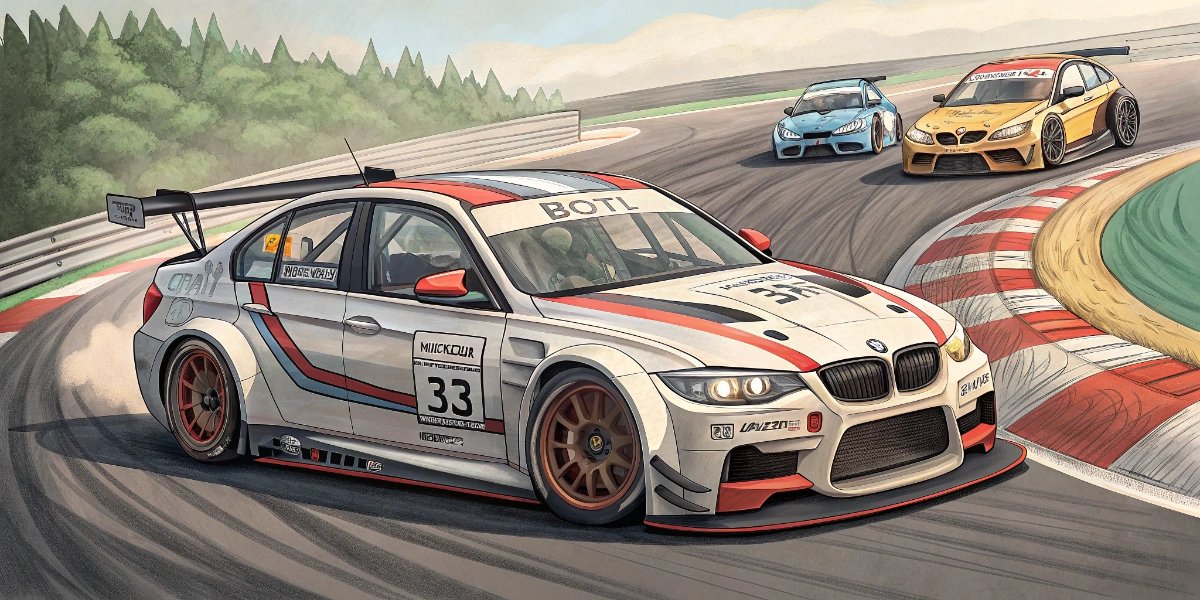
Touring car racing uses heavily modified production vehicles (sedans, hatchbacks) maintaining body shape—BMW M3, Honda Civic Type R, Audi RS3 competing on road courses. Regulations vary by series (World Touring Car Cup, British Touring Car Championship, Deutsche Tourenwagen Masters) but generally feature: 350-400 HP turbocharged engines, aerodynamic modifications (wings, splitters), racing suspension/brakes, roll cages, and production-based body shells. Racing is extremely close: cars running door-to-door, contact is common (and somewhat acceptable), overtaking frequent.
Why It Matters
Production car connection and manufacturer marketing: Touring cars look like road cars—BMW M3 touring car resembles M3 you buy from dealer (heavily modified underneath, but exterior similar). This connection allows manufacturers to market: "Race on Sunday, sell on Monday"—racing success boosts production car sales. Fans buy Honda Civics because they won touring car championships; BMW sells M3s partly through racing association.
Close racing and contact acceptance: Touring car racing allows more contact than open-wheel racing—cars bump, trade paint, and occasionally crash while racing door-to-door. This aggressive driving excites fans: battles are intense, positions change frequently, and drama is constant. Drivers accept contact as part of racing—not deliberately crashing but accepting that close racing means occasional bumping.
Fun Facts
- Power: 350-400 HP from turbocharged engines—impressive from production-based vehicles
- Contact: Bumping is common—touring cars race more aggressively than open-wheel series
- British Touring Car Championship—most successful series, 30+ years continuous operation
- DTM (Deutsche Tourenwagen Masters)—German series, eventually became so expensive teams quit
- Success ballast—some series add weight to winning cars, creating artificial parity
What Racing Vehicles Reveal About Engineering
Specialization Defines Excellence
Racing vehicles demonstrate extreme specialization: NASCAR optimizes for 500-mile oval endurance, Formula One maximizes cornering downforce, dragsters achieve pure acceleration, rally cars adapt across surfaces. No vehicle excels at everything—each is perfect for its specific context, terrible at others. This teaches fundamental engineering principle: optimizing for one goal requires compromising others. NASCAR car couldn't compete in Formula One, Formula One car would crash immediately on rally stage, dragster can't turn corners.
Rules Shape Competition
Racing demonstrates that rules determine outcomes: NASCAR's spec regulations create close competition, Formula One's technological freedom allows domination through spending, IndyCar's spec chassis creates equality, and touring cars' production connection links racing to sales. Each rule set produces different competition style—no rules mean pure meritocracy (unlimited spending wins), strict rules mean equality (driver skill determines winner).
Learning Opportunities for Kids
Physics Demonstrations
Racing vehicles demonstrate physics principles visibly: NASCAR drafting shows aerodynamic drag, Formula One downforce demonstrates air pressure differential, rally cars sliding illustrate friction limits, dragster acceleration reveals Newton's laws, and motocross jumping shows projectile motion. Kids learn that physics isn't abstract—it's observable reality governing how vehicles behave.
Engineering Trade-offs
Racing teaches that engineering involves constant trade-offs: dragsters accelerate incredibly but can't turn, Formula One corners fast but is fragile, NASCAR withstands contact but lacks ultimate performance, rally cars are versatile but not dominant anywhere. Understanding these compromises builds realistic thinking: you can't optimize for everything simultaneously.
Discussion Questions for Parents and Kids
- Which racing type would you want to try? Why does that one appeal to you more than others?
- Is drag racing (pure acceleration, no turning) real racing, or is cornering essential to racing definition?
- Should there be speed limits in racing (like NASCAR restrictor plates) or should ultimate performance be allowed regardless of danger?
- Which matters more: driver skill (spec racing like IndyCar) or engineering excellence (technological freedom like F1)?
- If you could design ultimate racing vehicle not limited by rules, what would you build? What would it be bad at?
Explore More Vehicle Types
Racing vehicles represent specialized extremes. Compare to other vehicle categories:
- Zoomy Wheels Racing Category - Printables, activities, and learning resources for racing vehicles
- American Cars Through History - How vehicles evolved over 100 years
- Vehicles of the USA - Monster trucks, school buses, and American vehicle culture
App Connection: Learning Through Racing
In Talk & Listen, children learn vehicle names including race cars. Understanding racing vehicles teaches that same category (race car) includes vastly different vehicles: dragsters, Formula One, NASCAR, rally cars all called "race cars" but designed for completely different purposes. This categorical thinking—recognizing that categories contain extreme diversity—builds cognitive flexibility. Learning that "race car" doesn't mean one thing but describes family of specialized vehicles sharing only "racing" commonality shows how language works: words group related but different things.
 Frequently Asked Questions
 Ad-free & offline ready