How Vehicles Reflect American History
Vehicles aren't just transportation—they're mirrors reflecting society's values, economic realities, and cultural aspirations. Horse-drawn buggies of 1880s-1910s represent pre-industrial America: skilled craftsmen individually building each buggy, horses requiring daily care, and mobility limited by animal endurance. Model T (1908-1927) introduced mass production making cars affordable for factory workers building them—Henry Ford's revolutionary idea that workers should afford products they manufacture. This democratized mobility: middle-class families could own cars, travel beyond walking distance, and experience freedom previous generations couldn't imagine.
1950s Cadillacs with excessive chrome, tail fins, and two-tone paint celebrated post-WWII prosperity—America won the war, economy boomed, and vehicles displayed confidence through visual excess. Hot rods emerged from WWII surplus: returning veterans using military mechanical skills and surplus parts to build custom performance cars in home garages—DIY rebellion against conformity. Muscle cars (1960s-70s) packed 400+ horsepower into affordable coupes, capturing youth culture's rejection of parents' sensible sedans—rebellion through acceleration, quarter-mile drag racing measuring status.
These eight vehicles span 100+ years showing how American transportation, manufacturing, and culture transformed. From animal power to 400 HP internal combustion, from individual craftsmanship to assembly-line mass production, from practical transportation to performance statements—vehicles evolved alongside society. Understanding vehicle history means understanding American history: industrialization, prosperity, youth rebellion, and changing relationship between people and machines they drive. Each era produced vehicles reflecting what Americans valued: craftsmanship (buggies), efficiency (Model T), service (fire trucks), prosperity (1950s chrome), rebellion (hot rods), and power (muscle cars).
How do American vehicles reflect history?
American vehicles mirror societal transformation over 100+ years. Horse-drawn buggies (1880s-1910s) represent pre-industrial craftsmanship with each buggy individually built. Model T (1908-1927) introduced assembly lines making cars affordable for workers—democratizing mobility. 1950s Cadillacs displayed chrome excess celebrating post-war prosperity. Muscle cars (1960s-70s) packed 400+ HP into affordable coupes, capturing youth rebellion. Each era's vehicles reflect society's values: craftsmanship, democratization, prosperity, and cultural change.
1. Horse-Drawn Buggy (1880s-1910s) - Pre-Automobile America
What It Is
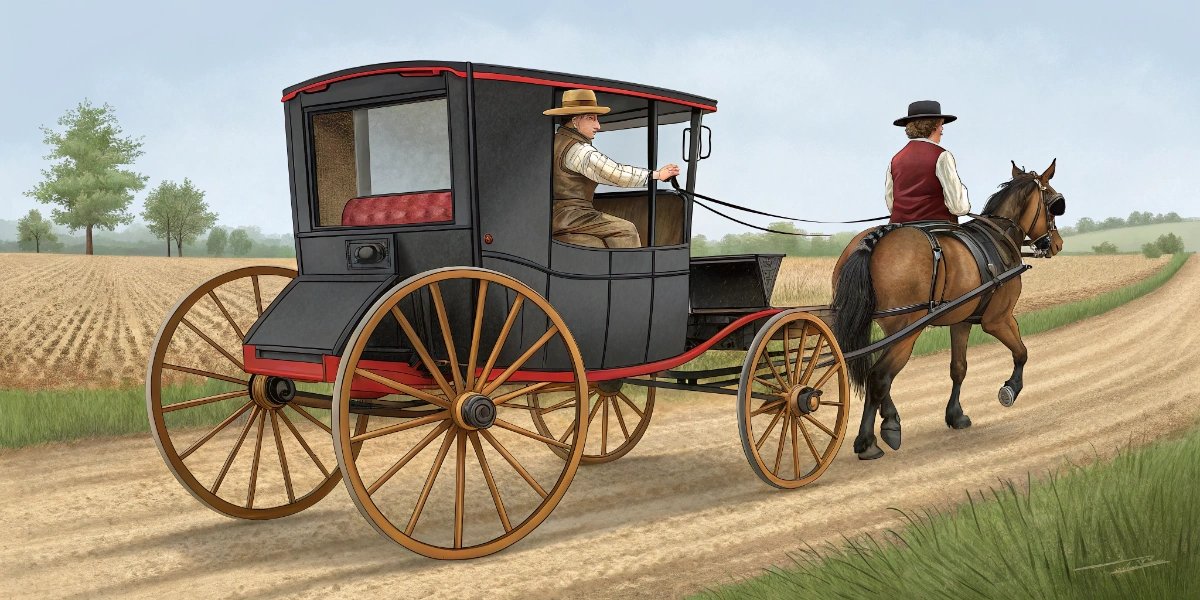
Horse-drawn buggies were primary personal transportation before automobiles became affordable—essentially carriages pulled by one or two horses. Various styles existed: two-wheeled carts (simplest, cheapest), four-wheeled buggies (more stable), surreys (four seats with fringe top), and buckboards (work wagons). Built by wheelwrights (skilled craftsmen) using wood frames, steel-rimmed wheels, leather seats, and springs for suspension. Each buggy was individually crafted—no mass production, making them expensive relative to income. Middle-class families owned buggies; working-class families walked or used public horse-drawn streetcars. Horses required daily care: feeding, watering, grooming, and cleaning stables—ownership was ongoing labor commitment.
Why It Matters
Individual craftsmanship before mass production: Each buggy was custom-built by skilled wheelwright—measuring customer, selecting wood, shaping wheels, fitting metal rims, assembling frame, and installing seats/springs. This craftsmanship meant high prices (buggies cost $50-150 in 1900s—equivalent to $1,800-5,400 today) and long production times (weeks per buggy). No two buggies identical—slight variations in every piece. This contrasts completely with later mass production: Model T assembly lines produced identical cars in hours, not weeks. Buggy era represents pre-industrial economy: skilled labor, individual production, high costs limiting ownership to middle/upper classes.
Horses as limiting factor: Horse endurance limited travel: average horse walks 3-4 mph, trots 8-12 mph, and tires after 20-30 miles daily. This meant local travel only—visiting neighboring towns feasible, but crossing states required weeks and multiple horse changes. Horses also required care: feeding twice daily (hay, oats), watering, grooming, and cleaning stables. Horse ownership was daily labor commitment, not just parking vehicle overnight. This labor disappeared with automobiles: cars don't need feeding, don't produce manure, and park without daily care. Transition from horse to automobile freed hours daily from animal care.
Urban manure crisis driving automobile adoption: Cities in 1900 faced "Great Horse Manure Crisis"—New York City's 100,000+ horses produced 2.5 million pounds of manure daily, creating sanitation nightmare. Streets were filthy, smell overwhelming, and flies breeding in manure spread disease. Early automobiles were welcomed partly as sanitation solution: they didn't produce manure. This environmental problem accelerated automobile adoption—cars were cleaner than horses (ironic given later pollution concerns). Urban desire to eliminate horse manure motivated early automobile enthusiasm, showing that new technology adoption often solves old technology's problems while creating new ones.
Cultural Significance
Horse buggies represent nostalgic "simpler times" in American imagination—slower pace, closer community connections, craftsmanship over mass production. This nostalgia ignores realities: buggy era had high infant mortality, limited medical care (doctors traveled slowly by horse), economic inequality (poor couldn't afford buggies), and hard physical labor. Romanticizing past ignores that most people living then wanted modern conveniences we now have. Buggies are symbols, not literal models for living. They remind us that every era has trade-offs: we gained speed/convenience but lost craftsmanship/slower pace. Neither era is simply "better"—they're different with different advantages/disadvantages.
Fun Facts
- Wheelwrights were highly respected skilled tradesmen—years of apprenticeship required
- Buggy wheels needed iron rims—heated red-hot, fitted over wooden wheel, cooled to shrink tight
- Horses produced 10-15 tons of manure yearly—enormous waste management challenge
- Buggy whips gave rise to expression "buggy whip manufacturer"—outdated business unable to adapt
- Some Amish communities still use buggies today—rejecting automobiles for religious/cultural reasons
- Transition from buggy to car took only 10-15 years (1908-1923)—remarkably rapid technology replacement
Teaching Moment
Horse buggies teach about pre-industrial craftsmanship, transportation limitations, and technological transition. Kids learn that "the old days" involved daily animal care, limited travel range, and expensive individual craftsmanship. Understanding these limitations shows why people eagerly adopted automobiles—not just novelty but genuine improvement in convenience, range, and cleanliness. Also demonstrates how quickly societies can change: 1900 America was horse-powered, 1920 America was automobile-powered—20 years transformed transportation completely. Finally, teaches that nostalgia often romanticizes past while ignoring difficulties. Appreciating historical context prevents simplistic "things were better back then" thinking while still valuing what was lost (craftsmanship, slower pace).
2. Model T Ford (1908-1927) - Democratizing the Automobile
What It Is
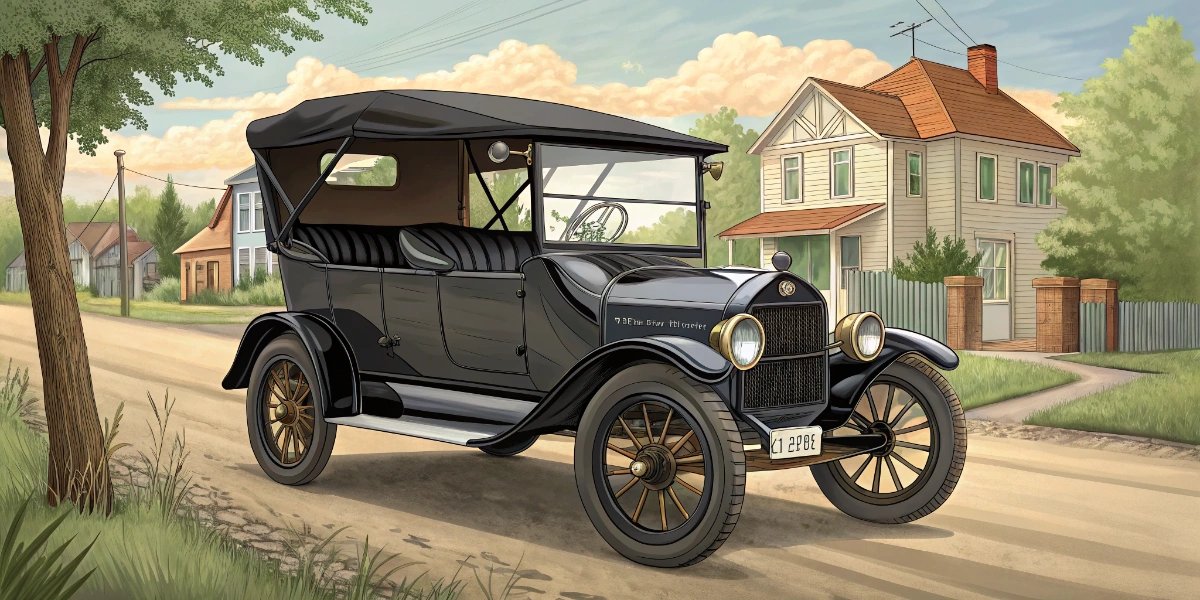
The Model T was first affordable mass-produced automobile, manufactured by Ford Motor Company from 1908-1927 with 15+ million built. Initially cost $825 (1908), but assembly line innovations dropped price to $260 by 1925—making cars affordable for middle-class families including Ford factory workers. Available only in black after 1914 (black paint dried fastest, speeding production). Simple, reliable design: 20 HP four-cylinder engine, planetary transmission (two forward gears, one reverse), hand-crank start (electric starters came later), and high ground clearance for rough rural roads. Top speed 40-45 mph, achieved 13-21 mpg, and was designed for owner maintenance—farmers could repair them using farm tools.
Why It Matters
Assembly line revolution: Ford introduced moving assembly line (1913) where workers stayed in place while car moved past them, each worker installing specific parts repeatedly. This specialization increased efficiency dramatically: Model T assembly time dropped from 12+ hours to 93 minutes—8x faster production. Lower production costs meant lower prices, making cars affordable for workers building them. Ford paid workers $5/day (double typical wages) so they could afford Model Ts—revolutionary idea that workers should be customers. Assembly line transformed manufacturing globally: techniques spread to every industry, becoming foundation of 20th century mass production. Ford didn't invent assembly lines but perfected them for complex products.
Mobility democratization: Before Model T, cars were luxury toys for wealthy ($2,000-4,000). Model T at $260 (1925) meant middle-class families could own cars—factory workers, farmers, small business owners. This democratized mobility: families could visit relatives 50+ miles away (impossible with horses), farmers could transport goods to distant markets, doctors could reach patients faster, and young people could date away from parents' supervision. Model T expanded Americans' geographic reach from walking distance (5 miles) to driving distance (50+ miles)—fundamentally changing social patterns, economics, and culture. Affordable cars created suburban sprawl, interstate commerce, and tourism industry.
Simplicity enabling owner maintenance: Model T was designed for farmers without mechanical knowledge to maintain—high ground clearance for rough roads, simple planetary transmission (easier than manual), and common repairs possible with basic tools. Farmers already maintained horses, wagons, and farm equipment—Model T transferred those skills to automobiles. This simplicity meant cars didn't require expensive mechanics for every problem. Later cars became more complex requiring specialized tools/knowledge, but Model T era preserved owner agency. Drivers could fix their vehicles, not just operate them. This self-sufficiency appealed to rural Americans valuing independence.
Cultural Significance
Model T represents American innovation, mass production ingenuity, and democratic ideals—making luxury accessible to masses. Henry Ford's vision that workers should afford products they build challenged class assumptions: previously, working class made things for wealthy. Ford paid high wages and lowered prices, creating middle-class customers. This vision shaped 20th century American capitalism: mass production + mass consumption creating prosperity. Model T also symbolizes American optimism—belief that technology and efficiency can solve problems, improve lives, and democratize opportunity. Whether this optimism was justified (did cars actually improve lives, or create new problems like pollution/sprawl?) remains debated, but Model T era captured American faith in progress.
Fun Facts
- "Any customer can have a car painted any color... so long as it is black" (Henry Ford quote, 1922)
- 15 million Model Ts built—held production record until VW Beetle surpassed it (1972)
- Assembly line reduced production time from 12 hours to 93 minutes—revolutionary efficiency
- Farmers used Model T engines to power farm equipment—removing engine, using pulley system
- Model T touring car ($260 in 1925) equals approximately $4,500 today—still affordable
- Last Model T built May 26, 1927—Ford stopped production to redesign for Model A
Teaching Moment
Model T teaches about mass production, democratization of technology, and unintended consequences. Kids learn that making things affordable (through efficiency, not just cheaper materials) expands access—cars went from rich people's toys to middle-class necessity in 20 years. Understanding assembly line innovation shows how process improvements (not just product improvements) create value. Also demonstrates Ford's worker-as-customer philosophy: paying people enough to buy what they produce creates virtuous cycle. Finally, introduces concept of unintended consequences: Model T democratized mobility (good) but also created suburban sprawl, pollution, and dependence on cars (mixed). Technology rarely has purely positive or negative effects—outcomes are complex.
3. 1920s-50s Vintage Fire Truck - Community Service Vehicle
What It Is
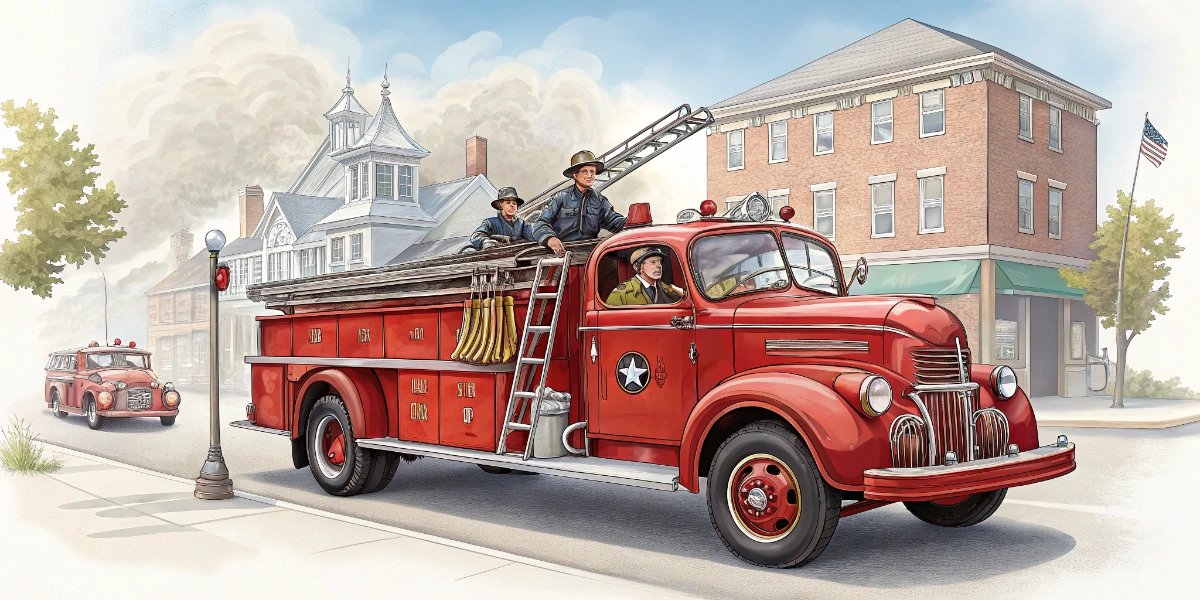
Vintage fire trucks from 1920s-1950s represent transition from horse-drawn fire equipment to motorized emergency vehicles. Early motorized fire trucks (1910s-20s) used commercial truck chassis modified with pumps, hoses, and ladders. By 1930s-50s, fire trucks were purpose-built: American LaFrance, Seagrave, Mack built specialized fire apparatus. Features included: powerful pumps (500-1,500 gallons per minute), long ladders (50-100 feet extending), sirens and bells (warning traffic), crew riding on sides/rear (enclosed cabs came later), and distinctive red paint (visibility and tradition). Volunteer fire departments (common in small towns) owned these trucks communally—entire community funded purchase, maintenance, and operation.
Why It Matters
Volunteer fire departments as community institutions: Small-town America relied on volunteer firefighters—neighbors who responded to alarms, fought fires without pay, and maintained equipment together. Fire department was social institution: fundraisers (pancake breakfasts, bingo nights), parades (showing off trucks), and community pride. Owning fire truck meant community could protect itself—independence from distant professional departments. This volunteerism represents American tradition: neighbors helping neighbors, community self-reliance, and civic participation. Many small towns still have volunteer departments today, continuing tradition started over 100 years ago. Fire trucks symbolize this community cooperation.
Purpose-built emergency vehicle evolution: Early fire trucks were commercial trucks with pumps added—compromises between regular truck needs and firefighting needs. By 1930s-50s, manufacturers built specialized fire apparatus: chassis designed for equipment weight, pumps integrated into design, and ergonomics optimized for firefighting. This specialization shows maturation: early adoption uses existing technology adapted (commercial truck + pump), later development creates purpose-built solutions (fire truck designed from scratch). This pattern repeats across technologies: first versions adapt existing tools, later versions optimize for specific purpose. Fire trucks demonstrate this evolution clearly.
Red paint tradition and visibility: Fire trucks are red for tradition and visibility—though research shows lime-yellow is actually more visible (some modern departments use yellow). Red originated from early fire brigades painting equipment red (cheapest durable paint available in 1800s), continuing as tradition even after paint costs equalized. This tradition-over-efficiency shows cultural inertia: people expect red fire trucks, so departments maintain tradition despite slightly better alternatives. Understanding that "we've always done it this way" can override optimal solutions is important lesson—traditions have value (continuity, shared expectations) even when technically suboptimal.
Cultural Significance
Vintage fire trucks represent American volunteerism, community pride, and civic duty. Fire department parades, firemen's festivals, and restored vintage trucks displayed at events show community connection to firefighting history. These trucks aren't just old equipment—they're symbols of when neighbors relied on each other for safety. Restored fire trucks at car shows attract crowds because they represent heroism, service, and community cooperation. Children love fire trucks (red, loud sirens, ladders, lights) but parents appreciate symbolism: firefighters risk lives protecting neighbors without expecting reward. Fire trucks embody civic virtue in mechanical form.
Fun Facts
- American LaFrance, Seagrave, Mack—legendary fire truck manufacturers (LaFrance stopped production 2014)
- Dalmatians rode on fire trucks—originally cleared crowds, now ceremonial mascots
- Bell vs siren—bells warned horse-drawn traffic, sirens warned automobiles (both used transitionally)
- Firefighters rode on sides/rear—exposed to weather, dangerous (modern trucks have enclosed cabs)
- Some vintage fire trucks still operational—collectors maintain them mechanically, use in parades
- Fire truck red (Pantone 484 C)—specific shade standardized for visibility and tradition
Teaching Moment
Vintage fire trucks teach about community cooperation, volunteerism, and public service. Kids learn that fire departments (especially small-town volunteers) represent neighbors helping neighbors—civic duty without payment expectation. Understanding volunteerism shows that communities function through cooperation, not just individual self-interest. Also demonstrates purpose-built design evolution: early fire trucks adapted existing vehicles, later trucks were designed specifically for firefighting. This pattern—adapt first, optimize later—applies to many technologies. Finally, teaches about tradition (red paint) vs efficiency (yellow is more visible)—sometimes traditions persist despite better alternatives because shared expectations have value. Not everything needs optimizing.
4. 1950s Cadillac - Post-War Prosperity Symbol
What It Is
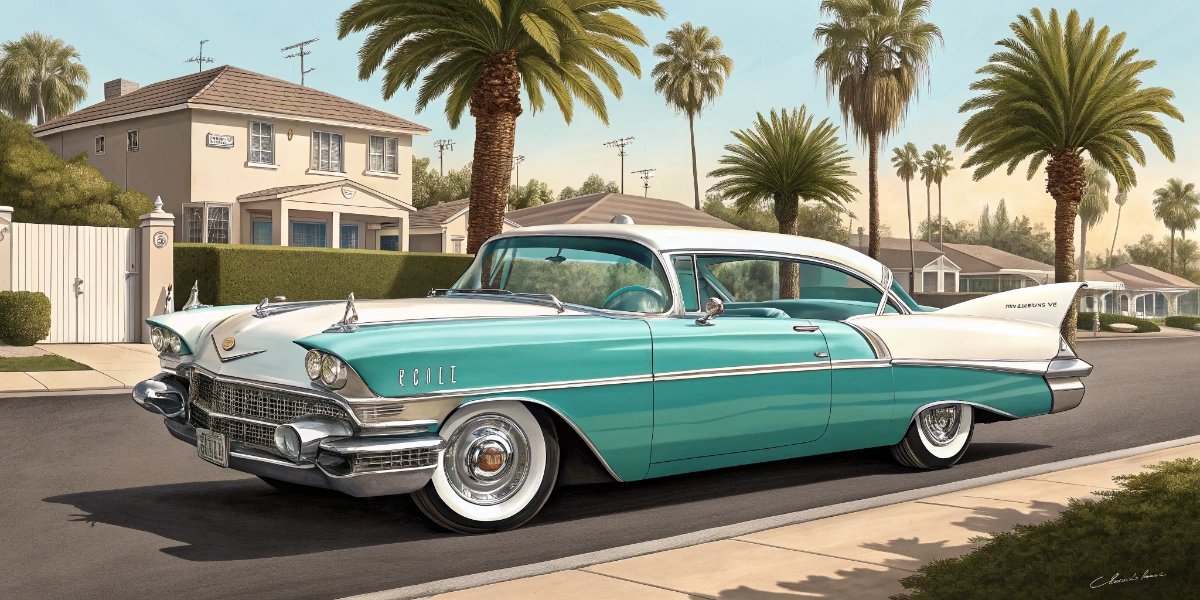
1950s Cadillacs epitomize post-WWII American automotive excess: tail fins (inspired by P-38 fighter planes), extensive chrome trim, two-tone paint, massive size (18+ feet long), powerful V8 engines (250-365 HP), and luxury features (power windows, air conditioning, power steering). Models like Eldorado and Coupe DeVille represented top of American luxury—Cadillac competed with Packard, Lincoln for prestige market. Prices ranged $3,500-6,000 (1950s dollars—equivalent to $40,000-70,000 today). Styling emphasized visual drama over aerodynamics: fins, chrome, and bulk signaled wealth and success. Gas mileage was terrible (8-12 mpg) but gas was cheap ($0.20/gallon), so efficiency didn't matter.
Why It Matters
Tail fins and chrome excess reflecting confidence: Post-WWII America enjoyed unprecedented prosperity: war was won, economy boomed, suburbs expanded, and middle class grew. This confidence expressed itself through automotive styling—bigger, flashier, more dramatic every year. Tail fins grew taller (1959 Cadillac had 42-inch fins—most extreme ever), chrome covered every surface, and size increased yearly. This wasn't functional—it was celebration. Americans felt prosperous and wanted vehicles displaying that prosperity. Excess was point: demonstrating that you could afford unnecessary features. This confidence contrasts sharply with 1970s-80s fuel crisis austerity—when gas prices spiked, excess fell out of favor. 1950s styling shows society displaying wealth through consumption.
Planned obsolescence and annual model changes: 1950s automakers introduced major styling changes annually—making last year's car look outdated, encouraging new purchases. This "planned obsolescence" was intentional: cars mechanically lasted 10+ years, but styling made them socially obsolete in 3-5 years. Manufacturers profited from fashion-driven replacement, not just wear-out replacement. This practice continues today (though less dramatically), showing how consumer goods use styling to drive consumption. Understanding planned obsolescence reveals that many purchases aren't needs but social pressure to stay current. 1950s Cadillacs taught Americans that cars weren't just transportation—they were status symbols requiring regular updates.
American Dream symbolism: Owning Cadillac meant "you made it"—achieving American Dream of prosperity through hard work. Cadillacs appeared in driveways of doctors, lawyers, business owners, and successful salespeople—markers of professional success. This symbolism made Cadillac brand aspirational: people worked hard hoping to someday afford Cadillac. Marketing reinforced this: "Standard of the World," "Cadillac luxury," positioning brand as ultimate achievement. Whether this materialism was healthy (motivating work) or unhealthy (equating success with consumption) is debatable, but 1950s Cadillacs clearly symbolized prosperity achievement in American culture.
Cultural Significance
1950s Cadillacs represent peak American automotive confidence—belief that bigger was better, excess was celebration, and prosperity would continue forever. This optimism ended with 1970s fuel crisis: suddenly, huge gas-guzzling cars seemed irresponsible rather than celebratory. Cadillacs also symbolize 1950s American culture: suburban expansion, nuclear families, conformity expectations, and consumer prosperity. TV shows, movies, and period pieces use 1950s Cadillacs as visual shorthand for post-war America. They're culturally loaded symbols—representing prosperity but also excess, confidence but also waste, achievement but also materialism. How you interpret 1950s Cadillacs reflects how you view that era generally.
Fun Facts
- 1959 Cadillac had tallest tail fins ever—42 inches high, inspired by fighter jets
- Chrome trim could weigh 200+ pounds—purely decorative weight
- Some models had six taillights—functional excessiveness
- Elvis owned multiple Cadillacs—including pink 1955 Fleetwood (famous)
- Gas mileage: 8-12 mpg—fuel efficiency wasn't priority, gas cost $0.20/gallon
- Annual styling changes—1958 looked completely different from 1957, driving planned obsolescence
Teaching Moment
1950s Cadillacs teach about prosperity expression, planned obsolescence, and cultural values. Kids learn that people display wealth through consumption—buying unnecessary features signals success. Understanding this social signaling explains much consumer behavior: people buy brands/styles partly for social communication, not just utility. Also demonstrates planned obsolescence: making products socially outdated before mechanically worn out drives consumption. Recognizing this manipulation helps resist it—buying based on need rather than fashion. Finally, raises questions about materialism: is displaying wealth through consumption healthy motivation or empty values? Different people answer differently, but 1950s Cadillacs force the question. Vehicles reflect what societies value—prosperity, excess, status.
5. Hot Rod (1940s-1960s) - DIY Rebellion Culture
What It Is
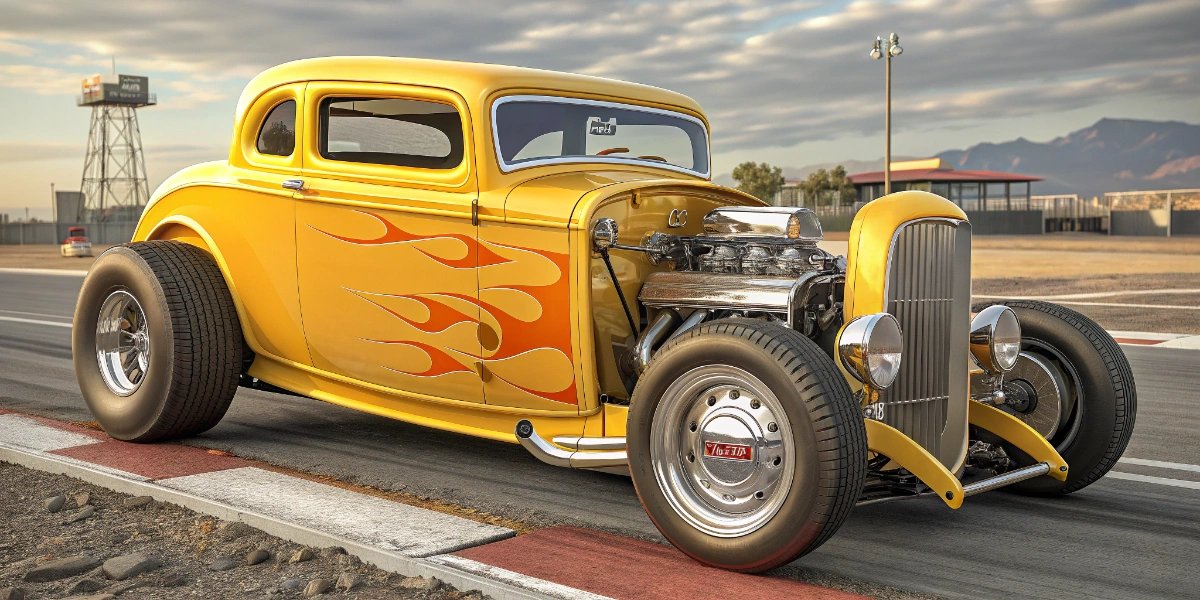
Hot rods are highly modified cars built for performance—typically 1920s-40s Ford Model As and Model Ts with bodies lightened (removing fenders, hood, running boards), engines swapped (installing bigger V8s), and suspensions lowered. Built by enthusiasts in home garages using surplus WWII aircraft/automotive parts (cheap after war ended). Common modifications: chopped tops (roof lowered 3-5 inches), dropped axles (lowering front suspension), chrome plating, custom paint (often flames), and dual exhaust. Built for drag racing (quarter-mile acceleration contests) or cruising (showing off). Hot rodding was DIY culture: building your own car rather than buying factory stock—mechanical creativity, not just consumption.
Why It Matters
WWII veterans using military mechanical skills: Returning WWII veterans had mechanical training from military service—maintaining aircraft, tanks, trucks, jeeps. After war, they applied these skills to civilian cars: swapping engines, modifying suspensions, and improving performance. Surplus WWII parts were cheap and available—aircraft aluminum for bodies, military electronics, and powerful engines. This created hot rod boom: veterans with skills + surplus parts + peacetime leisure = custom car culture. Hot rodding was peacetime use of wartime skills—transforming military mechanical knowledge into civilian creativity. This pattern repeats: military technology often becomes civilian after wars end.
Rebellion against conformity and factory standards: 1950s American culture emphasized conformity: suburbs, corporate jobs, identical ranch houses, matching factory cars. Hot rodders rejected this— building unique custom cars expressing individuality. Modifying cars was rebellion: refusing to accept factory standards, creating something personal, and demonstrating mechanical mastery. This DIY ethos opposed consumer culture: rather than buying what corporations offered, hot rodders made what they wanted. This rebellion was mostly harmless (unlike later counterculture movements), expressed through machines rather than politics. But it represented independence: young people asserting control over their vehicles and rejecting parents' sensible sedans.
Drag racing culture and performance measuring: Hot rodders needed to measure performance objectively: which modifications actually improved acceleration? Drag racing provided answer: quarter-mile time tells truth. This created testing culture: modify car, test at drag strip, measure results, iterate improvements. Scientific method applied to DIY car building. Drag strips (many former military airfields after WWII) became gathering places where hot rodders shared knowledge, competed, and learned. This community knowledge-sharing advanced hot rod technology faster than any single person could—collective experimentation benefiting everyone. Open-source ethos before internet: sharing improvements freely rather than keeping secrets.
Cultural Significance
Hot rods represent American DIY culture, mechanical creativity, and youth rebellion. They're symbols of self-reliance: building your own vehicle rather than accepting factory offerings. This maker culture persists today: people modifying cars, building computers, programming software—creating rather than just consuming. Hot rods also represent generational tension: parents wanted youth to accept sensible factory cars, youth modified cars to stand out. This pattern repeats: each generation finds ways to express individuality, often through technology. Hot rods were 1950s-60s youth expression—similar to later generations' custom computers, modified gaming systems, or smartphone customization. Technology becomes canvas for identity expression.
Fun Facts
- Model T was popular base—cheap, available, lightweight body perfect for modifications
- Flathead Ford V8 (1932-1953)—legendary hot rod engine, simple to modify and powerful
- Chopped tops—roof lowered 3-5 inches, improving aerodynamics and style
- Dry lakes racing—California hot rodders raced on dry lake beds before drag strips existed
- Hot Rod Magazine (founded 1948)—spread technical knowledge nationally, building community
- American Graffiti (1973 film)—popularized hot rod nostalgia, influencing later custom car culture
Teaching Moment
Hot rods teach about DIY culture, creative problem-solving, and expressing individuality through craft. Kids learn that some people modify things rather than accepting them as-sold—cars, computers, clothes, anything can be customized. This maker mentality values creativity and technical skill over consumption. Understanding that you can modify/improve things empowers agency: not just accepting what's given but making it better. Also demonstrates community knowledge-sharing: hot rodders freely shared modifications helping everyone improve. This open-source ethos (before internet/computers) shows that cooperation often advances technology faster than competition/secrecy. Finally, teaches that rebellion doesn't require destruction—hot rodders rebelled by creating, not destroying. Positive rebellion channels youth energy into productive creativity.
6. Muscle Car - 1960s Dodge Charger/Plymouth Road Runner
What It Is
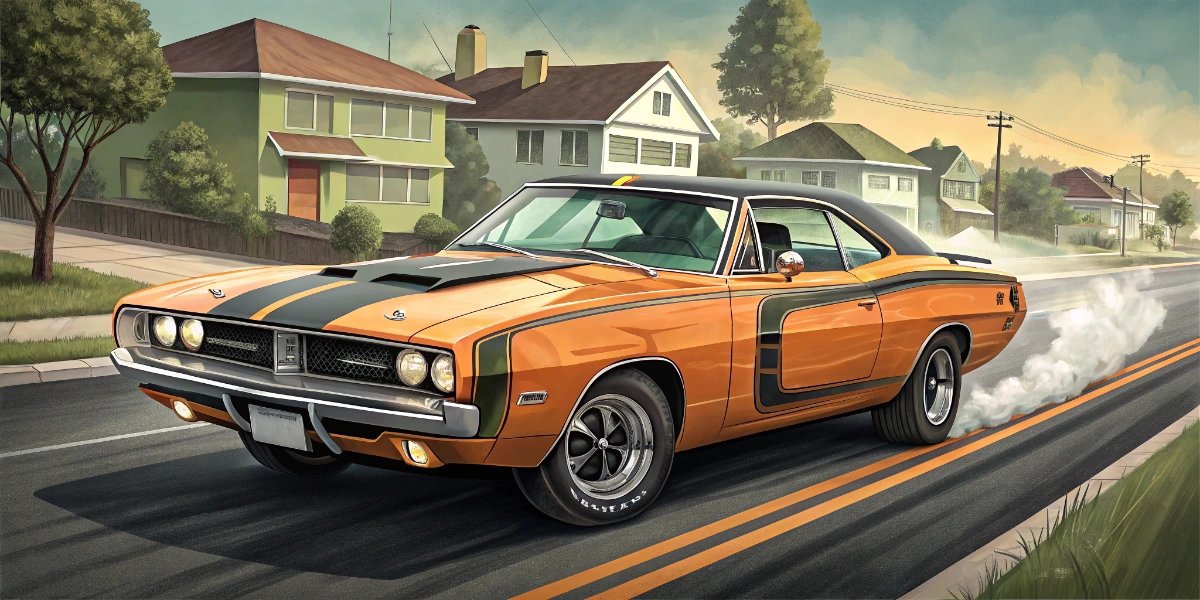
Muscle cars were affordable high-performance cars (1964-1974) combining powerful V8 engines (400-450+ HP) in mid-size body styles at accessible prices—performance for youth market. Classic examples: Dodge Charger, Plymouth Road Runner, Pontiac GTO, Chevrolet Chevelle SS, Ford Mustang (though technically pony car). Formula: big-block V8 engine (426 Hemi, 440 Six-Pack, 454 LS6) in intermediate chassis, rear-wheel drive, manual transmission, minimal luxury features keeping prices reasonable. Quarter-mile times: 13-14 seconds stock—extremely fast for era. Insurance nicknamed them "Super Cars" charging youth drivers prohibitive rates. Muscle car era ended 1974 due to: insurance costs, emissions regulations, fuel crisis, and safety concerns.
Why It Matters
Factory performance for youth market: Before muscle cars, high performance required custom modifications (hot rods) or expensive sports cars (Corvette). Muscle cars offered factory performance at reasonable prices: Plymouth Road Runner cost $3,000 (1969) with 440 Six-Pack engine producing 390 HP—affordable for working-class youth. This democratized performance: you didn't need mechanical skills (hot rods) or wealth (Corvette) to drive fast car. Detroit recognized youth wanted performance and sold it to them—creating muscle car segment targeting young buyers. This marketing innovation: identifying underserved customer desire (affordable performance) and building products meeting it. Muscle cars were youth culture becoming consumer market.
Horsepower wars and quarter-mile drag racing: 1960s manufacturers competed for performance bragging rights: whose car was fastest? This arms race produced: Dodge 426 Hemi (425 HP), Chevrolet 454 LS6 (450 HP), Ford 429 Boss (375 HP underrated), and Plymouth 440 Six-Pack (390 HP). Horsepower numbers escalated yearly as manufacturers competed. Quarter-mile drag racing measured performance objectively: road test magazines published times, youth compared brands, dealerships advertised performance. This created feedback loop: performance sold cars, so manufacturers built more performance. Eventually insurance companies killed it: classifying muscle cars as high-risk, charging youth drivers $1,000+ annual premiums (when car cost $3,000). Insurance costs ended muscle car era as much as regulations/fuel crisis.
Youth rebellion through acceleration: Muscle cars represented youth culture rejecting parents' values: parents drove sensible sedans (Impala, Galaxie), youth wanted performance (Charger, Road Runner). This generational divide expressed itself through vehicle choice: practical vs exciting, economy vs performance, conformity vs individuality. Owning muscle car was statement: prioritizing fun over practicality, accepting poor fuel economy (8-12 mpg) for acceleration, and embracing risk (muscle cars crashed often—inexperienced youth + powerful cars = accidents). This wasn't rebellion through protest—it was rebellion through consumption. Youth bought performance, annoying parents who thought it wasteful/dangerous. Generational conflict commodified.
Cultural Significance
Muscle cars symbolize 1960s-70s American youth culture: rebellion, confidence, and excess. They represent last era before regulations restricted performance: emissions controls (1975+), fuel efficiency standards (CAFE 1978+), and insurance industry pressure all ended muscle car era. Survivors are now collectibles valued $50,000-200,000+— nostalgia for when cheap performance existed. Muscle cars also represent American excess: 450 HP in street cars was unnecessary (no roads required it), wasteful (terrible fuel economy), and dangerous (more power than young drivers could handle safely). Whether this excess was glorious freedom or irresponsible waste depends on perspective. Muscle cars force question: should people be free to buy dangerous/wasteful products, or should society regulate stupidity?
Fun Facts
- Dodge 426 Hemi—legendary engine, dual four-barrel carburetors, 425 HP (conservative rating)
- Plymouth Road Runner—budget muscle car, $3,000 new, Warner Bros cartoon character licensed for name/horn
- Quarter-mile times: 13-14 seconds stock—today's minivans match this (Honda Odyssey: 15 seconds)
- Insurance killed muscle cars—youth premiums exceeded $1,000 annually when cars cost $3,000
- Fuel economy: 8-12 mpg—terrible, but 1960s gas cost $0.30/gallon so nobody cared
- 1970 marked peak—emissions regulations starting 1971 reduced power, ending muscle car era
Teaching Moment
Muscle cars teach about youth culture, market forces, and regulation balancing freedom/safety. Kids learn that companies sell products customers want—even wasteful/dangerous ones if demand exists. Understanding this shows capitalism's amorality: businesses respond to demand regardless of whether products are "good." Also demonstrates how regulation ended muscle car era: emissions, fuel economy, insurance all made high-performance cars impractical. This raises questions about freedom vs safety: should people be free to buy dangerous cars, or should government/insurance restrict access? Different people answer differently, showing political philosophy differences. Finally, teaches about nostalgia: muscle cars are now collectibles because they represent era before regulations—freedom that's now restricted. Sometimes regulation improves society (cleaner air, better fuel economy), but also eliminates options people valued.
7. 1970s Station Wagon - Family Hauler
What It Is
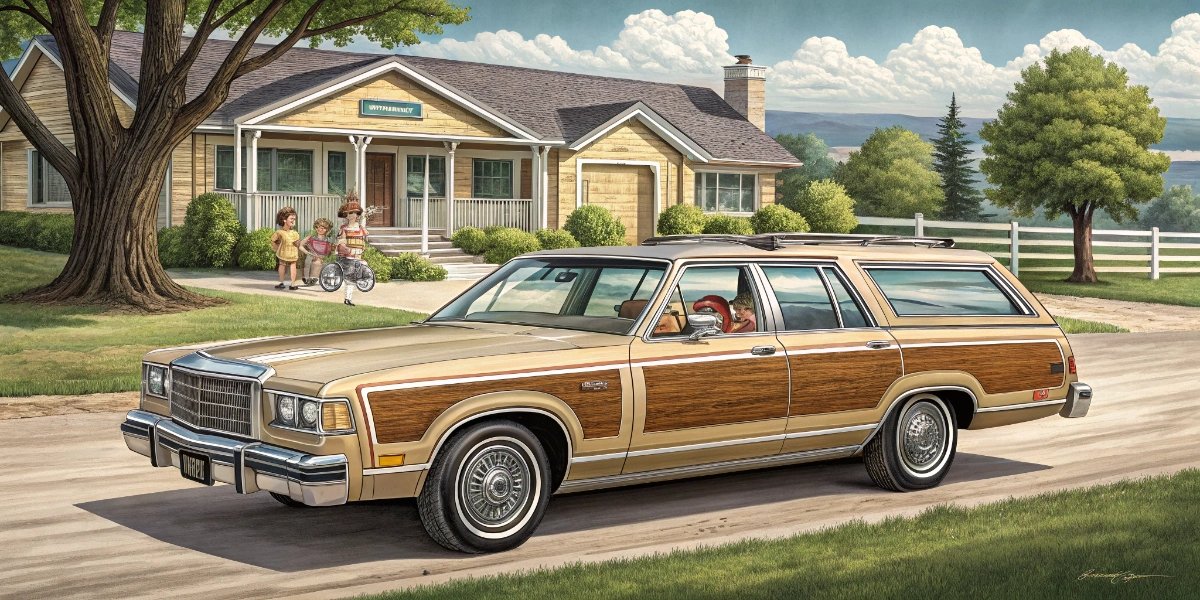
Station wagons were three-row family vehicles (1950s-1990s peak) with fold-down rear seats creating cargo space—before minivans/SUVs dominated family market. Full-size wagons (Chevrolet Caprice, Ford Country Squire, Plymouth Fury) seated 8-9 passengers with third-row rear-facing seats ("way-back" seating kids loved). Featured wood-grain vinyl trim (mimicking 1940s real wood), powerful V8 engines (because vehicle was heavy), and automatic transmissions. Served as family transportation: road trips, grocery runs, carpools, camping trips. Station wagons represented middle-class family life: not exciting, very practical. Parents drove them; kids rode in way-back watching cars behind them.
Why It Matters
Peak family vehicle before minivans/SUVs: 1970s-80s station wagons were dominant family vehicle—before Chrysler minivan (1984) and Ford Explorer (1991) created new categories. Wagons offered: three rows seating 8-9 people, cargo space with rear seats folded, car-like handling (not truck-based), and reasonable fuel economy (15-18 mpg). They solved family transportation need: hauling kids, groceries, camping gear, sports equipment. Station wagons eventually lost to minivans (more interior space, sliding doors) and SUVs (higher seating, 4WD capability, better image). But for 30+ years, station wagons were quintessential American family vehicle—symbol of suburban middle-class life.
Wood-grain vinyl and status symbolism: Fake wood-grain vinyl trim ("woodie" styling) referenced 1940s station wagons with real wood bodies—expensive craftsmanship. By 1970s, vinyl simulated wood for appearance without cost/maintenance. This fakery was intentional: signaling traditional values (real wood era) through imitation. It worked culturally: wood-grain wagons suggested family values, stability, and middle-class respectability. Whether fake wood was tacky (critics said yes) or charming (families liked it) divided opinion. Eventually falling out of favor (1990s), wood-grain trim is now nostalgic symbol of 1970s-80s childhood—generation who rode in way-back remembers fondly.
Third-row rear-facing "way-back" seating: Station wagons had third-row seats facing backward—kids sat watching cars behind them, waving at following drivers. This seating was exciting for kids (different perspective) but concerning for safety (facing wrong direction in crash). Eventually eliminated due to safety concerns, rear-facing seats are remembered fondly by generation raised riding them—nostalgia for seemingly more carefree era. Modern third-row seats face forward (safer), but something was lost: way-back riding was adventure for kids, making family road trips more exciting. Sometimes safety improvements reduce fun—trade-off worth making, but worth acknowledging.
Cultural Significance
Station wagons symbolize 1970s-80s suburban family life: middle-class, practical, slightly boring but reliable. They represent parents prioritizing function over style—choosing sensible family vehicle over exciting sports cars/muscle cars. This practicality was both virtue (responsible parenting) and object of ridicule (uncool Dad mobile). Generation raised in station wagons has nostalgic affection but also remembers uncoolness: parents dropping you at school in wood-grain wagon = mild embarrassment. Today's equivalent might be minivans—practically excellent, socially uncool. Station wagons remind us that family responsibility sometimes means embracing uncool practicality. Being good parent matters more than looking cool.
Fun Facts
- Chevrolet Caprice wagon seated 9—three rows, bench seats throughout
- Ford Country Squire—iconic wood-grain vinyl trim, production 1950-1991
- Way-back seating—kids loved it, safety concerns eventually eliminated it
- Station wagons declined 1990s—minivans (Chrysler 1984) and SUVs replaced them
- Some wagons had power rear window—rolled down like regular window, loading convenience
- Modern luxury wagons (Audi, Volvo) cater to different market—European styling, not American family focus
Teaching Moment
Station wagons teach about practical parenting, nostalgia, and vehicle market evolution. Kids learn that parents often prioritize function over appearance—choosing uncool practical vehicles because they work better for families. Understanding this demonstrates maturity: recognizing that practicality sometimes outweighs image concerns. Also shows vehicle market evolution: station wagons dominated for decades, then suddenly disappeared (replaced by minivans/SUVs)—market shifts eliminate entire categories when better options appear. Finally, teaches about nostalgia: adults remember station wagons fondly despite them being uncool when new. This shows that nostalgia transforms perception—things seem better in retrospect than they felt at time. Understanding this prevents romanticizing past while still appreciating positive memories.
8. 1980s-90s Conversion Van - Customization Peak
What It Is
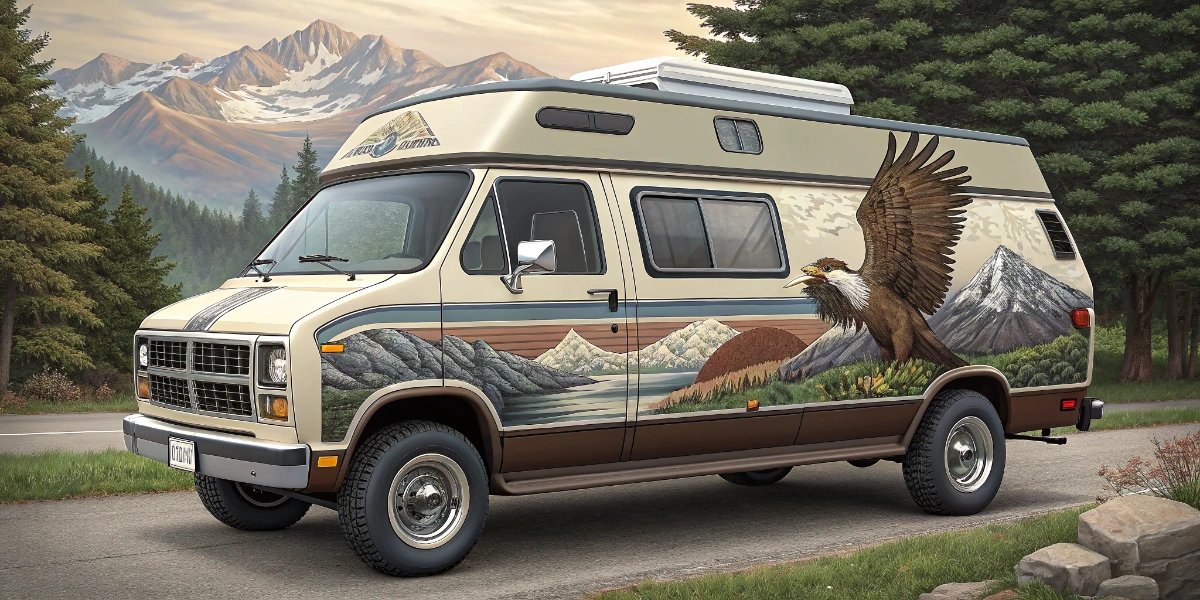
Conversion vans were customized full-size vans (Chevy, Ford, Dodge) modified by aftermarket companies with luxury features: captain's chairs, mood lighting, wood trim, small TVs/VCRs, shag carpet, murals painted on sides, porthole windows, and raised roofs. Marketed as luxury family vehicles combining van practicality with car comfort—"land yacht" concept. Popular 1980s-1990s for family road trips, church vans, and bachelor pad imagery (shag carpet = sleazy reputation). Cost $25,000-40,000 (1980s-90s)—expensive but less than RVs. Eventually killed by minivans (more practical) and SUVs (better image). Today seen as kitschy 1980s aesthetic—tacky but charming nostalgia.
Why It Matters
Peak customization before factory options dominated: 1980s conversion vans represented aftermarket customization era: manufacturers built plain vans, specialty companies added luxury features customers wanted but factories didn't offer. This created customization market: Starcraft, Gladiator, Mark III companies installed captain's chairs, TVs, custom interiors. By 2000s, factories offered most features themselves (eliminating conversion market), and minivans/SUVs provided luxury without customization. Conversion vans show transition: early era needed aftermarket modifications providing features, later era has factories offering everything. Customization market thrives when factories don't meet all desires—when factories catch up, customization declines.
Land yacht concept: luxury + space: Conversion vans promised car-like luxury in van body: comfortable seating (captain's chairs not benches), entertainment (TV/VCR), and ambiance (mood lighting, murals). This appealed to families wanting comfort during long road trips and youth wanting cool vehicles. "Land yacht" marketing suggested living room on wheels—not just transportation but destination. Whether vans delivered on promise is debatable (still driving on highways), but concept appealed: upgrading transportation experience from simple A-to-B trips to cozy, social road journeys.
Cultural Significance
Conversion vans represent peak 1980s customization culture—when people expressed personality through murals, shag carpet, neon lighting, and wild interiors. They blur line between vehicle and living room, showing how Americans turned transportation into hangout space. They also capture awkward mix of wholesome (family road trips, church vans) and sleazy ("van culture" jokes), making them rich cultural artifacts of the era.
Fun Facts
- Some conversion vans had tiny CRT TVs with built-in VCRs so kids could watch movies on the road
- Round "porthole" windows and plush curtains were common—turning rear cabin into cozy cave
- Aftermarket companies often added custom paint murals—dragons, sunsets, or band logos
- Raised roofs let adults stand up inside, making vans feel like miniature RVs
- Today, restored conversion vans appear at car shows as rolling time capsules of 1980s style
Teaching Moment
Conversion vans teach about customization, changing tastes, and how markets shift. Kids learn that when factories don't offer features people want, smaller companies step in to modify products. They also see how styles that once seemed cool (shag carpet, murals) later feel dated—tastes change over time. Finally, conversion vans show how entire product categories can disappear when better options arrive (minivans and SUVs), reminding us that no design stays dominant forever.
Connect This Guide to Simple Vehicle Pages
For toddler-friendly pictures and simpler language, you can pair this deep-dive with the basic vehicle pages and vintage category hub:
- Visit the Wayback Wheels vintage vehicle category for a gentle, picture-led overview of these classic cars.
- Open the horse-drawn buggy vehicle page when talking about pre-car transportation and how daily life used to work.
- Pair the Model T section with the Model T vehicle page so kids can see a simple illustration of the car that democratized driving.
- Use the vintage fire engine vehicle page when you want a quick, child-level recap of community service vehicles.
- When you reach the hot rod section, tap over to the hot rod vehicle page to keep things visual while you talk about DIY car culture.
- For muscle cars, the muscle car vehicle page gives you a simple launch point before you explore horsepower and youth culture in more detail here.
Moving back and forth between this research guide and the simpler vehicle pages lets you match depth to your child's age—zooming out for historical context when you are ready, and zooming in on a single favorite vehicle when your child just wants to point, name, and make sounds.
 Frequently Asked Questions
 Ad-free & offline ready