What do 'trusted' app badges really cost?
Certifications like kidSAFE cost developers $10,000+ per year. These costs get passed to families through subscription fees. Apps that don't collect children's data don't need expensive certifications—they have nothing to certify. Look for Apple's free 'Data Not Collected' label as a simpler indicator of privacy.
That "kidSAFE" badge on your child's app? It cost the developer thousands of dollars per year. And if you're paying a monthly subscription, you're helping cover that cost.
This isn't a criticism of certification programs—they serve an important purpose. But parents deserve to understand what these badges actually mean, what they cost, and why some apps need them while others don't.

Pricing and certification status checked November 2025. Always confirm current subscription prices and badge status on the App Store or provider websites.
What These "Certified Safe" Badges Actually Mean
The most common certification you'll see on kids' apps is the kidSAFE+ COPPA-CERTIFIED Seal. Here's what it actually does:
- COPPA Compliance Review: A third party verifies the app meets Children's Online Privacy Protection Act requirements
- Safe Harbor Protection: The developer gains legal protection against FTC enforcement actions
- Ongoing Monitoring: The certification body provides continuous oversight and enforcement
The key phrase is "Safe Harbor protection." This is legal insurance. If an app collects children's data and something goes wrong, the certification provides a defense against federal penalties.
Why This Matters: COPPA Penalties Are Severe
COPPA violations aren't minor fines. Recent FTC enforcement actions show the scale of penalties:
| Company | Year | Penalty | Violation |
|---|---|---|---|
| Epic Games (Fortnite) | 2022 | $275 million | Collected children's data without parental consent |
| YouTube (Google) | 2019 | $170 million | Illegally collected personal information from children |
| Amazon (Alexa) | 2023 | $25 million | Kept children's voice recordings, ignored deletion requests |
| Cognosphere (Genshin Impact) | 2025 | $20 million | Failed to obtain parental consent, shared data with advertisers |
| Disney | 2025 | $10 million | Enabled unlawful collection of children's data on YouTube |
| TikTok (Musical.ly) | 2019 | $5.7 million | Illegally collected personal information from children |
Source: FTC enforcement actions compiled by PRIVO, a COPPA Safe Harbor provider. Current COPPA civil penalties can reach $53,088 per violation.
For apps that collect significant amounts of children's data, certification isn't optional—it's risk management. The annual certification cost is far less than potential FTC penalties.
The Certification Cost Structure
Certification programs don't publish exact pricing, but industry sources indicate the following cost structures:
| Certification | Cost Structure | Type |
|---|---|---|
| kidSAFE+ COPPA Seal | ~$10,000+/year | FTC Safe Harbor (legal protection) |
| ESRB Privacy Certified | Revenue-based tiers | FTC Safe Harbor (gaming focus) |
| TrustArc COPPA Seal | Enterprise pricing | FTC Safe Harbor |
| PTPA (Parent Tested Parent Approved) | $5,000+/year (estimated) | Marketing badge (no legal protection) |
| NAPPA (National Parenting Product Awards) | Submission + licensing-based fees (varies) | Marketing badge (no legal protection) |
| Mom's Choice Awards | $200-500+ per submission | Marketing badge (no legal protection) |
| Common Sense Media | CLOSED to new apps | Educator trust (was free) |
The FTC Safe Harbor certifications (kidSAFE, ESRB, TrustArc) are annual, recurring costs—not one-time fees. The certification body provides ongoing monitoring, compliance updates, and legal protection, which requires sustained operational investment.
Marketing badges like PTPA, NAPPA, and Mom's Choice Awards don't provide legal protection—they're pay-to-play endorsements that look good on app store listings. And Common Sense Media, which was free and highly influential, no longer accepts new applications—giving legacy apps a permanent advantage. This creates a barrier that indie developers simply can't overcome.
How This Affects App Pricing
When an app has $10,000+ in annual certification costs, that expense needs to be covered somehow. The two main options:
Subscription Model
Spread certification costs across monthly/annual subscribers. A $10,000 annual cost divided among 1,000 subscribers = $10/subscriber/year just for certification overhead. See why subscription fatigue is real.
One-Time Purchase (No Certification)
Apps that don't collect data don't need certification. No ongoing compliance costs means one-time pricing is sustainable.
Who Actually Needs Certification?
Here's the key insight most parents miss: certification is most valuable for apps that collect children's data.
If an app doesn't collect personal information, it has minimal COPPA exposure. There's nothing to protect because there's nothing being collected.
| App | Data Collection | Pricing |
|---|---|---|
| Lingokids | 🚨 Heavy | $14.99/month |
| ABCmouse | 🚨 Heavy | $12.99/month |
| Speech Blubs | ⚠️ Moderate | $9.99/month |
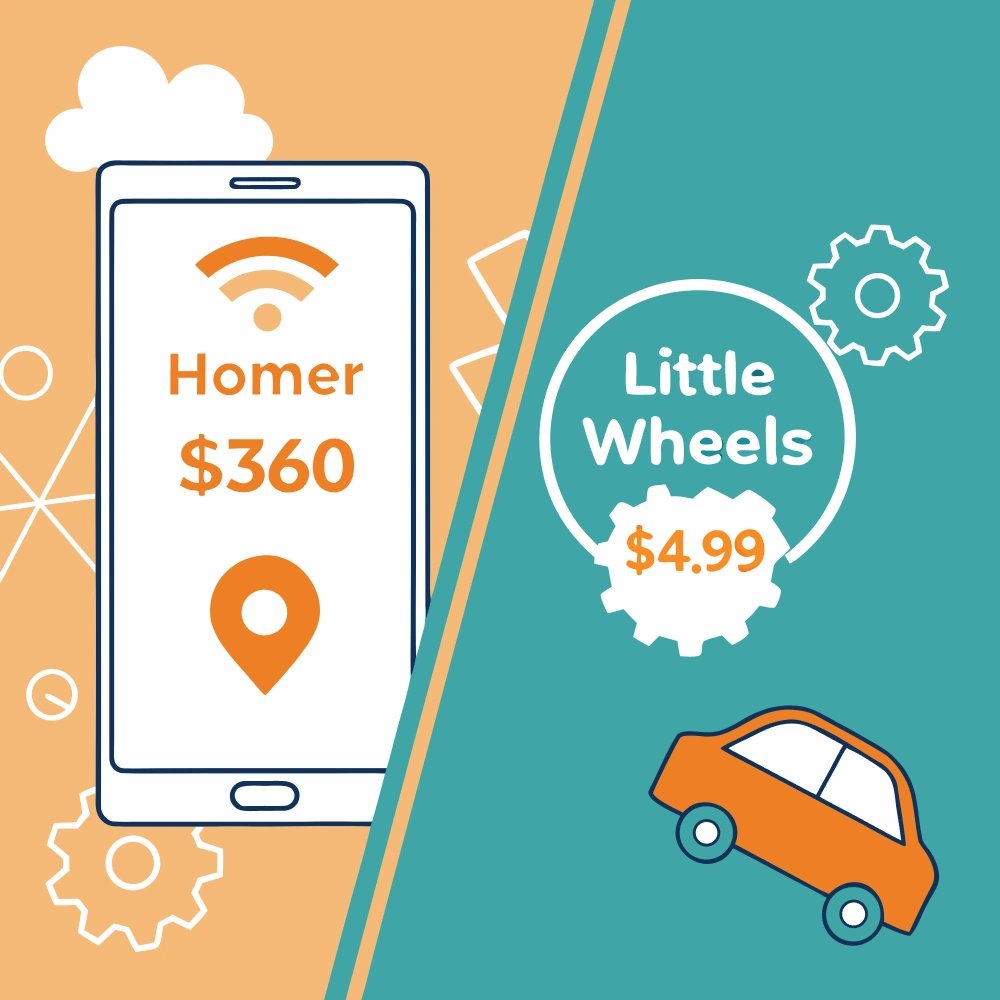
| HOMER | 🚨 Heavy | $9.99/month |
| Little Wheels | ✅ Zero | $4.99 once |
| Endless Alphabet | ✅ Minimal | $8.99 once |
| Teach Your Monster | ✅ Minimal | $8.99 once |
Data collection levels based on App Store privacy labels, November 2025.
Notice the pattern: apps with heavy data collection tend to have certifications and subscription pricing. Apps with minimal data collection often use one-time pricing and skip formal certification. For alternatives, see our 10 best indie apps for toddlers or 15 one-time purchase apps.
What Parents Should Actually Look For
Instead of relying solely on paid certification badges, consider these free, verifiable indicators:
1. Apple's App Store Privacy Labels
Apple requires all apps to disclose their data practices. Look for:
- "Data Not Collected" — The app collects no data from users
- "Data Not Linked to You" — Data collected isn't tied to your identity
- "Data Used to Track You" — The app tracks you across other apps/websites
These labels are free, platform-verified, and standardized. Apple reviews these disclosures and can remove apps that misrepresent their practices.
2. Offline Capability
Apps that work 100% offline can't transmit data while your child uses them. Test any app in airplane mode—if it works fully, that's a strong privacy signal.
For more on this, see our guide: Where Does Your Child's Data Go? You can also learn how AI recommendations favor apps with these expensive certifications.
3. Account Requirements
Apps that require account creation necessarily collect some personal information (at minimum, an email address). Apps that work without accounts have one less data collection vector.
The Bottom Line
Certification badges aren't bad—they serve a legitimate purpose for apps that handle children's data. But they're not the only indicator of safety, and they come with costs that get passed to families.
Key Takeaways
- Certification costs money — typically $10,000+ annually for comprehensive COPPA Safe Harbor
- These costs get passed to users — often through subscription pricing
- Apps that don't collect data don't need certification — there's nothing to certify
- Free alternatives exist — Apple's privacy labels, offline capability, no-account design
- Look at actual practices, not just badges — the App Store privacy label tells you what data is actually collected
When evaluating any kids' app—including ours—check the App Store privacy label, test offline functionality, and consider whether the pricing model aligns with the app's data practices. A $4.99 one-time purchase with zero data collection tells a different story than a $14.99/month subscription with heavy data collection and certification overhead. For a deeper look at how funding and business models shape app decisions, see Indie Apps vs Big Tech.
References
- COPPA Enforcement History: PRIVO. "History of COPPA & GDPR Violations." privo.com/history-of-coppa-gdpr-violations. Accessed November 2025.
- COPPA Civil Penalties: Federal Trade Commission. Current maximum civil penalty of $53,088 per violation as of 2024 adjustment.
- kidSAFE Seal Program: kidsafeseal.com/aboutourseals.html
- App Store Privacy Labels: Apple App Store listings for referenced applications, accessed November 2025.
- OpenAI Parental Controls: OpenAI. "Introducing parental controls." September 2025. Confirms partnership with Common Sense Media for safety standards.
Related Reading
- How AI Recommendations Favor Big Companies (And What Parents Should Know)14 mins
AI systems favor PE-backed apps with $10-25K certifications and marketing budgets. Indie apps that collect zero data are algorithmically invisible.
- Where Does Your Child's Data Go? Kids' App HQ Map12 mins
We mapped 20+ kids' app headquarters—from Slovenia to Qatar. See which apps collect data and which keep your child's info private.
- Indie Apps vs Big Tech: Why Smaller Developers Matter10 mins
Research-backed comparison of indie vs corporate app development. Evidence shows indie developers prioritize child development, privacy, and ethical design over engagement metrics. Updated October 2025 with app ecosystem analysis.
- The Hidden Cost of "Free" Toddler Apps6 mins
Evidence-based analysis of free app economics. Research reveals hidden costs: attention manipulation, data harvesting, and development impacts. Updated October 2025 with privacy protection strategies and quality alternatives.
- Dark Patterns in Kids Apps Exposed: 8 Manipulative Tactics to Avoid11 mins
Discover the 8 psychological manipulation tactics kids' apps use—from fake urgency to emotional guilt—and learn how to spot and avoid these predatory designs.
- Ad-Free Toddler Apps: Complete Guide to Quality Apps Without Advertising17 mins
Why ads harm toddler development, how to spot truly ad-free apps, and the best quality alternatives to ad-supported apps flooding app stores.
 Frequently Asked Questions
 Ad-free & offline ready