What are the best ABCmouse alternatives without subscriptions?
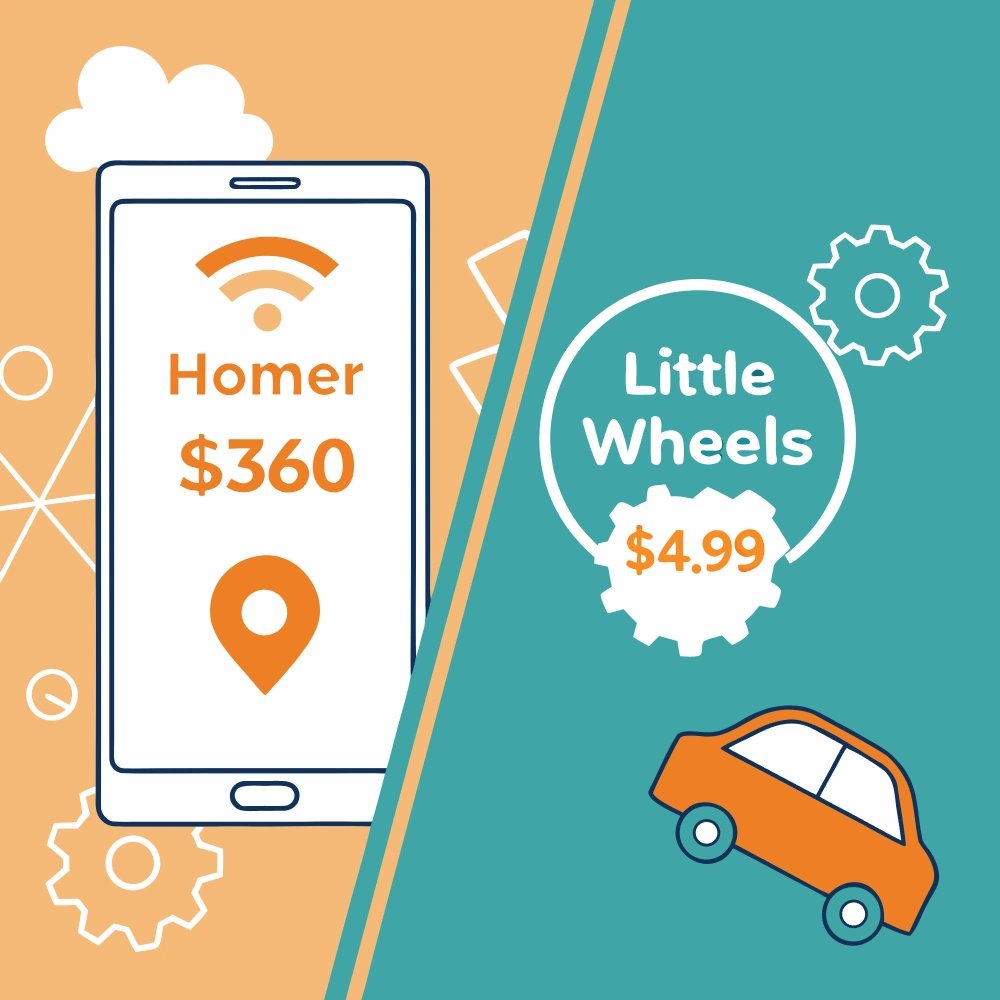
ABCmouse costs about $45 for the first year and around $59.99 a year after that (or about $14.99 month-to-month). Strong alternatives: Khan Academy Kids (free, nonprofit), Little Wheels apps (free to download, $4.99 one-time unlock each for speech, creativity and bedtime), and a few carefully chosen letter/reading apps. You can build a focused library for around $20–40 total, once, instead of renewing every year—without the subscription and cancellation issues that led to a $10 million FTC settlement.
Let's address the elephant in the room: ABCmouse settled with the Federal Trade Commission in 2020 for $10 million. The charges? Making subscription cancellation difficult, continuing to charge parents who thought they'd cancelled, and using deceptive trial terms.
The company didn't admit wrongdoing, but they agreed to pay $10 million and change their practices. That's not exactly a ringing endorsement for trustworthy business practices.
So when parents ask about ABCmouse alternatives, they're not just seeking cheaper options. They're seeking ethical options. Apps that respect families instead of exploiting subscription psychology.
⚠️ FTC Settlement: $10 Million in Refunds
In 2020, the Federal Trade Commission required ABCmouse to pay $10 million for deceptive subscription practices. The company made cancellation difficult, charged parents who thought they'd cancelled, and used confusing trial terms.
Read the official FTC press release →The ABCmouse Model: What You're Actually Paying For
ABCmouse positions itself as a comprehensive learning platform. One subscription, endless educational content. It sounds appealing—until you calculate what "endless" actually costs.
The Real Price
ABCmouse's annual plan runs about $45 for the first year and renews near $59.99. Month-to-month is about $14.99, which works out to $179.88 a year if you never switch to annual. Over three years on the annual plan—a typical usage window for the 2-8 age range they target—you'll pay about $164.98. On the monthly plan, closer to $539.
Pricing checked: July 2026. Always confirm current price on the App Store.
That's not pocket change. That's real money that could fund:
- Museum memberships for hands-on learning
- Real art supplies for tactile creativity
- Library storytimes and community programs
- Quality buy-once apps you own forever
Quick facts (ABCmouse, July 2026): ABCmouse runs as an online-only subscription (about $45 the first year, $59.99/year on renewal, or $14.99/month), covers up to three child profiles, requires an account and internet connection for core play, and collects contact info, identifiers, usage data, and diagnostics for analytics and operations (see their privacy policy for current details). If you need offline, no-account options, you'll want to lean toward one-time purchase apps that work fully offline instead.
ABCmouse vs buy-once apps: usability for real toddlers
| App | Price | Cost over 5 years | Works offline | Ads | Collects child data | Ages | Best for |
|---|---|---|---|---|---|---|---|
| Talk & Listen (App Store: Learn to Talk: First Words) | $4.99 one-time unlock (free to download) | $4.99 | Yes | No | No | 2-6 | Late talkers and first-words practice |
| Create & Play (App Store: Toddler Art: Coloring Games) | $4.99 one-time unlock (free to download) | $4.99 | Yes | No | No | 2-6 | Mess-free art and music |
| Sleepy Train: Calm Bedtime | $4.99 one-time unlock (free to download) | $4.99 | Yes | No | No | 2-6 | Bedtime wind-down and naming big feelings |
| ABCmouse | $59.99 /year | $284.96 | — | No | — | 2-8 | Broad early-learning curriculum |
Five-year cost assumes a subscription is kept for five years, roughly a child’s toddler-through-school-start span. Little Wheels apps are free to download with a $4.99 one-time in-app purchase, so their five-year cost equals their day-one cost. Our pricing verified 2026-07-30. A blank cell means we have not re-checked that figure rather than that it is zero — competitor pricing changes, and we would rather leave a gap than publish a number we cannot stand behind.
Once you get past the pricing, the next question is simple: can an actual 2–3-year-old move around without constant help, or does the app assume an older, more independent child?
ABCmouse
- Interaction style: guided curriculum path with animated maps, mini‑games, and reward systems; kids follow sequences of short learning activities.
- Independence for toddlers: interface assumes a bit of reading and fine motor control; better for ~3.5+ than brand‑new 2‑year‑olds who may struggle with menus and small tap targets.
- Cognitive load / stimulation: busy UI with many icons, tickets, and visual effects; motivating for some kids, overwhelming for others.
- Parent involvement needed: often works best when an adult is nearby to log in, pick activities, and nudge kids back toward the learning path.
- Session quality & routine: sessions can drift into long, wandering map exploration instead of a contained 10‑minute practice block.
- Device / context fit & offline bridge: designed for always‑online use, so experience is smoother on stable home WiFi than travel. Many families add their own books or crafts; the app itself doesn’t strongly guide you into specific offline activities or printables.
Buy-once apps (Talk & Listen, Create & Play)
- Interaction style: Talk & Listen focuses on vehicle‑based speech games; Create & Play focuses on open‑ended art, music, and sticker scenes.
- Independence for toddlers: starting play is usually "open → tap a big button → you’re in"; most 2–3‑year‑olds can return to favorite activities on their own.
- Cognitive load / stimulation: clean screens, few buttons, and no in‑app ads or upgrade prompts; easier to keep attention on the main task.
- Parent involvement needed: you can set things up and check in; you don’t have to co‑pilot every second once they know where their favorites live.
- Session quality & routine: built around short, replayable routines that naturally cap sessions—one drawing, one DJ session, or one small batch of vehicles.
- Device / context fit & offline bridge: works 100% offline after download, so it’s predictable on planes or in waiting rooms. Vehicle vocabulary and art projects map directly to toy play, drawing, and printable vehicle scenes for offline follow‑up.
Learn more: the no‑subscription toddler apps guide walks through this philosophy in detail, and the Create & Play deep dive shows exactly how the art and DJ tools are set up for little hands.
3-Year Cost Comparison
| Option | Year 1 | Year 2 | Year 3 | Total |
|---|---|---|---|---|
| ABCmouse (annual plan) | $45.00 | $59.99 | $59.99 | $164.98 |
| Buy-Once Alternative | $18.97 | $0 | $0 | $18.97 |
| You Save: | $146.01 | |||
Buy-once apps: Little Wheels Talk & Listen ($4.99) + Create & Play ($4.99) + Endless Alphabet ($8.99) + Khan Academy Kids (Free)
Get the No-Subscription App Checklist
15 quality apps you buy once. Organized by learning area with real prices.
The Breadth vs. Depth Problem
ABCmouse offers thousands of activities across multiple subjects. Sounds impressive. But here's the issue: breadth often comes at the expense of depth.
When a platform tries to cover everything—reading, math, science, art, music—each area gets shallow treatment. Your child might tap through dozens of activities without truly mastering any concept or developing genuine interest.
Focused apps that do one thing excellently often deliver better learning outcomes than platforms attempting to do everything adequately.
The Engagement Cliff
Talk to parents who've used ABCmouse. Most report a pattern: initial excitement, daily use for 2-4 weeks, declining interest, then the app sits unused while the subscription continues charging.
This isn't your child's fault or yours. It's the nature of comprehensive platforms. Without focused engagement hooks, toddlers lose interest. The "endless content" becomes overwhelming noise rather than purposeful learning.
What the FTC Settlement Tells Us
The 2020 FTC settlement wasn't just about money. It revealed business practices that should concern any parent considering ABCmouse.
Difficult Cancellation
According to the FTC complaint, ABCmouse made cancellation unnecessarily difficult. Parents had to navigate multiple screens, answer multiple questions, and sometimes contact customer service.
This friction isn't accidental. Every extra step reduces cancellation rates. Companies implementing these tactics prioritize their revenue over customer satisfaction.
Continued Charging
The FTC alleged that ABCmouse continued charging some parents who believed they'd successfully cancelled. These parents discovered the ongoing charges months later—sometimes totaling hundreds of dollars.
Whether through technical failures or intentional design, the result was the same: parents paid for services they'd tried to cancel.
Deceptive Trial Terms
The complaint also addressed confusing free trial terms. Parents signing up for "free trials" didn't always understand when charges would begin or how to cancel before being charged.
Free trials should be straightforward: clear start date, clear end date, clear cancellation process. When they're intentionally confusing, it's a red flag about company values.
The Free Alternative: Khan Academy Kids
Before spending money on any learning platform, try Khan Academy Kids. It's completely free. Not freemium. Not trial. Actually, genuinely free.
What You Get (For $0)
- Comprehensive preschool through early elementary curriculum
- Reading, math, logic, social-emotional learning, creativity
- Thousands of activities and books
- No ads, no subscriptions, no data selling
- Created by nonprofit Khan Academy
This isn't a budget alternative with compromised quality. Khan Academy Kids receives praise from educators, parents, and child development experts. The production values rival or exceed paid alternatives.
Why It's Free
Khan Academy is a nonprofit organization funded by donations. They believe education should be accessible to everyone. No profit motive means no pressure to maximize revenue extraction from users.
This alignment of values matters. Khan Academy succeeds when children learn, period. Not when parents stay subscribed, not when they click more ads, not when they upgrade to premium tiers. Just when kids learn.
The Trade-Off
Khan Academy Kids requires internet connectivity for full functionality. Some content works offline after downloading, but the experience is designed for connected use.
If you need completely offline apps—for travel, rural areas, or data privacy—you'll want alternatives. But for most families, this trade-off is reasonable for free, high-quality content.
Building a Buy-Once Alternative Library
If you prefer focused apps over comprehensive platforms, here's how to build a quality collection for less than ABCmouse costs in two months.
The $25 Core Collection
Speech & Language: Little Wheels Talk & Listen ($4.99)
100+ vehicles for speech practice
Progressive difficulty tiers
Offline functionality
No ads or subscriptions
Creative Development: Little Wheels Create & Play ($4.99)
DJ music mixing
Physics-based stickers
Mess-free art tools
Completely offline
Letter Recognition: Endless Alphabet ($8.99)
Interactive letter puzzles
Engaging animations
Pre-reader friendly
One-time purchase
Comprehensive Backup: Khan Academy Kids (Free)
Full preschool curriculum
Math, reading, logic
Nonprofit model
No subscriptions
Total investment: $18.97 plus free comprehensive backup
Versus ABCmouse: You've spent about what five weeks of a monthly ABCmouse membership costs—once. In year one you save about $26. In year two you save the full $59.99, and again in year three. Three-year savings: about $147, and it keeps growing every year you don't renew.
Why This Approach Works Better
Instead of shallow coverage of everything, you get deep engagement in specific areas matched to your child's current needs and interests.
Your vehicle-obsessed toddler gets focused speech practice through Talk & Listen. Your creative child gets genuine music mixing tools in Create & Play. Your letter-curious preschooler gets satisfying alphabet puzzles in Endless Alphabet.
Each app does one thing excellently rather than many things adequately. This focused approach typically generates more engagement and better learning outcomes.
Flexibility for Changing Needs
When you own apps outright, you can delete and reinstall as needs change. Your 2-year-old might not engage with letter recognition yet—that's fine. Install Endless Alphabet at 3 when interest emerges. No additional cost.
ABCmouse charges the same regardless of whether your child is ready for specific content. You're paying for access to everything, even content your child can't or won't use yet.
Focused Alternatives by Learning Area
Maybe you don't need comprehensive learning. Maybe you need specific skill development. Here are targeted alternatives to consider.
For Speech Development
If speech practice is your priority, ABCmouse's speech activities are a tiny fraction of their content. You're renewing at $59.99 a year mostly for things you don't need.
Dedicated speech apps like Little Wheels Talk & Listen ($4.99) offer deeper, more engaging speech practice than comprehensive platforms can provide. Your child gets 100+ pronunciation-tiered vehicles, interactive soundboards, and call-and-response features—all designed specifically for speech development.
For the cost of one month of ABCmouse, you get lifetime access to focused speech tools.
For Creative Expression
ABCmouse includes art activities, but they're structured lessons, not open-ended creativity. That's fine for some kids. For others, true creative freedom matters more.
Apps like Little Wheels Create & Play ($4.99) offer genuine creative tools: DJ mixing where kids make real music, physics-based scenes where creations interact realistically, unlimited art supplies without cleanup.
This is creativity as exploration, not curriculum. Both have value, but they serve different needs.
For Math Fundamentals
Khan Academy Kids (free) covers math basics comprehensively. If you want something additional or different, apps like Moose Math (free) or Todo Math ($5.99) provide focused number practice.
No need to pay ABCmouse's subscription for math content when excellent free and buy-once alternatives exist.
For Reading Readiness
ABCmouse's reading pathway is solid. But so is Khan Academy Kids' (free). And Endless Alphabet ($8.99) makes letter recognition genuinely fun in ways that curriculum-focused platforms often don't.
Combine Khan Academy Kids for systematic reading instruction with Endless Alphabet for engaging practice—total cost is $8.99 once versus $59.99 a year, every year, for ABCmouse.
When ABCmouse Might Make Sense
Let's be fair. ABCmouse isn't wrong for every family. Despite the FTC settlement and high cost, some situations might justify it.
Multiple Children in Target Age Range
If you have three kids aged 3, 5, and 7 all actively using ABCmouse daily, the per-child cost becomes reasonable—one membership covers up to three profiles. $59.99 divided by three kids is $20 per child annually, which is genuinely competitive with buying focused apps for each. This is the case where ABCmouse is the better buy, and it is worth saying so.
But most families don't have multiple children in this specific age range simultaneously using the app daily. And even then, buy-once apps can be shared across devices at no additional cost.
Your Child Genuinely Loves It
Some kids click with ABCmouse's gamified learning path. If your child uses it enthusiastically every day and you see clear learning progress, the cost might be justified.
Just be honest about actual usage. "She loved it for two weeks" doesn't justify a year-long subscription.
You Have Money to Burn
If $59.99 a year is genuinely insignificant to your family budget, and you like having comprehensive content available, go ahead.
But most parents reading articles about alternatives are seeking them because the cost matters. And when cost matters, better options exist.
Making the Switch
Ready to cancel ABCmouse and try alternatives? Here's how to transition smoothly.
Step 1: Start Alternatives First
Don't cancel ABCmouse immediately. First, install Khan Academy Kids (free) and let your child explore it alongside ABCmouse for a week.
If focusing on specific skills, add one focused app (speech, creative, etc.) that addresses your child's primary need.
Give your child time to adjust to new apps while the familiar one is still available.
Step 2: Track Actual Usage
For two weeks, honestly track which apps your child actually uses. Not which ones you wish they'd use—which ones they actually open and engage with.
Many parents discover their child prefers the new focused apps to ABCmouse's comprehensive platform. The decision to cancel becomes obvious.
Step 3: Cancel During Active Subscription Period
Don't wait until the last day of your billing cycle. Cancel early in the period to ensure it processes correctly. You'll keep access until the period ends, but you've secured cancellation.
Document the cancellation confirmation. Screenshot it. Save the email. Given ABCmouse's history of charging parents who thought they'd cancelled, documentation matters.
Step 4: Monitor Your Billing
Check your credit card statement the month after cancellation. Verify no charge appears. If ABCmouse charges you anyway, you have documentation to dispute it.
This isn't paranoia—it's prudent given their FTC settlement over exactly this issue.
The Bottom Line
ABCmouse renews at about $59.99 a year. Khan Academy Kids offers comparable breadth for $0. Focused buy-once apps cost $5-10 each, once, and often deliver better engagement.
The comprehensive platform model sounds appealing in theory. In practice, most families would be better served by focused tools matched to their child's actual needs and interests.
Add ABCmouse's history of subscription practice issues, and the case for alternatives becomes even stronger.
You don't need to renew a subscription every year for quality educational content. You just need to know where to look—and have the confidence to choose apps that respect your family and your budget.
Start with Khan Academy Kids (free). Add focused buy-once apps for specific needs ($5-10 each). Build a library you actually own instead of renting access to content your child might not fully use.
Your wallet—and your child's focused learning—will benefit.
 Frequently Asked Questions
 Ad-free & offline ready