Important Notice: This content is for educational purposes only and is not medical advice. If you have concerns about your child's emotional regulation, sensory processing, or development, consult your pediatrician, occupational therapist, or a licensed child psychologist for proper evaluation and guidance.
Why the Distinction Matters More Than You Think
Your three-year-old is on the floor of the living room, screaming and flailing. You might call it a "tantrum" because that's the word we use for any intense toddler upset. But if you're using that single word to describe two fundamentally different neurological states, you're going to respond in ways that help one situation and make the other dramatically worse.
The distinction between tantrums and meltdowns isn't just semantics or professional jargon—it's a difference in what's happening in your child's brain and nervous system. Understanding this difference changes everything about how you respond, what you say, what you expect, and what actually helps.
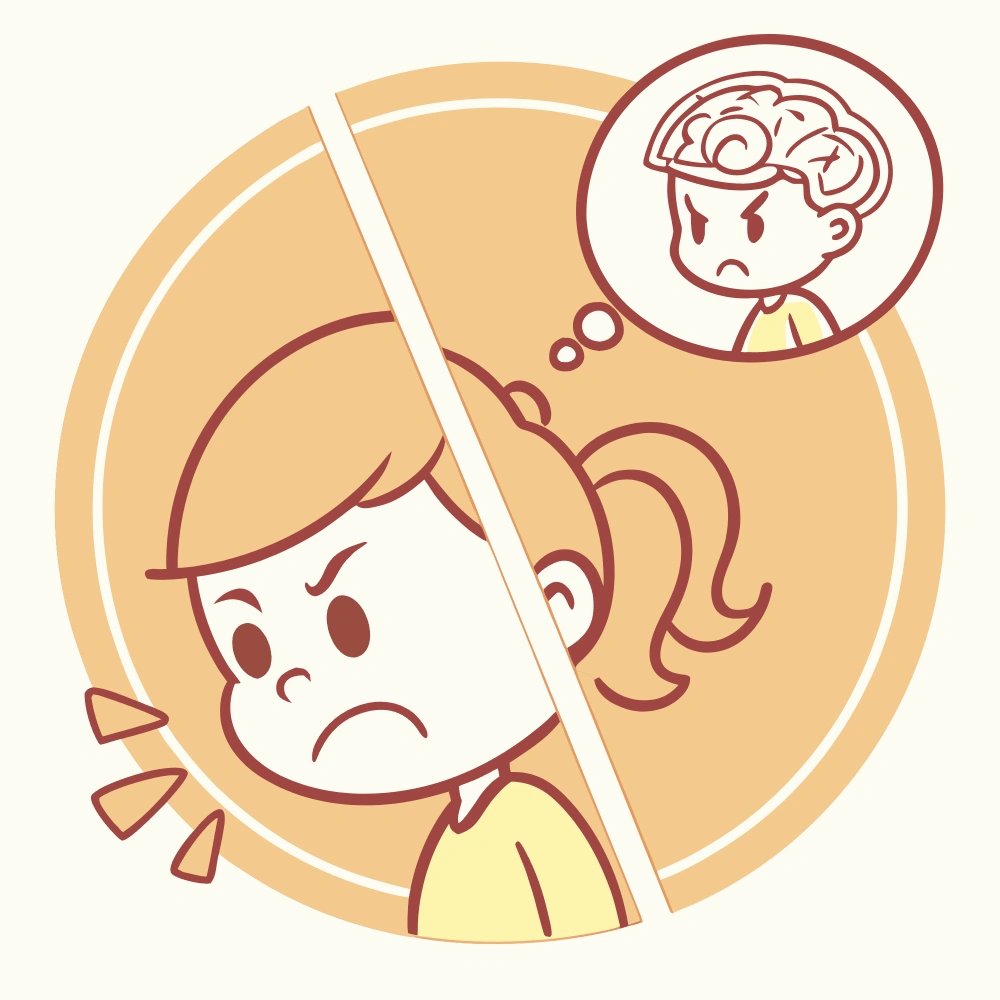
Here's the crucial insight: tantrums are about behavior, while meltdowns are about nervous system capacity. One involves conscious control that your child is choosing not to use. The other involves a complete loss of conscious control because their nervous system has exceeded its capacity to regulate.
Think of it this way: a tantrum is like someone choosing to drive aggressively because they're angry. A meltdown is like a car whose brakes have failed—the driver has lost the ability to control it regardless of their intentions.
What Is a Tantrum? The Neurological Reality
A tantrum is a goal-directed behavior that originates in the thinking parts of your child's brain. Yes, your child is genuinely upset during a tantrum—their emotions are real—but they retain access to the parts of their brain that can make decisions, assess outcomes, and modify behavior based on whether it's working.
Key characteristics of a tantrum:
- There's a clear goal. Your child wants something specific: the candy bar, to stay at the park, to not take a bath, to have more screen time. The upset is about not getting that thing.
- The child has an audience awareness. Research on child development shows that true tantrums often escalate when parents are watching and decrease in intensity or stop entirely when the parent leaves the room or isn't paying attention. This isn't "manipulation" in a negative sense—it's your child's brain assessing whether this strategy is working.
- The behavior stops when the goal is met OR when it's clear the goal won't be met. If you give in and hand over the candy, the tantrum ends immediately. If you calmly and firmly make it clear you won't be giving in, and you remain unbothered by the behavior, the tantrum typically winds down within a few minutes because the strategy isn't working.
- Your child can respond to choices and redirection during a tantrum. "You can have carrots or apples—which one?" or "You can walk to the car or I can carry you" often work during tantrums because your child's thinking brain is still online enough to process options.
- After a tantrum, your child can usually tell you what they were upset about. "I wanted the toy." "I didn't want to leave." Their memory and language centers were functioning throughout.
What's happening in the brain during a tantrum:
Tantrums primarily engage the limbic system (the emotional center of the brain) but the prefrontal cortex (the thinking, decision-making part) remains at least partially online. Your child's emotional brain is saying "I WANT THIS NOW" very loudly, and while their prefrontal cortex isn't managing those emotions well yet (because it's still developing and won't be fully developed until their mid-20s), it's still present enough to make strategic decisions about behavior.
As Daniel Siegel and Tina Payne Bryson explain in The Whole-Brain Child, during a tantrum your child has "flipped their lid" but not completely—there's still some connection between the upstairs brain (thinking) and downstairs brain (emotional/survival).
What Is a Meltdown? When the System Exceeds Capacity
A meltdown is nervous system overwhelm. It's what happens when your child's capacity to process sensory input, manage emotions, or handle stress has been completely exceeded. This isn't a behavior choice—it's a physiological state similar to what adults experience during panic attacks.
Key characteristics of a meltdown:
- There may not be a clear, logical trigger. Meltdowns can be triggered by sensory overload (too much noise, light, or stimulation), emotional overwhelm (too many transitions or demands), or accumulated stress throughout the day—even if the final trigger seems minor ("We're out of the purple cup").
- The child has no audience awareness. During a true meltdown, your child doesn't care if you're watching or not. The behavior is the same whether you're present or absent because it's not goal-directed—it's a nervous system discharge.
- The behavior doesn't stop when you offer what they "want." If your child is having a meltdown about the purple cup and you find a purple cup, they might throw it. This confuses parents ("But I gave you what you wanted!") until you realize the purple cup was never really the point—it was just the trigger for a system already at capacity.
- Your child cannot respond to choices or reasoning during a meltdown. "Do you want to calm down in your room or in the living room?" doesn't compute because the part of their brain that processes choices is offline. They're in pure survival mode.
- After a meltdown, your child often can't explain what happened. They might say "I don't know" or remember only fragments because their memory encoding was impaired during the overwhelm. They genuinely don't know why they melted down—they just know they felt terrible.
- Meltdowns often continue until the child is physically exhausted. Unlike tantrums that stop when they're not working, meltdowns have to run their course until the nervous system can begin to regulate again—often only after the child has cried or screamed themselves into exhaustion.
What's happening in the brain during a meltdown:
During a meltdown, your child has experienced what Siegel and Bryson call a "downstairs brain takeover." The prefrontal cortex has gone almost completely offline. The amygdala (the brain's smoke detector for threat) has taken over, flooding the system with stress hormones (cortisol and adrenaline), and triggering fight-flight-freeze responses.
This is why you might see behaviors during meltdowns that seem extreme or "not like your child"—hitting, biting, complete emotional dysregulation, inability to communicate. These behaviors aren't choices; they're nervous system responses to perceived threat when higher-order thinking is unavailable.
Dr. Stuart Shanker's work on self-regulation emphasizes that meltdowns represent a state where the child's stress has exceeded their capacity to manage it. The child isn't "misbehaving"—their nervous system is in crisis mode.
The Test: How to Tell Which One You're Dealing With
In the moment, when your child is upset, here's how to quickly assess whether you're dealing with a tantrum or a meltdown:
The Audience Test:
Walk away calmly and observe from a distance. If your child follows you or escalates to get your attention back, it's likely a tantrum—they want an audience because the behavior is goal-directed. If your child doesn't seem to notice or care that you've left, it's more likely a meltdown—they're in their own world of overwhelm.
The Distraction Test:
Offer something they typically love. "Want to watch your favorite show?" or "Should we get your favorite snack?" If they can switch gears and accept the offer, it was a tantrum. If they refuse or can't even process the offer, it's a meltdown.
The Reasoning Test:
Offer a simple choice. "You can have water or milk—which one?" If they can answer (even if the answer is "NO!"), they're having a tantrum. If they can't process the question at all or seem not to hear you, it's a meltdown.
The Duration Pattern:
Observe what happens when you remain calm and neutral. Tantrums typically decrease in intensity within 2-5 minutes when they're clearly not working. Meltdowns continue for much longer (10-30+ minutes) regardless of your response because they have to run their physiological course.
Typical Duration: Tantrum vs Meltdown
The Recovery Test:
Notice how your child is afterward. After a tantrum, children typically recover quickly and can move on to the next activity without lingering effects. After a meltdown, children are often exhausted, clingy, or "hangover-ish" because their nervous system has been through a significant stress event.
Why Your Response Strategy Must Be Different
Understanding the distinction isn't just academic—it completely changes what you should do in the moment and what will actually help your child.
How to respond to a TANTRUM:
- Stay calm but maintain the boundary. "I hear that you want the candy. The answer is no." Then stop engaging with the behavior. Your calm consistency teaches that tantrums don't work to change your decisions.
- You can walk away or remain neutral. You're not being cruel—you're teaching that you won't negotiate through tantrums. You're available when they're calm.
- Offer choices within your boundary. "You can't have candy, but you can have pretzels or fruit—which sounds good?" This gives their thinking brain something to do.
- Brief acknowledgment, then move on. "You're disappointed. That's hard. When you're ready, we'll continue with our day." Don't over-discuss or over-process.
- Let natural consequences teach. If the tantrum is about leaving the park and you said "5 more minutes then we go," follow through. The consequence (leaving) teaches that tantrums don't extend park time.
How to respond to a MELTDOWN:
- Prioritize safety first. Move dangerous objects, create space from hazards, protect them and others from harm. This is a nervous system crisis—safety is your only immediate goal.
- Stay close but don't demand interaction. Your regulated presence helps their nervous system, but forcing eye contact, demanding they talk, or insisting on hugs can make things worse because their system can't process those demands.
- Reduce sensory input. Lower lights, reduce noise, minimize talking. Their nervous system is already overloaded—more input makes it worse. Sometimes moving to a quieter, less stimulating space helps significantly.
- Use minimal words. Not "You need to calm down right now, this is ridiculous, people are staring"—instead "I'm here. You're safe. Breathe." Keep it simple because their language processing is offline.
- Wait it out with compassion. You can't rush a meltdown. It has to complete its physiological cycle. Your job is to keep everyone safe while their nervous system processes and recovers. Think of yourself as a lighthouse—steady, calm, present.
- Offer sensory regulation after the peak. Once they're coming down, some children benefit from deep pressure (tight hugs), cold water on their face, a heavy blanket, or rhythmic rocking. These help activate the calming (parasympathetic) nervous system.
Notice the difference? With tantrums, you can set boundaries, walk away, and let consequences teach. With meltdowns, none of those strategies work because your child's brain cannot learn anything in that state—you're just keeping everyone safe until their nervous system can recover.
The Gray Area: When It's Both
Real life is messy, and sometimes what starts as a tantrum can escalate into a meltdown. This typically happens when:
- A tantrum goes on too long. Your child started with goal-directed behavior (tantrum), but the emotional intensity of their own upset overwhelms their nervous system capacity, tipping them into genuine meltdown territory.
- Your child was already close to capacity. They're tired, hungry, overstimulated, or stressed from earlier in the day. What would normally be a brief tantrum pushes their already-taxed nervous system over the edge into meltdown.
- The environment is overwhelming. A tantrum in a quiet home might stay a tantrum. The same tantrum in a loud, bright, crowded store might escalate to meltdown because the sensory load is too much.
When this happens, you might start with tantrum strategies (calm boundary-setting) but need to shift to meltdown strategies (safety, minimal input, nervous system support) as you see the situation change. Pay attention to the signs: if your usual tantrum strategies aren't working and your child seems to be escalating rather than winding down, shift to meltdown mode.
Sensory Processing and Meltdown Susceptibility
Some children are significantly more prone to meltdowns than tantrums because of how their nervous systems process sensory information. This is where understanding sensory processing becomes crucial.
Children with sensory processing differences—which can occur in neurotypical children but are more common in children with autism, ADHD, or other neurodevelopmental differences—have nervous systems that either over-respond or under-respond to sensory input. Carol Kranowitz's work in The Out-of-Sync Child has been foundational in helping parents understand these patterns.
Signs your child might be more meltdown-prone due to sensory processing:
- They're often described as "intense," "sensitive," or "easily overwhelmed"
- They have strong reactions to tags in clothing, certain fabrics, or food textures
- They cover their ears in moderately loud environments or seek out loud noises
- They seem to have emotional reactions "out of proportion" to the trigger
- They struggle particularly in busy environments (grocery stores, parties, schools)
- They need a lot of recovery time after outings or social events
- They have particular difficulty with transitions
If this sounds like your child, meltdowns are less about behavior management and more about nervous system management. Working with an occupational therapist who specializes in sensory processing can be incredibly helpful. They can assess your child's specific sensory profile and provide strategies to prevent overwhelm before it becomes meltdown.
Prevention Strategies: Reducing Both
While tantrums and meltdowns require different in-the-moment responses, prevention strategies have significant overlap because both are easier to prevent than to manage:
For preventing tantrums:
- Teach emotional vocabulary when calm. Children who can say "I'm frustrated" are less likely to show frustration through tantrums.
- Offer choices proactively. "Bath now or after one more story?" gives their brain a sense of control, reducing the need to assert control through tantrums.
- Stay consistent with boundaries. If tantrums sometimes work (you give in), you're inadvertently training more tantrums. If they never work, children learn other strategies faster.
- Catch them being good. Notice and acknowledge when they handle disappointment well: "You wanted more crackers, you were sad I said no, but you didn't tantrum—you're learning!"
For preventing meltdowns:
- Track patterns. When do meltdowns typically happen? Time of day? After certain activities? In specific environments? Patterns reveal triggers you can modify.
- Monitor their stress bucket. Imagine your child has a bucket for stress that fills throughout the day. Hunger, tiredness, sensory overload, transitions, social demands—all add to the bucket. Before it overflows into meltdown, provide breaks, quiet time, snacks, or calming activities to empty the bucket.
- Prepare for transitions. Meltdowns often happen around transitions. Give warnings ("5 more minutes then bath time"), use visual timers, create transition rituals ("First we say goodbye to your toys, then we go to bathroom, then bath").
- Build in regulation breaks. After stimulating activities (preschool, playdates, shopping), plan quiet, low-demand time. Their nervous system needs recovery time to prevent overwhelm.
- Sensory-friendly modifications. If certain environments trigger meltdowns, modify them: noise-canceling headphones, sunglasses in bright stores, chewy necklaces for oral input, weighted lap pad in the car.
What This Means for Your Parenting
Understanding the tantrum vs. meltdown distinction should actually reduce your guilt and stress, not increase it. Here's why:
Tantrums don't mean you're a bad parent. They mean your child is developmentally on track. All children have tantrums as they learn to manage disappointment and realize they can't always control outcomes. Your job isn't to prevent all tantrums (impossible) but to respond calmly and consistently so they learn tantrums don't work to get what they want.
Meltdowns don't mean your child is manipulating you. They mean your child's nervous system reached capacity. Your job isn't to discipline the meltdown but to keep everyone safe while their system recovers, then work on prevention strategies for next time. There's no "lesson to teach" during a meltdown because the learning centers of their brain are offline.
You're not "giving in" when you respond differently to each. You're responding appropriately to different neurological states. Just as you wouldn't discipline someone having a seizure, you don't discipline a nervous system that's overwhelmed. But you also don't reward goal-directed behavior that crosses boundaries.
The parents who handle these situations most effectively aren't the ones who never encounter them—they're the ones who can read their child's state accurately and respond accordingly. That's not permissiveness. That's sophisticated, brain-science-informed parenting.
When to Seek Professional Help
Consider consulting with your pediatrician, an occupational therapist, or a child psychologist if:
- Meltdowns are happening multiple times daily and significantly impacting family functioning
- Meltdowns regularly result in harm to your child, others, or property
- Your child seems unable to recover from meltdowns even with your support
- You suspect sensory processing differences and want strategies specific to your child
- Tantrums aren't decreasing in frequency as your child approaches age 4-5
- You feel completely overwhelmed and need support for yourself
Professional evaluation can identify whether sensory processing differences, anxiety, language delays (which increase frustration), or other factors are contributing. Occupational therapists are particularly skilled at assessing sensory processing and providing specific regulation strategies.
The Bottom Line
The distinction between tantrums and meltdowns isn't about having a perfect label for every upset. It's about understanding what's happening in your child's brain and nervous system so you can respond in ways that actually help.
Tantrums need boundaries, consistency, and emotional support once they're calm. Meltdowns need safety, reduced input, and compassion while the storm passes. Same external behavior, completely different internal experience, completely different effective response.
The more you practice observing your child and noticing the patterns—audience awareness, ability to respond to choices, recovery patterns—the better you'll get at reading their state and responding appropriately. This isn't about being a perfect parent. It's about being a responsive one who understands what your child's behavior is actually communicating about their internal state.
And that understanding? That changes everything.
References & Further Reading
Books Referenced
- Siegel, D. J., & Bryson, T. P. (2011). The Whole-Brain Child: 12 Revolutionary Strategies to Nurture Your Child's Developing Mind. Bantam Books.
- Shanker, S. (2016). Self-Reg: How to Help Your Child (and You) Break the Stress Cycle and Successfully Engage with Life. Penguin Press.
- Kranowitz, C. (2022). The Out-of-Sync Child: Recognizing and Coping with Sensory Processing Disorder (3rd edition). Penguin Random House.
Professional Resources
- American Academy of Pediatrics - Temper Tantrums: healthychildren.org
- Zero to Three - Understanding Toddler Behavior: zerotothree.org
- STAR Institute for Sensory Processing: spdstar.org
Finding Professional Support
- Occupational Therapists: American Occupational Therapy Association (AOTA) - Find a pediatric OT specializing in sensory processing
- Child Psychologists: American Psychological Association (APA) - Psychologist Locator for child development specialists
- Speech-Language Pathologists: American Speech-Language-Hearing Association (ASHA) - Some SLPs work on communication frustration that triggers meltdowns
Related Reading
- Why Can't My Toddler Calm Down? Complete Regulation Guide53 mins
Science-backed guide to toddler meltdowns and emotional regulation. Learn co-regulation, what's normal at each age, and when to seek help.
- How to Handle Toddler Tantrums in Public Without Losing Your Cool9 mins
When your toddler melts down in public and everyone's staring, here's exactly what to do. Evidence-based scripts that work without yelling or giving in.
- Best SEL Apps for Toddlers? I Tested 7 (Honest Comparison)16 mins
Honest comparison of Moshi, Peppy Pals, Daniel Tiger, Headspace Kids, and more. Privacy, pricing, what actually works—from a parent building an SEL app.
 Frequently Asked Questions