
Every parent knows that moment. You're at the playground, watching other 2-year-olds chatter away while your little one points and grunts. Your stomach drops as you wonder: Is my child falling behind?
If you're worried your toddler might be a late talker, you're not alone. About 15-20% of toddlers experience speech delays, and the anxiety that comes with it affects nearly every parent in this situation.
What is a late talker?
A late talker has delayed speech but typical development otherwise. By 24 months most toddlers have about 50 words and start combining two words. If your child is under these milestones, consider supportive strategies and an evaluation.

On the App Store as “Learn to Talk: First Words”
On the App Store as “Toddler Art: Coloring Games”
This guide is part of my Late Talkers & Early Speech Concerns series for parents of 2–6 year olds who are worried about speech but not sure what really counts as “late.”
In a few minutes, you'll see what "late talker" actually means, when it’s worth getting an evaluation, and simple ways to support your child at home—including where a vehicle-based app like Talk & Listen can fit alongside professional guidance.
For more on healthy device use, see our Screen Time Guidelines for Educational Apps.
If you're looking for structured speech practice at home, our vehicle-based speech app offers 100+ words organized by phoneme difficulty—perfect for late talkers who love trucks and trains.
What Actually Defines a "Late Talker"?
Late talkers are children who have delayed speech development but typical development in other areas. By 24 months, most toddlers should have around 50 words and be starting to combine them into simple phrases like "more milk" or "daddy go."
However, every child develops at their own pace. The key markers speech-language pathologists look for include:
- 18 months: 10-20 words
- 24 months: 50+ words, 2-word combinations
- 30 months: 200+ words, 3-word phrases
- 36 months: 1,000+ words, simple conversations
📋 Speech Milestone Awareness
Select your child's age to see typical speech milestones:
Based on CDC developmental milestones. Not a diagnosis—consult your pediatrician with concerns.
Want a more guided check? Take the Late Talker Quiz.
Why Some Toddlers Talk Later (And It's Usually Fine)
Common reasons for delayed speech include:
Personality and Temperament
Some children are naturally quieter observers. They're processing language internally before they feel ready to use it. These "strong silent types" often have vocabulary explosions once they start talking.
Birth Order Effects
Younger siblings sometimes talk later because older siblings anticipate their needs or "translate" for them. Parents might also have less one-on-one conversation time with subsequent children.
Bilingual Households
Children learning multiple languages simultaneously might seem delayed in one language while building vocabulary in both. This is completely normal and actually provides cognitive benefits. Learn more about bilingual language development.
Individual Development Patterns
Just like some children walk at 9 months and others at 15 months, speech timelines vary widely within the normal range.
When to Take Action vs. When to Wait
Trust your instincts, but here are clear guidelines:
Red Flags That Need Professional Assessment:
- No words by 18 months
- No two-word combinations by 30 months
- Significant regression (losing words they once used)
- Difficulty understanding simple instructions
- Not responding to their name consistently
Signs You Can Feel Encouraged:
- Good eye contact and social engagement
- Responds to instructions appropriately
- Uses gestures to communicate
- Shows interest in books and songs
- Attempts to imitate sounds, even if unclear
Practical Ways to Support Your Late Talker at Home
The good news? There's so much you can do to support your child's language development, starting today.
1. Follow Your Child's Lead
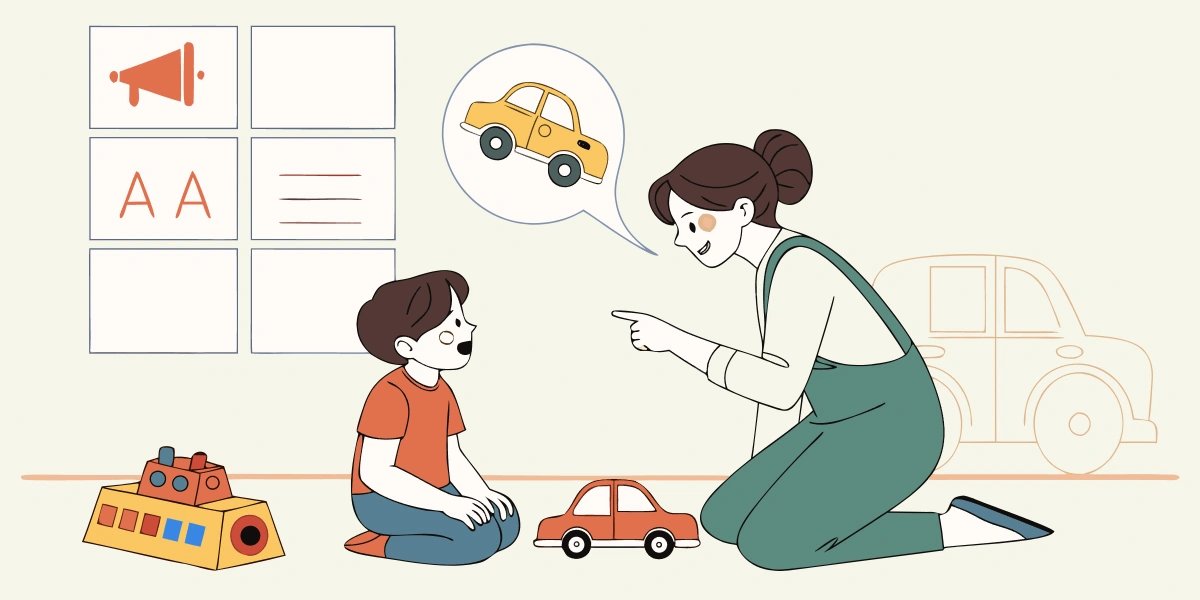
Instead of constantly correcting or demanding speech, join their world. If they're interested in trucks, talk about trucks. This natural approach reduces pressure and increases engagement.
2. Use the "Say Less" Strategy
Many parents overwhelm late talkers with too many words. Try shortening your sentences and giving your child time to process and respond.
Instead of: "Do you want to drink some milk or would you prefer water?"
Try: "Milk or water?" (while holding up both options)
3. Create Communication Opportunities
Set up situations where your child needs to communicate:
- Put favorite snacks in clear containers they can't open
- "Forget" to give them a spoon at mealtime
- Pause during familiar songs for them to fill in words
4. Focus on Sounds They Can Make
If your child struggles with complex words, celebrate the sounds they can produce. Many late talkers benefit from starting with vehicle sounds for speech practice, animal noises, and action words like "go," "up," and "more."
Free Speech Practice Cards
Download our free vehicle sound cards for speech practice at home. Perfect for late talkers and toddlers building vocabulary.
Get free printables →How Technology Can Help (When Chosen Carefully)
While screen time gets a bad rap, research-backed speech apps like a dedicated late talker app can provide valuable practice opportunities—especially for children who need extra repetition or prefer independent exploration. Finding the right tools can feel overwhelming, but is a key part of helping your toddler develop speech skills.
Look for apps that:
- Focus on phoneme practice (individual speech sounds)
- Use call-and-response interaction
- Allow children to hear pronunciations slowed down
- Don't rely on complex instructions
- Work offline (no ads or distractions)
The key is finding tools that complement, not replace, human interaction. Little Wheels: Talk & Listen was specifically designed for late talkers, using vehicle sounds and interactive naming games that children can practice independently or with parents.
Building Your Support Network
Remember: You don't have to navigate this alone.
Professional Resources:
- Early Intervention Services (free evaluations before age 3)
- Speech-Language Pathologists who specialize in toddlers
- Developmental pediatricians for comprehensive assessments
Parent Communities:
- Local late talker support groups
- Online forums with evidence-based information
- Playgroups that welcome children at all communication levels
The Bottom Line: Progress Over Perfection
Most late talkers catch up to their peers by kindergarten, especially with appropriate support. Your child's journey might look different from others, but that doesn't mean it's wrong.
Trust yourself. You know your child better than anyone. If you're concerned, seek evaluation. If professionals reassure you that development is within normal limits, try to enjoy this stage instead of constantly worrying about the next milestone.
Your late talker is still learning, growing, and developing their unique voice. Sometimes the children who take longer to speak have the most interesting things to say when they're ready.
Ready to support your late talker's journey? Explore speech practice tools that meet them where they are, and remember—every child's timeline is different, and that's perfectly okay.
Confused by Speech Therapy Terms?
Fronting, gliding, gestalt language processing—our Speech Therapy Glossary explains 50+ terms in plain language.
Browse the Glossary →Next steps for late talkers & early speech concerns
When you're ready, these guides give you practical next moves:
You Might Also Like
How Vehicle Names Teach 100+ Speech Sounds (Phoneme Transfer Explained)
Your child's vehicle obsession is secretly speech therapy. Learn how mastering one sound in 'car' transfers to 50+ everyday words.
Do Speech Apps Really Work? What SLPs Actually Say
The honest answer about speech app effectiveness: what research shows, what SLPs recommend, and when apps help vs. when they don't.

What Actually Makes a Late Talker App Work (The Features That Matter)
Which app features actually support a late talker - call-and-response, offline practice, no subscription - and which are marketing.
 Frequently Asked Questions
 References
 Ad-free & offline ready


