Important Notice: This content is for educational purposes only and is not medical advice. These techniques support typical language development and can supplement professional therapy, but they don't replace evaluation or treatment by a qualified speech-language pathologist when needed. If you have concerns about your child's speech or language development, consult a professional.
If you are mainly trying to choose a speech app, start with Toddler Speech Apps for Ages 2–6 for a calm overview of options and then come back here for step-by-step home practice.
Can I really do speech therapy at home with my toddler?
You can’t replace a speech-language pathologist, but you can use five research-backed techniques—pause and wait, modeling, expansion, play narration, and predictable routines—inside everyday moments. That turns meals, bath time, and play into speech practice that supports professional therapy and often reduces your child’s frustration.
What Speech Therapy at Home Actually Means
You've been told your child could benefit from more language input at home. Or maybe you're on a waiting list for professional speech therapy and want to support your child's development while you wait. Or perhaps your child is developing typically but you want to enrich their language environment.
Whatever brought you here, let's clarify something important: speech therapy at home isn't about turning yourself into a speech-language pathologist. You're not qualified to diagnose or treat speech disorders, and that's not the goal.
What you can do—and what research shows is enormously valuable—is use evidence-based techniques during everyday interactions to create a language-rich environment. These are the same strategies speech-language professionals teach parents to use between therapy sessions.
The techniques in this article are based on research-backed parent coaching approaches used by speech-language pathologists worldwide. They work for children developing typically and for children with language delays.
The Foundation: Following Your Child's Lead
Before any specific technique, understand this principle: effective language learning happens when you talk about what your child is already paying attention to.
If your child is staring at a bird outside, that's the moment to provide bird-related language ("Look, a BIRD! The bird is FLYING!"). If they're focused on their toy truck and you try to teach color names, you're fighting their attention, not building on it.
Research on joint attention shows that children learn language most effectively when adults provide words for what the child is already focused on. This seems obvious, but watch yourself for a day—how often are you trying to redirect their attention to what you think they should learn instead of providing language for what already has their attention?
Following their lead doesn't mean being passive. It means observing first, then enriching what they're already doing with language.
Technique 1: Pause and Wait
This is the hardest technique to master because it requires you to do nothing.
How it works: After you say something or ask a question, pause for 5-7 seconds and wait. Actually count in your head. It feels like an eternity. Wait anyway.
Why it works: Toddlers need processing time. Their brains are working on: understanding what you said, formulating a response, planning the motor movements for speech, and executing those movements. That takes time. If you fill every silence, you're eliminating opportunities for them to initiate communication.
In practice:
- You're playing with toy vehicles. You hold up the bus and look at your child expectantly. Don't say "What's this?" Just wait.
- You're getting snack ready. You hold up the cup and pause, looking at your child. Wait for a request (word, gesture, or sound).
- You're reading a familiar book. You pause before the last word of a repeated phrase, giving them space to fill it in.
What happens: At first, they might not respond. That's normal. They're learning that silence is their turn. After consistent practice over several days, many toddlers start filling the pauses with sounds, gestures, or words. You've created space for communication instead of a monologue they observe passively.
Common mistake: Waiting only 1-2 seconds, then jumping in. Toddlers need 5-7 seconds. Count it out. Get comfortable with the silence.
Technique 2: Modeling (The Right Level)
Modeling means saying words or phrases your child isn't saying yet, providing them with a clear example of what to say.
How it works: Provide language that's one small step above your child's current level:
- If they're not talking yet: model single words ("ball," "up," "more")
- If they use single words: model two-word phrases ("big ball," "go up," "more juice")
- If they use two-word phrases: model three-word sentences ("throw the ball," "daddy going up," "want more juice")
Why it works: Language development happens in small increments. If your child uses single words and you model complex sentences, the gap is too big to bridge. If you only repeat what they already say, there's nothing new to learn. One step above is the "zone of proximal development"—close enough to reach.
In practice:
- Your child points to a truck and says "truck." You respond: "Yes, BIG truck! The truck goes FAST!"
- Your child says "juice." You model: "Want juice? Here's the juice."
- Your child says "doggy go." You expand: "The doggy is going outside!"
Critical detail: Say the model 3-5 times in natural context before expecting your child to attempt it. One exposure isn't enough. "Big truck. Look at the big truck. You're pushing the big truck." That's three natural repetitions in 10 seconds.
Common mistake: Asking your child to repeat after you. "Say 'big truck.'" This often leads to shutdown. Instead, model enthusiastically and wait. If they say it, great. If not, that's okay—the model is still valuable input.
Technique 3: Expansion (Not Correction)
Expansion means taking what your child says and adding to it without correcting.
How it works: Your child produces an incomplete or unclear utterance. You repeat it back fully formed, adding one piece of information.
Examples:
- Child says: "Dog." You say: "Yes, brown dog!"
- Child says: "Go car." You say: "The car is going fast!"
- Child says: "More." You say: "More crackers? Okay, more crackers."
- Child says: "Truck boke." You say: "Oh no, the truck broke! It's broken."
Why it works: You're confirming they communicated successfully (positive reinforcement) while modeling a more complete version. Research shows expansion supports language development better than direct correction, which can discourage communication attempts.
Critical detail: Use a warm, interested tone—not a corrective teaching tone. You're joining their communication, not fixing it. The difference is subtle but children sense it.
What not to do: "No, say 'the truck is broken.'" Direct correction often leads to frustration and reduced communication attempts. Expansion gives them the correct model without making their attempt feel wrong.
Technique 4: Parallel Talk and Self-Talk
These narration techniques provide language connected to immediate experience.
Parallel talk: Narrate what your child is doing.
- "You're stacking the blocks. Red block on top. Building it tall!"
- "You're washing your hands. Rubbing the soap. Making bubbles!"
- "You're pushing the truck. Truck going fast. Vroom vroom!"
Self-talk: Narrate what you're doing.
- "I'm making a sandwich. First the bread. Now the peanut butter. Spreading it on."
- "I'm looking for my keys. Where are they? Not on the table. Maybe in my bag?"
Why it works: You're providing vocabulary for actions and objects your child is already observing. They don't have to shift attention to learn the words—you're labeling their current focus.
When to use it: During play, daily routines, any time you're together. It feels awkward at first (you're narrating obvious things), but it becomes natural quickly.
How much narration: You're not providing non-stop commentary. Narrate for 30-60 seconds, then pause. Give your child processing time and space to respond. Too much narration overwhelms; strategic narration supports.
Technique 5: Routines with Predictable Language
Repetitive routines with consistent language create opportunities for anticipation and participation.
How it works: Use the exact same words for the same routine every day. Your child learns to predict what you'll say, and eventually fills in the words.
Bath time example:
"Time for bath! Let's go upstairs. Turn on the water. Test the water—is it warm? Off come the clothes. In you go! Where's the soap? Wash the belly! Now rinse. All clean!"
Use these exact phrases every bath. After 2-3 weeks, pause before key phrases:
"Time for... [pause]" (Child fills in: "bath!")
"Off come the... [pause]" (Child fills in: "clothes!")
Why it works: Predictability reduces processing load. Your child knows what's coming, so they can focus on producing the words rather than figuring out meaning. This builds confidence and gives them successful communication experiences.
Other routine opportunities:
- Bedtime: "Time for bed. Brush teeth. Put on pajamas. Read a book. Lights off. Goodnight!"
- Meals: "Time to eat. Sit down. Wash hands. What do we want? Let's get plates. Time to eat!"
- Leaving house: "Get your shoes. Arms in the coat. Where's your backpack? Open the door. Let's go!"
The progression: Week 1-2, you say everything. Week 3-4, pause before key words. Week 5+, your child starts filling in multiple words. The routine becomes a language scaffold they can rely on.
Using Vehicles for Language Practice (Why It Works)
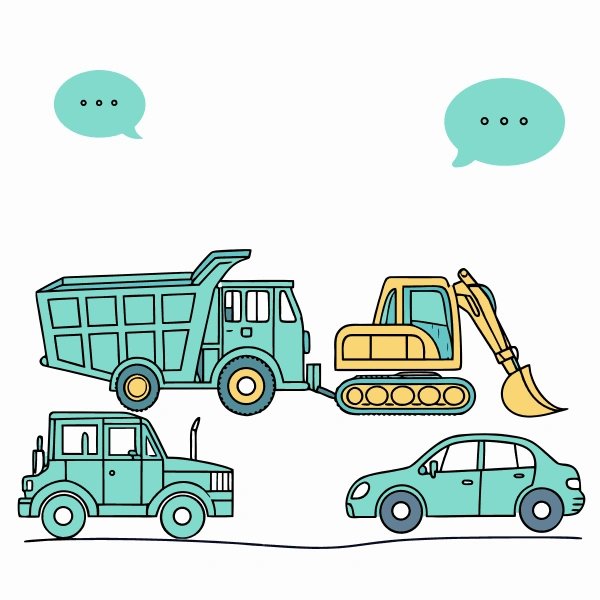
Many parents discover their toddler is fascinated by vehicles—cars, trucks, trains, planes. This isn't random, and you should leverage it.
Research on young children's special interests shows that toddlers learn vocabulary faster when it relates to topics they're intrinsically motivated by. If your child will watch a garbage truck for 5 minutes but won't look at alphabet flashcards, that garbage truck is your language teaching opportunity.
Vehicle vocabulary is also phonetically useful—it covers a wide range of sounds that toddlers are learning.
How to use vehicles for speech practice:
During play: Get down on the floor with toy vehicles. Use all the techniques above:
- Model: "Big TRUCK! Look at the TRUCK!"
- Expand: Child says "truck," you say "Red truck! Truck going fast!"
- Parallel talk: "You're pushing the firetruck. The firetruck is going to help people."
- Pause and wait: Hold up a vehicle and look at them expectantly. Wait for them to request it or label it.
In real life: Point out real vehicles during car rides, walks, or from windows. "Look, a BUS! The bus is yellow. The bus is big!" You're providing 3-5 repetitions of "bus" in different contexts within seconds.
With structured practice: Apps like Talk & Listen organize vehicle vocabulary by difficulty level and provide the call-and-response structure that supports learning. After practicing with the app, play with toy versions of the same vehicles—the combination of structured practice plus spontaneous play reinforces learning.
The key is following their interest. If your child loves trains, lean into trains. If they're obsessed with construction vehicles, that's your vocabulary goldmine. Don't fight their interests—use them.
Free Speech Practice Cards
Download our free vehicle sound cards for speech practice at home. Perfect for late talkers and toddlers building vocabulary.
Get free printables →Creating Communication Temptations
Sometimes the best language practice comes from gentle "sabotage"—creating situations where your child needs to communicate.
Environmental setups:
- Put favorite snacks in clear containers they can't open
- Place desired toys slightly out of reach (on shelves, tables)
- Give them a snack without a spoon or cup without a straw
- Put items in unexpected places (coat in the fridge, shoes on the counter)
- Pause familiar songs midway through and wait for them to request "more" or "go"
Why this works: You're creating natural reasons to communicate. Your child wants something, and communication is the tool to get it. This teaches the functional power of language—words make things happen.
Important boundaries: Never withhold needs (food when hungry, comfort when distressed, safety). This technique is for wants and preferences, not needs. And honor all communication attempts—gestures, sounds, approximations, and words all count as successful communication.
When to Practice (The 5-Minute Rule)
You don't need dedicated "speech therapy time." You need consistent use of these techniques during activities you're already doing.
Best practice windows:
- Meals: Natural communication opportunities (requesting food, more, all done)
- Bath time: Predictable routine with consistent vocabulary
- Play sessions: Following their lead and narrating what they're focused on
- Getting dressed: Routine language about body parts and clothing
- Car rides: Pointing out vehicles, buildings, animals—environmental vocabulary
Five minutes of focused practice during three daily routines (15 minutes total) is more effective than one 30-minute session. Toddlers learn through distributed practice across contexts, not massed practice in artificial teaching sessions.
The goal: These techniques become automatic in your interactions. At first, you'll consciously practice "pause and wait" or "expansion." After 2-3 weeks of conscious use, they become your natural communication style with your child.
Tracking Progress (Without Driving Yourself Crazy)
Simple tracking helps you see progress that feels invisible day-to-day.
Keep a word list: Write down new words as you hear them. Date them. After a month, you'll see growth you might have missed noticing daily.
Note what's changing: It's not just about word count. Notice:
- Is your child attempting more communication (even if unclear)?
- Are they initiating more (pointing, leading you places, making requests)?
- Are they trying to imitate words more frequently?
- Are they using words in new contexts (said "dog" at home, now says it at the park)?
What not to track: Don't compare to other children. Compare to your child's baseline. A child who goes from 10 words to 25 words in 6 weeks is making progress, regardless of where peers are.
When Home Practice Isn't Enough
These techniques support language development, but they're a supplement—not a replacement—for professional speech therapy or medical evaluation when needed.
Consider consultation with a speech-language professional if:
- Your child is over 30 months with fewer than 50 words
- You've used these techniques consistently for 8-12 weeks with no noticeable change
- Your child seems frustrated by their inability to communicate
- You're not sure if what you're seeing is typical development or delay
- Your child is in speech therapy and you want guidance on home practice
Home practice and professional therapy aren't either-or—they work together. Speech-language professionals can identify which specific techniques will benefit your child most and adjust approaches based on your child's unique needs.
Learn when to seek evaluation for late talkers.
Start With One Technique This Week
Don't try to implement all five techniques starting tomorrow. Pick one:
Week 1: Practice "pause and wait" during one daily routine. Count to 7 after questions or holding up objects. Notice what happens.
Week 2: Add "expansion." When your child says something, repeat it back with one addition. Do this consistently during meals.
Week 3: Try parallel talk during playtime. Narrate what they're doing for 2-3 minutes, then pause and observe.
Week 4: Establish one predictable routine with consistent language. Use the same phrases every time.
After a month of conscious practice, assess: which techniques feel natural? Which does your child respond to most? Do more of what's working.
Speech and language development is a marathon, not a sprint. Small consistent efforts over weeks and months create meaningful change. You don't need to be perfect. You need to be consistent.
Your child's language will develop. These techniques give you tools to support that development in ways that research shows actually work. Start with one. Practice it this week. That's enough.
References
- Girolametto, L., Weitzman, E., & Greenberg, J. (2022). Training parents to facilitate their children's language: A systematic review. American Journal of Speech-Language Pathology, 31(3), 1301-1320. https://doi.org/10.1044/2022_AJSLP-21-00229
- Suskind, D. L., et al. (2021). Parent talk and child language development. Pediatrics, 148(3), e2020049537. https://doi.org/10.1542/peds.2020-049537
- American Speech-Language-Hearing Association. (2024). How does your child hear and talk? Birth to 5 years developmental milestones. Retrieved from https://www.asha.org/public/speech/development/chart/
- Tomasello, M., & Farrar, M. J. (2021). Joint attention and early language development. Child Development, 57(6), 1454-1463. https://doi.org/10.2307/1130423