What are the hidden costs of app subscriptions?
Beyond the monthly charge: Forgotten subscriptions ($200-400/year), price increases (30-50% over time), multi-device fees, mental overhead. Average family pays $273/month across all subscriptions. One-time purchase apps eliminate all hidden costs—pay once, own forever.
Your credit card statement shows $9.99 charged by "Fun Learning Apps Inc." You stare at it for a moment. You subscribed to something for your toddler. Three months ago? Four? You can't remember the last time she used it.
So you've paid $29.97 to $39.96 for an app your child barely touched. That's just one forgotten subscription. Multiply this across the average household's subscriptions, and you're looking at $200-400 annually on services you're not actively using.
But forgotten charges are just one hidden cost of subscription apps. The real financial damage runs deeper.

Part of the Subscription Liberation Movement
Quit app subscriptions and choose one-time purchases. No monthly fees. No surprise charges. Just quality apps you own forever.
The Forgotten Subscription Tax
Most people are paying for something right now they have forgotten about. At ten or fifteen dollars a month, that forgetting is not a bug in the model — it is the model.
Why Forgetting Happens
Subscription companies make sign-up effortless. One tap. Face ID. Done. But cancellation? Navigate to settings. Find subscriptions. Locate the specific app. Hit cancel. Confirm. Confirm again. Sometimes contact customer service.
This friction is by design. Easy to start, hard to stop. The longer you forget, the more they earn.
Kids' apps are particularly vulnerable to forgetting because:
- Toddler interests change rapidly—an app they loved last month is forgotten this month
- Parents subscribe during specific phases (speech delays, long car trip) that pass
- Overwhelmed parents have limited mental bandwidth to track every app subscription
- Charges are small enough ($9.99-14.99) that they don't trigger immediate attention
The Quarterly Audit Strategy
Set a recurring calendar reminder every three months: "Audit Subscriptions."
When it triggers:
- Review app store subscription lists (iPhone Settings > [Your Name] > Subscriptions; Google Play Store > Menu > Subscriptions)
- Check credit card statements for recurring charges not in app stores
- For each subscription, ask: "Has my child used this in the past month?"
- If no, cancel immediately—even if you plan to "maybe use it next month"
- Calculate quarterly spending: multiply monthly charges by 3
This 15-minute task every three months can save you hundreds of dollars annually.
Price Creep: The Slow Bleed
That $9.99 subscription you started last year? It's $11.99 now. Next year it might be $13.99. You're paying 40% more than when you signed up—for the exact same app.
How Companies Justify Increases
You'll receive an email (maybe) explaining that "to continue providing quality content" or "due to increased costs" they're raising prices. The email makes it sound reasonable, inevitable, beyond their control.
But here's reality: many subscription increases aren't driven by costs. They're driven by revenue targets. Companies test how much they can raise prices before subscribers cancel. Most don't cancel—inertia is powerful.
The Compounding Effect
A $2 increase doesn't sound significant. But over three years—a typical toddler app usage window—that's $72 extra. Across three subscriptions experiencing similar increases, you've paid $216 more than the original pricing suggested.
With one-time purchase apps, the price you pay is the price. Forever. No creep, no surprises, no "adjustments to better serve you."
Protection Strategy
When you receive a price increase notification:
- Don't rationalize it as "only $2 more"
- Calculate annual impact: $2/month = $24/year
- Multiply by expected usage years: $24 × 3 years = $72 total increase
- Search for buy-once alternatives immediately
- If the app is essential and irreplaceable, accept the increase—but most aren't
Multi-Device Money Grab
You have an iPhone. Your partner has an Android tablet the kids use. Some subscriptions charge per device or limit simultaneous usage. Suddenly you're paying twice for the same content.
The Family Sharing Trap
App stores offer "family sharing," but subscription apps can restrict it. Some allow sharing, some charge extra, some block it entirely.
You discover this after subscribing when your child can't access the app on the tablet even though you're paying monthly on your phone. Now you're deciding: pay double, deal with device-switching hassles, or cancel altogether.
Buy-once apps don't have this problem. Purchase on your account, install on every family device. No additional fees, no usage limits, no per-device charges.
The Travel Device Issue
You load apps on a tablet for a flight. Later you realize half the subscriptions don't work offline or require you to "register" the new device—sometimes with limits on how many devices you can register.
The app you're paying $9.99/month for won't work on the plane because it requires internet authentication. You're stuck entertaining a toddler on a five-hour flight with broken subscriptions.
Offline buy-once apps work everywhere, always, on every device linked to your account. No authentication, no device limits, no surprises at 35,000 feet.
Feature Removal and Tier Manipulation
Some subscription apps move features to higher pricing tiers over time. That thing you subscribed for? Now it costs extra.
The Bait and Switch
You subscribe for $9.99/month because the app offers specific features your child needs. Six months later, those features are moved to the $14.99/month "premium" tier.
You're already invested. Your child expects these features. The company knows you're more likely to upgrade than cancel. Congratulations—you're now paying 50% more than when you started.
The Content Reduction Trick
Similar tactic: apps reduce content in lower tiers rather than raising prices directly. You're still paying $9.99, but you're getting less. Your child notices missing content. You upgrade to restore access.
Same result—you're paying more—but the company avoids the PR problem of announcing a price increase.
Protection Strategy
When you notice features moved or content reduced:
- Don't upgrade immediately out of panic
- Evaluate whether your child actually needs those features
- Search for alternatives that include everything in a single tier
- If no alternatives exist and features are essential, upgrade—but recognize you're being manipulated
The Mental Overhead Cost
Beyond direct financial costs, subscriptions tax your attention and decision-making capacity.
The Open Loop Problem
Every subscription is an open loop in your mind. You have to:
- Remember it exists
- Track when it renews
- Evaluate whether it's still worth the cost
- Decide monthly whether to keep or cancel
- Monitor for price increases
- Watch for feature changes
This cognitive load is exhausting. Each subscription requires ongoing mental energy that could be spent on, you know, parenting.
The Decision Fatigue Factor
Every month, every subscription is a decision point. Keep it? Cancel it? Worth the money? Child still using it? Price fair?
These micro-decisions add up. They drain your willpower and attention. It's death by a thousand paper cuts, except the cuts are recurring charges.
Buy-once apps close the loop. You decide once. You purchase once. You never think about it again. The mental relief is as valuable as the financial savings.
The Guilt and Anxiety Tax
Forgotten subscriptions create guilt. "I'm wasting money on something I'm not using."
Price increases create anxiety. "Should I cancel? But my child likes it. But it's more expensive now. But cancelling feels wasteful after paying for six months."
This emotional overhead has real costs even if they're not on your credit card statement.
The Total Hidden Cost Calculation
Let's add it all up for a typical family with three kids' app subscriptions:
Visible costs:
- 3 subscriptions × $10/month average = $360/year
Hidden costs:
- Forgotten subscription (1 app × $10/month × 4 months before noticed) = $40
- Price increases (3 subscriptions × $2 increase × 12 months) = $72/year
- Double payment for multi-device (1 subscription × $10/month × 3 months before resolved) = $30
- Feature upgrade forced by tier manipulation (1 subscription × $5 increase × 12 months) = $60
Total annual cost: $562
Versus buy-once alternatives:
- 3 quality apps × $7 average = $21
- Year 1 savings: $541
- Year 2 savings: $562 (full subscription cost, no app purchases needed)
- Year 3 savings: $562
- Three-year total savings: $1,665
That's not theoretical. That's real money you could spend on actual experiences with your child.
Breaking the Subscription Cycle
You don't have to accept these hidden costs as inevitable.
The One-Subscription-Per-Month Strategy
Don't try to cancel everything at once. Instead, replace one subscription per month with a buy-once alternative.
Month 1: Replace your most expensive subscription. Month 2: Replace the one your child uses least. Month 3: Replace the one that just raised prices.
Gradual replacement prevents overwhelm while systematically reducing your subscription burden.
The "Would I Pay This Upfront?" Test
For every subscription, ask: "If this app cost the annual amount upfront, would I pay it?"
A $9.99/month app costs $119.88 annually. Would you pay $120 upfront for this specific app? Most honest answers are "no."
If you wouldn't pay the annual cost upfront, you shouldn't pay it monthly either.
The Documentation Habit
Every time you subscribe or cancel:
- Screenshot the confirmation
- Save confirmation emails
- Note the date in a simple spreadsheet
This documentation protects you when companies charge after cancellation or when you need to dispute charges. Given the FTC settlements with companies over subscription practices, documentation isn't paranoia—it's prudent.
The Better Way
Subscription fatigue is real. Hidden costs are real. The mental overhead is real.
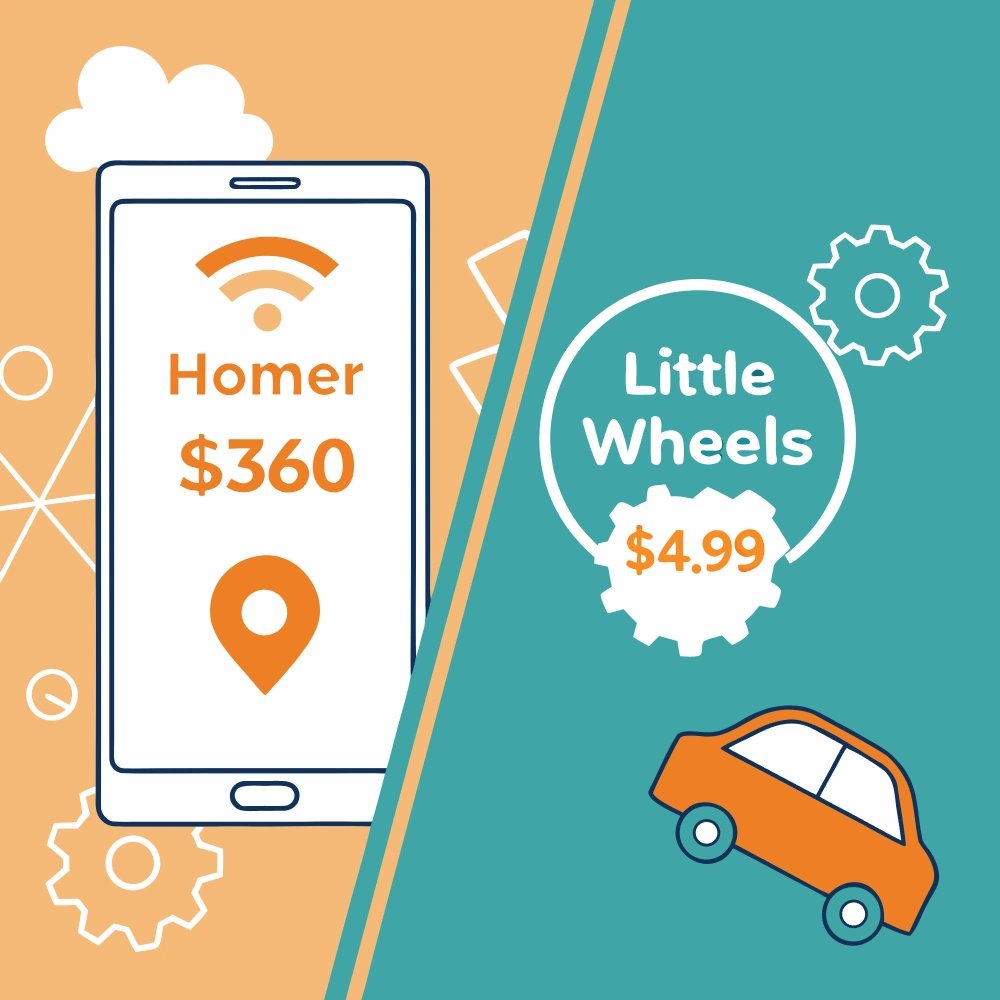
But quality toddler apps don't require subscriptions. They exist at fair, transparent, one-time prices. Apps like Little Wheels Talk & Listen ($4.99) and Create & Play ($4.99) prove that quality content can be priced fairly without recurring charges.
You can build a complete app library for $20-40 total and own it forever. No hidden costs. No price increases. No forgotten charges. No mental overhead.
Just quality apps, purchased once, owned permanently, used whenever needed.
The subscription model thrives on your inattention to hidden costs. But you're reading this article. You're paying attention now. You can choose differently.
Your wallet—and your peace of mind—deserve better than perpetual monthly charges with compounding hidden costs.
Join the Subscription Liberation Movement
Download Little Wheels — $4.99 once, own forever. No hidden costs, no price creep, no forgotten charges. Choose transparency over manipulation.
 Frequently Asked Questions
 Ad-free & offline ready