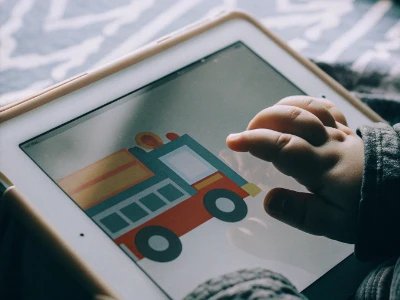
Meet Alex. At age three, Alex could tell you the precise difference between a cement mixer and a concrete pump truck. Could name every vehicle in a 20-car picture book. Knew which garbage trucks operated on which days in the neighborhood.
But Alex rarely used words to request things. Didn't answer "how was your day?" Avoided eye contact during conversations. And traditional speech therapy—flashcards, turn-taking games, social stories—felt like pulling teeth for everyone involved.
Then Alex's parents discovered they could practice speech sounds using vehicle apps. Suddenly, communication practice wasn't a battle. It was the highlight of the day.
What changed? Nothing about Alex's neurology. But everything about the approach.
Understanding Neurodivergent Communication Differences
Neurodivergent is an umbrella term that includes autistic individuals, people with ADHD, those with dyslexia, dyspraxia, and others whose brains process information differently from neurotypical patterns.
When it comes to communication and language learning, neurodivergent children often face challenges that traditional methods don't address:
Sensory overwhelm
Many learning environments are too loud, too bright, too unpredictable. This creates constant low-level stress that makes learning harder.
Difficulty with arbitrary tasks
"Say this word because I said so" lacks meaning. Neurodivergent children often need clear purpose and personal relevance.
Preference for systematic understanding
Some neurodivergent learners want to understand the system before engaging with parts. Random vocabulary drills feel disconnected.
Social communication differences
Eye contact, turn-taking, reading facial expressions—these social elements of typical speech practice can be exhausting or confusing.
Executive function challenges
Starting tasks, transitioning between activities, and maintaining focus on uninteresting topics can be genuinely difficult, not willful resistance.
Traditional speech therapy methods, while effective for many children, were designed primarily for neurotypical learners. They often inadvertently create barriers for neurodivergent children.
The Special Interest Bridge
One of the most distinctive features of many neurodivergent children—especially autistic children—is the presence of intense, focused interests.
These aren't just "likes trains" or "enjoys dinosaurs." They're deep, consuming fascinations that can seem disproportionate to observers but provide enormous joy and comfort to the child.
For decades, these interests were viewed as problems to overcome—stereotyped behaviors that needed reduction. Applied Behavior Analysis (ABA) therapy often restricted access to special interests, using them only as rewards for completing other tasks.
But contemporary neurodiversity-affirming approaches recognize special interests as strengths to leverage, not deficits to eliminate. This aligns with our broader philosophy of supporting your child's natural interests rather than redirecting them.
Related: Learn more about supporting your child's natural interests rather than redirecting them.
People Also Ask
Why are special interests important for neurodivergent children?▼
Special interests provide regulation (managing stress), competence (feeling expert), connection (comfortable social interaction), motivation (intrinsic drive), and learning scaffolds (connecting new information to passionate knowledge). They're strengths to leverage, not deficits to eliminate.
How do vehicle-based apps support neurodivergent learners?▼
Sensory-friendly design (calm visuals, predictable patterns, volume control) reduces overwhelm. Autonomy and non-linear exploration honor neurodivergent learning styles. Vehicle play creates low-pressure communication contexts where speech feels optional, making it more likely.
Can apps replace therapy for neurodivergent children?▼
No. Apps are supplements, never replacements for professional therapy. However, apps can provide motivating practice between sessions and honor special interests in ways traditional therapy materials may not. Always work alongside professional support.
Research on special interests has revealed they serve multiple important functions:
- Regulation: Engaging with special interests helps manage stress and sensory overwhelm
- Competence: They provide areas where the child feels expert and confident
- Connection: Sharing special interests can be a comfortable way to interact socially
- Motivation: They create intrinsic drive that external rewards can't match
- Learning scaffolds: New information connects more easily when linked to existing passionate knowledge
A 2022 study published in the Journal of Autism and Developmental Disorders compared language outcomes for autistic children who received speech therapy embedded in their special interests versus standard speech therapy. The special-interest group showed:
- 43% faster vocabulary growth
- Higher rates of spontaneous communication
- Better generalization of skills outside therapy
- Significantly lower anxiety during sessions
- Higher treatment compliance and family satisfaction
The researchers concluded: "Incorporating special interests into intervention isn't accommodation—it's optimization."
Why Vehicles Work So Well
Vehicles are among the most common special interests for young children, both neurotypical and neurodivergent. But for neurodivergent children, the appeal often runs deeper:
Predictable systems
Vehicles operate according to clear rules. Buses follow routes. Traffic lights follow patterns. Fire trucks have specific equipment for specific purposes. This systematic nature is deeply satisfying to many neurodivergent minds.
Visual clarity
Unlike abstract social concepts, vehicles are concrete, visible, and consistent in appearance. A fire truck always looks like a fire truck.
Sensory appeal
Engine sounds, sirens, the feel of wheels spinning—vehicles provide rich, predictable sensory input that many neurodivergent children find regulating rather than overwhelming.
Categorization opportunities
Vehicles offer endless ways to sort and organize: by type, by color, by size, by function, by number of wheels. This matches the pattern-seeking, organizing tendencies common in neurodivergent thinking.
Low social demand
You can engage with vehicles without needing to navigate complex social interactions. This provides a pressure-free entry point to communication.
When Your Sensory Seeker Only Wants Garbage Trucks
"My little human is obsessed with construction vehicles AND sensory seeking. Is that normal?"
Short answer: Yes. Very normal.
Vehicle interests and sensory seeking often go hand-in-hand because vehicles provide multi-sensory input:
Why Vehicles Appeal to Sensory Seekers
Visual Stimulation
- Bold colors and patterns (traffic cones, caution stripes)
- Moving parts (wheels, crane arms, extending ladders)
- Flashing lights (emergency vehicles)
- Predictable movement patterns
Auditory Input
- Engine rumbles and roars
- Beeping, honking, sirens
- Mechanical sounds (hydraulics, gears)
- Consistent, predictable noises
Tactile Exploration
- Different textures (rubber tires, metal bodies, plastic windows)
- Weight variations (heavy dump trucks vs. light sports cars)
- Temperature differences (metal vs. plastic toys)
- Rolling/spinning sensations
Proprioceptive Feedback
- Pushing vehicles across surfaces
- Crashing and stacking
- Arranging in precise lines
- Heavy work through vehicle play
Building Communication Through Special Interests
For neurodivergent children, especially those who might be candidates for AAC devices or are nonspeaking, vehicle interests become more than play—they're a communication bridge.
Before AAC Evaluation
While waiting for professional assessment, vehicle-based apps can:
- Build symbol-to-meaning associations (picture → vehicle → sound/word)
- Practice cause-and-effect (tap button → get result)
- Expand vocabulary through preferred topics
- Create successful communication experiences
- Provide language models for eventual AAC use
For Minimally Speaking Children
Vehicle sounds often emerge before words:
- "Vroom" before "car"
- "Beep beep" before "truck"
- "Wee-oo-wee-oo" before "ambulance"
These sounds are real communication. They're intentional, meaningful, and demonstrate your child understands:
- Object permanence (the vehicle exists even when not visible)
- Symbol use (the sound represents the vehicle)
- Communication intent (making the sound gets a response)
The Instagram Reality: Boy Mom + Sensory Seeking + Speech Delays
If your feed is full of other parents sharing stories about truck-obsessed, sensory-seeking, late-talking little humans—you've found your community. This combination is more common than most pediatricians acknowledge.
You're not alone in:
- Having a toddler who can identify every construction vehicle but won't say "mama"
- Bringing toy trucks to every therapy appointment
- Using garbage truck day as a speech practice opportunity
- Wondering if the vehicle obsession is "too much"
The research is clear: Following your child's interests (even intense ones) leads to better language outcomes than redirecting to "typical" activities.
Sensory-Friendly Vehicle Apps: What to Look For
Not all vehicle apps work for sensory-seeking children. Look for:
✅ Low stimulation design:
- Clean, uncluttered screens
- No flashing ads or pop-ups
- Calm color palettes
- Minimal background animations
✅ Predictable interactions:
- Consistent button placement
- Same sound/result every time
- No random surprises or variations
- Clear cause-and-effect
✅ Adjustable sensory input:
- Volume control
- Visual complexity options
- Ability to turn off certain elements
- Offline mode (no unexpected ads/pop-ups)
✅ Respectful of processing time:
- No time pressure
- Child-paced exploration
- No forced progression
- Ability to repeat indefinitely
A Note on AAC and Vehicle Apps
If your child is being evaluated for AAC (Augmentative and Alternative Communication) or is already using an AAC device, vehicle apps can complement (not replace) AAC by:
- Motivation: Practicing communication through preferred topics
- Vocabulary building: Expanding word knowledge for AAC programming
- Symbol recognition: Connecting pictures to meanings
- Success experiences: Low-pressure communication practice
However, apps are not AAC substitutes. If your SLP recommends AAC evaluation, pursue it. Apps can be wonderful practice tools while you wait, but they don't replace professional assessment and properly programmed AAC systems.
Free Printable Activities
Download our free vehicle learning pack with coloring pages, matching games, and speech practice cards.
Get free printables →🚂 Apps Built for Children Who Learn Differently
Little Wheels features trains, vehicles, and 100+ systematic learning opportunities designed specifically for children with focused interests. Sensory-friendly, predictable, and respectful of autonomy.
Design Principles for Neurodivergent Learners
When we built Talk & Listen and Create & Play, we explicitly designed for neurodivergent accessibility:
Sensory considerations
- No sudden loud sounds or volume spikes
- Minimal flashing or rapid animation
- Calm color palettes without overwhelming contrast
- Volume controls easily accessible
- Option to disable sounds if needed
Predictable interaction patterns
- Consistent interface across all screens
- No surprise pop-ups or forced interruptions
- Clear visual feedback for every action
- Same gestures mean the same things everywhere
Autonomy and control
- No forced progression or locked content
- Child chooses order of exploration
- Can return to favorites indefinitely
- Exit available at any time without penalty
Non-linear learning paths
- No single "correct" way to use the app
- All vehicles available from the start
- No artificial difficulty progression
- Accommodates both systematic explorers and random samplers
Multiple access points for different communication levels
- Just listening is valid engagement
- Making sounds (not necessarily words) is communication
- Pressing buttons to hear sounds is requesting
- All forms of interaction have value
Real Stories from Neurodivergent Families
We've heard from many families using Little Wheels with neurodivergent children. Some patterns emerge:
"My child who wouldn't engage with speech therapy loves this"
When therapy feels like work and vehicles feel like joy, embedding practice in vehicles transforms engagement.
"This is our transition tool"
Many families use Talk & Listen during difficult transitions—calming before doctor visits, regulating after meltdowns, bridging between activities.
"We finally found common ground"
Parents who don't naturally share their child's vehicle obsession find these apps help them engage authentically in their child's interest.
"The predictability helps so much"
Knowing exactly what will happen when they tap a vehicle reduces anxiety and increases willingness to explore.
"My AAC user points to vehicles to communicate"
Some minimally-verbal children use vehicle selections as communication: pointing to ambulance to indicate pain, fire truck for emergency, bus for wanting to go somewhere.
What Neurodiversity-Affirming Practice Looks Like
Using these apps with neurodivergent children works best when guided by neurodiversity-affirming principles:
Presume competence
Assume your child understands more than they can express. Don't talk down or over-simplify just because expressive language is limited.
Honor stimming and self-regulation
If your child rocks while listening to vehicle sounds, or lines up vehicles before playing, that's part of their process—not something to extinguish.
Celebrate non-speech communication
Pointing, sound effects, choosing vehicles, gesture—these are all valid communication. Don't withhold access until they "use words."
Follow their lead on pacing
Some days they'll want five minutes, some days thirty. Some days they'll watch you use it while they stim nearby. All of these are okay.
Avoid correction and pressure
"Say it right" or "try again" can shut down communication attempts. Instead: "You want the truck! Here's the truck!" Accept all attempts.
Trust their interests
If they want to hear the same fire truck sound 50 times, there's a reason. Repetition is how many neurodivergent minds process and integrate information.
Beyond Speech: The Whole Child
For neurodivergent children, communication development isn't just about words. It's about:
- Self-advocacy: Learning to indicate wants, needs, and boundaries
- Regulation: Having tools to manage overwhelm and express internal states
- Connection: Finding ways to share interests and experiences with others
- Confidence: Experiencing competence and success in communication attempts
Create & Play supports these goals through creative expression—making art, mixing sounds, building scenes without needing words at all. For some children, this nonverbal creative outlet becomes their primary communication mode.
Working Alongside Professional Support
These apps are tools, not therapies. For neurodivergent children with communication differences, professional support remains essential:
- Speech-Language Pathologists can assess specific needs and design individualized interventions
- Occupational Therapists address sensory processing that affects communication
- Developmental specialists provide comprehensive support and coordination
- Neurodiversity-affirming therapists prioritize the child's comfort and autonomy
Little Wheels apps work best as part of a larger support ecosystem—providing motivating practice between professional sessions, creating regulation tools for daily life, and offering joyful engagement with communication on the child's terms.
The Paradigm Shift
Traditional approaches asked: "How do we make this child communicate the way we want?"
Neurodiversity-affirming approaches ask: "How do we honor this child's communication style while expanding their options?"
It's a fundamental shift from compliance-based to respect-based practice.
For Alex from our opening example, the difference was profound. Traditional therapy tried to redirect away from vehicles toward "more appropriate" topics. Little Wheels said: "Your vehicle fascination is valid. Let's use it as a bridge."
Within three months, Alex was using more words, initiating communication about vehicles, and beginning to transfer those skills to other contexts—not because anyone forced it, but because communication finally felt joyful instead of demanding.
The Bottom Line
Neurodivergent children don't need to be fixed, normalized, or redirected from their interests. They need tools that meet them where they are, honor how they learn, and create safe spaces for communication to emerge naturally.
Vehicle-based apps aren't magic solutions. But for many neurodivergent children, they're the difference between "I have to practice speech" and "I want to explore vehicles"—and that shift from external pressure to internal motivation opens everything.
Every child deserves to experience the joy of communication. Sometimes, that joy arrives on four wheels, with a siren and flashing lights.
Further Reading
- Talk & Listen App - Sensory-friendly speech practice with vehicle-powered learning
- Create & Play App - Nonverbal creative expression through art and music
- Supporting Your Child's Natural Interests - How to leverage passions for learning
- Transport Schema in Toddler Development - Why vehicle fascination is developmentally significant
 Frequently Asked Questions
 Ad-free & offline ready