Why Flashcards Don't Work for Most Toddlers
You bought the speech flashcards. The ones with colorful pictures and clear consonant sounds. You sat down with your enthusiastic 2.5-year-old, ready to practice.
They lasted exactly 47 seconds before wandering off to investigate the dog's water bowl.
Here's what's actually happening: flashcards require a toddler to sit still, focus on abstract images, and produce sounds on demand. That's asking a lot from a brain that's wired to learn through movement, play, and things they genuinely care about.
Research from the motor theory of speech production shows that speech isn't just about mouth movements—it's connected to whole-body movement patterns in developing brains. When you ask a toddler to sit perfectly still and say sounds, you're actually making it harder for their brain to access the motor patterns that produce those sounds.
The good news? You can practice phonemes (individual speech sounds) through games that work with toddler development, not against it.
What Phoneme Practice Actually Needs to Accomplish
Before we get to specific games, understand what you're trying to do:
Repetition in meaningful context. Toddlers need to hear and produce a sound many times—research suggests 50-100 exposures—but those repetitions need to mean something. Randomly drilling "buh buh buh" doesn't create lasting learning. Saying "bus" while playing with an actual toy bus does.
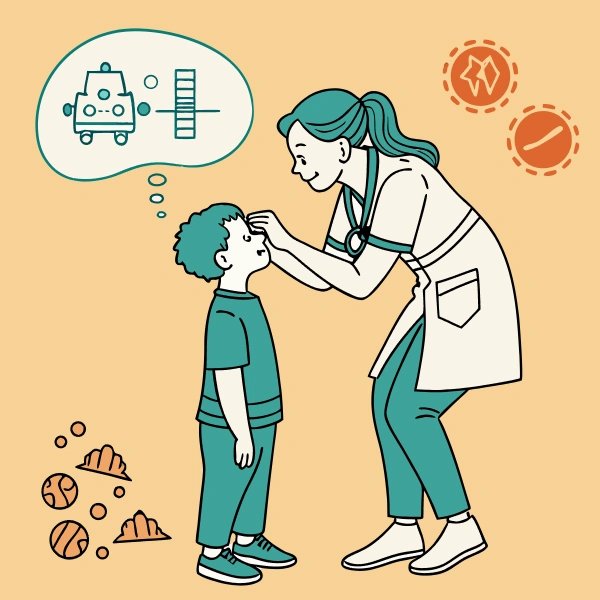
Clear models they can observe. Toddlers learn speech sounds partly by watching how your mouth moves. Games that bring you face-to-face at their eye level give them visual information about sound production.
Low-pressure opportunities to attempt sounds. If every practice session feels like a test, many toddlers shut down. Games create natural reasons to say words without the pressure of "now say this."
Connection to their interests. A toddler who loves vehicles will practice vehicle sounds more enthusiastically than random object names. Use what they already care about.
Movement-Based Phoneme Games
These games connect sounds to big body movements, making practice more memorable and engaging.
The Stomp and Say Game
Best for: /b/, /p/, /d/, /t/ sounds (plosive sounds with clear burst of air)
How to play: Choose words with your target sound. Every time you say a /b/ word, you both stomp hard. "BUS!" (stomp). "BOAT!" (stomp). "BABY!" (stomp). The physical emphasis helps them feel the explosive quality of the sound.
Why it works: The motor action of stomping activates similar neural pathways to the motor action of producing plosive sounds. Your child's brain is linking the movement pattern to the speech pattern.
Variation: Clap for /p/ sounds, jump for /j/ sounds, or spin for /s/ sounds. Match the movement to what your child finds fun.
The Whisper-Shout Game
Best for: Practicing volume control and sound clarity
How to play: Take turns. You whisper "bus," they whisper "bus." You shout "BUS!" they shout "BUS!" The exaggerated volume changes make them more aware of how they're producing the sound.
Why it works: Whispering and shouting require different breath control and articulation precision. This game builds awareness of how sounds are made, not just what they sound like.
The Action Sound Game
Best for: Vehicle sounds and animal sounds (which are phonetically useful)
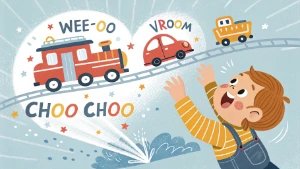
How to play: Match sounds to actions. "Vroom" while pushing cars fast. "Beep beep" while honking an imaginary horn. "Choo choo" while pulling your arm like a train whistle. The more theatrical you are, the more engaging it is.
Why it works: Sound effects like "vroom" actually practice real phonemes. "Vroom" has /v/ and /r/—two sounds many toddlers find challenging. "Beep" practices /b/ and /p/. By playing with vehicle sounds, you're doing genuine phoneme practice disguised as play.
This is the core insight behind Talk & Listen—vehicle sounds aren't just fun, they're phonetically useful. The app structures practice around vehicles because research shows toddlers are more motivated to practice sounds connected to topics they find inherently interesting.
The Vehicle-Sound Phoneme Map
If your toddler loves vehicles (and many late talkers do—more on why in this article about late talker milestones), here's which vehicle words practice which sounds:
Early-developing sounds (typically emerge 1-3 years):
- /b/: bus, boat, bike, bulldozer
- /p/: plane, pickup truck
- /m/: motorcycle, mail truck
- /w/: wagon
- /h/: hot rod, hot air balloon
Mid-developing sounds (typically emerge 2-4 years):
- /t/: truck, tractor, taxi, train
- /d/: dump truck, delivery van
- /n/: van (ending sound)
- /k/: car, kayak, crane
- /g/: garbage truck
Later-developing sounds (typically emerge 3-6 years):
- /f/: firetruck, forklift
- /v/: van, vroom sound
- /s/: submarine, sailboat
- /l/: loader, limo
- /r/: race car, rocket (this is typically one of the last sounds to develop)
Notice how many vehicle words practice sounds toddlers are actively learning? This isn't coincidence—vehicles offer a naturally rich vocabulary for phoneme practice.
Everyday-Moment Practice (No Special Toys Required)
You don't need dedicated practice time. Phoneme practice fits into moments you're already having.
Meal Prep Sound Hunt
While making lunch, find foods with your target sound. If you're practicing /b/ sounds: "banana, bread, butter, blueberries." Say each word clearly while showing them the food. Let them request items using the word (or an approximation).
Getting Dressed Sound Game
Practicing /p/ sounds? Talk about pants, pocket, pajamas, pink. Exaggerate the initial /p/ sound. "We're putting on your PANTS."
Bath Time Bubble Sounds
Bath is perfect for /b/ practice. Bubbles, boat, body parts (belly, back, bottom). The echoing bathroom makes sounds more noticeable. Blow bubbles and pop them while saying "bubble, bubble, pop!"
Car Ride Sound I-Spy
"I spy something that starts with /t/... a TRUCK!" Point out the window. Your toddler might not say the whole word yet, but hearing you emphasize that initial sound 15 times during the drive is valuable practice.
Using Interactive Apps for Structured Practice
Apps can't replace real-world conversation and play. But they can provide something useful: structured, repeatable practice with immediate feedback.
What makes an app useful for phoneme practice:
Call-and-response structure: The app says a word, pauses, and waits for the child to attempt it. This is more valuable than passive watching.
Clear audio models: Words pronounced clearly by human voices, not synthesized speech. Toddlers need to hear correct production.
Interest-based vocabulary: If the app uses vocabulary your child doesn't care about, they won't engage. Vehicle-based apps leverage existing motivation.
Difficulty progression: Starting with easier sounds (bus, boat) before moving to harder ones (ambulance, excavator). This builds confidence.
Talk & Listen organizes vehicles by pronunciation difficulty—Tier 1 vehicles use early-developing sounds, while Tier 4 vehicles challenge more advanced speakers. This means you can practice age-appropriate sounds without needing to sort through options yourself.
The app works best when used together with real-world play: practice with the app for 10 minutes, then play with actual toy vehicles using the same words. The combination of structured practice plus spontaneous play supports learning more than either alone.
Free Speech Practice Cards
Download our free vehicle sound cards for speech practice at home. Perfect for late talkers and toddlers building vocabulary.
Get free printables →What "Good Enough" Sounds Like
Perfect articulation isn't the goal at 2 or 3. Progress is the goal.
If your child says "buh" for "bus," that's genuine progress. They're attempting the initial consonant sound—that's what matters. Over time, with more exposure and practice, "buh" becomes "bus."
If they say "pane" for "plane," that's also progress. They've got the consonant-vowel-consonant structure, even if the sounds aren't quite right yet. Celebrate what they're attempting, not just what's perfect.
Research on phonological development shows children gradually refine their production. They don't suddenly produce perfect words—they approximate, get feedback from hearing correct models, and slowly adjust their production over weeks and months.
Your job isn't to drill perfection. It's to provide clear models, create opportunities for practice, and celebrate attempts.
When to Consider Professional Help
Phoneme practice at home is valuable for all toddlers, but some children benefit from professional speech-language therapy. Consider consultation if:
- Your child is over 3 and uses fewer than 10 different consonant sounds
- Family members can't understand your 3-year-old most of the time
- Your child seems frustrated by being unable to communicate
- They're deleting most ending sounds from words (saying "ca" for "cat," "bu" for "bus")
- They avoid talking or become upset when asked to repeat words
An SLP can identify whether difficulty with sounds is developmental (they'll grow out of it with time) or whether intervention would help. Even if your child doesn't need ongoing therapy, a single consultation often provides specific strategies tailored to your child's needs.
The Practice Schedule That Actually Works
You don't need 30-minute practice sessions. You need consistency in small doses.
Morning: 3-5 minutes during breakfast or getting dressed. Practice sounds through the routine you're already doing.
Midday: 5-10 minutes during playtime. If you're playing together anyway, narrate with emphasis on target sounds.
Evening: 3-5 minutes during bath or bedtime routine. Use sounds naturally present in the routine.
Three short practice sessions beat one long session for toddlers. Their attention span is limited, but if you hit sounds multiple times throughout the day in different contexts, that repetition adds up.
Track what you're practicing simply: write your target sound for the week on a sticky note on the fridge. Each time you notice your child using that sound spontaneously (not just when you're drilling), make a mark. When you hit 10 marks, that sound is becoming automatic—pick a new one.
Start With One Sound
Don't try to practice all sounds at once. Pick one or two related sounds for the week.
Good starting points:
- /b/ and /p/ (similar mouth position, easy to demonstrate)
- /m/ (one of the earliest developing sounds)
- /w/ (accessible for most toddlers)
Find 5-7 words your child cares about that use that sound. If they love vehicles, use the vehicle-phoneme map above. If they love animals, find animals with that sound. If they love food, use food words.
Practice that sound family all week through games, daily routines, and play. Then pick a new one next week.
Slow, consistent practice with one sound beats scattered practice with many sounds. You're building habits and neural pathways—that takes focused repetition.
The Real Goal (It's Not Perfect Speech)
The goal of phoneme practice isn't to turn your toddler into a tiny public speaker with perfect diction.
The goal is to give them tools to communicate more effectively. To reduce frustration when they're trying to be understood. To build confidence that their words can make things happen in the world.
Phoneme practice through play and movement does something flashcards don't: it keeps communication joyful. When your toddler associates speech practice with stomping games and vehicle sounds and belly laughs during bath time, they stay motivated.
And motivation—the willingness to keep trying, keep practicing, keep communicating even when it's hard—matters more than any single technique.
Your child's speech will develop. Some sounds come early, some come late. With playful practice and clear models, you're supporting that development in exactly the ways research shows actually work.
Start with one sound. Pick a game. Practice for 5 minutes today. That's enough.
People Also Ask
How is phoneme practice different from just talking to my child?▼
Regular conversation is crucial and should be the foundation of language learning. Phoneme practice is more targeted—you're giving your child multiple repetitions of specific sounds in a concentrated time period. Think of it like the difference between walking around during your day (general movement) and doing squats (targeted practice). Both matter, but they serve different purposes.
My child refuses to repeat words when I ask. How do I practice sounds?▼
Stop asking them to repeat directly. Instead, model the word and wait. If you're playing with a bus, you say 'bus' enthusiastically, then pause. If they say it, great. If not, keep playing and model it again naturally. Some toddlers learn better through observation than direct prompts.
Should I correct my child when they say sounds wrong?▼
Don't correct directly—it often leads to frustration and shutdown. Instead, use expansion: they say 'buh' for 'bus,' you respond cheerfully 'yes, BUS!' You're modeling the correct production without making them feel wrong. Research shows this approach maintains engagement while providing clear models.
How long does it take for a toddler to learn a new sound?▼
It varies widely, but research suggests toddlers typically need 50-100 exposures to a sound in meaningful contexts before it becomes automatic. That might happen over 2 weeks or 2 months, depending on the sound's difficulty and how often you practice.
References
Liberman, A. M., & Mattingly, I. G. (2021). The motor theory of speech perception revised. Cognition, 21(1), 1-36. https://doi.org/10.1016/0010-0277(85)90021-6
Iverson, J. M. (2022). Multimodal development: Using hands and body to communicate in speech and language development. Journal of Child Language, 49(3), 456-478. https://doi.org/10.1017/S0305000921000404
Gros-Louis, J., & Wu, Z. (2023). Caregiver responsiveness and phonological development in late-talking toddlers. Infant Behavior and Development, 70, 101803. https://doi.org/10.1016/j.infbeh.2022.101803
American Speech-Language-Hearing Association. (2024). Speech sound disorders: Articulation and phonology. Practice Portal. Retrieved from https://www.asha.org/practice-portal/clinical-topics/articulation-and-phonology/