Classic Racer for Toddlers (Ages 2-6)

In the Little Wheels app

📸 What you'll see in real life (also in the app!)
Bridge digital and real-world learning: Practice with the app, then spot classic racers in your neighborhood!
What Does a Classic Racer Do?
Vintage racing cars from the early days of motorsports, with open wheels, streamlined bodies, and racing heritage.
- ✓Raced on historic tracks
- ✓Pushed speed limits
- ✓Tested new technology
- ✓Thrilled spectators
A classic racer is an old race car from the early days of racing. It's light and fast, and it can go screech-vroom as it zooms around a track with big numbers on the side.
How to Use This Vehicle With Your Toddler
Start with real-world moments, add calm-time printables, then bring in screens as an optional bridge—not the main event.

1. Start in Real Life
Go on a classic racer hunt on walks or drives. Point out colors, sounds, and what it's doing.
2. Print & Color
Use free classic racer coloring pages and activities when you need quiet, hands-on time.
3. When You're Ready for Screens
Use Little Wheels apps as a calm, contained next step that practices the same words and ideas you already talk about.
Vehicle Sound Quiz
Let your child guess real vehicle sounds in a free 1-minute listening game.
Play Sound Quiz →Compare This Vehicle
See how this classic racer stacks up for size, speed, and learning.
Compare Vehicles →Offline Mode Guide: Where to See a Real Classic Racer Today
Turn "screen time" into "street time." Here is your checklist for spotting a real classic racer in your community this week. In one of our cities? Grab a local spotting guide with the exact depots, routes, and watch spots near you.
📍 Spotting Checklist
- ✓At vintage racing events
- ✓In automotive museums
- ✓At historic race tracks
- ✓In classic racing documentaries
💡 Parent Pro-Tips

Why Classic Racer Matters for Development
How this one vehicle obsession can build real skills, language, and confidence for toddlers ages 2-6.
Key Benefits
Practices /k/, /l/, /s/, and /r/ sounds
Learns about racing history
Develops understanding of technological progress
Encourages appreciation for bravery and skill
Speech Sounds
Classic Racer starts with the /k/ sound. Practice these words during play:
Practice Words
💡 Tip: K is made in the back of the throat like G. Try "car," "cup," and "cat."
When You're Ready for Classic Racer Screen Time
After you've tried the real-world ideas and printables on this page, you might still want a calm, contained way to bring in screens. Little Wheels apps pick up right where this classic racer learning leaves off—built around the same vehicles and routines.
✨ Available Features
Browse Classic Racer in Vehicle Showroom with sounds & facts
Collect Classic Racer as a Daily Card with fun facts and stats
Hear Classic Racer pronunciations in English + Spanish
Use Classic Racer sounds as piano notes in Music Room
Read Classic Racer in "Wayback Wheels Book" interactive storybook
Create scenes with Classic Racer stickers in Open Canvas Chaos
For Curious Kids
Fun facts and answers to common questions
💡 Fun Facts
Early race cars had no seat belts or roll cages
Drivers wore leather helmets and goggles
Some classic racers are worth millions today
Racing helped develop modern car technology
❓ Questions Kids Ask
"Were old race cars safe?"
Not as safe as today! Early racers didn't have seat belts, helmets were leather, and crashes were very dangerous!
"How fast could classic racers go?"
Some went over 150 mph! That was incredibly fast for cars from the 1920s-1950s!
"Why do classic racers have open wheels?"
Open wheels reduce weight and air resistance! It's a design that's still used in Formula 1 racing today!
"Can you still race classic cars?"
Yes! There are special vintage racing events where people race restored classic cars!
Explore More Classic Racer Resources
More Vehicles
Apps & Activities
Learn More
🌟 Discover Other Vehicle Categories
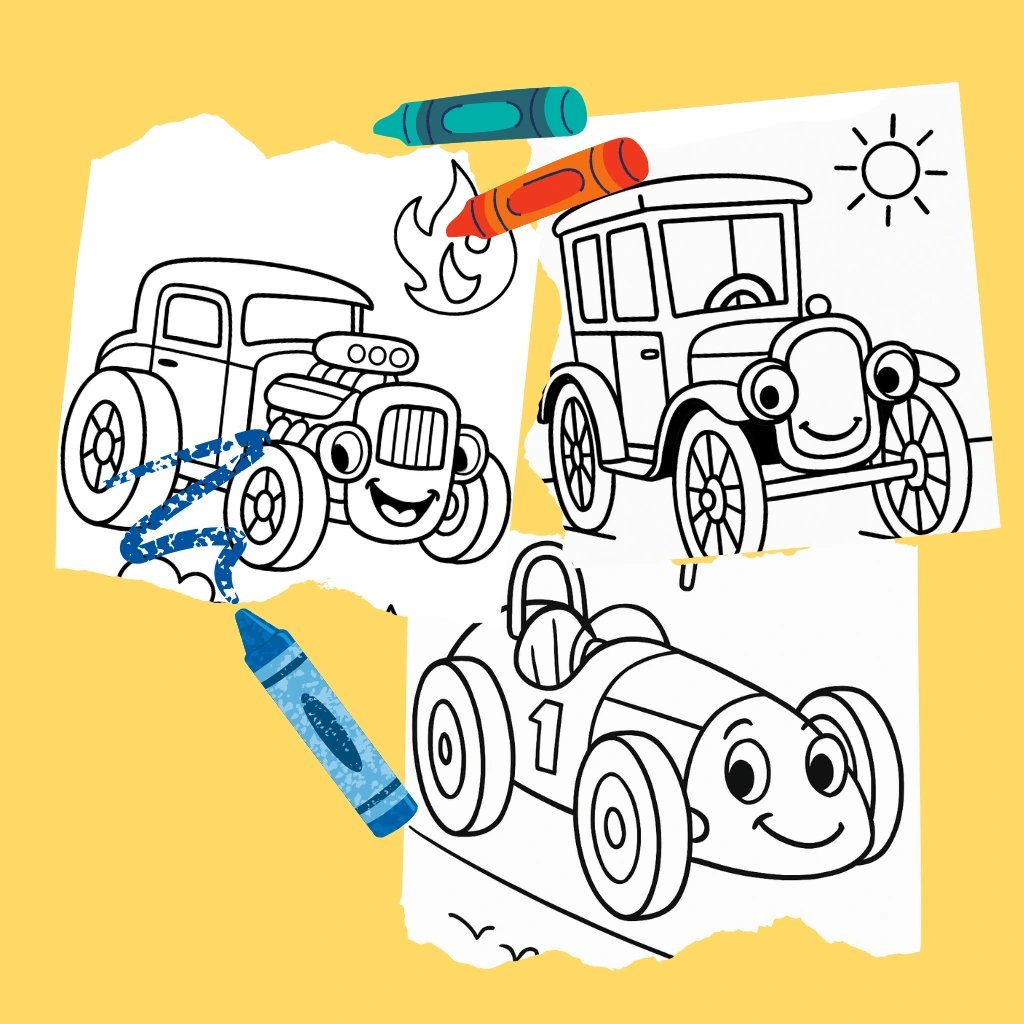
Free Classic Racer Coloring Pages
Get the complete Wayback Wheels coloring book with Classic Racer and more! Print-ready PDFs perfect for toddlers and preschoolers.
Get the Wayback Wheels Coloring BookFree coloring books • No email required • Instant download
More Classic Racer Content
Free printables, learning guides, and activities featuring classic racers
Frequently Asked Questions
Common questions about classic racer learning
What is a classic racer?
Vintage racing cars from the early days of motorsports, with open wheels, streamlined bodies, and racing heritage.
What does a classic racer do?
Classic Racers raced on historic tracks. Pushed speed limits. Tested new technology. Thrilled spectators.
Who drives a classic racer?
A classic racer is usually driven by a race car driver.
What can my toddler learn from classic racer apps?
Classic Racer apps help toddlers practice speech sounds like k and l, learn about wayback-wheels vehicles, and develop motor skills through interactive play. Practices /k/, /l/, /s/, and /r/ sounds
What age is best for classic racer learning apps?
Classic Racer activities are perfect for 2-6 years. This is when children are most fascinated by vehicles and eager to learn through play-based activities.
Which Little Wheels app has classic racer activities?
Classic Racer appears in both Talk & Listen and Create & Play apps! Practice speech sounds in Talk & Listen, then create classic racer art in Create & Play.
Do classic racer apps work offline?
Yes! Little Wheels apps work completely offline with no ads or subscriptions. Download once for $4.99, and your toddler can enjoy classic racer activities anywhere—perfect for car rides, flights, or areas without WiFi.
What speech sounds can my toddler practice with classic racer?
Classic Racer helps practice the /k/ sound. Try words like cookie, cake, chicken, cat during play. K is made in the back of the throat like G. Try "car," "cup," and "cat."
Ready to get started?
Two apps. One mission: Learning that feels like play.



Try Little Wheels FREE for 7 days. No ads. No tracking.
Classic Racer in one paragraph
Classic Racer is a vehicle in the Wayback Wheels collection in Little Wheels, for ages 2-6. Vintage racing cars from the early days of motorsports, with open wheels, streamlined bodies, and racing heritage. Its sound is "Screech-vroom!". It is driven by a race car driver. Saying its name practises the /k/ speech sound. Has a lightweight body and open wheels, like early racing cars.