How do I know if my toddler needs a speech app?
Look for toddlers who understand a lot, say very little, and feel stuck—especially if you are on a long waitlist for services. In those cases, a well-designed speech app can give you daily practice and structure while you pursue or supplement speech therapy.
If you are still deciding which app to start with, read the overview Toddler Speech Apps for Ages 2–6 for calm, ad-free options and simple daily routines.
⚠️ Important: Apps ≠ Therapy
Speech apps are a supplement, not a replacement for professional speech therapy or medical evaluation. If you're worried, get an evaluation with a licensed speech-language pathologist or talk to your pediatrician—many assessments are free through early intervention.
These signs mean "try an app while you wait for eval" or "supplement what you're already doing"—not "skip the SLP."
They Say Complex Words But Not Simple Ones
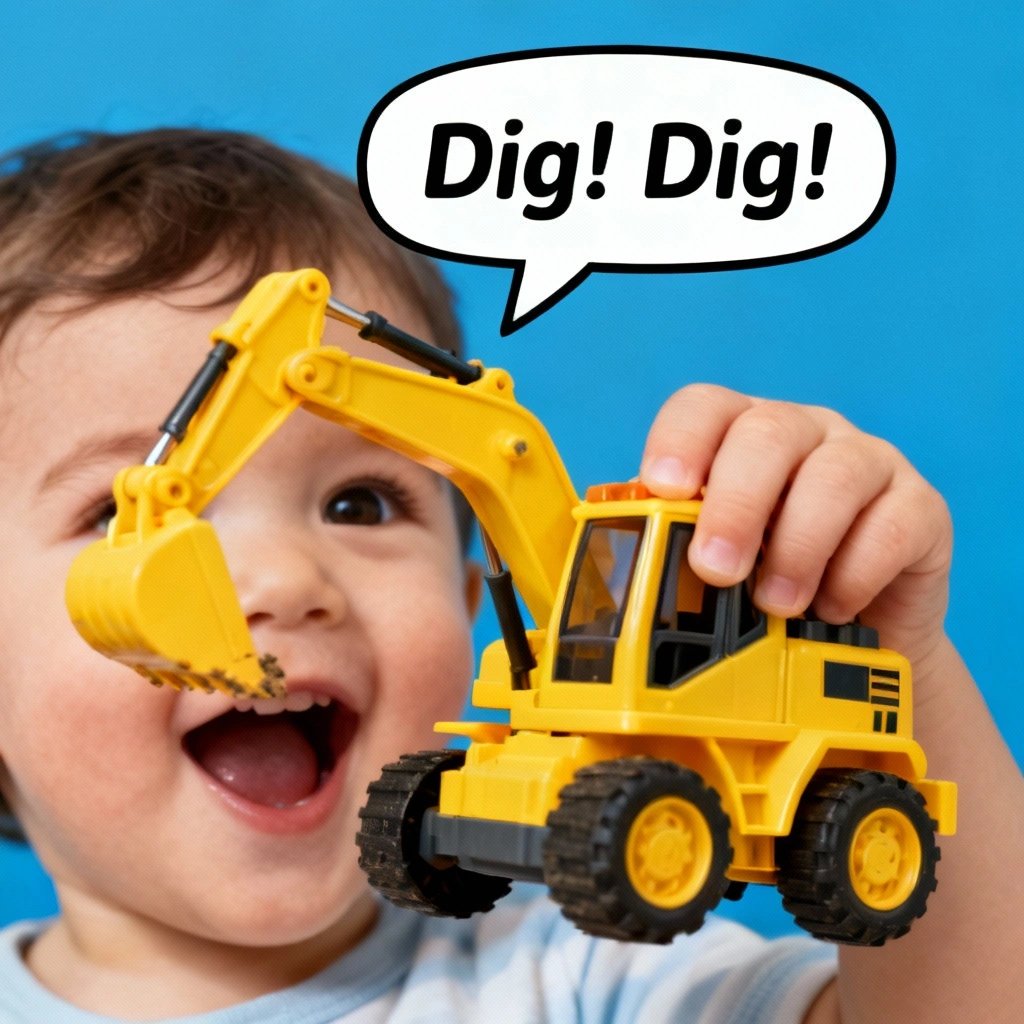
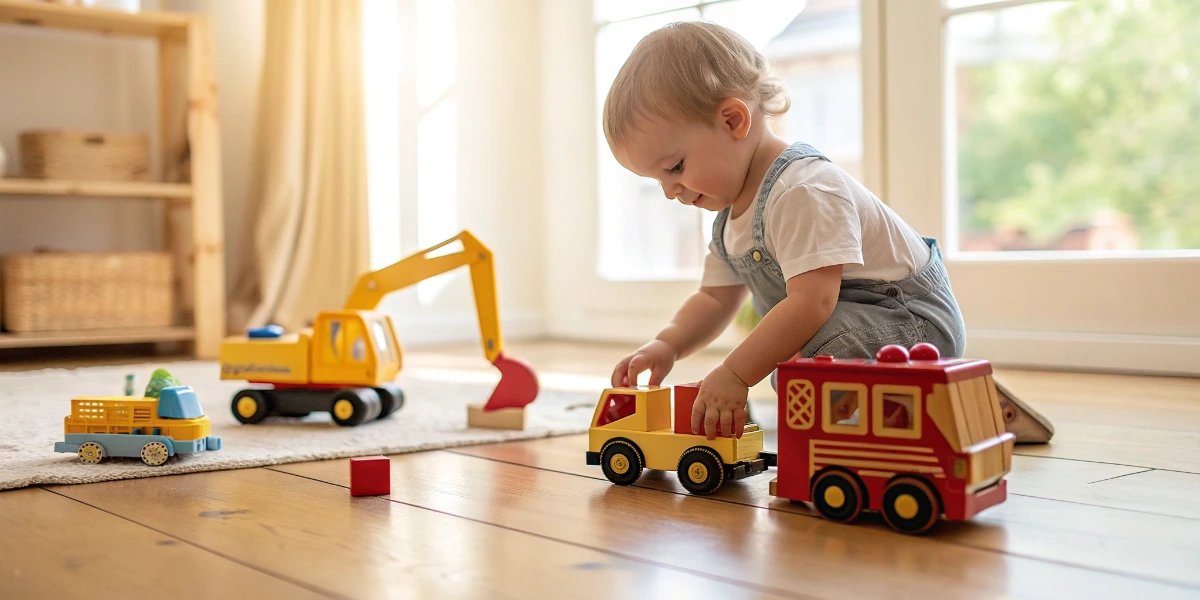
The "Excavator" KidYour toddler says "excavator," "ambulance," or "garbage truck" perfectly but struggles with "mama," "more," or "up."
✅ Why This Happens:
- •Complex words have clearer phonemes (sounds)
- •High motivation makes hard words easier
- •They can transfer sounds from vehicles to other words
📱 How a Speech App Helps:
Apps like Talk & Listen use their vehicle obsession to teach 100+ speech sounds systematically. "Excavator" becomes a bridge to "mama."
This is called phoneme transfer—using sounds they can say to teach sounds they can't.
They Understand Everything But Won't Talk
Receptive > ExpressiveThey follow complex instructions ("Go get your red truck from the bedroom") but only say 10-20 words.
✅ What This Means:
- •Receptive language (understanding) is ahead of expressive (speaking)
- •This is common and often resolves with practice
- •They need motivation to practice speaking
📱 How a Speech App Helps:
Apps provide low-pressure practice. No one's staring at them waiting for words. They can try, fail, and try again without judgment.
They're Frustrated But Not Trying New Words
The Stuck KidThey point, grunt, and melt down when you don't understand. But they're not attempting new words even when you model them.
✅ What's Happening:
- •They've learned that pointing/grunting works
- •They need a reason to try harder methods
- •Current communication is "good enough" for their needs
📱 How a Speech App Helps:
Apps make speaking the fun option. Hearing "excavator" makes the excavator move. Speaking becomes rewarding, not frustrating.
You're On a Waitlist for Speech Therapy
The 6-Month WaitYou got the eval. They qualified. Now you're waiting 3-6 months for an opening. What do you do in the meantime?
✅ The Reality:
- •Early intervention waitlists are 3-6 months in most areas
- •Private SLPs cost $100-200/session
- •Every month matters in early language development
📱 How a Speech App Helps:
Apps give you something to do while you wait. Daily practice at home, designed by SLPs, for $5 instead of $150/session.
Many SLPs recommend apps as homework between sessions.
They Have a Specific Obsession You Can Leverage
The Motivation KeyVehicles, animals, dinosaurs, trains—they're obsessed. And you know obsession = motivation = learning.
✅ Why Obsessions Matter:
- •Kids practice what they love 10x more than random words
- •High motivation reduces frustration
- •Obsessions provide 100+ vocabulary words in one category
📱 How a Speech App Helps:
Apps built around their obsession (like Talk & Listen for vehicles) turn practice into play. They don't know they're doing speech therapy.
🚨 When to Skip the App and Call an SLP
❌ No words by 18 months
Get an eval. Apps can supplement, but you need professional guidance.
❌ Losing words they used to say
This is regression. Call your pediatrician immediately.
❌ Not responding to their name
Could be hearing or developmental. Needs professional evaluation.
❌ No babbling or sound play by 12 months
Early intervention is key. Get an eval while you try apps.
🤔 Should You Try an App?
✅ Yes, try an app if:
- • They're 18+ months with some words but behind peers
- • You're waiting for therapy to start
- • They have a strong obsession (vehicles, animals, etc.)
- • You want to supplement current therapy
- • They understand more than they say
⚠️ Try an app AND get an eval if:
- • No words by 18 months
- • Fewer than 50 words by 24 months
- • Not combining words by 30 months
- • You're worried (trust your gut)
For step-by-step home practice ideas, see 8 Ways to Practice Speech at Home.
More Help for Late Talkers
- 8 Best Speech Apps for Late Talkers | Parent-Tested7 mins
Parent-tested speech apps that actually work for late talkers. From free to $8.99 one-time. No subscriptions, no gimmicks—just real progress. Ages 18mo-4yo.
- 10 Best First Words for Late Talkers | SLP-Approved6 mins
The easiest first words for late talkers to learn. Functional, motivating, actually achievable. SLP-approved starting point for ages 18mo-3yo speech practice.
- 5 Myths About Speech Delay | Stop Googling at 2am6 mins
Common speech delay myths debunked by SLPs. What actually matters vs what doesn't. Stop googling, start understanding. Ages 18mo-4yo parent guide.
Ready to Try Talk & Listen?
Designed by SLPs for vehicle-obsessed late talkers. Uses phoneme transfer to teach 100+ speech sounds. 7-day free trial.
Start Free Trial →$4.99 one-time after trial • No subscription • Offline • Ad-free
 Frequently Asked Questions