"The weather passed. It always does."
One idea runs through every part of Sleepy Train: feelings are weather — visible, always changing, always passing, never bad.
Why a two-year-old cannot say what they feel
"I am frustrated because I expected a different outcome" is not available to a small child. Neither is most of the emotional vocabulary adults reach for automatically. What is available is a picture — and weather is a picture every child already has, from outside the window, before anyone teaches it to them.
So a child who cannot yet say "disappointed" can absolutely say stormy. That is not a lesser version of the real thing. For the next couple of years it is the real thing, and it does the job: it turns an overwhelming internal state into something that can be pointed at, shared, and talked about afterwards.
The three things weather does at once
It passes
This is the one children genuinely do not know. Inside a big feeling, a three-year-old has no evidence that it ends — it feels total and permanent. Being told "you'll be fine in a minute" is unconvincing. Watching it happen to a train, repeatedly, on ordinary days, is much more convincing, and that is why the storms in the app always resolve.
It is not you
Weather happens to a place. It is not what the place is. That distinction is the difference between a state and an identity, and it is why "you are having a stormy feeling" does something different to a child than "you are being difficult." One describes an event. The other describes them.
It is not bad
Nobody moralises about rain. A vocabulary with no shame in it gets used honestly — and a child who can tell you they are stormy is a child who does not have to show you instead. This is the part that quietly does the most work, and the part most easily ruined by an adult treating certain weather as unwelcome.
How the metaphor shows up in the app
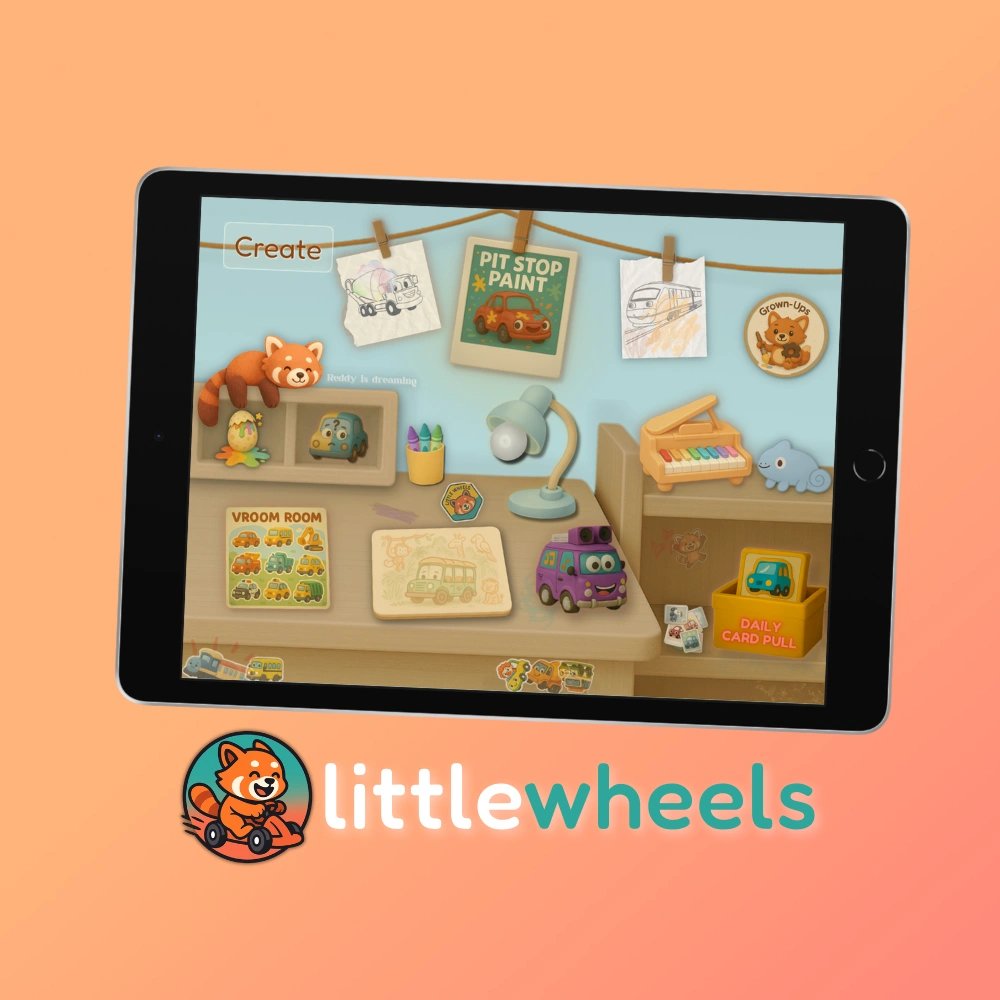
- Morning and evening check-in — the train shares its weather, then asks about yours. It never assesses, never scores, and accepts whatever the child says.
- Big Feelings — clouds gather before a storm arrives, so the child sees it coming rather than being ambushed. Recognising the build-up is a skill in itself.
- Sky Switchboard — a reward-free sandbox where the child commands the sky: sun, rain, storm, snow, stars. Somewhere safe to make the weather, which is a different and useful kind of control.
- Stories — nine illustrated books, each about one feeling, so the same language arrives in a completely different form.
Using it at home, where it matters more
The metaphor is stronger outside the app than inside it, because you can use it in the moments that actually count. Narrate your own weather: "I'm cloudy this morning, I need a slow breath." Ask at dinner what the weather was today. Mark the passing out loud once a storm has gone through.
Describe rather than diagnose — "that looks stormy" leaves room for a child to correct you, and being corrected is a good outcome. You are building a shared vocabulary, not an accurate diagnosis, and the vocabulary belongs to both of you.
What this is not
It is a framing and a vocabulary. It is not therapy, not an assessment, and not a substitute for support if you are worried about your child. The check-in follows CASEL-aligned practice and the breathing pacing is clinically validated for the age band — the app itself has not been studied, and nothing here should be read as claiming otherwise.
If you want the practical side — what to do before, during and after a big feeling, and when an app is the wrong tool entirely — the calm-down apps guide covers it, including the argument for skipping the app and using a glitter jar.