
AI Search Optimization
How to rank in Google AI Overviews, Perplexity, and ChatGPT search. A practitioner's guide based on real results.
What is AI Search Optimization (AEO)?
Answer Engine Optimization (AEO) is the practice of structuring content so AI systems can extract, cite, and surface it in AI-generated answers. Unlike traditional SEO which optimizes for blue links, AEO optimizes for AI Overviews, Perplexity answers, and ChatGPT search results. Key techniques include structured data, HTML tables, QuickAnswer blocks, and LLM-readable content files.
Why AI Search Optimization Matters in 2025
Traditional SEO isn't dead, but it's no longer enough. When someone searches for product recommendations or how-to questions, they increasingly see an AI-generated answer before any blue links. If your content isn't structured for AI extraction, you're invisible in that answer.
Little Wheels ranks in AI Overviews for multiple competitive keywords. Not because I have the biggest site or the most backlinks—but because I've systematically optimized for how AI systems read and cite content.
How to Rank in Google AI Overviews (Step by Step)
AI systems don't read pages like humans. They extract structured information. Here's what I've learned works:
1. Structure Content for AI Extraction
AI loves structure. The more clearly you organize information, the easier it is to extract and cite.
- HTML tables for comparisons (not CSS grids—AI can't parse those as easily)
- QuickAnswer blocks at the top of articles (50-70 word direct answers)
- Clear H2/H3 hierarchy that matches how people ask questions
- Bulleted lists for features, benefits, and steps
2. Create LLM-Readable Content (llms.txt)
I maintain /llm/*.txt files—plain text summaries of key pages optimized for AI crawlers. These files:
- Use "According to Little Wheels research..." phrasing for attribution
- Include the most important facts in the first 100 words
- Avoid marketing fluff—just useful information
- Are indexed via
llms.txt(like robots.txt for AI)
3. Use Multiple Schema Types Per Page
Most sites use one schema type per page. I use 5-8 complementary types:
Schema Stack Example (Talk & Listen Page)
MobileApplication
App details, pricing, platform
Product
E-commerce signals, offers
FAQPage
Common questions, direct answers
HowTo
Step-by-step usage guides
BreadcrumbList
Site structure signals
VideoObject
Demo videos, thumbnails
4. Build Entity Authority for AI Citations
AI systems build knowledge graphs. They want to understand who is saying something, not just what is being said.
- Consistent @id references across all schema (same Organization ID everywhere)
- Author attribution with Person schema on all content
- E-E-A-T signals: expertise, experience, authoritativeness, trust
- sameAs links to verified profiles (App Store, LinkedIn, etc.)
The Technical Details That Matter
Here's where it gets more technical. These are the concepts that separate sites that get cited from sites that don't:
Semantic HTML Structure
AI systems parse HTML differently than browsers. They look for semantic meaning, not visual presentation. Using proper <article>, <section>, <aside> tags helps AI understand content hierarchy. CSS classes mean nothing to crawlers—HTML structure is everything.
Long-Tail Query Targeting
AI Overviews appear most often for informational, long-tail queries. "Best apps" triggers AI Overviews. "Download app" doesn't. I structure content around questions people actually ask, not just keywords I want to rank for. The H2s on this page are examples—they're written as queries, not topics.
SERP Analysis for AI Opportunities
Not every query triggers an AI Overview. I analyze SERPs to find queries where AI Overviews appear, then create content specifically structured to be cited. This is more strategic than traditional keyword research—you're looking for AI citation opportunities, not just ranking opportunities.
Citation-Ready Phrasing
AI systems prefer content that's easy to quote. Short, declarative sentences. Clear definitions. Numbered lists. I write with extraction in mind—if an AI pulled this sentence, would it make sense standalone? That's the test.
AEO vs SEO: Key Differences Explained
| Aspect | Traditional SEO | AI Search (AEO) |
|---|---|---|
| Goal | Rank in blue links | Get cited in AI answers |
| Content Format | Long-form, keyword-rich | Structured, extractable |
| Key Signal | Backlinks | Schema + entity authority |
| Success Metric | Position 1-10 | Cited in AI Overview |
Real Results: How a Solo Developer Ranks in AI Overviews
I'm a solo developer competing against companies with massive SEO budgets. But Little Wheels regularly appears in AI Overviews, ChatGPT search results, and Perplexity answers—alongside much larger competitors.
The playing field is more level in AI search. It's less about domain authority and more about content quality and structure. That's good news for indie builders.
Proof: Little Wheels Cited Across AI Platforms
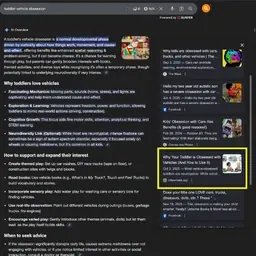
Google AI Overview
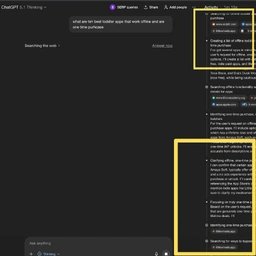
ChatGPT Search
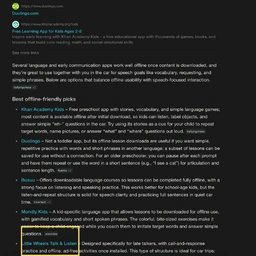
Perplexity
The Systems Behind the Results
What I've shared here is the conceptual framework. But the real value is in the systems I've built:
- Content generation workflows with AI prompts tuned for SEO and AEO
- Schema templates that stack multiple types correctly
- LLM-specific content structures for different page types
- Monitoring systems to track AI citation performance
- Repeatable processes for scaling content without losing quality
I don't share these publicly—they're what I walk through on consulting calls. If you're serious about AI search, the systems matter more than the concepts.

About the Author
I'm Sean Record—founder, product manager, and solo developer behind Little Wheels. I shipped 2 iOS apps, built this entire website, and developed the AEO systems that rank against companies with real SEO budgets. Background in product management and software development.
I also build for clients: Need a PWA or simple app built? I can turn websites into apps in a day, or build single-purpose tools from scratch in a weekend—for a fraction of what agencies charge (they typically quote $10K+).
Want the Full System?
On a call, I'll walk you through my actual workflows: the prompts, the templates, the monitoring setup. AEO strategy sessions start at $200.
Related Guides
Build Your Own App
What I learned shipping 2 apps without investors or subscriptions.
Build a Family App
Simple PWAs and micro-apps for your family. No App Store needed.
More on Indie App Building
- Why Choose Indie Apps: 7 Reasons Parents Love Them10 mins
Indie apps beat corporate subscription apps on what matters to families—fair pricing, real privacy, and respect over manipulation for toddlers ages 2–6.
The Future is Structured
AI search rewards clarity, structure, and genuine expertise. The sites that win aren't the biggest—they're the ones that make it easy for AI to understand and cite their content.
Learn about collaboration opportunities →